1 hour ago
Six months into the US-Israel war against Iran, Donald Trump is shifting from strikes to harsher economic pressure. The move highlights a costly, unresolved conflict testing US readiness and regional stability.

Washington,UPDATED: Aug 28, 2026 10:24 IST
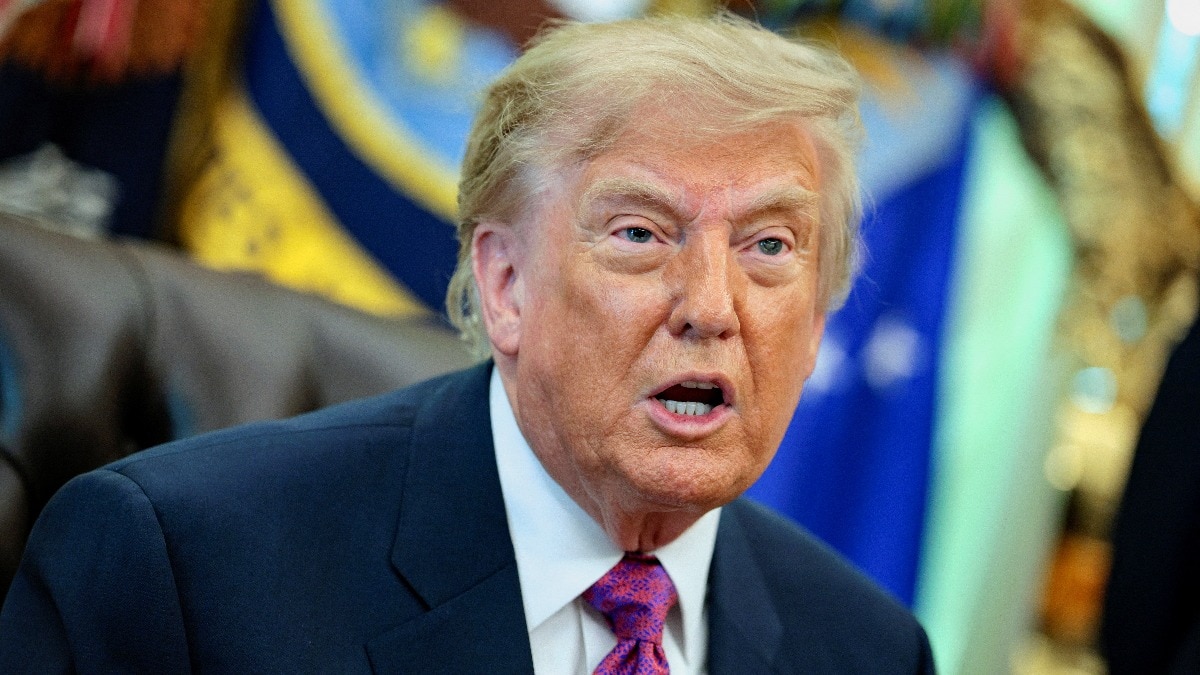
President Donald Trump reaches the six-month mark of the US-Israel war against Iran on Friday, as his administration shifts from military action to sharper economic pressure on Tehran. The milestone comes after Trump had repeatedly told Americans the conflict would be a "little excursion" lasting only a few weeks.
The war is still continuing, even as Trump says Iran's leadership, military and economy have been badly hit by bombs and blockade. This week, the administration said it would now focus on increasing economic pressure, including threats to punish any country or entity that continues to do business with Tehran.
The move towards sanctions comes as the administration weighs reduced munitions stockpiles after months of war, raising concerns that the prolonged conflict could affect US military readiness in other parts of the world. Trump's language on ending the war quickly has also softened. He said this week that he is "not in a hurry" to bring Iran back to the negotiating table and continued to argue that the Islamic Republic's leadership is struggling. "They're not paying their troops. They're in deep trouble. They have very little capacity," Trump told reporters on Thursday. "We don't want to speak to them. We're not looking to meet or anything," he said.
It is unclear whether Trump will publicly mark the six-month point of a conflict that has cost the United States more than USD 37.5 billion and affected his popularity ahead of key November elections for his party. He is spending Friday in Houston, where he will honour the Artemis II NASA crew for their 10-day mission around the moon earlier this year.
The moment is difficult for a president who campaigned on keeping the military out of "endless wars" and criticised earlier administrations for spending American money and lives in conflicts in the Middle East. Trump, however, has pushed back against comparisons with Iraq and Afghanistan, noting that no American troops have been deployed into Iran. Even so, the conflict has lasted far longer than he had said. That did not stop him from sharing a social media post this week declaring "MISSION ACCOMPLISHED 2026". The AI-generated image showed Trump with US fighter jets, a warship and American flags, alongside smaller images of former president George W Bush and former Iranian Supreme Leader Ayatollah Ali Khamenei, who was killed in an Israeli strike at the start of the war.
The phrase carries weight in US politics because Bush faced criticism for a 2003 speech aboard the USS Abraham Lincoln under a White House-produced banner reading "Mission Accomplished". That speech later came to symbolise a premature claim of victory in the Iraq war, which continued for nearly nine more years. More than two decades later, US troops are still stationed in Iraq.
Trump has repeatedly said the US-Israel campaign has badly damaged Iran's navy and air force. Iranian officials have said the country has suffered USD 270 billion in direct and indirect damage. Israeli strikes in the opening weeks of the war also wiped out much of Iran's leadership structure, including Khamenei. But Iran has retained leverage through attacks in the Strait of Hormuz, where far fewer vessels carrying oil and liquefied natural gas are now willing to pass. Trump said again on Thursday that the "Strait of Hormuz is open", adding that 24 vessels had passed through the day before. Before the war, about 130 vessels used the waterway every day.
Qatar and Pakistan are continuing efforts to find a diplomatic exit. Qatar's Prime Minister Sheikh Mohammed bin Abdulrahman Al Thani was in Tehran on Thursday to discuss a proposed Iran-Oman plan aimed at increasing traffic through the Strait of Hormuz. In Washington, though, Trump has shown little interest in reviving a preliminary June deal that was meant to reopen the strait and begin talks on Iran's nuclear programme. That arrangement collapsed within weeks after Iran began attacking ships.
Trump says the US effort to squeeze Tehran economically is working, with a US naval blockade stopping Iranian oil from reaching the market while only a small number of vessels carrying oil from other Gulf countries move through. "We have control and we have the blockade," Trump said. "Iran is not getting anything. Nothing is going through."
Aarathi Krishnan, a geopolitical risk analyst at RAKSHA Intelligence Future, said there was no doubt that strikes and decades of sanctions had badly hurt Iran. But she said Trump may be mistaken if he believes more pressure will necessarily deliver the political outcome he wants, because Tehran has spent decades adapting to sanctions. According to the Monetary Fund, Iran's economy was already under pressure before the war, with rising inflation. World Bank data showed national income per person fell from about USD 8,000 in 2012 to USD 5,000 in 2024. Krishnan said Tehran has also shown resilience by selling discounted oil and building opaque shipping and financial networks. "This administration has completely underestimated the Iranian resolve," she said. "This is not new to the Iranian regime."
Richard Goldberg, who served as a senior adviser on Iran at the Security Council during Trump's first term, said Iran could be in "uncharted waters" if the administration carries out a much tougher campaign against its trade partners. "What we should be seeing is an attempt to seal off every escape hatch the regime has left," said Goldberg, now with the Foundation for Defence of Democracies. "Use the economic power of the United States to layer a naval blockade with an air and land embargo while dropping the hammer on anyone who gives the regime access to hard currency -- whether that's in the Middle East, China or even Europe."
How far the administration is prepared to go remains unclear. Treasury Secretary Scott Bessent this week launched what the White House has called "Operation Economic Outcast", but so far has only warned countries to reduce trade with Iran and has not announced any secondary sanctions. Bessent said countries should be given a chance to move away from Iran before it was too late, and he also acknowledged possible economic risks for the US. China, Iran's biggest trade partner and oil buyer, responded by saying it opposed "illegal unilateral sanctions". When asked on Thursday why he was not already sanctioning Chinese banks, Trump replied: "Who said I'm not? You don't know if I'm doing it. I don't have to announce everything, do I?"
Six months into the war, the conflict remains unresolved, the administration is leaning more heavily on sanctions, diplomatic efforts are still under way, and Trump continues to insist that Iran is under severe pressure even as the fighting and disruption in the region go on.
With PTI Inputs
- Ends
Published By:
India Today Web Desk
Published On:
Aug 28, 2026 10:24 IST