1 month ago
Britain's debate over grooming gangs has intensified as a statutory national inquiry moves forward and police reopen hundreds of historical child sexual exploitation cases. In an interview with India Today, British activist Tommy Robinson cited survivor testimonies to claim organised networks moved victims between cities and criticised past institutional responses.
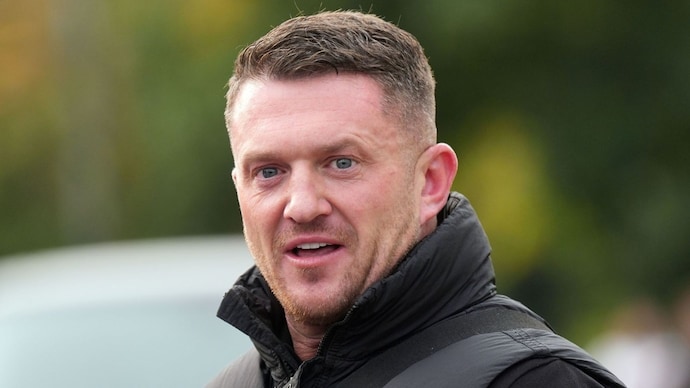
British activist Tommy Robinson (Photo: ITG)

UPDATED: Feb 12, 2026 16:15 IST
Political debate in Britain has intensified over calls for a nationwide investigation into historical grooming gang cases, as survivor testimonies and reopened police reviews bring renewed attention to past failures.
Independent MP Rupert Lowe is leading a crowdfunded probe into hundreds of child sexual exploitation cases. Police across England and Wales are reviewing more than 800 historical cases, while a statutory national inquiry is also under way.
Against this backdrop, India Today spoke to British activist Tommy Robinson, who has campaigned for years on grooming gang investigations, immigration and policing.
AUTHORITIES ACCUSED OF AVOIDING ISSUE
Asked about claims that some victims were trafficked abroad, Robinson said authorities had for years avoided confronting the issue and that those raising concerns were labelled “far-right” or “racist”.
He said he began speaking publicly about grooming gangs in 2004 and later organised protests demanding stronger action. According to him, wider public recognition of the scale of abuse came much later.
Referring to cases in towns such as Rotherham and Telford, Robinson claimed the extent of child sexual exploitation had been underestimated and alleged that many suspects identified during investigations were not prosecuted. He argued that authorities failed to act decisively despite victims being identified over several years.
CLAIMS OF VICTIMS MOVED BETWEEN CITIES
With police reviewing hundreds of cases, Robinson said survivor testimonies form the basis of his belief that grooming gangs operated across multiple towns and cities.
He claimed that in several cases, victims were moved to other locations when families or authorities began raising concerns. According to him, girls from towns such as Rochdale were allegedly taken to other cities and exploited by different groups.
Robinson said such accounts suggest coordination rather than isolated local crimes, alleging that victims were moved repeatedly and abused by multiple perpetrators. He also claimed some local businesses were used to transport victims and said testimonies describe abuse in houses where several men were present.
He called for investigations to establish whether organised networks operated across regions.
IMMIGRATION ROW ADDS TO POLITICAL TENSIONS
The debate has also fed into wider disagreements over immigration policy. Business leaders, including Manchester United co-owner Sir Jim Ratcliffe, have spoken about immigration, while Prime Minister Keir Starmer and others have rejected Robinson’s position.
Robinson said immigration and national security are likely to remain central political issues in the UK. He called for stricter action against illegal immigration and foreign nationals convicted of serious crimes, while saying migrants who integrate and contribute positively should be treated separately.
As the statutory inquiry progresses and police reviews continue, the grooming gang issue remains at the centre of a contentious political debate in Britain.
- Ends
Published By:
Priyanka Kumari
Published On:
Feb 12, 2026