3 hours ago
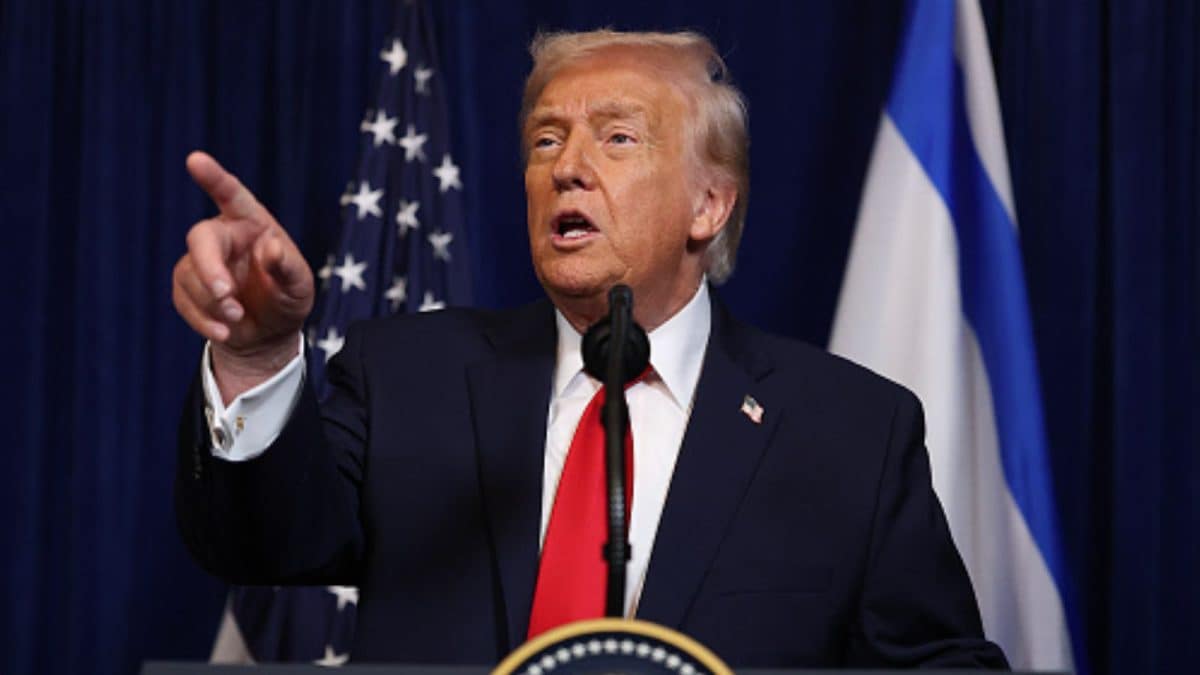
Trump said Cuba had survived for years on "large amounts of oil and money from Venezuela," claiming Havana had provided security support to Venezuela's leadership in return. Cuba rejected Trump's remarks, accusing the US of acting in a way that threatens international stability.
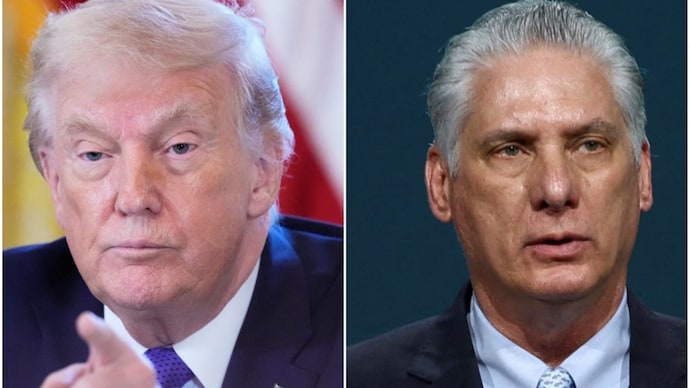
US President Donald Trump (left), Cuba's President Miguel Diaz-Canel. (Reuters photos)

New Delhi,UPDATED: Jan 12, 2026 00:03 IST
The geopolitical noose around Cuba tightened significantly on Sunday as US President Donald Trump issued a stark ultimatum to the island nation: cut a deal with Washington or face total economic isolation.
The warning follows the dramatic US military operation in Venezuela earlier this month that resulted in the capture of President Nicolas Maduro, an event that has effectively severed Cuba’s most vital economic artery.
TRUMP’S ULTIMATUM TO CUBA
Taking to his Truth Social platform, President Trump made it clear that the era of Venezuelan subsidies keeping the Cuban economy afloat is over.
“There will be no more oil or money going to Cuba – zero!” Trump wrote. "I strongly suggest they make a deal, before it’s too late."
While the President did not elaborate on what specific terms such a "deal" would entail, the message marks a severe escalation in the administration's campaign to dominate the Western Hemisphere. The US has already begun seizing oil tankers linked to Venezuela to control global distribution, a move that has left Cuba, which was already facing severe blackouts, bracing for potential widespread unrest.
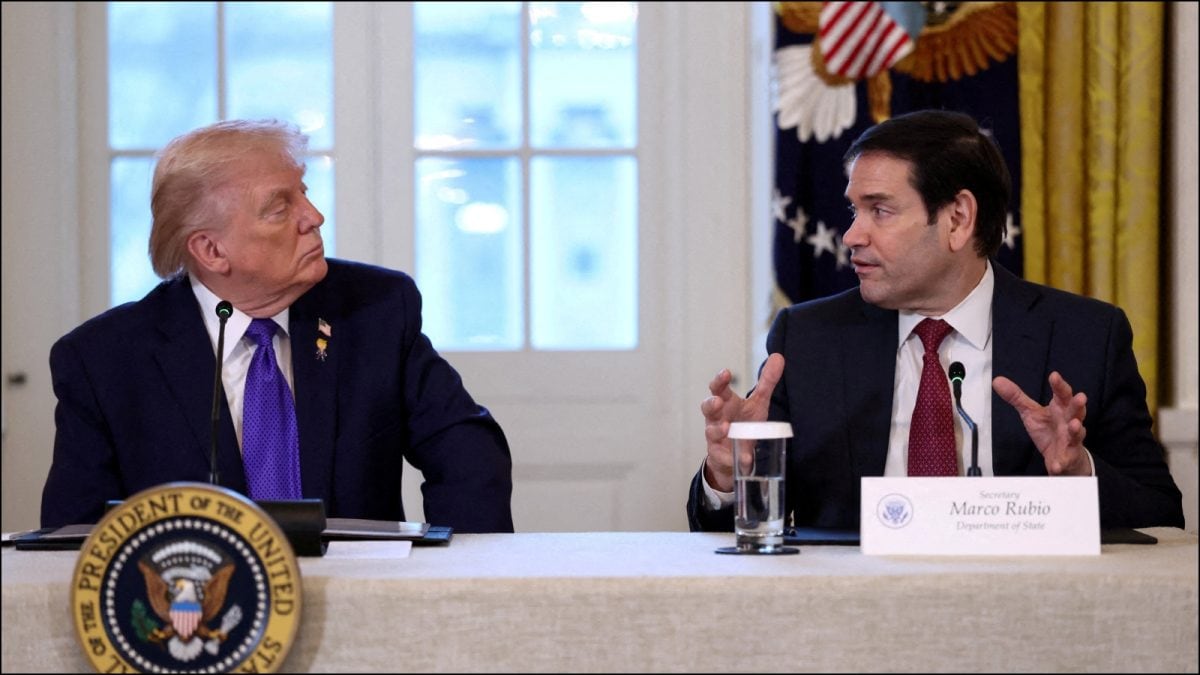
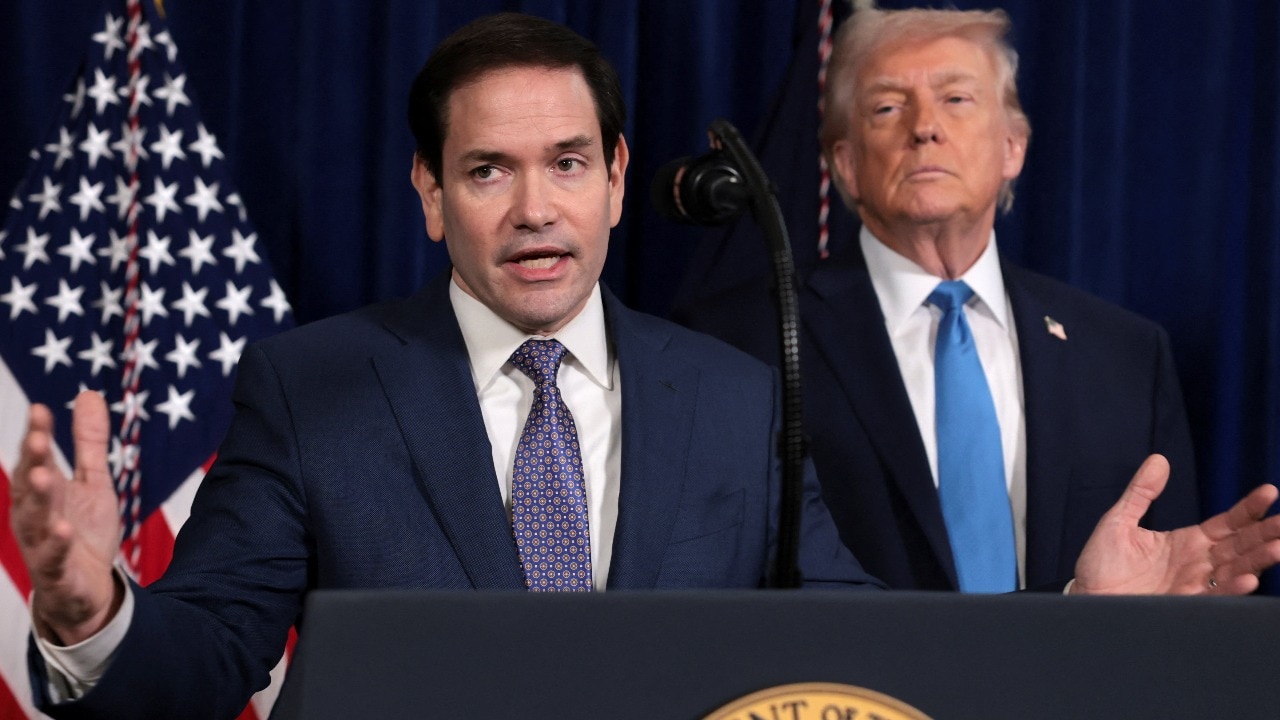
Adding to the aggressive rhetoric, Trump also reposted a social media comment suggesting US Secretary of State Marco Rubio could become the President of Cuba, adding, "Sounds good to me!"
HAVANA HITS BACK
Cuba’s leadership responded with immediate defiance, rejecting the idea that the US has the moral authority to dictate terms.
"Cuba is a free, independent, and sovereign nation. Nobody dictates what we do," Cuban President Miguel Diaz-Canel said on X. He added that while Cuba does not seek conflict, "it prepares, ready to defend the homeland to the last drop of blood."
Foreign Minister Bruno Rodriguez went further, accusing the US of behaving in a "criminal" manner that threatens global peace, according to Reuters.
Rodriguez also denied Trump’s claim that Cuba received payment for providing security services to Venezuela, asserting that the island has the right to import fuel from any nation willing to sell it.
VENEZUELAN CONNECTION
The backdrop to this war of words is the sudden collapse of the alliance between Havana and Caracas following the US intervention. For years, Cuba relied on Venezuela for roughly 50% of its oil deficit.
However, shipping data shows that no cargoes have left Venezuelan ports for Cuba since US forces captured Maduro in early January, as per a report by Reuters. To make matters worse, Havana confirmed that 32 members of its armed forces were killed during the US raid in Venezuela, where they were providing security services.
Meanwhile, Washington is moving quickly to redirect Venezuela's resources. The US and Venezuela's interim government are progressing on a $2 billion deal to supply 50 million barrels of oil to the US, with proceeds going into US-supervised accounts.
CRISIS ON THE GROUND
For the average Cuban, the diplomatic standoff translates into a deepening humanitarian crisis. Even before the oil cutoff, the island was suffering from hours-long rolling blackouts and shortages of food and medicine.
Several media reports highlighted the desperation on the streets, where a record-breaking 1.4 million people have fled the island between 2020 and 2024.
"I’d be lying if I told you that I don’t want to leave the country," 16-year-old student Amanda Gomez told Associated Press. "We’re all thinking about leaving, from the youngest to the oldest."
Experts warn that the complete halt of oil could be the tipping point. Michael Galant of the Center for Economic and Policy Research said that the U.S. strategy appears to be intentional "besieging" designed to cause suffering "indiscriminate [enough]... to instigate some sort of uprising."
WHAT’S THE END GAME?
While some US officials see the current pressure as the final blow to the communist regime, others are skeptical about a quick collapse.
Rep Mario Diaz-Balart (R-FL) cheered the President's moves, posting on X that "We are witnessing what I am convinced will be the beginning of the end of the regime in Havana.”
However, experts caution that the Cuban government has survived decades of sanctions. "The Cuban people have experienced suffering for a very long time," Galant noted.
For now, the island remains in a precarious limbo.
- Ends
(with inputs from Reuters, AP, AFP)
Published On:
Jan 12, 2026
Tune In