 1 month ago
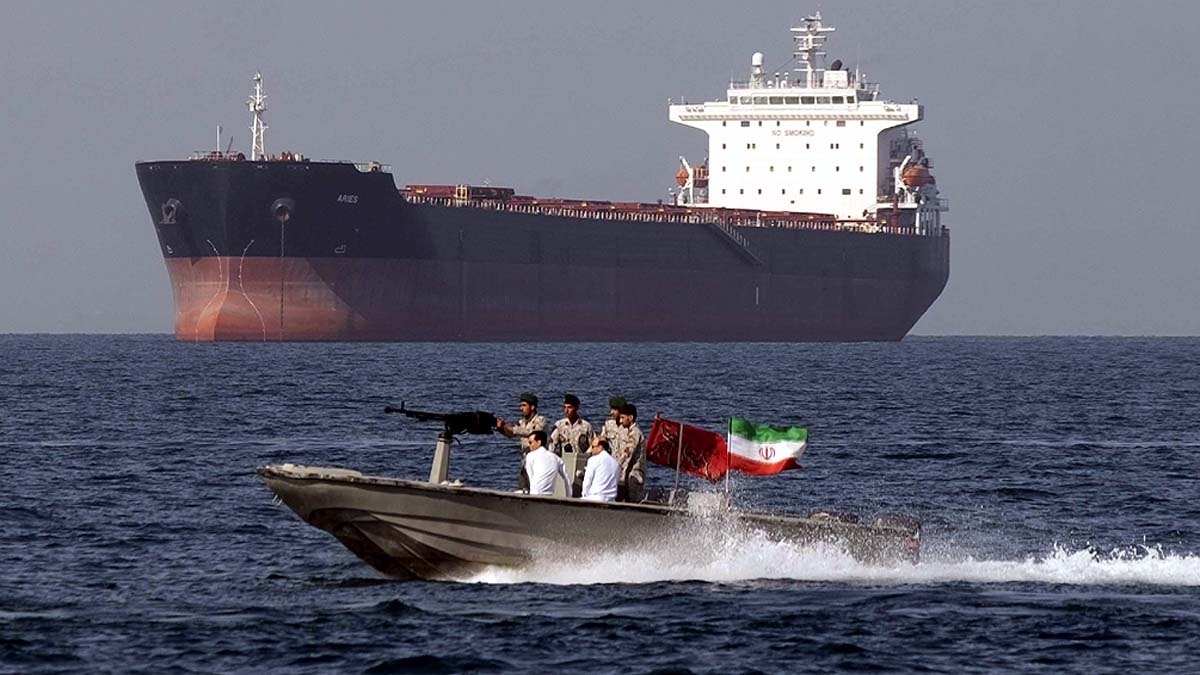
In a strikingly ironic development, Iran, which is currently locked in a war with the US over its opaque nuclear programme, has been elected as one of the vice-presidents of a key Nuclear Non-Proliferation Treaty (NPT) conference.
The appointment came during the 11th Review Conference of the NPT, which began this week at the United Nations in New York, reported news agency Reuters. Delegates nominated 34 vice-presidents for the month-long meeting. Conference chair and Vietnam's UN ambassador Do Hung Viet said Iran's nomination came from "the group of non-aligned and other states".
The NPT, which entered into force in 1970, is the cornerstone of the global nuclear order. It seeks to prevent the spread of nuclear weapons beyond five recognised nuclear-weapon states (US, Russia, UK, France and China), while promoting peaceful nuclear cooperation and advancing disarmament.
Today, 191 of the UN's 195 member states are signatories, with India, Pakistan, Israel and South Sudan remaining outside the treaty.
Iran was among the earliest signatories, joining the NPT in 1968 under the Pahlavi monarchy. However, its nuclear trajectory has since become deeply contentious. Following the 1979 Islamic Revolution, Tehran's nuclear programme has drawn sustained international scrutiny.
IRAN'S NUCLEAR RECORD AT ODDS WITH NPT ROLE
While Iran remains formally within the NPT framework, it has increasingly been accused of violating its spirit, if not its letter. It has enriched uranium to levels of up to 60% (far above the typical 3 to 5% required for civilian energy use) and has restricted access for inspectors from the Atomic Energy Agency (IAEA), including at sites targeted during last year's brief but intense 12-day war.
Although Iran denies seeking nuclear arms, both the IAEA and US intelligence assessments have previously indicated that Tehran pursued a weapons programme until 2003.
Indeed, concerns over Iran's alleged clandestine nuclear ambitions were a key factor behind US President Donald Trump's decision to start a war with Iran.
Just days before hostilities began, the IAEA, in a confidential report flagged unresolved questions about Tehran's activities, reportedly pointing to sites such as Isfahan, where enrichment efforts and stockpiles of near weapons-grade material had raised alarm.
It is against this backdrop that Iran's elevation to a vice-presidential role at the NPT conference has drawn sharp reactions.
It is against this backdrop, that Iran was elected as one of the NPT conference's VP's. The irony of this development was expressed by Christopher Yeaw, assistant secretary for the US Bureau of Arms Control and Nonproliferation, who was quoted by Reuters as saying that the conference that Iran's selection was an "affront" to the NPT.
He said it was "indisputable that Iran has long demonstrated its contempt for the non-proliferation commitments of the NPT," and had refused to cooperate with the UN nuclear watchdog to resolve questions about its programme, and called Iran's selection "beyond shameful and an embarrassment to the credibility of this conference".
Iran, of course, responded in kind. Reza Najafi, who serves as Tehran's ambassador to the Atomic Energy Agency, was reported by Reuters as having rejected the US statement as "baseless and politically motivated".
"It is indefensible that the US as the only state ever to have used nuclear weapons, and the one that continues to expand and modernise its nuclear arsenal... seeks to position itself as an arbitrator of the compliance," he told the meeting.
The episode captures the contradiction at the heart of the current situation — that even as tensions over Iran's nuclear ambitions were among the reasons for the war that has set the Middle East (and global energy prices) on fire, the same country now occupies a formal leadership role in the very forum tasked with preventing nuclear proliferation.
- Ends
Published By:
Shounak Sanyal
Published On:
Apr 29, 2026 13:16 IST
Tune In