1 month ago
Trump attacked Friedrich Merz after the German chancellor criticised Washington's handling of the Iran conflict. The spat has exposed wider strain between the US and European allies over strategy and regional risks.
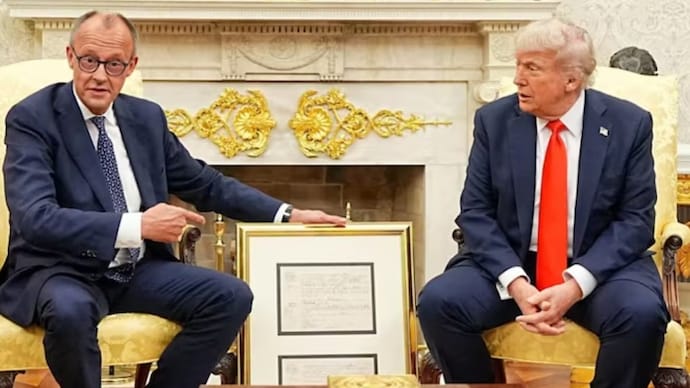
US President Donald Trump sharply criticised German Chancellor Friedrich Merz

UPDATED: Apr 29, 2026 04:16 IST
US President Donald Trump sharply criticised German Chancellor Friedrich Merz on Tuesday over his comments on the ongoing Iran conflict, accusing him of misjudging Tehran’s nuclear ambitions and misrepresenting his own stance.
In a post on Truth Social, Trump claimed that Merz “thinks it’s OK for Iran to have a Nuclear Weapon,” adding, “He doesn’t know what he’s talking about.” The remark appeared to mischaracterise Merz’s position, as the German leader has consistently maintained that Iran must not acquire nuclear weapons.
Trump warned that a nuclear-armed Iran would pose a global threat. “If Iran had a Nuclear Weapon, the whole World would be held hostage,” he said, asserting that his administration was taking action that previous leaders had failed to pursue.
The exchange follows Merz’s pointed criticism of US handling of the Iran conflict. Speaking a day earlier, the German Chancellor said Iran’s leadership was “humiliating” the United States in diplomatic engagements, referring to failed talks that reportedly involved US officials travelling to Pakistan without achieving progress.
Merz also questioned Washington’s broader strategy, saying he did not see a clear exit plan in the Iran war. His remarks highlighted widening divisions between the US and its European NATO allies, tensions that have already been strained over Ukraine and other geopolitical issues.
Suggesting that Iran’s capabilities may have been underestimated, Merz said, “Iranians are clearly stronger than one thought,” adding that they are negotiating “very skillfully” as the conflict evolves.
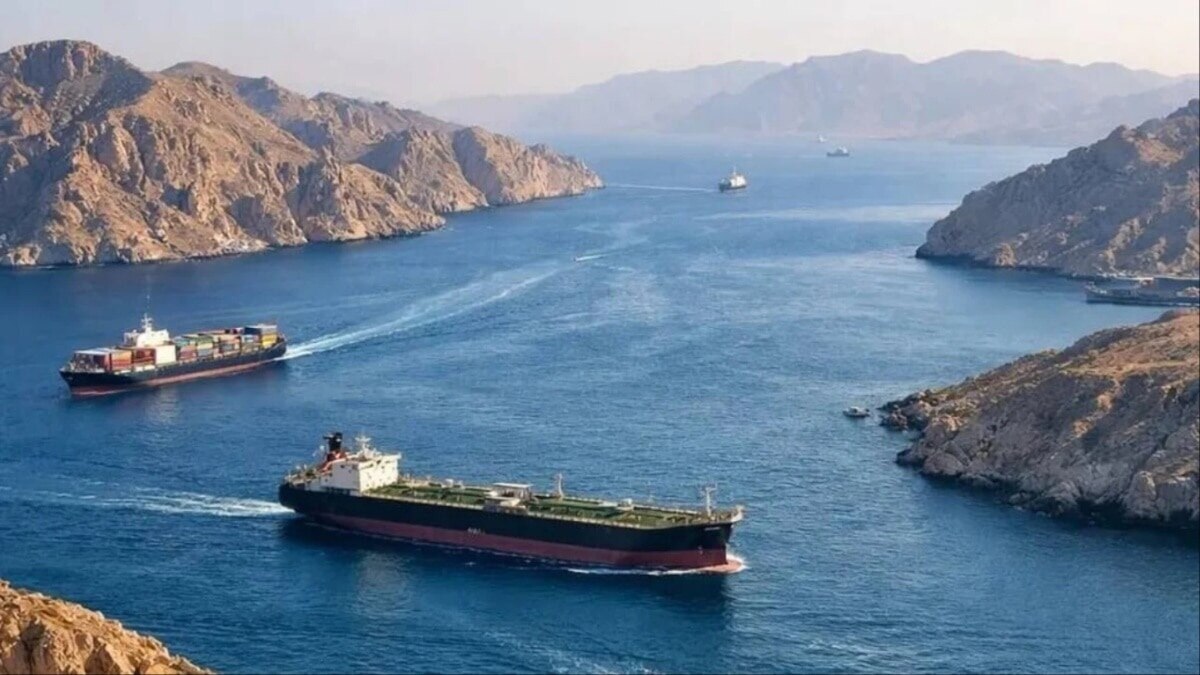
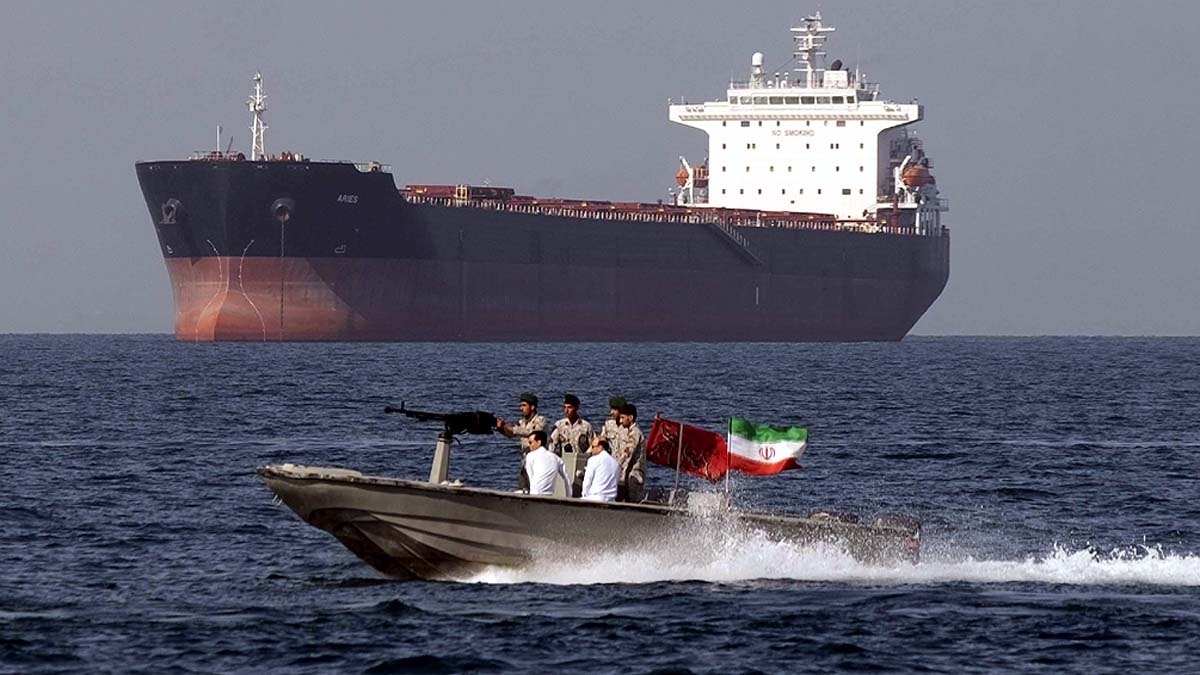
He further raised alarm over developments in the Strait of Hormuz, warning that the critical shipping route is “partially mined.” Any disruption in the strait, a vital artery for global oil shipments, could have immediate and far-reaching consequences for energy markets and international trade.
The public disagreement underscores growing concern in Europe over how the Iran conflict may reshape regional power dynamics and further strain transatlantic relations.
- Ends
Published By:
Zafar Zaidi
Published On:
Apr 29, 2026 04:16 IST
Tune In