1 month ago
The UAE sought back $3.5 billion in loans it gave to Pakistan. Now, it has exited oil cartel OPEC, which would be a blow to its de facto leader Saudi Arabia. Is this UAE's open war against the Saudi-Pakistan nexus?
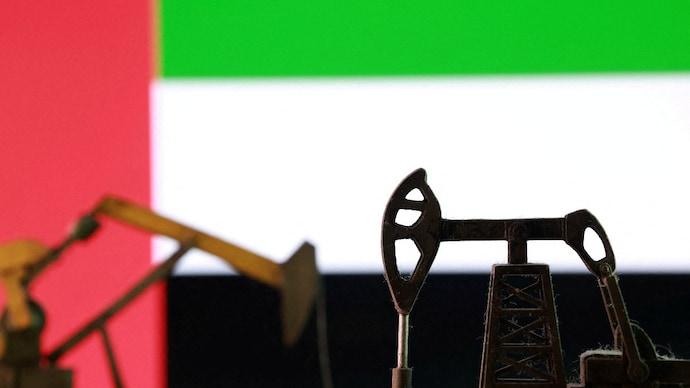
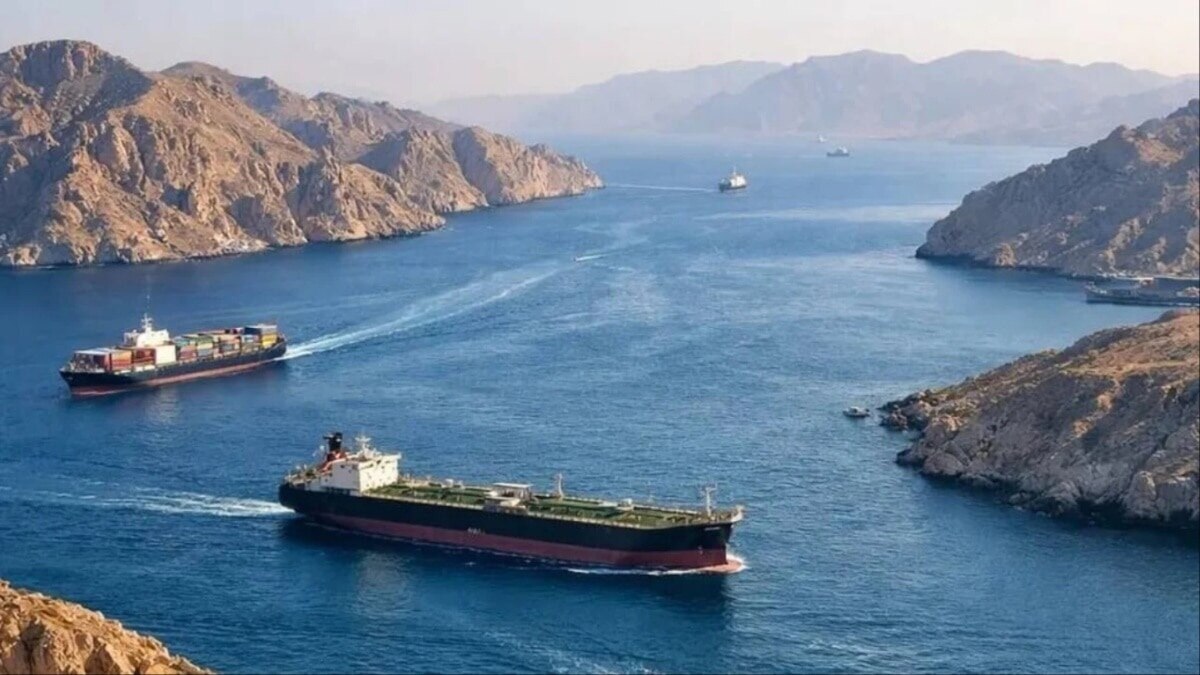
The UAE supplies around 9% of the OPEC's overall petroleum production but feels the market is undersupplied. (Image: Reuters)

New Delhi,UPDATED: Apr 28, 2026 20:44 IST
The United Arab Emirates (UAE) has made its intentions clear. If the two recent developments are anything to go by, the Gulf nation has declared an open fight against the Pakistan-Saudi Arabia nexus. Its latest decision to leave the oil cartel OPEC is aimed at delivering a hard blow at Saudi Arabia.
A couple of quick developments lead up to Tuesday's significant move by the UAE to leave the Organisation of the Petroleum Exporting Countries (OPEC). The UAE has been hammered by Iran, while it saw little support from Gulf Cooperation Council (GCC) countries.
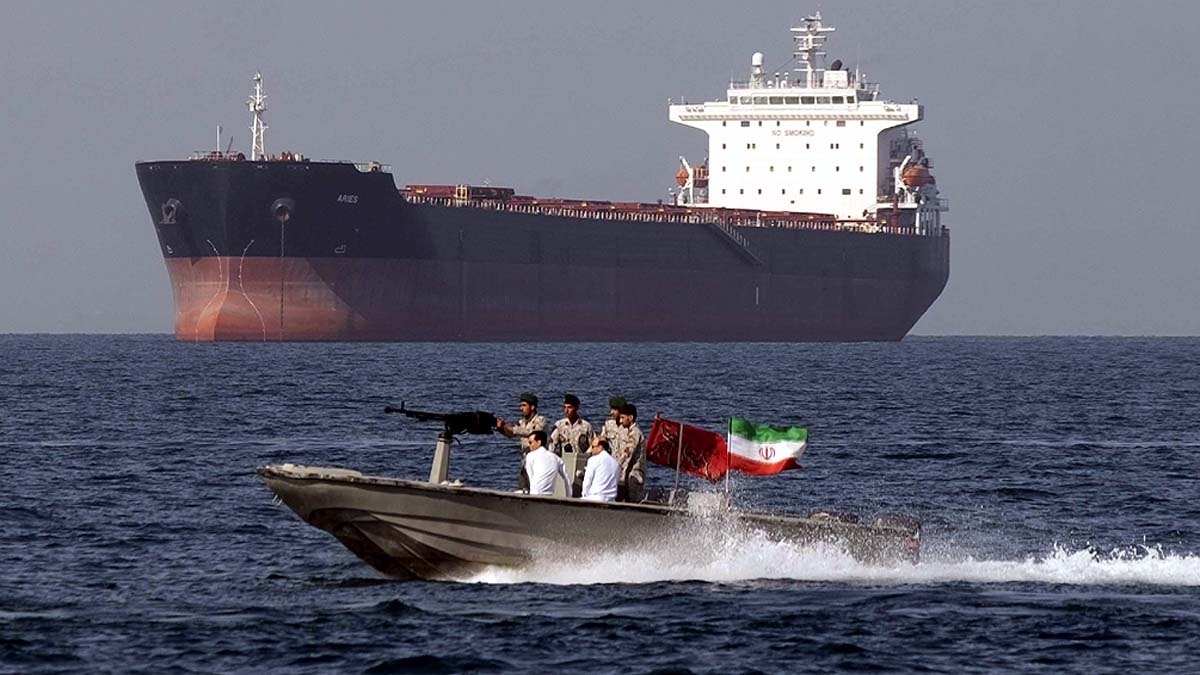
While the US, which began the conflict, seems to have slithered out of the war for now with a unilateral ceasefire declared by President Donald Trump, using Pakistan as a fig leaf, the UAE was left militarily exposed to a smarting Iran.
It wanted a stronger response, which Pakistan denied it by playing the mediator in the US-Iran talks. While the role will help Islamabad get a better bargaining status, it left the UAE with burnt oil assets and unrequited vengeance.
After Israel, which along with the US, initiated the strikes against Tehran, it was the UAE that took the most Iranian hits. In recent days, the UAE's envoys have highlighted how Iran targeted its infrastructure with missiles and drones. As of April 8, the air defences of the UAE have intercepted with 537 ballistic missiles, 26 cruise missiles, and 2,256 drones, said Abu Dhabi's Ministry of Defence.
Pakistan's role as mediator annoyed the UAE as it "sees things in kind of black and white at the moment", Neil Quilliam, an associate fellow at Chatham House, told The Financial Times.
"There's no neutrality in this, there's no middle ground and if you're mediating then you are in the middle ground," Quilliam told The FT about the UAE's position after being hit by Iran.
The London-based newspaper reported that the UAE "had signalled to Islamabad that it wanted it to take a harder line against Iran". But Islamabad didn't defer to that line of thought.
"They [Islamabad] sought to position themselves as a mediator, which didn't go down well," Abdulkhaleq Abdulla, an Emirati academic and commentator, told the FT about the "frustration" in Abu Dhabi.
Anger and frustration are what made the UAE seek immediate repayment of the $3.5-billion loan, which according to reports, it hadn't planned to demand till the end of 2027.
That was around a fifth of Pakistan's central bank's liquidity. It was a big blow, but Saudi Arabia stepped in by lending Pakistan $3 billion in loans. It has promised another $5 billion line of credit.
Pakistan and Saudi Arabia had in September 2025 signed a mutual defence agreement, the details of which are still shrouded in mystery. What is known is that the Nato-like deal allows Pakistan to provide its nuclear weapons and missiles to defend Riyadh. Pakistan is the only Islamic country with nuclear weapons.
Islamabad's reaction to the Iranian attacks on Saudi Arabia was very different. It reassured Riyadh that it would honour its defence pact.
The rift among the Gulf countries was playing out. While the UAE has strong ties with India, Saudi Arabia, Pakistan and Turkey were forming an axis. There is discussion on a tripartite military pact between them.
The UAE must have been uncomfortable with the growing alliance between Islamabad and Riyadh, with which it was in a power tussle in Yemen and Sudan.
Saudi Arabia and the UAE were key partners in the 2015 Yemen intervention, which was aimed to restore Yemen's internationally recognised President Abdrabbuh Mansur Hadi to power after he was ousted by Iran-backed Houthi rebels.
But they have repeatedly clashed over strategy and influence. Riyadh has pushed for political deals with the Houthis, while Abu Dhabi strongly backed southern separatists and adopted a more aggressive stance against Iranian-backed groups.
These differences have significantly strained their once-solid alliance since 2019.
Sudan is another territory where the two have diverged sharply since the 2023 civil war.
The UAE is widely accused of backing the paramilitary Rapid Support Forces (RSF), while Saudi Arabia, aligned with Egypt, has supported the Sudanese Armed Forces (SAF).
This proxy rivalry over influence, Red Sea ports, and resources has prolonged the conflict and turned Sudan into another arena of Gulf competition.
Then there have been differences between the two countries over oil output targets too.
For decades, Saudi Arabia has been the undisputed de facto leader of OPEC. Riyadh sets the tone for production quotas, price strategy and the group's overall direction.
The UAE's sudden withdrawal removes a key ally and a major producer from the fold at a moment when the cartel is already under strain from the US-Iran conflict and Hormuz disruptions.
The OPEC exit gives the UAE freedom to pump at full capacity without quota restrictions. This can be potentially seen as an economic win in a tight global energy market.
"The UAE's decision to exit from OPEC reflects a policy-driven evolution aligned with long-term market fundamentals," wrote Suhail Mohamed Al Mazrouei, the UAE's Minister of Energy and Infrastructure.
Also, this can be seen as a move that Abu Dhabi is no longer willing to subordinate its interests to Riyadh's leadership inside OPEC or in broader regional strategy.
It must be noted that the UAE's decision to exit OPEC does not mean an outright rupture with Saudi Arabia. The two countries remain major trading partners and fellow GCC members. But it does mark the most public and consequential assertion of independence by Abu Dhabi in years.
The UAE supplies around 9% of the OPEC's overall petroleum production but feels the market is undersupplied. It is one of the OPEC's top producers behind Saudi Arabia and Iraq, with a daily output of about 3 million barrels.
Abu Dhabi's breaking away from the oil cartel after 59 years will have big geopolitical ramifications and change calculations in Washington DC, Beijing and Moscow.
"The UAE has taken a sovereign decision in line with its long-term energy strategy, its true production capability and its national interest, as well as global energy market stability," wrote Sultan Al Jaber, the UAE's Minister of Industry and Advanced Technology.
What Jaber went on to say was more telling. "Our commitment to our partners remains unwavering. For us, trust, partnership and credibility are not talking points...they are a track record."
Whether this is the beginning of a genuine realignment in Gulf politics or a tactical manoeuvre remains to be seen. But the UAE has chosen this moment, amid war, blockade and shifting alliances, to step out of Saudi Arabia's shadow in one of the most visible forums possible. The recent moves are the UAE's most open fight against the Pakistan-Saudi nexus.
- Ends
Published On:
Apr 28, 2026 20:44 IST