22 hours ago
Last Updated:January 07, 2026, 10:26 IST
After US forces captured Venezuelan President Maduro, Trump revived his push to bring Greenland under American control, calling the Arctic island essential for national security.

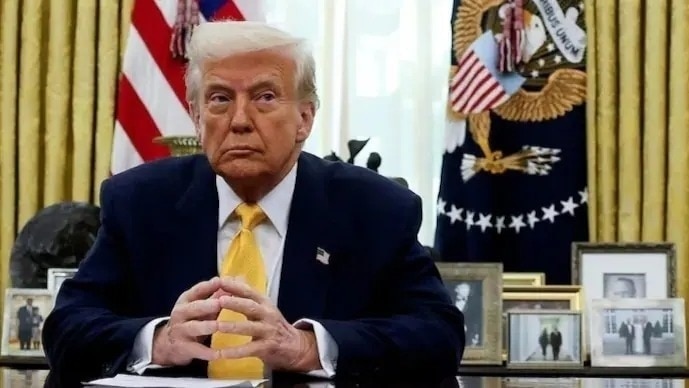
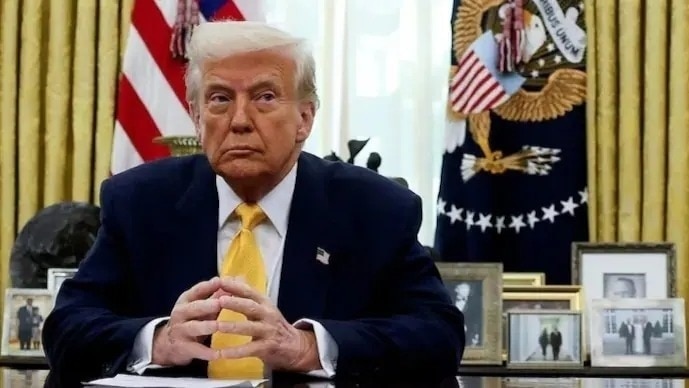
The day after US forces snatched Maduro from his home, Trump repeated that the US needs Greenland “from the standpoint of national security”. (Getty Images)
Greenland has been at the margins of global politics for decades, but the island has moved to the centre of an escalating confrontation after US forces captured Venezuelan President Nicolás Maduro in a lightning raid.
Within hours, President Donald Trump revived his long-standing demand for the US to take control of Greenland, calling it essential for American “national security" and insisting that Denmark is not capable of protecting the island’s strategic Arctic position.
“We need Greenland from the standpoint of national security, and Denmark is not going to be able to do it. We’ll worry about Greenland in about two months… let’s talk about Greenland in 20 days," Trump said in response to a reporter’s question while aboard Air Force One en route to Washington. Trump had also said, “We do need Greenland, absolutely. We need it for defence," in an earlier interview.
Leaders in Copenhagen have warned that any attempt by the United States to seize or “take over" the island would have grave consequences for sovereignty and could even rupture the North Atlantic Treaty Organisation (NATO). Greenland’s government has rejected Trump’s remarks as disrespectful and linked them to rising concerns about outside pressure on its politics.
Taken together, the strategic value of the Arctic, the mineral wealth beneath Greenland’s ice, and the island’s position between North America and Europe have made Trump’s ambition far more than a rhetorical flourish. It is now testing transatlantic alliances and reviving fears about how far Washington might go to secure control of the Arctic gateway.
This explainer breaks down why Trump wants Greenland, the long history behind America’s interest, the reasons for Denmark’s alarm, and how the situation threatens the foundations of NATO.
Why Is Trump Pushing For Greenland? The Strategic Logic Behind The Demand
Greenland’s strategic location is the primary reason Trump continues to return to the idea of American control. The island sits between North America and Europe and has long been central to US Arctic defence architecture. It enables Washington to monitor missile activity originating from Russia, China and North Korea and to maintain a forward line of early-warning capabilities.
The US operates the Pituffik Space Base in north-west Greenland, a facility that has historically served as a critical point for monitoring missile trajectories. Its location gives American defence planners an unobstructed vantage over the Arctic approaches.
The Arctic island also straddles the GIUK gap, the maritime corridor connecting Greenland, Iceland and the United Kingdom. It remains a crucial route for submarine and naval movements linking the Arctic Ocean to the Atlantic, making control and surveillance over this passage a long-standing American priority.
Beyond its military value, Greenland is rich in resources. According to a 2023 survey, 25 of the 34 minerals classified by the European Commission as “critical raw materials" are found on the island, including rare earth elements vital for electronics, electric vehicles and advanced weapons systems. With China dominating global rare-earth supply, interest in Greenland’s deposits has grown.
Although Greenland has banned oil and gas extraction, the mineral potential remains significant. Changing Arctic conditions, including the increased navigability of northern shipping routes, have further reinforced Greenland’s strategic value.
Trump has insisted that the issue is about defence, not minerals, telling reporters last month: “We need Greenland for national security, not for minerals." But his former national security adviser Mike Waltz suggested in January 2024 that Trump’s focus was on natural resources. He told Fox News that the administration’s focus on Greenland was “about critical minerals" and “natural resources."
How The US Has Sought Greenland In Past: A Long History Of Interest
American interest in Greenland stretches back more than a century and has been shaped by geography, wartime necessity and Cold War strategy.
In 1867, US officials noted that the island’s location and mineral potential made it an attractive prospect. During World War II, American forces moved into Greenland after Denmark was occupied by Nazi Germany, turning it into a crucial Arctic base.
In 1946, then US President Harry Truman made a formal offer of $100 million to purchase Greenland, after previously considering exchanging some portions of Alaska for parts of Greenland. The offer was rejected by Denmark, but Washington continued to expand its presence through a 1951 defence agreement that allowed it to build and operate military bases on the island, an arrangement that still exists today.
Trump revived the acquisition idea during his first term. He described the prospect as a “large real estate deal" and proposed purchasing the island. When Danish Prime Minister Mette Frederiksen called the idea “absurd", he cancelled a planned state visit to Denmark. Both Denmark and Greenland rejected the idea outright.
Despite these refusals, he revived those calls in December 2024, saying in a social media post: “For purposes of Security and Freedom throughout the World, the United States of America feels that the ownership and control of Greenland is an absolute necessity."
Why Denmark And Greenland Are Alarmed
The current confrontation differs from earlier attempts because it comes immediately after a US military operation that removed a foreign leader. Trump’s renewed claims, combined with comments suggesting that Denmark cannot secure the island, have escalated tensions across the Danish kingdom.
Greenland’s Prime Minister Jens-Frederik Nielsen condemned Trump’s linkage between Greenland, Venezuela and military action, calling it “wrong" and “disrespectful". He warned, “No more pressure. No more insinuations. No more fantasies of annexation." He reiterated that Greenland would remain “our home and our territory".
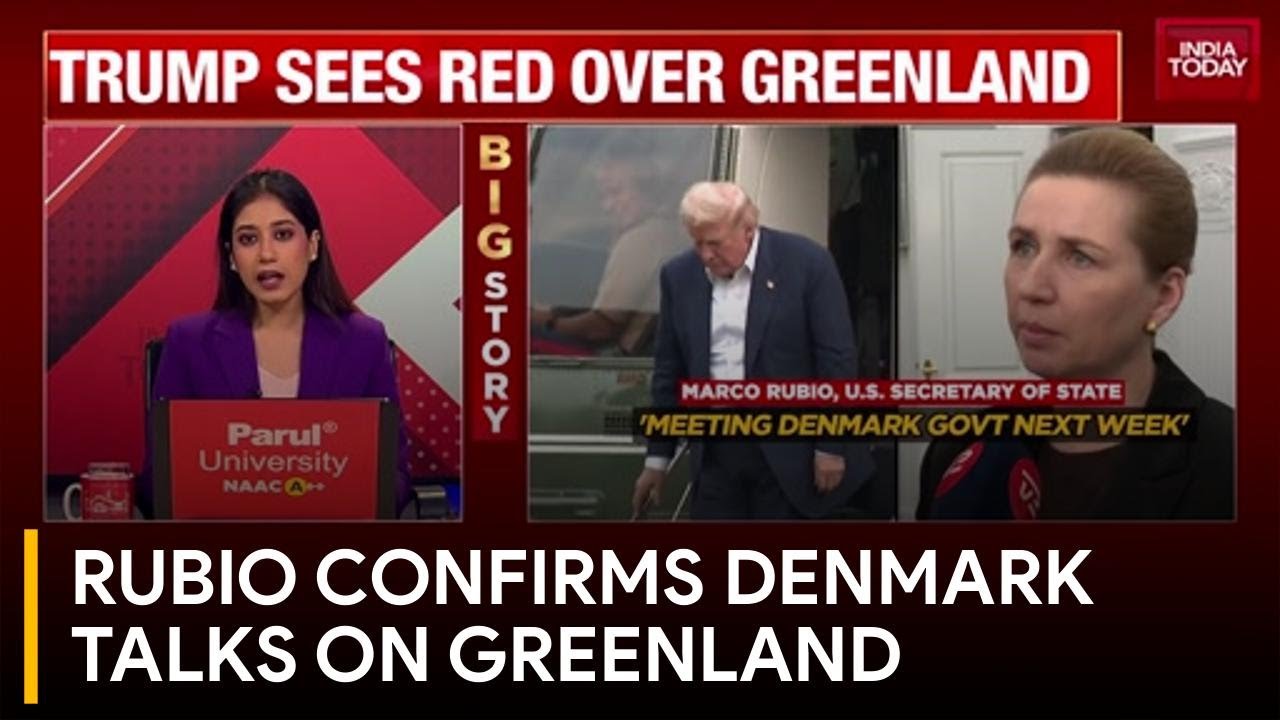
Denmark has been equally firm. Frederiksen said it “makes absolutely no sense" to discuss the United States “taking over" Greenland and insisted that the US has “no right to annex any of the three countries in the Danish kingdom." She also issued a direct warning: if the United States attacked Greenland, “everything stops", including NATO’s security umbrella.
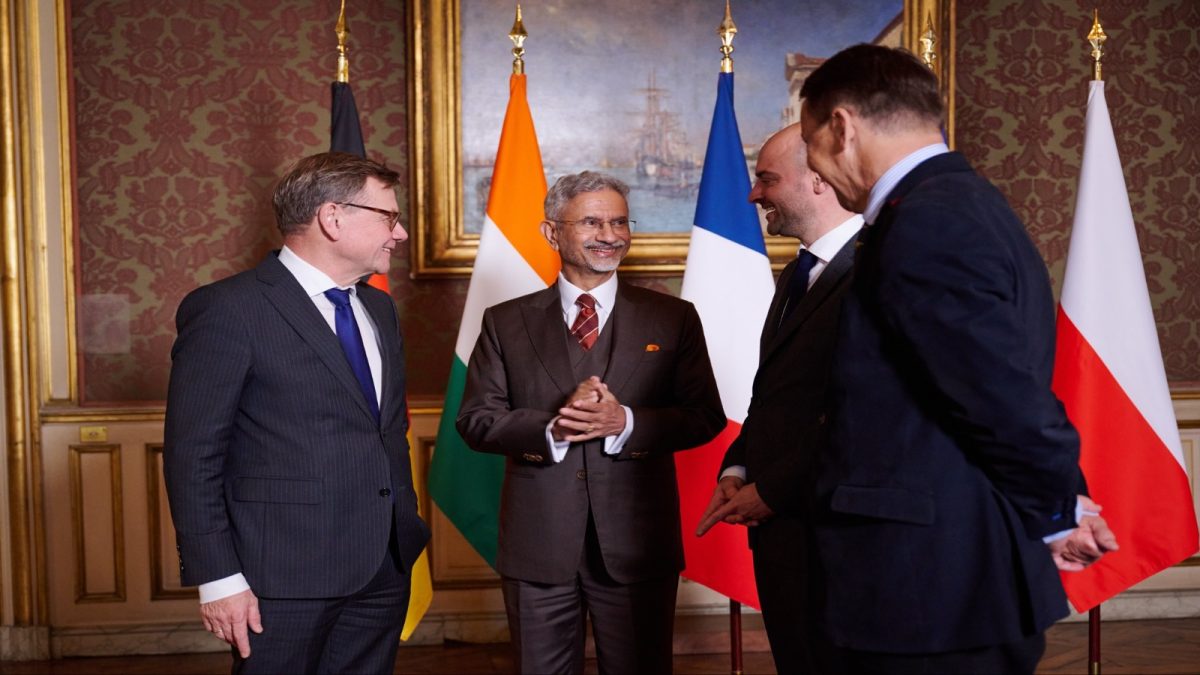
European leaders on Tuesday issued a joint statement supporting Denmark and Greenland. The statement emphasised that “Greenland belongs to its people" and that decisions about the island must be made only by Denmark and Greenland.
“Greenland belongs to its people. It is for Denmark and Greenland, and them only, to decide on matters concerning Denmark and Greenland," said a joint statement issued by the leaders of France, Britain, Germany, Italy, Poland, Spain, and Denmark. Canada and the Netherlands also backed the statement.
The leaders said security in the Arctic must be achieved collectively with NATO allies, including the United States. “NATO has made clear that the Arctic region is a priority and European Allies are stepping up," the statement said.
Public opinion reflects this position. Polling reported by Reuters showed that 85 per cent of Greenlanders oppose joining the United States.
Could The US Use Military Force? The NATO Consequences
Trump has repeatedly declined to rule out using force. White House said the administration was “discussing a range of options" to acquire Greenland and that military options were not excluded.
White House Press Secretary Karoline Leavitt said that “acquiring Greenland is a national security priority of the United States," to deter adversaries like Russia and China. “The president and his team are discussing a range of options to pursue this important foreign policy goal, and of course, utilising the US military is always an option at the commander in chief’s disposal," she said.
For Denmark, the threat is existential. Danish Prime Minister Mette Frederiksen said that the United States has “no right to annex" any part of the Danish kingdom and warned that if the US were to take military action against Greenland, “everything stops, including NATO and thus the security that has been provided since the end of World War II."
European leaders backed Denmark’s position, stressing that Arctic security must be handled collectively.
What Do Greenlanders Want? Autonomy Over Annexation
Greenland’s political landscape is shaped by its long struggle for autonomy. Incorporated into Denmark in 1953, the island gained home rule in 1979 and self-government in 2009, although Denmark retains control over defence, foreign affairs and monetary policy.
Many Greenlandic parties support the idea of eventual independence from Denmark, but that does not translate into support for American rule. Nielsen has affirmed that discussions about the island’s future must take place “through the proper channels" and with respect for international law.
Across the island, the position is clear: Greenlanders overwhelmingly reject US control, and leaders in both Nuuk and Copenhagen insist that the island’s future cannot be shaped by external pressure or covert operations.
First Published:
January 07, 2026, 09:48 IST
News explainers The Battle Over Greenland: Why Trump Wants The Arctic Island And Why Denmark Is Pushing Back
Disclaimer: Comments reflect users’ views, not News18’s. Please keep discussions respectful and constructive. Abusive, defamatory, or illegal comments will be removed. News18 may disable any comment at its discretion. By posting, you agree to our Terms of Use and Privacy Policy.
Read More