1 hour ago
Pakistan accused India of using terrorism allegations to justify holding the Indus Waters Treaty in abeyance. It said shared rivers cannot be turned into political leverage and warned of treaty violations.

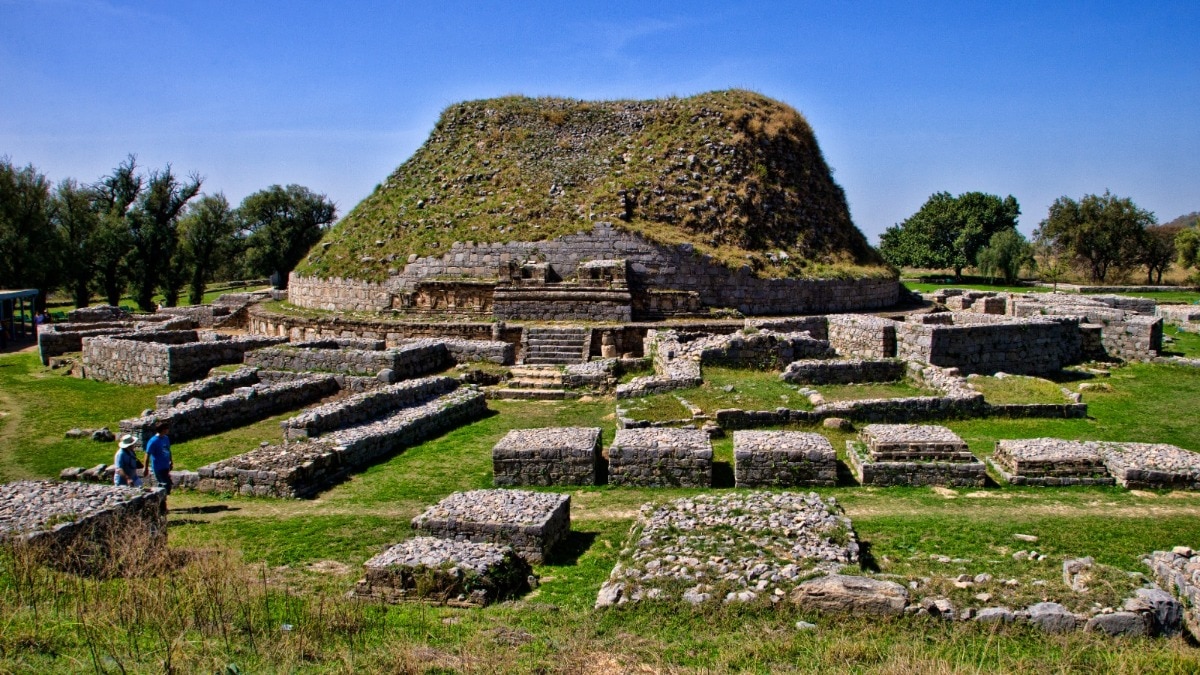
Stock photo used for illustration

Islamabad,UPDATED: Jul 2, 2026 19:52 IST
Pakistan has rejected what it called an Indian attempt to control shared rivers by treating water as a "strategic asset", particularly in the case of the Indus basin. The remarks came from Foreign Office spokesperson Tahir Andrabi during his weekly press briefing, in response to a question on India’s decision to place the Indus Waters Treaty in "abeyance".
Andrabi said Pakistan rejected "India's attempt to invoke baseless allegations of terrorism as a pretext for placing the Indus Waters Treaty (IWT) in abeyance and obstructing the lawful flow of the Pakistani share". He said the issue was not terrorism, but what he described as a growing tendency in the Indian leadership to treat a shared international river system as something that could be controlled, withheld or diverted.
India took a series of punitive measures against Pakistan a day after last year’s Pahalgam terror attack on April 22. One of the major steps was placing in "abeyance" the 1960 Indus Waters Treaty, which has governed the distribution and use of the Indus river and its tributaries since then.
"Let this be very clear: the real issue is not terrorism. The real issue is the growing disposition within the Indian leadership to treat a shared international river system as a strategic asset that can be controlled, withheld or diverted at will," Andrabi alleged. He added that water was not a tool of coercion or political pressure, and said any attempt to deny Pakistan its legitimate share under the treaty would amount to a clear violation of the international legal obligations undertaken by India.
Under the treaty, brokered by the World Bank, Pakistan received the entire flows from the three western rivers — Chenab, Jhelum and Indus — while India got complete rights over the three eastern rivers — Sutlej, Beas and Ravi.
Andrabi also referred to a seminar held in Islamabad on Tuesday titled " Seminar on Indus Waters Treaty: An Instrument of Peace and Regional Stability", and said participants supported the treaty and "rejected weaponisation of water". He also quoted Deputy Prime Minister and Foreign Minister Ishaq Dar as saying at the seminar that the treaty could not be suspended or terminated under any pretext, and that India’s move to place it in abeyance was "illegal, unilateral and without any basis".
When asked whether the seminar would help prevent Pakistan from becoming barren land, Andrabi said, "No country can do that. Not India, not any other country has the power to do that." Overall, Pakistan used the briefing and the seminar to reiterate its opposition to India’s move on the Indus Waters Treaty and to underline its position that water cannot be used as political pressure.
With PTI Inputs
- Ends
Published By:
India Today Web Desk
Published On:
Jul 2, 2026 19:52 IST