4 hours ago
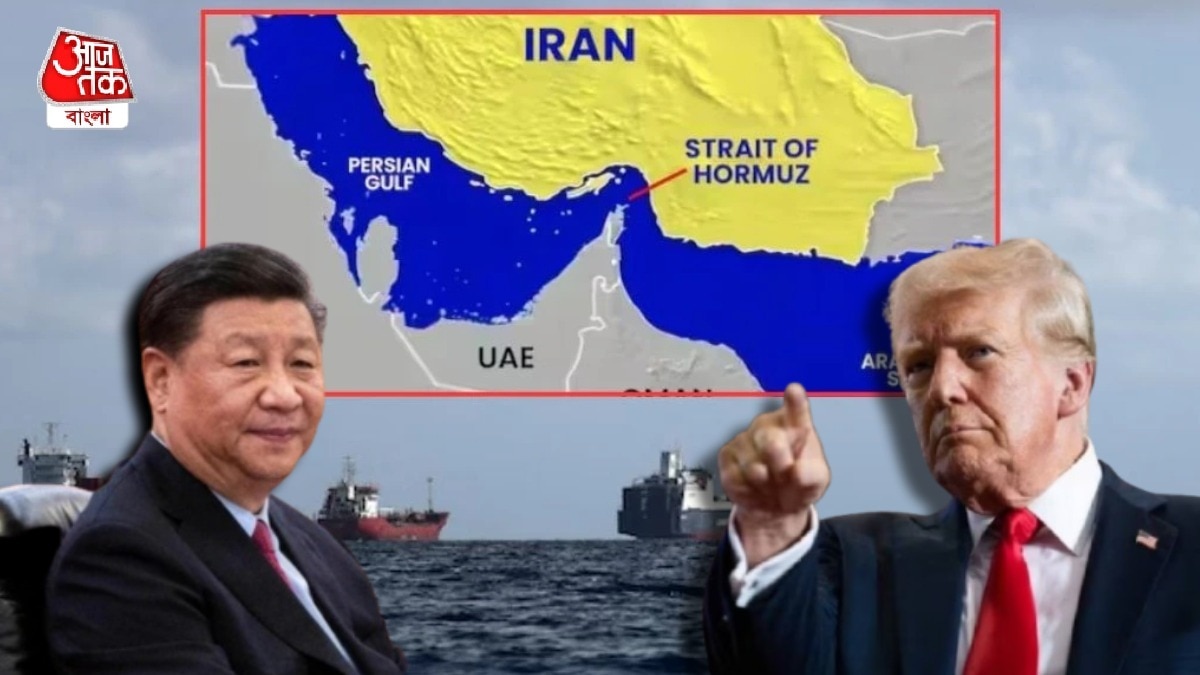
For nearly 40 days, the war in Iran has seen US air power on full display. Since February 28, Operation Epic Fury has seen sustained American strikes targeting 13,000 targets, including Iran’s military assets and critical infrastructure. Yet despite this dominance, Iranian air defences, along with missile and drone attacks, have continued to inflict damage. They include the Triton drone, the US's costliest air asset loss, AWACS and F-35 jets.
By mid-April, the US had lost at least 39 military aircraft, with around 10 more damaged. The CSIS estimates the US suffered at least $1.4 billion worth of combat losses and infrastructure damage in just the first six days of the fighting. Since April 1, the US has lost 24 MQ-9 Reaper drones to Iran amid escalating tensions around the Strait of Hormuz, reported news agency ANI quoting CBS News. The report added that these losses amount to an estimated $720 million.
While unmanned systems account for most of the attrition, the hit on high-value manned and support aircraft has amplified both financial and operational costs. Notably, these losses surpass those recorded in past large-scale US air campaigns in Libya and Iraq—though analysts caution this may reflect the far higher operational tempo in Iran compared to previous conflicts.
COSTLIEST SINGLE US ASSET LOST: MQ-4C TRITON
The Iran war saw the US lose one of its most advanced and expensive surveillance drones, the MQ-4C Triton, in the Persian Gulf, amid the war in Iran.
A single Triton drone, which is a high-altitude, long-endurance maritime surveillance unmanned aircraft, costs around $200–240 million. This is approximately twice the price of two fifth generation Lockheed Martin F-35 fighter jets, upgraded versions of which cost nearly $100 million.
The MQ-4C drone was reportedly missing after sending out an emergency signal "code 7700 alert" during an operation near the Strait of Hormuz on April 9. The United States Naval Command confirmed the loss of one MQ-4C in its mishap summary released on Tuesday.
MQ-9 REAPERS SUFFERED HEAVY ATTRITION
The MQ-9 Reaper has borne the brunt numerically. Entering service in 2007 and costing up to $30 million per unit, these medium-altitude, long-endurance UAVs are the backbone of US strike and surveillance operations.
By early April 2026, total losses reached 24 MQ-9 Reapers destroyed (many around Shiraz and Kish Island), primarily from Iranian surface-to-air missiles or ground strikes, reported CBS News. These medium-altitude drones, used for reconnaissance and precision strikes with Hellfire missiles, proved vulnerable to layered defences.
According to the CBS News report, cumulative direct costs for the Reaper losses alone exceed $720 million.
F-35 STRUCK BY IRANIAN GROUND FIRE; FIRST COMBAT LOSS
The F-35 Lightning II—among the most advanced stealth fighters ever built—has also faced unexpected challenges. Costing up to $100 million per aircraft, it has long been marketed as highly survivable in contested environments.
This perception, however, has received a browbeating. On March 19, CNN reported that a USAF F-35 was forced to make an emergency landing at a US air base in the Middle East after it was struck by what is believed to be Iranian fire, citing unnamed sources.
In any case, this marks the first time that an F-35, which entered service 10 years ago, has been hit by enemy ground fire.
Iran also claimed to have hit and downed a second F-35 on April 3, although the US has so far denied that particular claim.
AT LEAST FOUR F-15Es LOST SO FAR
The F-15E Strike Eagle is an updated variant of the F-15 Eagle capable of both air-to-air and ground attack roles.
Over the course of the war, the Strike Eagle has suffered multiple setbacks. On the night of March 1, three F-15Es were shot down over Kuwait in a friendly-fire incident during engagements with all six crew members ejected safely. A Kuwaiti F/A-18 was reportedly the source.
And on April 3, 2026, a fourth F-15E was downed by Iranian air defences over western Iran; both crews ejected and were eventually recovered in a daring Combat Search and Rescue (CSAR) mission.
With a brand-new F-15EX costing up to $100 million per unit, these losses represented up to $400 million in direct costs.
US LOST ITS FLYING PETROL PUMP: THE KC-135 AERIAL REFUELLER
The KC-135 Stratotanker is an American air-to-air refuelling aircraft derived from the commercial Boeing 707 aircraft that first entered service back in 1957.
For all intents and purposes, it is a flying petrol pump designed to extend the range of other US warplanes. The Stratotanker has a long history of military service dating back to the Vietnam War. Note, no new KC-135 has been produced since 1965.
On March 12, two KC-135s collided mid-air over western Iraq (not due to hostile action); one crashed, killing all six crew members, while the second made an emergency landing in Tel Aviv.
Iranian missile strikes on March 13 and 27 damaged or destroyed at least eight additional KC-135s at Prince Sultan Air Base in Saudi Arabia. There are no KC-135s currently in production. Its replacement, the KC-146 Pegasus, costs about $300 million a unit.
A-10 WARTHOG GROUND ATTACK AIRCRAFT STRUCK DOWN BY IRANIAN FIRE
On April 3, the same day the fourth F-15E was shot down, an A-10 Warthog ground-attack aircraft was lost near the Strait of Hormuz, possibly while supporting operations against Iranian assets.
The pilot managed to fly their stricken war bird into Kuwaiti airspace before ejecting and being rescued.
Though the older airframe carries a lower replacement cost at up to $30 million, its loss adds pressure on ground support capabilities in an already contested battlespace.
E-3 SENTRY FLYING RADAR DESTROYED IN IRAN MISSILE STRIKE
On March 27, during an Iranian missile and drone attack on Prince Sultan Air Base, at least one E-3 Sentry airborne warning and control system was destroyed (with another reportedly damaged).
The E-3 Sentry is, for all intents and purposes, a flying radar, used for detecting enemy aircraft and munitions as well as coordinating friendly aircraft.
There are no E-3 Sentry's in production and only 16 in service across the world. Its replacement, the E-5 Wedgetail, costs about $700 million a unit.
AIRCRAFT LOST DURING F-15E PILOT RESCUE
In addition to the aircraft and drone lost to accidents and Iranian air defences, the US also lost a decent number of fixed-wing aircraft and helicopters during the CSAR mission to rescue the downed F-15E Weapons Systems Officer.
According to a report by Reuters, US Special Forces destroyed two MC-130J Commando-II aircraft which had landed in rugged terrain south of Tehran carrying SpecOps personnel as part of the CSAR mission. The aircraft were destroyed after failing to take off in order to avoid their capture. A single MC-130 costs up to $120 million.
US Special Forces also destroyed four AH-6 Little Bird helicopters in order to avoid them falling into Iranian hands while they were rescuing one of the crew members of the F-15 jet from Iranian territory. These small choppers can cost up to $7.5 million per unit.
Taken together, these losses underscore a critical reality: even overwhelming air superiority no longer guarantees immunity from attrition. Iran's layered defences, asymmetric tactics, and willingness to target high-value assets have imposed real, and very expensive costs on US operations.
- Ends
Published By:
Shounak Sanyal
Published On:
Apr 16, 2026 14:56 IST
Tune In