1 month ago
This year's elections in Bangladesh on Thursday are the most consequential, not only for Dhaka but for India as well. It comes following a turbulent 18 months that saw the fall of the Sheikh Hasina regime and an interim government under Muhammad Yunus take charge. It saw ties with India reach an all-time low. Who are the key players? What do the elections mean for India?
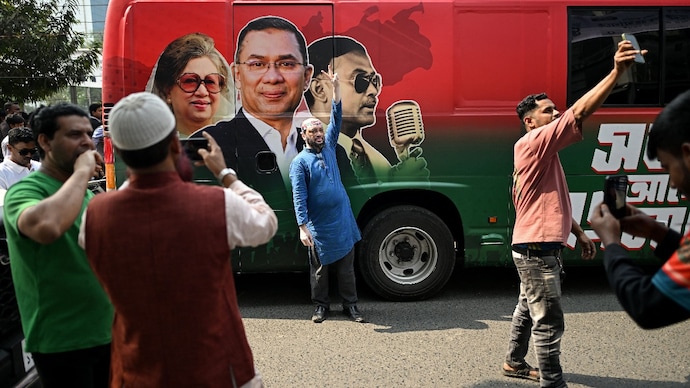
Bangladesh elections: The elections will largely be a two-way contest between the BNP and the Jamaat-e-Islami
Elections in a country with which it shares the longest land border with any of its neighbours are bound to be watched closely by India. However, this year's elections in Bangladesh on Thursday are the most consequential for India as well as for Dhaka itself. A turbulent 18 months under interim chief Muhammad Yunus, following the ouster of Awami League's Sheikh Hasina in a bloody student-led uprising, have taken ties with India to an all-time low. Its biggest gainers have been China and Pakistan. In such a scenario, the elections could reshape South Asia's balance of power as well as restore stability in a nation wrecked by unrest.
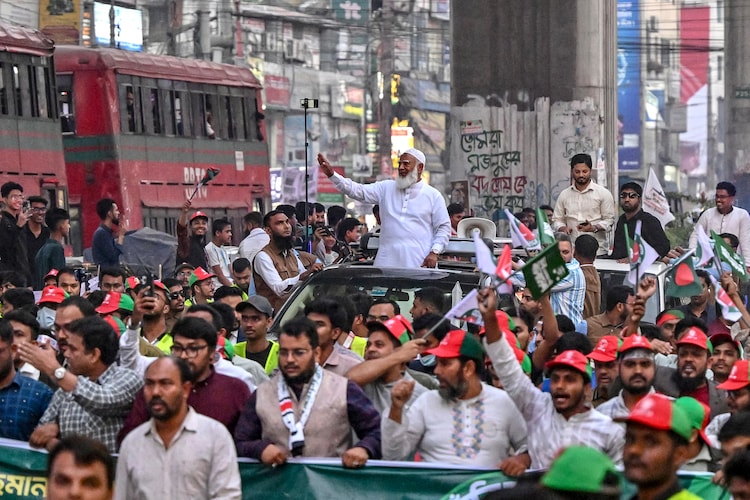
For India, the scenes in Bangladesh's streets ahead of the upcoming polls reveal a dramatic shift from the atmosphere during the 2024 elections. The 'boat' symbol of Hasina's Awami League, which has had close ties with India, is nowhere to be found after being banned from the polls. Instead, banners bearing the sheaf of paddy symbol of the Tarique Rahman-led Bangladesh ist Party (BNP) and 'scales' of its challenger and one-time ally, the Jamaat-e-Islami, hang from poles and trees.
WHO ARE KEY PLAYERS? WHEN WILL WE KNOW RESULTS?
In fact, this is the first election in nearly three decades that Bangladesh's begums -- Hasina and her rival Khaleda Zia (BNP) -- are not on the ballot box. While Hasina is in India, Zia passed away in December last year, propelling her son, Tarique, to lead the BNP for the first time. Tarique, who returned after 17 years in exile in London, is widely seen as the frontrunner to become the next prime minister.
India has historically had rocky ties with both BNP and the Jamaat. But, with its neighbourhood at stake, India will have to bury the hatchet with whichever party forms the government. The BNP, which has quietly moved to occupy the liberal-centrist space vacated by the Awami League, is tipped to win the polls, according to surveys. However, the Jamaat, which has joined hands with the student-led Citizen Party (NCP) and nine other parties, is snapping at its heels.
A party or coalition needs to win 151 of the 300 seats in the Jatiya Sangsad to form the government. The remaining 50 seats are reserved for women and are allocated to parties proportionally after the results, which are expected to be declared on February 13 (Friday).
However, this time the results may be delayed as Bangladesh will also hold a referendum on the 2025 July Charter, which was drafted by the Yunus government following the student protests and outlines a roadmap for constitutional amendments and new laws.
Now, you have an idea of the major players in the elections. Stay with us as we now delve into the crucial aspect of what the elections mean for India.
WHAT BANGLADESH ELECTIONS MEAN FOR INDIA?
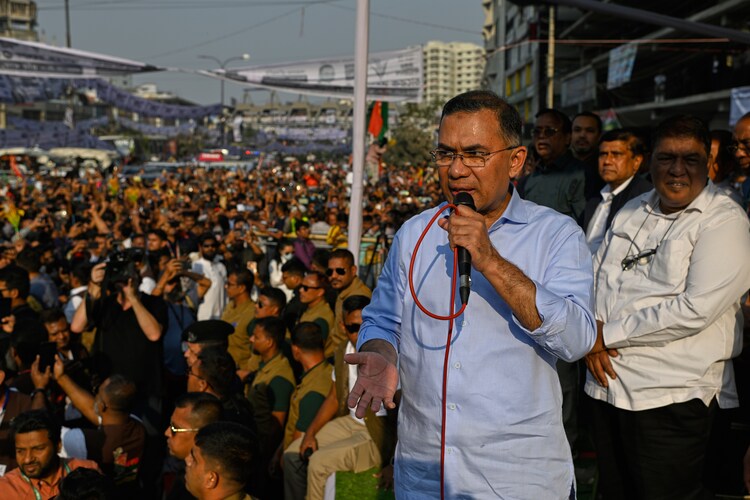
For India, Bangladesh is not just a neighbour. Five states share their borders with Bangladesh. Thus, it plays an indispensable role in border security. During Hasina's reign, she helped crack down on anti-India insurgents based in Bangladesh. On the other hand, when the BNP ruled Bangladesh in 2001-06, relations with India deteriorated amid growing instability along the border.
Moreover, Bangladesh has served as a strategic counter-balance in the subcontinent against China and Pakistan, both of whom Yunus has courted while alienating India.
Bangladesh, bordered by India on three sides and the Bay of Bengal to the south, relies on New Delhi for trade and transit. India is also Bangladesh's largest trading partner in Asia. However, restrictions on trade with each other have seen India's exports to Bangladesh decrease by over 5%.
While Bangladesh has banned Indian yarn and other goods via land routes, Delhi has suspended key transhipment access that allowed Bangladeshi exports to go via Indian ports. Readymade garment imports from Bangladesh have also been halted via land borders. Overall, the measures target nearly 42% of Bangladesh's exports to India.
The strain in ties has spilt over into the diplomatic space as well. India has put on hold most normal visa services for Bangladeshis, who were among its largest groups of medical tourists. Bangladesh, in a tit-for-tat move, has also suspended visa services at its missions in New Delhi, Agartala, and Siliguri.
INDIA'S OUTREACH TO BNP, JAMAAT
Both New Delhi and Dhaka will hope to iron out these trade and diplomatic issues after a newly elected government is in place.
The outreach has already begun.
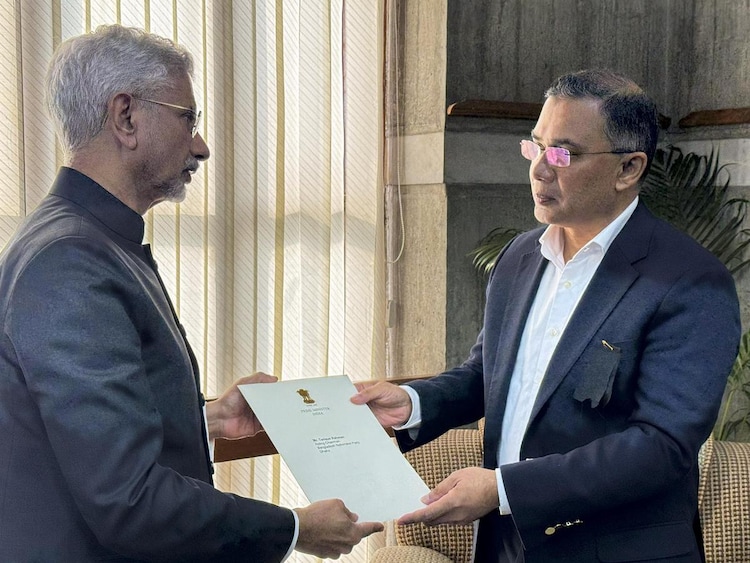
Last month, Foreign Minister S Jaishankar travelled to Dhaka for former prime minister Khaleda Zia's funeral. He also met Tarique and handed over a letter from Prime Minister Narendra Modi.
India has also engaged with the Jamaat, which has gnawed back into Bangladesh's political space after the Hasina-era ban on the party was lifted. Historically, the Jamaat, once an ally of the BNP, has acted against India's interests, encouraging extremist groups in the northeast.
A senior Jamaat leader told the BBC that Indian officials have engaged the party's leadership four times in the past year. An invitation was also sent to the Indian High Commission's Republic Day reception at a Dhaka hotel.
The warming up is reflected in the Jamaat's election manifesto. The party, widely seen as a stooge of Pakistan's ISI, specifically talked of maintaining "friendly and cooperative" relations with India. Pakistan was inexplicably absent in its manifesto.
The Jamaat has also fielded one Hindu candidate, Krishna Nandi, from Khulna for the first time in its history.
Yet, these intermittent overtures have done little to arrest the broader slide in ties. But how did relations hit rock bottom between India and Bangladesh?
HOW INDIA-BANGLADESH TIES CAME UNDER STRAIN?
Much water has flown down the Padma under Yunus, who has targeted India for sheltering Hasina despite extradition requests. A section in Bangladesh, especially the youth and Gen Z, feels that India has been intervening in the country's affairs, and it has given rise to deep anti-India sentiment. Long-standing grievances like border killings and water-sharing disputes have only added to the pressure. India, however, has never meddled in Bangladesh's internal affairs.
Adding to India's woes has been Yunus's outreach to countries that have historically been hostile to Delhi -- China and Pakistan. In fact, Yunus even made Beijing his first port of call in 2025, a break from tradition. However, what rankled Delhi was Yunus referring to India's northeast region as "landlocked" and calling on China to expand its control in the region.
Not one to give an inch, China has moved swiftly to occupy the space left by India. Presently, China is involved in several high-profile infrastructure projects in Bangladesh, including helping in the revival of the Lalmonirhat airbase in Rangpur, which is close to India's Chicken's Neck -- the narrow land strip connecting the mainland to the northeast.
Besides, China is also helping in the modernisation of the Mongla Port -- Bangladesh's second-largest seaport -- and a water management project along the River Teesta. More recently, the countries signed a key defence deal for a drone plant at a northern airbase near India.
All throughout, India has adopted a wait-and-watch policy and has not commented on the developments designed to provoke it.
WARMING UP WITH PAKISTAN
Bangladesh's engagement with Pakistan has been particularly concerning, with recent months seeing a flurry of visits by Islamabad's military leadership to Dhaka. This is the first time that the countries have engaged so closely since Bangladesh's secession from Pakistan in 1971.
However, for Bangladesh, all the atrocities committed by Pakistan are now passe. The countries recently resumed direct flights after 14 years and also established direct sea links between Chittagong and Karachi.
Dhaka and Islamabad are eyeing defence cooperation, with reports suggesting that Bangladesh was considering procuring the JF-17 fighter aircraft. The jet is jointly produced by China and Pakistan.
On the domestic front, Yunus has given space to extremist leaders who have openly threatened to cut off Chicken's Neck from India and given calls to set Delhi on fire. The anti-India sentiment escalated after the murder of radical leader Sharif Osman Hadi, one of the student leaders who spearheaded the protests against Hasina.
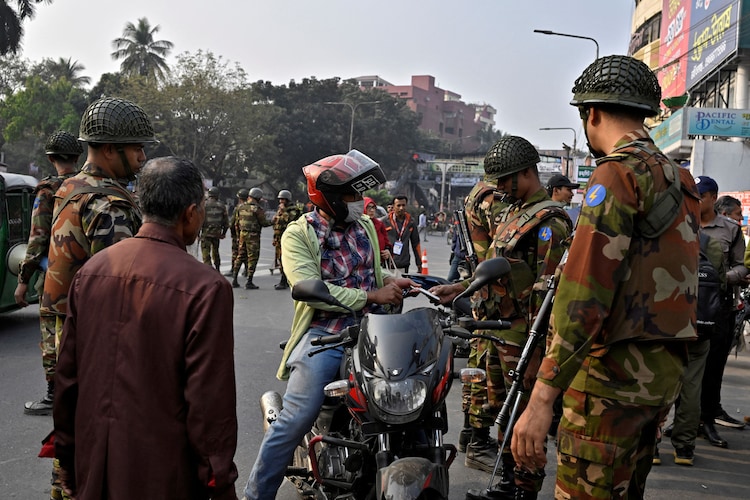
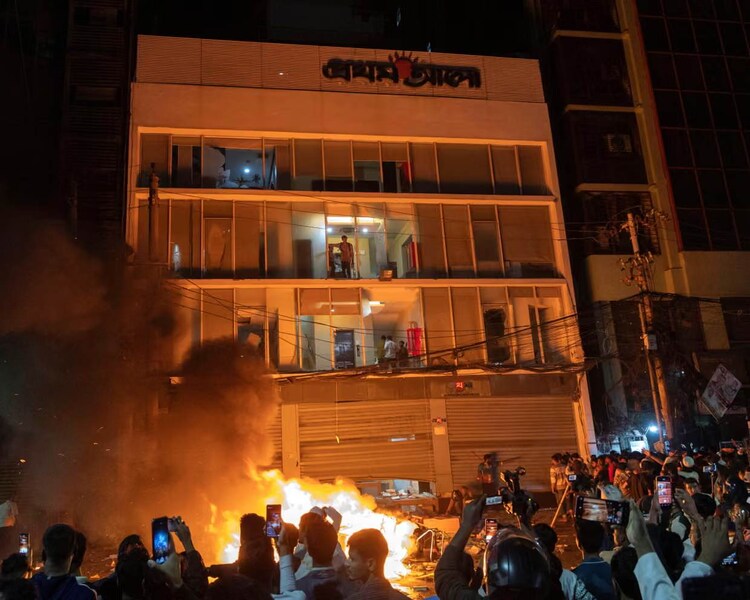
A section believed that Hadi's killers fled to India after the incident. Hadi's death unleashed another round of violence in Bangladesh, which saw media houses being set on fire, cultural sites being vandalised, and Indian missions being targeted.
Attacks on minorities, including Bangladesh's 13 million-strong Hindu population, further exacerbated tensions. Matters came to a head when a garment worker, Dipu Chandra Das, was brutally lynched over allegations of blasphemy. It invited global criticism. Since then, attacks on Hindus have not stopped in Bangladesh.
WHAT LIES AHEAD FOR INDIA?
Now, coming to our conclusion.
India would have obviously preferred the Awami League to be leading the next government, with or without Hasina. But the reality is that the Awami League is not going to regain its lost political space anytime soon. Its best bet remains Tarique Rahman's BNP, seen as a more democratic liberal option. But, at the same time, the Jamaat has also softened its tone towards India.
However, whichever party comes to power, the ties with India will, in part, be dictated by the thorny issue of Hasina's extradition. It remains to be seen what New Delhi's next move will be with respect to Hasina.
Geopolitical experts maintain that a decisive result in the elections, instead of a fractured outcome, was vital for restoring stability in Bangladesh, which has been plagued by months of unrest and major industries, including the garments sector, facing significant disruptions.
- Ends
Published By:
Abhishek De
Published On:
Feb 12, 2026
Tune In