1 hour ago
Nearly 3 million workers to receive a 4.75% pay rise

Patrick Commins
Nearly 3 million workers will receive a 4.75% pay rise after the Fair Work Commission handed down its annual minimum wage decision.
Unions had demanded a higher 6% pay increase after last month’s budget projected inflation reaching 5% in the year to June. A peak employers’ association, the Australian Chamber of Commerce and Industry, was calling for a 3.5% increase.
The government estimates that fewer than 80,000 Australians are paid the current national minimum wage of $24.95 an hour, or $948 for a 38-hour working week.
But the change in the minimum wage affects about 2.8 million employees who have their pay set by an modern award.
Cost of living has been the No 1 issue weighing on Australian households since inflation tore through the economy in the wake of the Covid-19 lockdowns.
The previous minimum wage increase was 3.5% for 2025-26.
Inflation was 4.2% in the year to April, according to the latest Australian Bureau of Statistics figures, and the budget also predicted consumer price growth could push beyond 5% should the Middle East conflict extend further and oil prices climb higher for longer.
With the Reserve Bank warning it may have to hike interest rates further to squash any signs an inflationary mindset has taken hold of the country, Jim Chalmers, the treasurer, has called for a “real” wage increase, but added that it also needed to be “sustainable”.
Key events

Melissa Davey
Department of health defends internal testing of aged care algorithm
Independent Senator David Pocock had grilled department of health and aged care officials in Senate estimates about creating an algorithm used to assess the home care needs of older Australians in-house, and testing it internally without consulting any aged care advocates or experts about the final version of the algorithm.
The department confirmed it validated the algorithm in-house.
Department officials said while the final algorithm was not consulted on, it had undergone many reiterations and assessments before being finalised.
“We have tended to move away from kind of end point evaluation of the final product to think about what are all the steps on the way through that have led to give confidence that something leads to the right outcome,” Pocock was told.
Greg Pugh from the department of health and aged care said the department ran the algorithm through a process of refinement on more than 200,000 completed assessments over 2024 and 2025... “all of that work ensured that those algorithms would be achieving those reliable outcomes when support at home commenced,” he said.
Pocock said the current algorithm in its final, current form should also have been clinically assessed.
He gave the example of an experienced geriatrician who contacted him about a patient with significant visual impairment who was assessed by the algorithm as needing a level two support package, “but any experienced clinician could see that the man needed a level four”.
Because of inadequate support, the man’s daughter has now moved in with him, Pocock said, “and while he waits for reassessment, she’s using up her long service leave because he’s obviously now at significant risk of injury”.
Pugh said it was not appropriate to “readily dismiss all of the professional clinical work” that went into designing the assessment and algorithm before the final version was implemented.

Tom McIlroy
Former Labor minister launches public Aukus inquiry
The former Labor minister Peter Garrett has launched the public inquiry into the Aukus nuclear submarine agreement, alongside independent MPs David Pocock and Andrew Wilkie.
Garrett says he sees no evidence that the US military industrial base has sufficient output to build submarines for Australia – putting at risk the costly deal with Australia and the UK.
Garrett will have four fellow commissioners for the five-month inquiry: former chief of defence Chris Barrie, former Western Australian premier and Keating government minister Carmen Lawrence, as well as the Australia Institute’s co-CEO Leanne Minshull and Karina Lester, a Yankunytjatjara community leader.
The inquiry is due to report by the end of October.
Patrick Commins
Fair Work Commission president ‘regrets’ no real pay increase for award workers
The Fair Work Commission’s president, Justice Adam Hatcher, described it as “regrettable” that this morning’s minimum wage decision for a 4.75% increase could not deliver a real pay rise for the millions of workers on award wages.
Hatcher said “a fundamental consideration” was that most employees on modern awards “are still in the position that their wage rates in real terms remain lower than what they were in July 2021 prior to the post pandemic spike in inflation”.
The real wage gap … has particularly affected the living standards of the low paid and their capacity to meet their needs.
This was the background to the higher 6% increase in the pay rates of roughly 100,000 employees on the very lowest wages.
The RBA forecasts inflation will hit 4.8% by June, and Hatcher said “it would now take a wage increase of well over 5% to close the real wage gap”.
We have concluded, regrettably, that it would not be practicable or responsible in the current uncertain circumstances to award a real wage increase for employees reliant on modern award wage rates that would be sufficient to close the real wage gap entirely,” he said.
However, we consider that we should at least ensure that modern award-related employees generally are not worse off in real terms than they were as at one July 2025, and that we should also take additional measures to protect the position of the very lowest paid workers under modern awards.
Solomon Islands prime minister attends welcome to country in Canberra
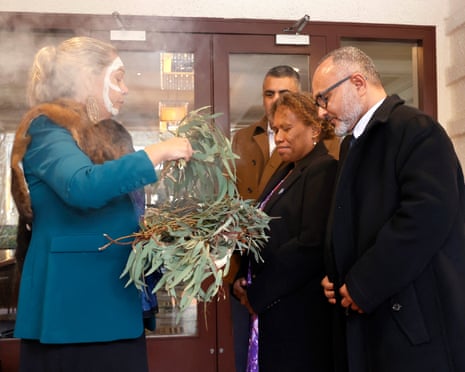
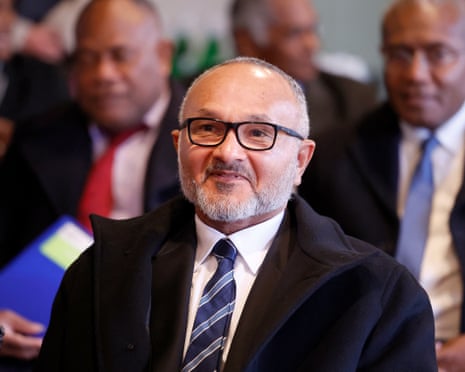
The Solomon Islands prime minister, Matthew Wale, is in Canberra this morning ahead of high-level meetings and has attended a welcome to country ceremony.
Wale replaced the former PM Jeremiah Manele, who was ousted from power in a no-confidence vote earlier this month. Wale has long advocated a more cautious approach on ties with Beijing and is expected to push for a closer security relationship with Australia and the United States in office.
He will attend talks with the prime minister, Anthony Albanese, on Wednesday.
Melissa Davey
No consultation before aged care algorithm was implemented
Greg Pugh, from the Department of Health and Aged care, confirmed in Senate estimates that no aged care provider, advocacy group or expert was consulted when the government made the decision to remove the ability for aged care assessors to override the outcomes of an aged care assessment tool.
The Integrated Assessment Tool (IAT) involves an assessor asking an older person questions about their physical, social and personal circumstances. An algorithm then determines the level of support and funding for home support that person is entitled to.
The department’s user manual states that assessors must accept the IAT’s classification outcome when assigning home support, with assessors telling Guardian Australia their role had effectively been reduced to data entry.
Aged care assessors said people are being under-assessed by the algorithm and are not getting the level of support needed, and that they have no ability to override the algorithm when it makes a wrong assessment. This is leaving people with inadequate care, they said.
Asked by Greens Senator Penny Allman-Payne whether the department consulted anyone on removing human override from the algorithm, Pugh said:
In terms of if we ever consulted one individual provider or older person about the removal of the override, I believe the answer that is no.
Liberal Senator Anne Ruston asked whether the algorithm in its current form was trialled by the department. Department staff confirmed it was not tested, but that the algorithm evolved on the basis of being trialed and tested internally in earlier versions.
‘I’ll never begrudge a pay rise’, Paterson says
James Paterson says workers deserve a pay rise, but says that increasing wages at this rate is not sustainable, because inflation at this rate is unsustainable.
Speaking to Sky News, the shadow defence minister said workers are “treading water” and the decision to increase the minimum and award wages by 4.75% over the next year is just to stop them from going backwards.
I’ll never begrudge a pay rise for Australian workers and I understand why in Labor’s high-inflation environment this is necessary to stop Australian workers going even further backwards.
The core of the problem is out-of-control inflation and we need to get that urgently under control because over the long term it’s not sustainable to keep increasing wages at this kind of rate because it’s not sustainable to have inflation at this rate.
He takes aim at the government over its spending and tells Labor to reign it in to slow down inflation (he doesn’t specify exactly where).
Greens say government grants for in-home childcare a ‘Bandaid solution’
The government has announced $5m in grants for in-home childcare, as nearly a third of the sector faces the risk of shutting down.
The little-known taxpayer supported program is a last resort service used by about 800 families with children who cannot access mainstream care, including because they live in remote locations, have serious illness or a disability, or because their parents work unusual hours.
But the sector isn’t eligible for government-funded pay rises for workers in mainstream childcare centres, which means that families are absorbing the costs of worker wage rises.
Instead the government has said a new “grant opportunity” will help services with ongoing operational costs and support financial viability. The minister for early childhood education, Jess Walsh, says:
I know that In Home Care is important to the around 800 families who use it and who, for a range of reasons, can’t participate in centre-based care. This grant will mean providers can keep delivering quality care for these families.
But the Greens have called the grants a “Bandaid solution”. Senator Steph Hodgins-May accused the government of “being caught on the back foot and … scrambling to avoid criticism”:
This is a Bandaid solution designed to distract families from their failure to properly support in-home care … This one-off grant doesn’t provide the long-term solution the sector deserves.

Cait Kelly
‘Human error’ behind anti-Liberal press release, employment department says
In Senate estimates, the Department of Employment and Workplace Relations has been asked why an anti-Liberal press release was up on the department’s website for over 48 hours.
The department said it came from the minister’s office, and there was a process error that allowed it to go up.
The department can’t say what communication happened between the minister’s office and the staff member for it to go up on the department’s website. The chief operating officer, Catherine Rule:
It was human error. By a junior staff member that lead to it being published. Once we became aware, it was removed. We will have had discussions with the staff member involved. This is not our usual practice.
Patrick Commins
Lowest paid workers get 6% boost to their wages
About 100,000 of the country’s lowest paid employees will actually be getting a 6% increase in their pay as a result of this morning’s minimum wage decision.
Announcing the 4.75% decision this morning applicable to the roughly 2.8m workers on award wages, the Fair Work Commission’s president, Justice Adam Hatcher, announced the lowest ongoing wage rate for employees will climb from nearly $24.95 per hour, to $26.44 - a lift of just under 6%.
Hatcher said this year’s decision, which applies from 1 July, was “particularly challenging” in the context of surging fuel prices adding to already existing inflationary pressures.
Hatcher pointed that falling living standards had hit the lowest paid the hardest, justifying what he called “additional measures” to protect more vulnerable employees.
The higher increase for the lowest paid reflected a “structural adjustment” to pay classifications, he said.
Nearly 3 million workers to receive a 4.75% pay rise
Patrick Commins
Nearly 3 million workers will receive a 4.75% pay rise after the Fair Work Commission handed down its annual minimum wage decision.
Unions had demanded a higher 6% pay increase after last month’s budget projected inflation reaching 5% in the year to June. A peak employers’ association, the Australian Chamber of Commerce and Industry, was calling for a 3.5% increase.
The government estimates that fewer than 80,000 Australians are paid the current national minimum wage of $24.95 an hour, or $948 for a 38-hour working week.
But the change in the minimum wage affects about 2.8 million employees who have their pay set by an modern award.
Cost of living has been the No 1 issue weighing on Australian households since inflation tore through the economy in the wake of the Covid-19 lockdowns.
The previous minimum wage increase was 3.5% for 2025-26.
Inflation was 4.2% in the year to April, according to the latest Australian Bureau of Statistics figures, and the budget also predicted consumer price growth could push beyond 5% should the Middle East conflict extend further and oil prices climb higher for longer.
With the Reserve Bank warning it may have to hike interest rates further to squash any signs an inflationary mindset has taken hold of the country, Jim Chalmers, the treasurer, has called for a “real” wage increase, but added that it also needed to be “sustainable”.

Andrew Messenger
Queensland reverses course on e-mobility legislation
Queensland’s government has announced it will roll back some of the most controversial elements of legislation cracking down on e-bikes and e-scooters – amending age limits, licensing requirements and a planned 10km/h speed limit.
Active transport user groups had criticised the legislation as unreasonably restricting access to the vehicles without any justification, particularly for disabled users. Food delivery companies and hire firms also warned during a parliamentary inquiry that the laws would affect their businesses, or even make them unviable.
Under the changes announced by the state transport minister, Brent Mickelberg, this morning, riders aged 12-17 can use e-mobility devices with parental supervision and those with a medical condition or disability who don’t have a licence will be able to use e-mobility devices under a medical exemption framework.
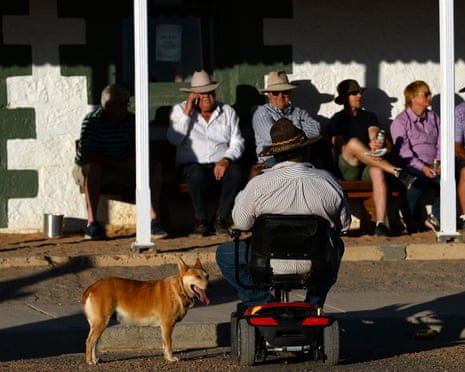
There will also be specific carveouts for recreational environments such as rail trails, Mickelberg said. The standard for compliant devices has also been eased to make devices that meet any past or future European standard legal, he said.
The speed limit will be reset to 25km/h on shared pathways or 12km/h where passing pedestrians. They represent almost all of Brisbane’s safe cycling network; many riders told the committee they were concerned the low speed limit could have forced them off safe protected cycling lanes on to dangerous main roads.
The laws are expected to “reduce congestion” on footpaths by allowing more e-vehicles to ride on the road, the government says. Mickelberg said:
The legislation this week will be tweaked, will be amended, to ensure that we strike the right balance.
And I’m confident that our legislation will strike the right balance of cracking down on those who do the wrong thing, while facilitating the lawful and reasonable use of e-mobility devices for those who want to do the right thing.
There are a host of new fines and punishments for e-vehicle users in the legislation, including the power to seize non-compliant vehicles, random breath testing requirements and the power to fine parents if their children rides illegally.
The legislation will pass later this week to take effect on 1 July.
Controversial mutual obligations system offline until 2027
Cait Kelly
In Senate estimates, the Department of Workplace Education and Employment has said the Targeted Compliance Framework, the IT system that runs Australia’s controversial mutual obligations regime, will be offline until 2027.
The automated IT system was illegally cancelling people’s payments.
The new department secretary, Simon Duggan, said:
By early 2027, we expect that all remaining provisions of the TCF will resume operation, namely section 42 AF relating to persistent mutual obligation failures, cancellations under section 42 AG relating to work refusal failures, and section 42 AH relating to unemployment failures while receiving a participation payment.
This timeframe reflects the greater complexity of returning these elements to lawful administration, including the need for more substantive changes to IT systems, procedures and training for human decision makers.
In the meantime, people in the employment services system are still required to meet their broader mutual obligation requirements, including attending appointments with their providers, undertaking skill-building activities, attending job interviews and accepting any offers of a suitable job as set out in their job plan.
There will be more on this during Senate estimates hearings tomorrow.
Fair Work Commission to decide on minimum wage increase
The Fair Work Commission will make its decision on how much to raise the minimum wage and award wages at 10am this morning.
The decision will impact around 3 million Australians, and take effect from July.
This morning, the treasurer, Jim Chalmers, said workers deserve a “decent real increase”, but the government won’t specify exactly what that should be (the same approach they’ve taken in previous years).
The trade unions are calling for a 6% increase, while business groups are calling for a 3.9% bump.
But the peak small business body has called for a temporary wage freeze, with increases to come only in December. One Nation’s Pauline Hanson has suggested there should be no increase at all this year.
The Reserve Bank expects headline inflation to hit 4.8% by the end of June and underlying inflation to hit 3.8%.
Tom McIlroy
Husic welcomes sanctions over settler violence in the West Bank
Labor MP Ed Husic has welcomed the federal government’s latest round sanctions on three Israeli individuals and four entities in response to escalating settler violence against Palestinians in the West Bank.
Husic last week called for more action against Israel, including new sanctions.
The violence we have witnessed in the Occupied Palestinian Territories has been allowed to go on too long and it’s critical the international community take a stand against it.
As someone who as urged our government to take tougher measures against this – and the Netanyahu government’s failure to observe international humanitarian law – I welcome today’s announcement as an important step … [there is] more to be done.
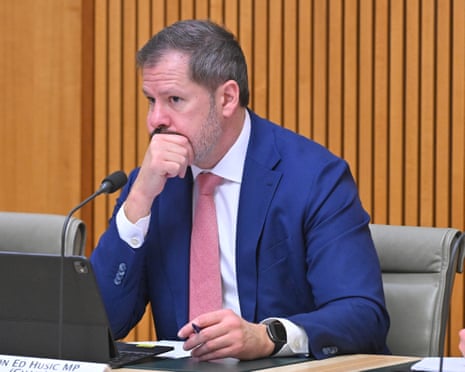
The foreign minister, Penny Wong, said the organisations would face targeted financial sanctions while the individuals will be the subject of travel bans to Australia.
Greens accuse billionaires of buying increasing political influence
Greens leader Larissa Waters is unsurprisingly unhappy with Oxfam’s analysis of rich listers showing the wealth of Australia’s billionaires increased by $25.67bn in the past year.
That’s equivalent to almost $50,000 a minute.
But she says they’re “using it to buy more political influence”, and that the major parties won’t do anything to stop them.
Billionaires have their fingerprints all over Australian politicians. The major parties aren’t interested in fixing anything, they won’t bite the hand that feeds them.
And One Nation? They’re not here to change the system, they serve the same billionaires and vested interests.