1 hour ago
Key events

Benita Kolovos
One Nation suggests Latrobe Valley for nuclear plant
Continuing on our last post on the Victorian housing debate, while most of the conversation stayed on topic, the most fiery interaction involved a back and forth between parties on energy policy.
Sonya Kilkenny was asked about property taxes and said that, unlike states such as WA, New South Wales and Queensland, Victoria did not have the “luxury” of using resource royalties to prop up its finances.
One Nation’s Warren Pickering, however, said Victoria was the “most energy-abundant” state in the country and should utilise coal and gas.
Kilkenny responded:
We are transitioning to renewables because renewables will provide certainty to the grid. They will ensure lower energy prices and deliver the jobs of the future.
Kilkenny asked Pickering what community he would propose putting a nuclear reactor in. The One Nation state leader replied:
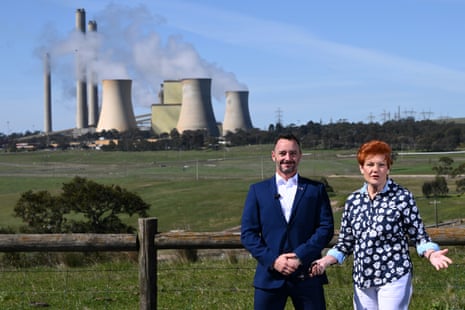
We’ll put the nuclear reactor where it makes viable sense to do so, where we’ve got existing power line infrastructure out at Loy Yang.
He received applause from the crowd, but it’s unlikely to be well received in the Latrobe Valley.
On Monday, Pickering was joined by Pauline Hanson in the region, where they announced the party would not allow Loy Yang A to close in 2035 as planned and would scrap Victoria’s 1983 ban on building nuclear power if it wins government in November.

Jordyn Beazley
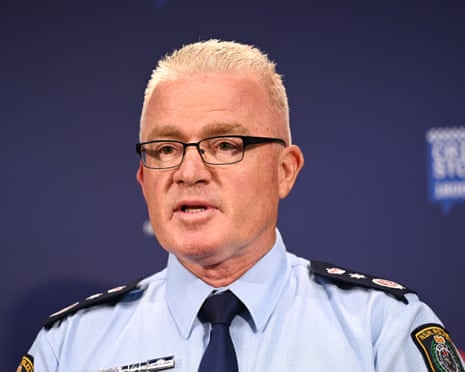
NSW police commissioner defends decision to keep sniffer dogs at music festivals
The NSW police commissioner has defended the decision to continue using drug detection dogs at music festivals, despite the government expanding access to pill testing, saying “police have a really significant role in supply reduction”.
On Wednesday the NSW government announced pill testing would resume at music festivals from October, but there will be no change to the use of sniffer dogs at music festivals.
Drug detection dogs has been found to prompt risky drug taking. Police, security guards, bag searches and sniffer dogs at music festivals can lead to riskier drug use as people may “pre-load”, or take all of their substances at once, to avoid detection.
The police commissioner, Mal Lanyon, said of the decision to continue to use drug detection dogs:
Police have a really significant role in supply reduction... The way that we use drug detection dogs at festivals is designed to make sure that we are focusing on those who want to supply drugs.
But I make it clear, drugs remain illegal and harmful, and I want anyone thinking of using drugs at a festival to understand that there can be consequences to their health.
The Redfern Legal Centre has criticised the decision, pointing to a 2019 coroner recommendation that drug detection dogs be scrapped.
The centre’s police accountability lead, Rian Terrell, said:
Having police and drug dogs at festivals where pill testing is available will deter young people from getting their pills tested, undermining the harm reduction outcomes of the scheme.”
Testing will be more effective and save more lives without drug dogs present.
Benita Kolovos
Victorian Labor use housing debate to announce 10-day planning process for small developments
We’re inching closer to the Victorian state election, which means plenty of politicians are on the event circuit.
The Australian Property Developers Association hosted the first debate this afternoon on housing, with the planning minister, Sonya Kilkenny, Coalition housing spokesperson, David Southwick, One Nation Victorian leader, Warren Pickering, and Family First’s Alex van der End subbing in after the Greens pulled out of the event.
Kilkenny kicked things off by announcing an expansion of its 10-day planning permit process to include developments of up to four homes on a block. She told the crowd:
Four homes that comply with the townhouse code will be approved in 10 days, council will not be able to object to the planning application. This is just one step in the reforms that we are delivering to ensure that we’re increasing supply so that more young Victorians ... are able to find a home close to the jobs that they want in the places they want to live, whether that is out in our greenfields or in our inner Melbourne suburbs areas that we know have been locked up for so long.
Southwick focused on the Liberals’ earlier annoucement that it would scrap the government’s target of 70% of new homes into established suburbs and 30% into growth areas, saying “wherever the market says is appropriate to build, we will build”.
Both the Liberals and One Nation said they would reduce the land tax threshold from the current level of $500,000 back to the old level of $300,000. Pickering also said he’d “roll back” windfall tax and impose a “two out, one in policy” for all regulatory requirements. He went on:
It was just baffling to me to understand how many new regulatory changes were introduced to Australian standards year after year after year with no revision of previous standards. There is so much overlap, and it’s it’s causing perpetual waste.
However, when asked which two regulations related to the housing industry he’d remove by the moderator, Michael Rowland, he couldn’t name any.
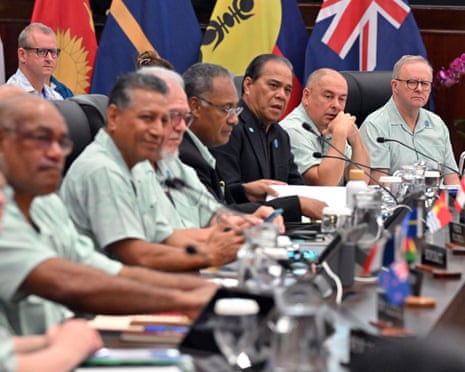
Australia and Pacific nations agree to maritime security deal to combat organised crime
Australia and Pacific nations have entered a maritime security deal to tackle increasing transnational and organised crime, including illicit drug trafficking.
The prime minister, Anthony Albanese, and Pacific leaders have agreed to Waqa Moana, a Pacific-led maritime security initiative, on Wednesday.
Under the deal, the prime minister has announced a $600m support package.
The AFP will additionally invest $49m in new counter-transnational and organised crime programs across the region, adding to the $140m the AFP has pledged to contribute over the next four years to support regional security objectives.
Albanese has also announced a department of defence investment of $312m over the next 10 years.
Albanese has welcomed the “growing capability of Pacific countries to work together to address shared security challenges”. He said:
The Pacific is our home and our family. That’s why it’s in Australia’s interests to work with our Pacific partners to combat organised crime.
For the good of every country in the region, including our own – we need to work together to stamp out the illicit drug trade.
NSW police investigate fatal shooting in Sydney’s west
New South Wales police have launched an investigation into a fatal shooting in Merrylands West in Sydney.
Emergency services were called to a home around 3.15pm after reports of a shooting.
A man believed to be in his 30s sustained a gunshot wound and was treated by paramedics but died at the scene. He is yet to be formally identified.
Three charged after suspected ketamine allegedly hidden in baby formula tin
Three people have been charged with drug offences after authorities allegedly found vacuum-sealed bags of suspected ketamine stored inside a tin of baby formula during a home search in Sydney’s south-west.
A man and woman, both aged 30, were arrested following the search where police also allegedly found another 3kg of suspected ketamine in foil packets in a suitcase and plastic container around the property.
Authorities said suspected MDMA tablets, about $30,000 cash, a replica firearm and other items suspected to be linked to drug trafficking were found.
The home search formed part of a wider federal investigation by the Australian Border Force (ABF) after officers allegedly detected ketamine and cocaine in a 26-year-old man’s luggage in July.
The Sydney couple have both been charged with five counts of drug offences each.
The 26-year-old man, from the Czech Republic, was charged with importing a commercial quantity of border-controlled drugs.
NSW police commissioner responds to footage of police officer boasting about punching Sydney anti-Herzog protester
Jordyn Beazley
The NSW police commissioner has responded to a video that emerged over the weekend that shows a police officer boasting about “punching” a protester in the head “when he was down”, saying he does not “condone” the language but he needs to “understand the context of it”.
The police body-worn camera footage, which was widely shared on social media over the weekend, revealed a male police officer telling his colleagues during the 9 February rally at Sydney town hall protesting against a visit by the Israeli president, Isaac Herzog: “I fucking pumped that cunt.”
A female officer can be heard replying, “So funny,” before the male officer says: “Then I punched him in the head when he was down.”
Guardian Australia understands the video relates to legal proceedings from a protester who was charged with assaulting police. They were one of three protesters who on Friday had the charges against them dropped.
The police commissioner, Mal Lanyon, was asked about the video on Wednesday during a press conference. He said:
The language is something that I don’t condone, but I need to understand the context of it. I think it’s appropriate that I leave that to the Lecc [Law Enforcement Conduct Commission] to actually conduct their investigations.
The police minister, Yasmin Catley, was also asked about the video during the same press confernce. She said:
I do not condone that language whatsoever. But what I would ask is, do we not all agree that we should have an independent investigation into this matter, and don’t we all agree that that should be at arm’s length of the government and the police? Yes, we absolutely should, because that’s the right thing to do, and that’s exactly what we’re doing.
The police watchdog, the Law Enforcement Conduct Commission, is investigating allegations of police brutality at the protest after it was referred for investigation by Greens MP, Sue Higginson.
Read the full story:
Police not expecting update on sexual assault investigation linked to Sydney Swans for eight weeks
Victorian police have travelled to New South Wales this week to interview four people as part of their investigations into the sexual assault allegations linked to the Sydney Swans.
Separate to the investigation, in August five Sydney Swans players were stood down for the rest of the season for breaching the club’s standards, including drinking and bringing women back to their hotel after their round 23 win over Essendon.
Police said they spoke to four men aged between 25 and 30 this week in Sydney’s eastern suburbs.
Police said they believe they have now identified all parties who were in the room at the time of the alleged incident and are not looking for anyone further.
The investigation remains ongoing. No one has been arrested or charged in relation to the allegations.
AFP raid Melbourne property in alleged corruption probe

Nino Bucci
The Australian federal police are searching properties in Melbourne on Wednesday as part of their investigation into alleged corruption within the building industry.
An AFP spokesperson confirmed in a statement that it had executed warrants in the Melbourne suburb of Keilor.
The search warrants are part of the AFP’s response to allegations of corruption in the Victorian building industry.
There is no threat to public safety.
Further comment will be made at an appropriate time.
Last month, the premier, Ben Carroll, announced a royal commission into “the nature and extent of corruption, criminal conduct and serious misconduct in relation to major construction projects in Victoria”.

Nick Visser
That’s all for me. Achol Arok will take it from here and guide you into the evening. Take care!

Luca Ittimani
First home loan applications hit three-month high, brokers’ company says
First home buyers’ loan applications hit a three-month high in August, Loan Market reports.
The mortgage brokers’ group has previously recorded falling loan applications from all groups over the months leading up to June, in the wake of interest rate rises and the budget’s cuts to investor tax breaks.
Investor loan applications fell back to their lowest numbers so far this year in August, after a slight pickup in July, Loan Market said. Separate Reserve Bank data earlier this week showed credit growth for property investors slowed sharply in July.
First home buyers’ applications bounced back from their decline and rose 6% from July to August, Loan Market reported. We reported on early signs of this recovery last week:
While separate data on other owner-occupier applications was not reported, pre-approvals for owner-occupier loans have dropped 12.6% in August 2026 compared to the same month last year, the group said. Investors’ pre-approvals have more than halved, down 55% in August 2026 from 2025.
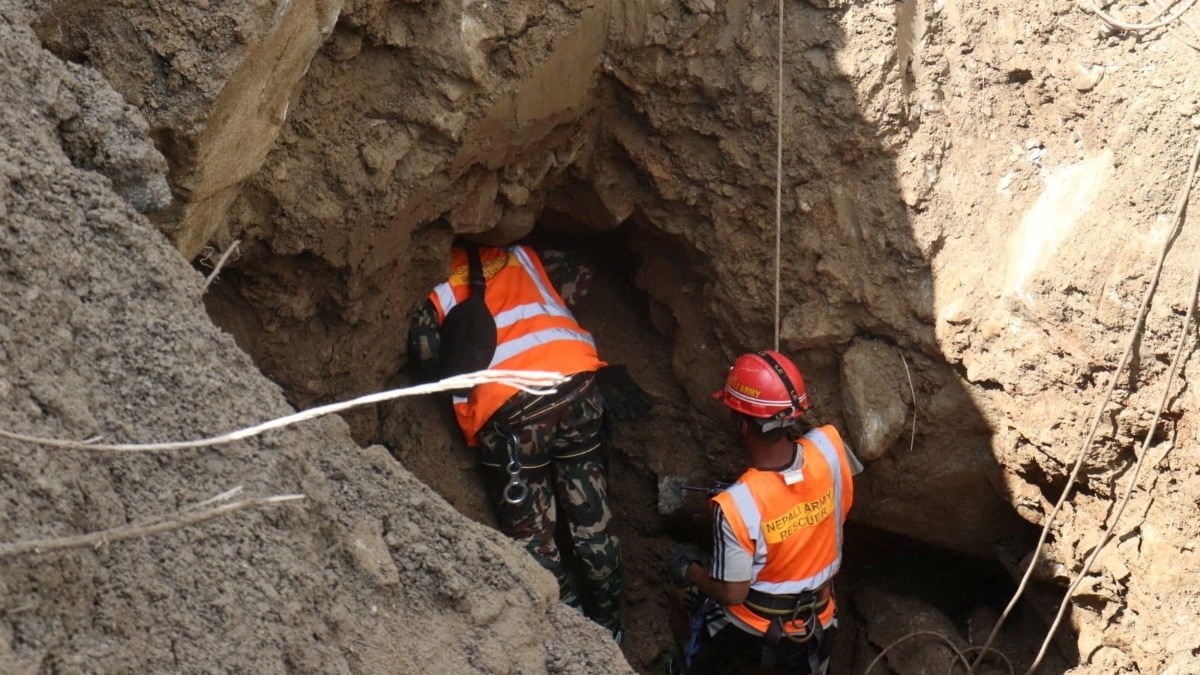
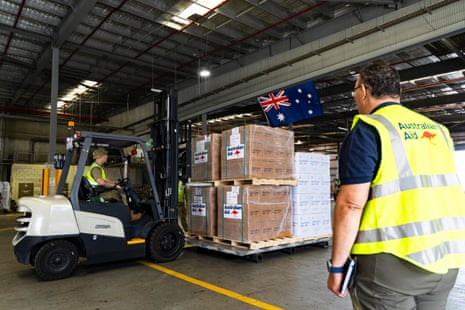
Australia to provide $8m in humanitarian and disaster relief supplies for Nepal
The Australian government is providing $8m in humanitarian support to Nepal, including nearly 1,500 hygiene kits, hundreds of menstrual kits and 2,200 solar lights with phone chargers.
An air force aircraft carrying the humanitarian and disaster relief supplies was set to arrive in Nepal today.
The plane will also carry five large community lighting towers, 432 shelter tool kits that include shovels, saws and machetes, and nearly 900 tarpaulins and rope.
There are 18 Australian response team personnel in Nepal to support the crisis response, the government says.
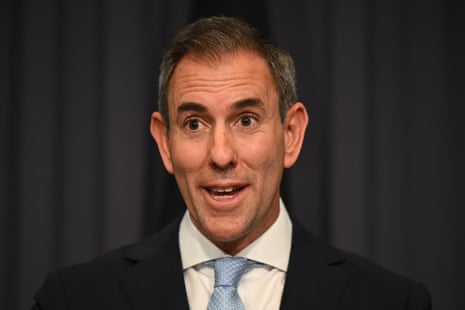
Chalmers hails ‘resilient’ economy, but experts less impressed

Patrick Commins
Here’s what Jim Chalmers, the treasurer, had to say about this morning national accounts figures which showed economic growth was weak but better than expected in the June quarter:
This is a robust result in challenging international circumstances. It shows the resilience of Australia’s economy in the face of global uncertainty and conflict.
Annual growth in Australia was as strong or stronger than every major advanced economy – equal to the United States and much stronger than the rest.
While global circumstances are challenging and people are under pressure, we’ve got a lot going for us and we can see some of this reflected in today’s figures.

And here are a couple of (less positive) early impressions from economists: Stephen Smith, a partner at Deloitte Access Economics, said:
Today’s national accounts data confirm that the Australian economy is going sideways.
Without the spending on motor vehicles, household consumption growth would have been closer to just 0.1% in the quarter – far too weak to suggest households are shrugging off cost-of-living challenges.
Today’s accounts show too little growth and too much inflation.
Brendan Rynne, chief economist at KPMG, said:
The latest national accounts data … reveals an Australian that is at the crossroads.
Growth is stalling, it is cheaper to hire people than it is to invest in capital, productivity is continuing to go backwards, wages are falling in real terms and the ‘free gift’ that improving terms of trade offers has reversed.
These results continue to raise the bigger policy picture of what needs to happen differently to turn around Australia’s declining standard of living.
The outlook can best be summarised as continuing to muddle along.
Albanese says the government retains hope for positive news out of Nepal, but it’s a ‘very difficult time’ for many
The prime minister, Anthony Albanese, is speaking in Palau, where he is visiting for the Pacific Islands Forum. He said today’s news that another five Australians had been confirmed safe in Nepal after the floods was good news, but the government still holds grave fears for the 38 other missing citizens.
We hope, of course, for positive news … and we’re doing everything we can to work with authorities. We think of all of the families at this very difficult time. And also for the very broader Nepalese–Australian community that is a large and growing larger community as well.
This is a very difficult time.

Tom McIlroy
Social media ‘one of society’s biggest challenges’: Chalmers
The treasurer, Jim Chalmers, says social media algorithms are one of the biggest challenges facing society today, hitting out at the business model of big platforms seeking to polarise users.
Sexual consent campaigner Chantel Contos spoke today at the Press Club in Canberra and Chalmers was asked about her push for platforms to be required to offer opt-in functions for algorithms.
“From a personal point of view, if you made a short list of the biggest problems that we’ve got in our society, I think the role of social media would be on that list,” he said.
Chalmers said content on big platforms is too often divisive and violent.
What President Obama said not that long ago, which is social media has become about affirmation rather than information … I think that’s a really neat way of describing what we’re up against as a country.
It is a huge challenge, and our society, our social cohesion, the way that we come at big problems, including in my part of the shop, in the economy, is hampered, not helped, by the way that algorithms are dominating people’s day.