1 hour ago
Nepal has named China, the US and India among the major emitters of greenhouse gasses and demanded climate compensation for the Ruswa floods that killed over 1,100 people. It has approached the UN Loss and Damage Fund and PM Balendra 'Balen' Shah might raise the issue at the UN General Assembly.
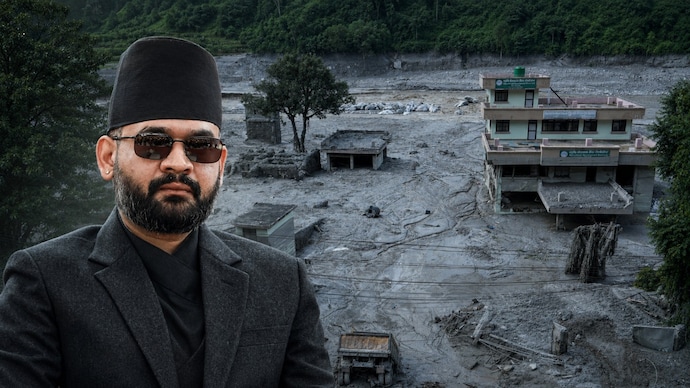
To demand compensation, Nepal PM Balen Shah could travel to New York to attend the UN General Assembly. (Images:PTI/ File)
Nepal has named China, India and the US among the world's biggest emitters of greenhouse gases, and demanded climate compensation for the recent deadly floods in Bhotkoshi that devastated several of its districts in Bagmati province. At least 1,127 people have died and around 3,900 remain missing in the floods, reportedly triggered by a massive rock-and-ice avalanche near the Nepal-China border. Such is Kathmandu's determination, that it is planning to send Prime Minister Balendra 'Balen' Shah to the United Nations General Assembly (UNGA) to press for the compensation.
Nepalese Foreign Minister Shisir Khanal said the three countries had a responsibility to compensate vulnerable nations bearing the consequences of emissions they contributed little to producing.
Kathmandu has formally approached the UN-backed Fund for Responding to Loss and Damage for urgent financial assistance. It is also preparing to raise the disaster and its demand for climate justice at international forums, according to reports.
"We are shifting our diplomatic framework from aid to justice and compensation," Khanal said in an interview with Kantipur TV.
Though the west loves to blame India because of the absolute carbon emissions, the country's per person and historical contributions are very low compared to developed nations.
The catastrophic flood surged through the Bhotekoshi river basin on August 26, devastating parts of Nepal's Rasuwa, Nuwakot and Dhading districts. Homes, roads, bridges and hydropower projects have been damaged and thousands of people remain displaced in what Nepal has called a "Himalayan Tsunami".
Nepal might need $4-5 billion, which is nearly 10% of its economy, to rebuild what has been destroyed by the floods, Finance Minister Swarnim Wagle told news agency Reuters last week.
BALEN SHAH LIKELY TO RAISE FLOOD COMPENSATION DEMAND AT UN
To amplify this, Balen Shah could travel to New York to attend the 81st UNGA, according to The Kathmandu Post. The proposal is being discussed so Shah can personally highlight the Rasuwa floods and demand climate justice and compensation.
Earlier, it was planned that Khanal would represent Nepal at UNGA, which starts on September 8. The general debate is scheduled to be held in the third and fourth weeks of September.
More than 1,100 people were confirmed dead and thousands remained missing as of September 1, according to figures reported by Nepal Police. Although authorities and experts believe the flood originated in the high-altitude region near the Nepal-China border, detailed scientific studies are still needed to establish its precise trigger and the extent of the climate-change link. The flood in the high-seismic zone also heightened experts' concerns about the safety of Chinese-built infrastructure projects in the fragile Himalayan region.
Nepal, which produces a negligible share of global emissions, is arguing that it is disproportionately exposed to melting glaciers, unstable mountain slopes and glacial floods.
NOT CHARITY, WANT JUSTICE, SAYS NEPAL ON FLOODS COMPENSATION
Nepaese Foreign Minister Khanal said the Rasuwa disaster should not be treated merely as a humanitarian emergency requiring donations. Instead, he framed compensation as a responsibility arising from the emissions produced by major industrial economies.
"This is not a matter of charity; it is a matter of legal and moral liability," the foreign minister told Kantipur TV.
Khanal named China, the United States and India as the world's three largest current emitters and said they had a responsibility to compensate countries such as Nepal.
According to the European Commission's latest EDGAR estimates for 2024, China, the US and India were the three largest greenhouse gas emitters in absolute terms. However, India emits only around three tonnes of carbon dioxide (CO2)-equivalent per person, far below China's roughly 11 tonnes and the US's over 17 tonnes.
However, questions of climate responsibility are more complicated. India has consistently argued that climate obligations must account for historical emissions, per-capita emissions, development requirements and the greater responsibility of countries that industrialised earlier and reaped its benefits.
NEPAL SENDS FORMAL REQUEST ON FLOODS TO GLOBAL FUND
The Nepalese government has also said a formal request has been sent to the Fund for Responding to Loss and Damage, rather than being publicly identified as three separate bilateral compensation claims submitted to India, China and the US, reported The Kathmandu Post reported separately.
The fund was agreed upon at the COP27 climate summit in 2022 and operationalised at COP28 to assist developing countries particularly vulnerable to climate change. Nepal's letter was co-signed by Finance Minister Swarnim Wagle and Forests and Agriculture Minister Geeta Chaudhary.
The request described the flood as a catastrophe that caused widespread deaths, displacement, destruction of critical infrastructure and disruption of livelihoods and essential services. Kathmandu sought an urgent response without waiting for the fund board's next scheduled meeting.
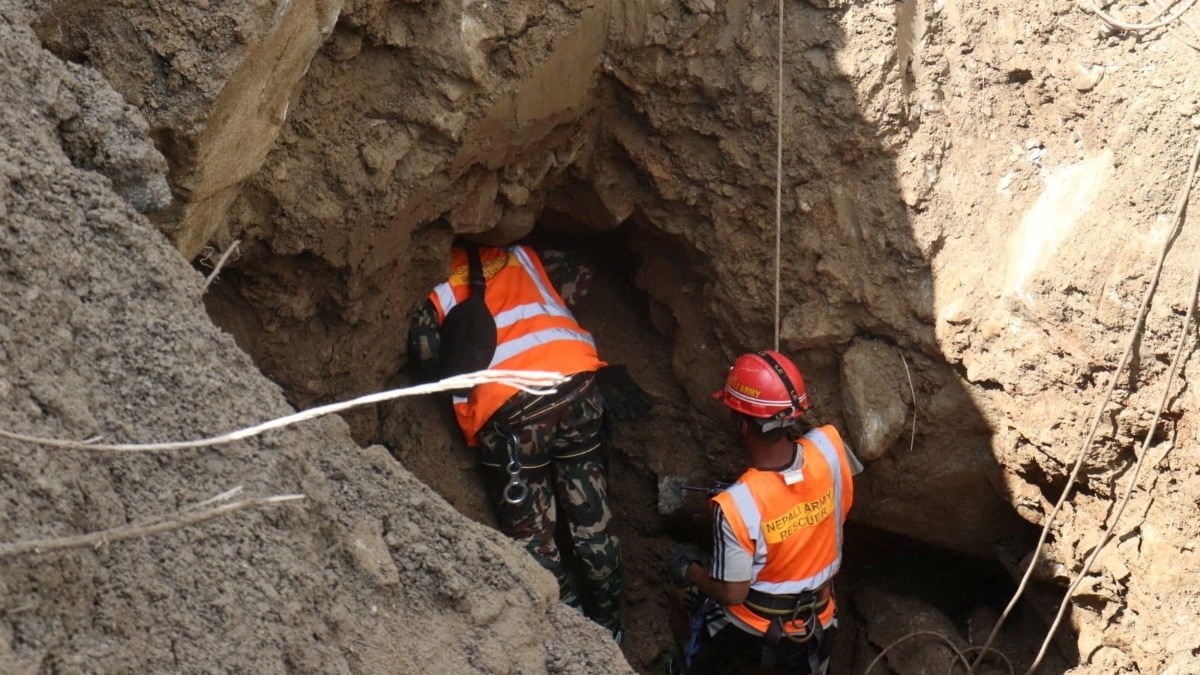
The Foreign Ministry has also mobilised Nepali embassies to brief governments and donors about the country's requirements. Apart from immediate relief, Nepal is seeking money for resettlement and reconstruction and specialist assistance such as tunnel-rescue teams, forensic experts and Bailey bridges.
Nepal had initially rejected foreign aid in search and rescue, saying its own agencies could handle the operation. However, Kathmandu later sought specialised teams, equipment and experts from India, China and other countries.
Khanal attributed the disaster to rapidly changing conditions in the Himalayan region and described it as a "Himalayan Tsunami". But a direct scientific attribution of an individual flood to human-induced climate change requires detailed investigation.
Initial assessments have considered a rock-ice avalanche, unstable glaciers and changes in the Himalayan ecosystem among the possible factors behind the flood. However, Khanal warned that the issue extended beyond Nepal because Himalayan glaciers sustain river systems used by billions across South Asia. Nepal's diplomatic message is that countries which contributed least to global warming cannot be left to repeatedly fund their own rescue and reconstruction.
- Ends
Published By:
Sushim Mukul
Published On:
Sep 2, 2026 11:41 IST