1 hour ago
A week after the catastrophic flash floods tore through Nepal, leaving a trail of death and destruction, families of those trapped inside flooded underground hydropower projects are facing an agonising wait for rescue.
Among them is the wife of an engineer trapped at the Trishuli 3A Hydropower Station, who says six days have passed with little sign of a meaningful rescue operation and questions how the government can treat the crisis with such urgency.
As of Wednesday, at least 40 Nepal Electricity Authority (NEA) employees, including her husband, are believed to be trapped inside the Trishuli 3A project in Rasuwa, one of the hardest-hit districts.
Speaking about the ordeal, the engineer’s wife said families were clinging to hope that the workers were safe inside what they had been told was one of the country’s safest hydropower stations.
“Forty NEA employees, including my husband, are trapped at the Trishuli 3A Hydropower Station. It's been six days since they've all been trapped inside. What's their condition? We're still hopeful that this is the safest hydropower station, as we've heard. Because it's the safest, we expect they'll all be fine, so we're wandering around,” she said.
She said family members had been moving between government offices and the Army Headquarters seeking information, while some relatives had travelled to the affected sites.
“I spent all day wandering outside the Army Headquarters. My brother has reached the field,” she said.
However, she questioned official claims about rescue teams reaching the site, saying the ground situation appeared very different from what was being reported.
“The media is reporting that a Chinese and an Indian team went for rescue operations. But the truth is, not even a JCB has reached there yet,” she said.
“How can the government treat such a serious issue so lightly? It was only the next day that we learned what volume and density this flood was, but even after six or seven days, not a single JCB or tunnel cutter had arrived.”
She said repeated announcements about rescue teams arriving had given families hope, but little had changed on the ground.
“The only media reporting is that the Chinese team went today, the Indian team went today. Rescue will happen today, tomorrow. The Home Minister has gone there, the Foreign Minister has gone there. Coordination is being done with the Chinese,” she said.
“After hearing all this, our family members are hopeful that if something doesn't happen today, maybe it will happen tomorrow, or the day after tomorrow. Six days have passed with this hope.”
But as the wait continued, she said the uncertainty had become unbearable.
“Now, every hour, every moment has become a heavy burden. Is this some kind of tunneling project? The government is saying that today we went ten meters in, twenty meters in. What is this? Are we supposed to save their lives or are we playing a joke?” she said.
“Is it just one person? This is a matter of 40 families. Does the government have any idea what their families are going through?”
She said many relatives were unable to speak publicly about their anguish and some had been hospitalised.
“At least I'm able to express my views. Many other family members are unable to speak. Many have been hospitalised. We can't even imagine their condition,” she said.
“He went there for national work, not for personal work. Doesn't the government have any responsibility? Do we have to beg in front of the media to save his life?”
NEARLY 1,000 HYDROPOWER WORKERS MISSING
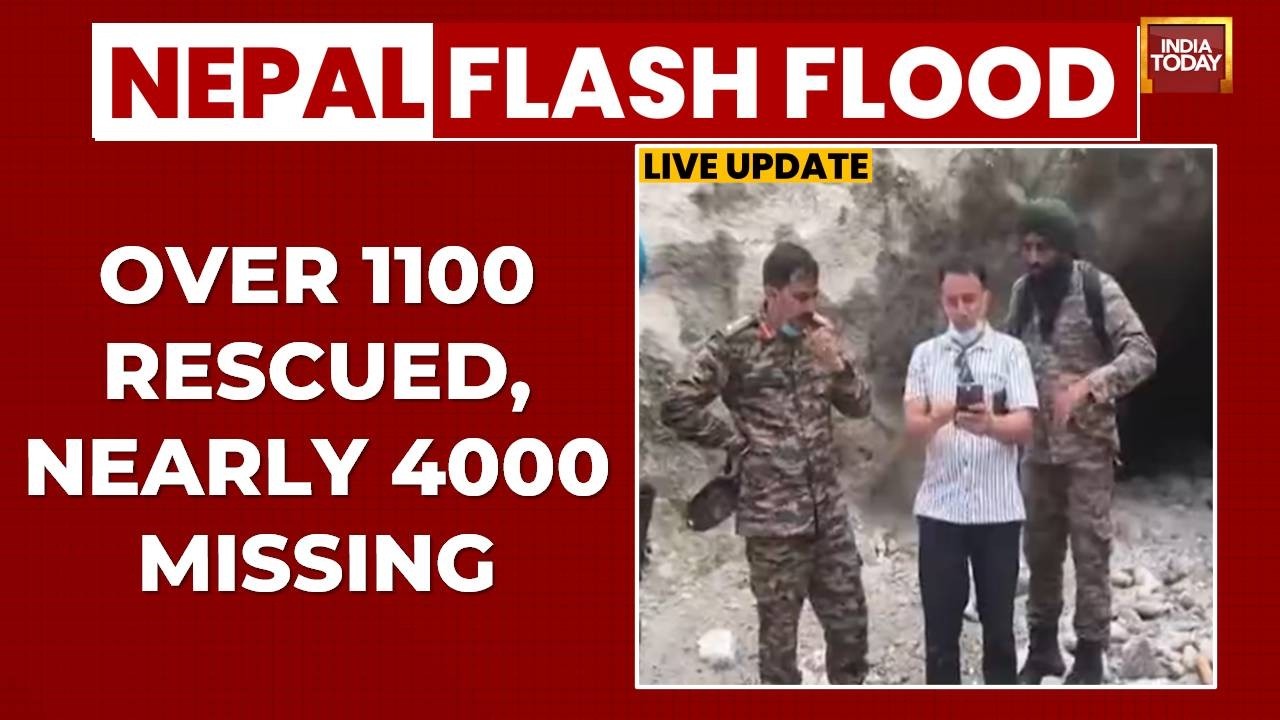
As the death toll rose to 1,093, with nearly 4,000 people still unaccounted for, several other hydropower projects in Nepal have also reported large numbers of missing workers.
A week after the disaster, more than 557 people were reported missing from the 216-MW Upper Trishuli-1 Hydropower Project alone. While 254 people were safely rescued from around the project site, the whereabouts of those still missing remain unknown.
At the under-construction 216-MW Upper Trishuli-1 project, more than 550 people remain unaccounted for, according to Independent Power Producers’ Association, Nepal (IPPAN) figures.
Chinese and South Korean teams have been involved in rescue efforts at the site.
At Upper Trishuli-3B, a 37-MW project spread across Rasuwa and Nuwakot, 122 people are feared missing. A joint team comprising the Nepali Army and NEA, with assistance from Chinese experts, is conducting rescue operations.
At the 22-MW Chilime Hydropower Project, at least eight people are believed missing. An Indian team has conducted an aerial assessment of the area in coordination with the Nepali Army, with pumps and excavators being used in rescue efforts.
At the 20-MW Langtang Khola Hydropower Project, at least 41 people are estimated to be missing. The Nepali Army is conducting search-and-rescue operations, while an Indian team has also studied the site and begun further operations.
At the 14.1-MW Mailung Khola Hydropower Project, seven people are estimated to be missing, with a South Korean team involved in aerial assessment and rescue efforts.
Several other projects have also reported missing workers, including Rasuwagadhi Hydropower Project, where 93 people are unaccounted for; Rasuwa-Bhotekoshi, with four missing; Middle Trishuli Ganga, with two missing; and the Trishuli and Devighat hydropower projects, with one missing each.
- Ends
(With Reuters inputs)
Published By:
Karishma Saurabh Kalita
Published On:
Sep 2, 2026 08:36 IST