1 hour ago
The WHO has raised the risk of the Bundibugyo strain of Ebola spreading across the Democratic Republic of Congo to "very high," with 82 confirmed cases and no approved vaccine or treatment currently available.
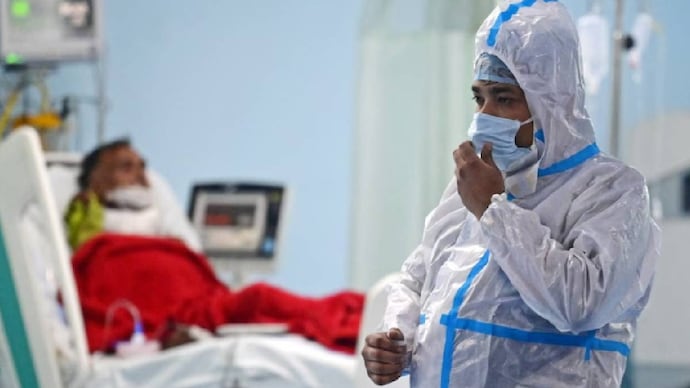
The WHO has raised the risk of the Bundibugyo strain of Ebola spreading across the Democratic Republic of Congo to “very high".

UPDATED: May 22, 2026 23:50 IST
The World Health Organisation has raised the risk of the Bundibugyo strain of Ebola turning into a national outbreak in the Democratic Republic of Congo to "very high".
The strain, for which there is no approved vaccine or treatment, was declared an emergency of international concern by the WHO on Sunday.
"We are now revising our risk assessment to very high at the national level, high at the regional level, and low at global level," WHO Chief Tedros Adhanom Ghebreyesus told reporters.
So far, 82 cases have been confirmed in Congo, with seven confirmed deaths, 177 suspected deaths and almost 750 suspected cases. The situation in Uganda is stable, with two cases confirmed in people who travelled from the DRC, one of them fatal, Tedros said.
"The potential of this virus spreading rapidly is high, very high, and that changed the whole dynamic," said Abdirahman Mahamud, WHO Director of Health Emergency Alert & Response Operations.
Measures taken in Uganda, including intense contact tracing and cancellation of a mass gathering, appear to have been effective in stemming the spread of the virus, Tedros said.
A US national who was working in Congo has been confirmed to have the virus and been transferred to Germany for care.
"We are also aware of reports today about another American national with a high-risk contact who has been transferred to the Czech Republic," Tedros added.
EXPERIMENTAL DRUG USED FOR CONTACT CASES
The WHO's chief scientist, Sylvie Briand, said an antiviral treatment called Obeldesivir could be used among Ebola contacts to prevent them from developing the disease.
Obeldesivir is an experimental oral COVID antiviral drug from Gilead Sciences GILD.O.
"This is a promising treatment drug, but it has still to be implemented under a very, very strict protocol," Briand said.
The WHO said there were early signs of surveillance working as it was picking up more cases. However, it was having to catch up as the outbreak likely started two months ago but was only declared last Friday.
"We are sprinting behind, so that we can really try to control this outbreak. Because it (the virus) is still transmitting for the time being, the number will keep rising for some time," said WHO’s representative in DRC, Anne Ancia.
- Ends
Published By:
Akshat Trivedi
Published On:
May 22, 2026 23:50 IST