1 hour ago
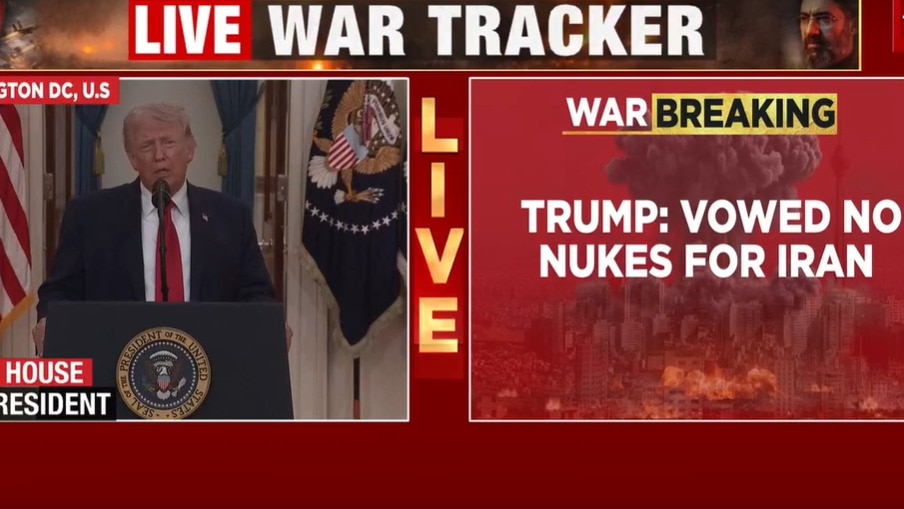
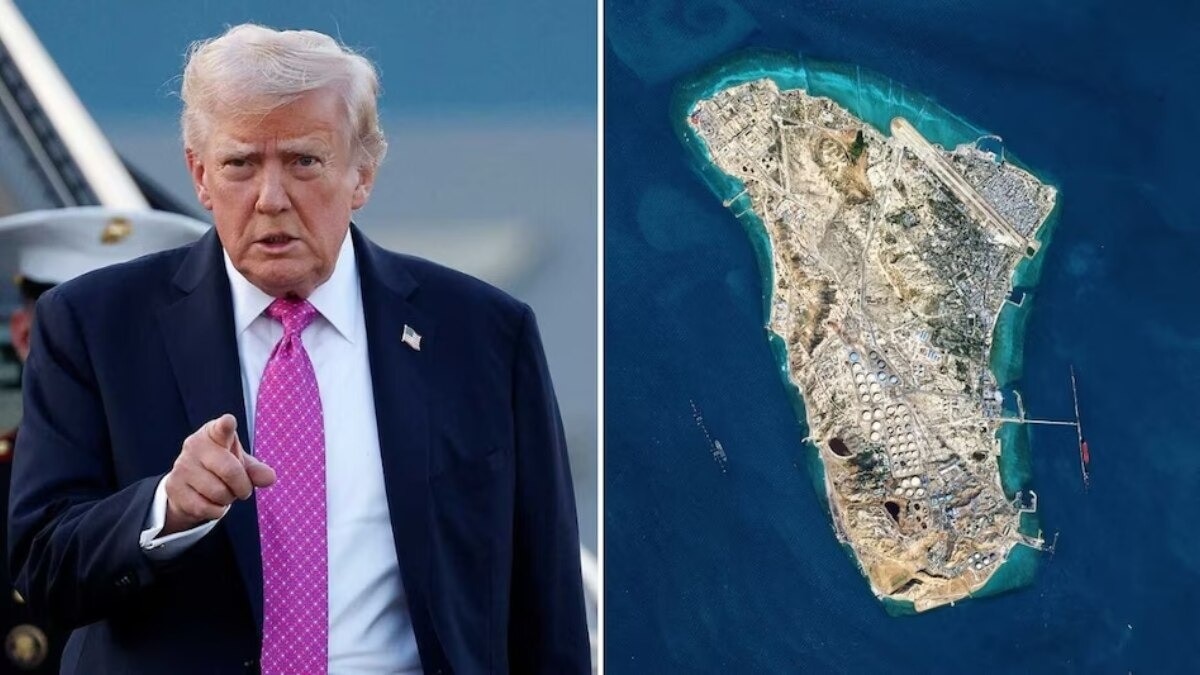
On April Fools' Day, President Donald Trump delivered a history lesson about American military conflicts. What he left out was the most important part.
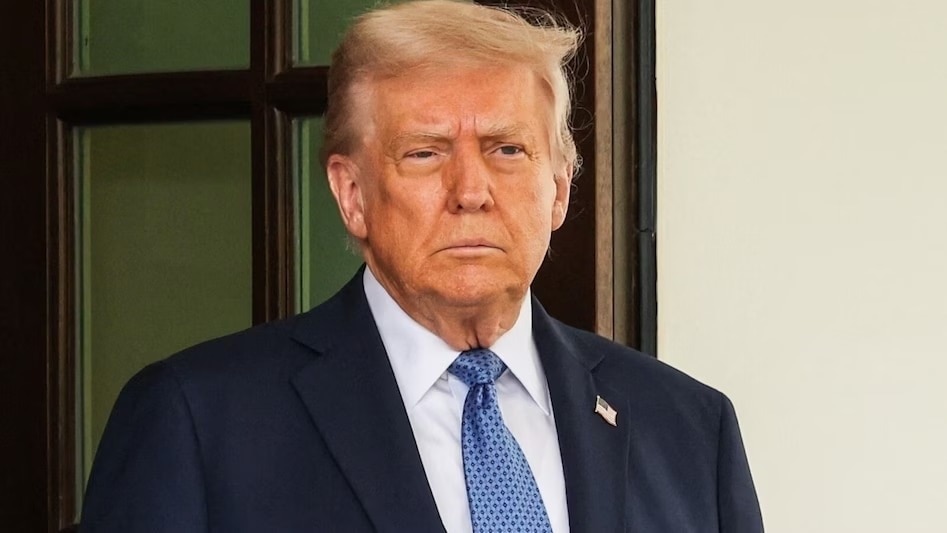
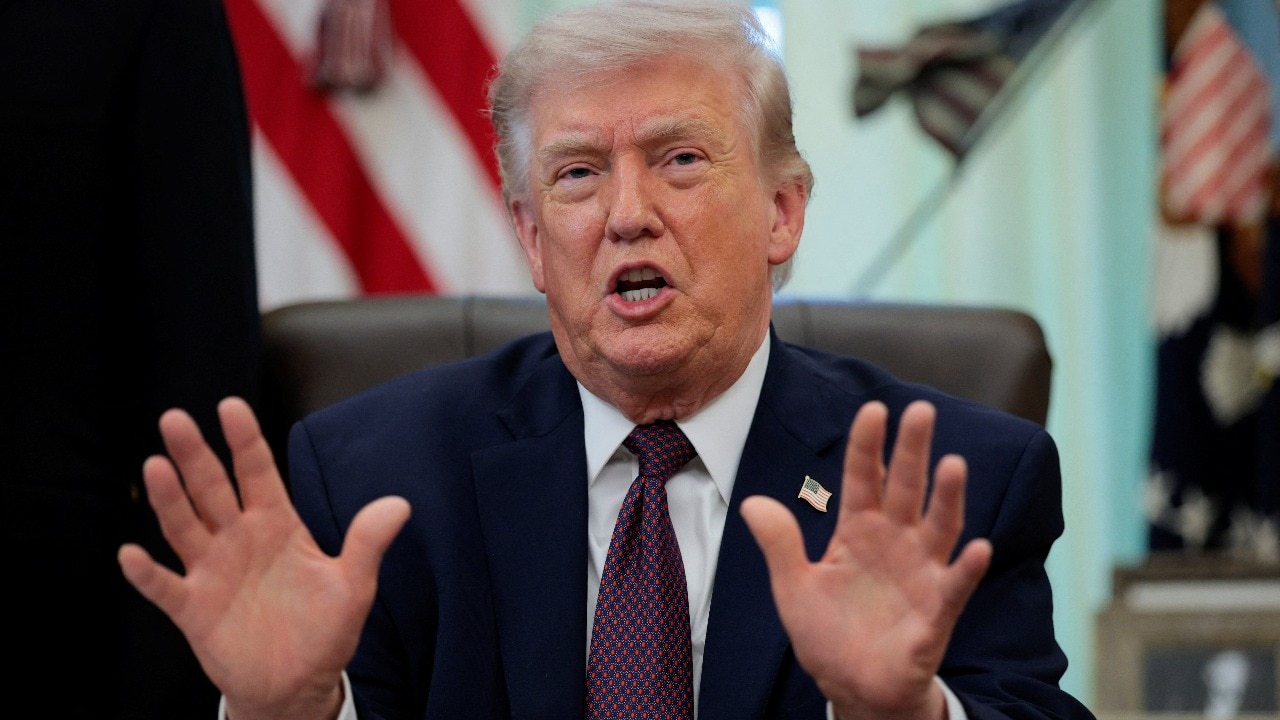
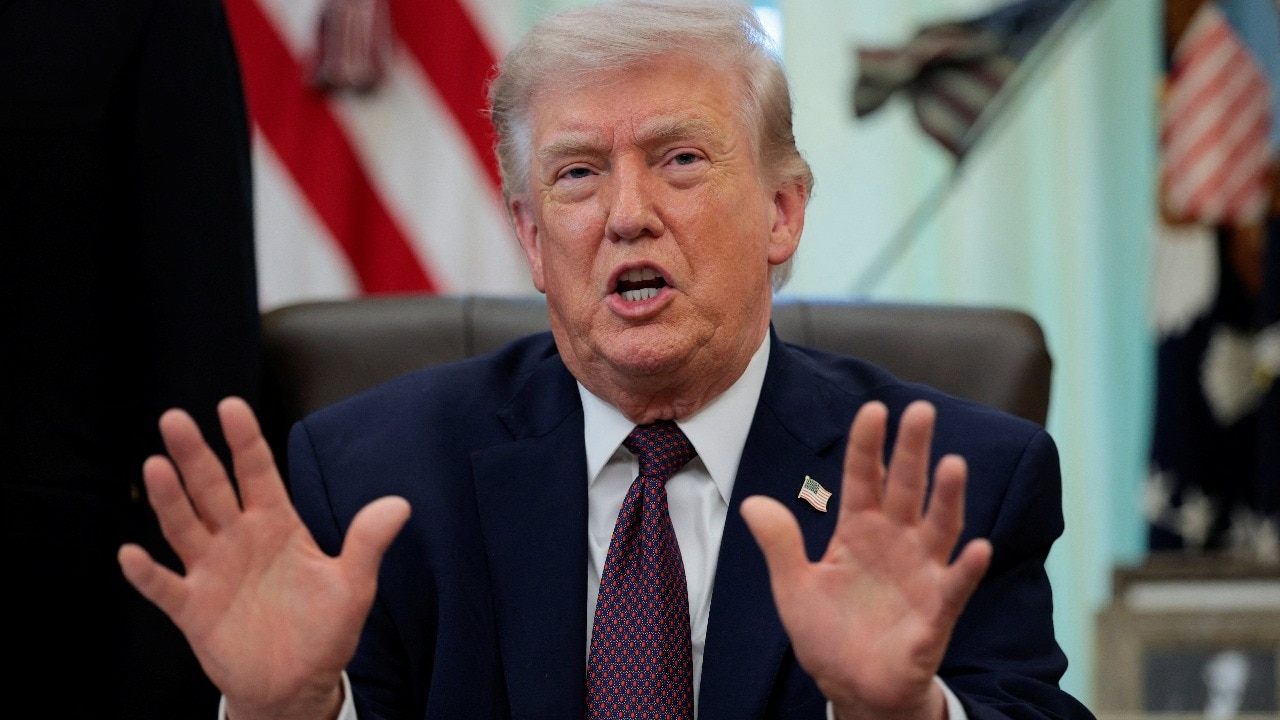
In his address to the nation, Trump invoked America’s past wars to place the ongoing 32-day Operation Epic Fury against Iran in historical perspective. With the flags of every branch of the military flanking him, Trump cycled through the duration of America's major wars. World War I: one year, seven months, and five days. World War II: three years, eight months, and 25 days. Korea: three years, one month, and two days. Vietnam: 19 years, five months, and 29 days. Iraq: eight years, eight months, and 28 days.
Then came the punchline.
“It's very important that we keep this (Iran) conflict in perspective,” Trump said, before arriving at his contrast: “We are in this military operation, so powerful, so brilliant, against one of the most powerful countries, for 32 days.”
The implication was clear. Where other presidents had bled America dry over years and decades, Trump had done something historic in just over a month. Iran has been essentially decimated, he told the nation. “The hard part is done.”
It was a rhetorically effective moment. It was also an unwitting self-indictment. Because the history Trump invoked that night, the very wars he listed as monuments to American sacrifice and duration are a record of failure, ambiguity, and humiliation.
Korea ended in a stalemate that persists to this day. Vietnam ended in disgrace. Iraq produced no weapons of mass destruction, spawned ISIS, and left a region in ruins. Afghanistan ended with the Taliban back in Kabul, 20 years and $2.3 trillion later.
This is the full story of US failures. And what it portends for Iran.
CHAPTER 1: 1950-53
KOREA: THE WAR THAT NEVER REALLY ENDED
When Trump cited the Korean War's duration of three years, one month, and two days, he was citing the first great lesson of post-WWII American military adventurism: that a clear military objective does not guarantee a satisfying outcome.
It was 1950. North Korea, backed by the Soviet Union and China, had invaded the South. A UN coalition led by the United States entered the war to repel the North.
By early September 1950, North Korean forces had overrun most of South Korea and pinned UN and Republic of Korea (ROK) troops into the defensive Pusan Perimeter in the southeast. UN forces were on the brink of being pushed into the sea.
General Douglas MacArthur, Commander-in-Chief of UN Command, proposed striking deep behind enemy lines to sever NKPA supply and communication routes, and recapture Seoul. His amphibious landing at Inchon is still studied in military academies as a masterclass in audacious, asymmetric tactics. The North Korean army was routed. South Korea was liberated.
Then ambition intervened. Rather than stop at the dividing line, the 38th Parallel, which was the original objective, American commanders pushed north toward the Chinese border. China responded with a massive intervention. The war reversed.
Years of bloody stalemate followed, fought along terrain that had already been won and lost and won again.
The Korean War was the first time in history when US forces decided to fight for a draw rather than insist on victory. The stalemate ultimately left the aggressor, Kim Il Sung, in power and unpunished.
By the time the armistice was signed in July 1953, the war had left the peninsula devastated with no clear victory for either side. The boundary between the two Koreas had barely shifted from where it stood in 1950. Some 600,000 Chinese troops and well over 2 million Koreans, civilians and military combined , had perished.
The US suffered more than 36,000 total in-theater deaths, according to the official Defense Casualty Analysis System.
The American press described it more succinctly: Die for a tie.
It was called the forgotten war. The lessons were also forgotten.
Then came Vietnam.
CHAPTER 2: 1955-1975
VIETNAM: THE WAR THAT BROKE THE NATION’S CONFIDENCE
The US backed South Vietnam against a communist insurgency supported by the North, driven by the “domino theory”: the fear that if one country fell to communism, the rest of Southeast Asia would follow. It was a political objective dressed in military clothing, and it would prove fatal.
The US sent money, then advisers, then half a million troops. It dropped more bombs than were dropped in all of World War II. It still lost.
The war ultimately cost 58,000 American lives and more than three million Vietnamese ones.
Once the last US troops left in 1973, the North overran the South. The final, chaotic evacuation from Saigon in 1975 could not have been more confronting.
The most extraordinary testimony to what went wrong came from the man most responsible for managing the escalation. Secretary of Defense Robert McNamara.
In his 1995 memoir, In Retrospect: The Tragedy and Lessons of Vietnam, he wrote: “We of the Kennedy and Johnson administrations who participated in the decisions on Vietnam acted on what we thought were the principles and the traditions of this nation. We made our decisions in the light of those values. Yet we were wrong. I believe we were terribly wrong.”
What made Vietnam so uniquely scarring was not merely the military defeat but the discovery that the justifications for the war had been built on deception.
The Gulf of Tonkin incident–a reported attack on a US destroyer– was manipulated. The body counts that McNamara tracked were falsified. The optimistic briefings never matched the reality on the ground.
As analyst George Friedman has written, the cost of failure was the realisation that the most important question was never asked: How would the United States benefit from victory, and what would defeat cost? Defeat was never imagined, and the benefit of success was vastly overrated.
CHAPTER 3: 2003-2011
IRAQ: THE WEAPONS THAT WEREN’T THERE
If Vietnam was the wound incurred because of deception, Iraq was the proof that the lesson hadn't been learnt.
The George Bush administration invaded Iraq in March 2003 on the stated justification that Saddam Hussein possessed weapons of mass destruction and had links to al-Qaeda.
Both claims were wrong. The weapons did not exist. The al-Qaeda connection was fabricated.
The US achieved its initial conventional military objectives rapidly: coalition forces toppled Saddam Hussein's Ba'athist regime and captured Baghdad on April 9, 2003 with minimal resistance.
On May 1, 2003, six weeks into the invasion, President Bush landed on the USS Abraham Lincoln beneath a banner reading “Mission Accomplished” and declared that major combat operations had ended. It was, in retrospect, the opening ceremony of a disaster.
The broader Iraq War continued for over eight years as an occupation and counter-insurgency operation. In the years after the “Mission Accomplished” banner was unfurled, more than 4,000 US troops were killed and tens of thousands were wounded.
The power vacuum created by the invasion gave rise to al-Qaeda in Iraq, which later metastasised into ISIS, seizing vast territory across two countries and committing atrocities on a medieval scale. By the end of 2006, Iraq was coming apart along ethno-sectarian fault lines.
US combat operations formally ended under President Barack Obama on August 31, 2010 (with nearly 50,000 troops remaining in advisory/training roles). A ceremony in Baghdad on December 15, 2011, marked the official end of the US, concluding nearly nine years of direct involvement.
CHAPTER 4: 2001-2021
AFGHANISTAN: THE LONGEST WAR, THE CLEAREST FAILURE
Trump's list ended with Iraq. He did not mention Afghanistan, the longest war in American history, and perhaps its most complete modern failure.
The War in Afghanistan, officially launched as Operation Enduring Freedom, began in direct response to the September 11, 2001, terrorist attacks on the US, which killed nearly 3,000 people and were orchestrated by the al-Qaeda network led by Osama bin Laden.
The initial objective – destroy al-Qaeda and remove the Taliban – was achieved within weeks. Then, as in Korea and Vietnam and Iraq before it, the mission expanded. Nation-building was added. Democracy promotion followed. During two decades of fighting and botched state-building, with the support of NATO and non-NATO allies, the US found itself involved in an unwinnable war, failing to quell the Pakistan-backed, Taliban-led armed opposition.
On August 30, 2021, American troops completed their withdrawal after two decades at a cost of an estimated $2.313 trillion. Overall, the conflict claimed an estimated 243,000 lives.
The Taliban that surrendered in 2001 was the same Taliban that signed a peace agreement with the Trump administration in Doha in 2020 and retook the country in 2021. The circle was complete.
CHAPTER 5: 2026-
IRAN: THE WAR THAT REPRESENTS US MISTAKES
The bitter irony of Trump's April 1st address is that the historical record he invoked must have invoked familiar ghosts.
The comparisons he drew between Operation Epic Fury and America's past wars may not have set minds at rest, since they implied this war may go on longer than has so far been acknowledged.
Reacting to the speech, Senate Minority Leader Chuck Schumer was more direct: “Has there ever been a more rambling, disjointed, and pathetic presidential war speech? Donald Trump’s actions in Iran will be considered one of the greatest policy blunders in the history of our country, failing to articulate objectives, alienating allies, and ignoring the kitchen table problems Americans are facing. He is completely unfit to be Commander-in-Chief and the whole world knows it,” Schumer wrote.
EPILOGUE: THE LESSONS NOT BEING LEARN
After the Korea stalemate, the Vietnam fiasco, the Iraq debacle, and the Afghanistan retreat, any US President would have been wiser in their choice of intervention. But Trump, like his predecessors, has ignored history.
His war is reflecting the pattern seen across seven decades. A swift, overwhelming military operation. Early declarations of success. Shifting objectives. Unforeseen consequences. A grinding, expensive, politically toxic aftermath. And, eventually, a withdrawal that leaves the region transformed, though rarely in the way that was promised.
In all likelihood, Operation Epic Fury will follow the same path. Trump is correct that Iran's conventional military has been severely degraded. The destruction of its navy, much of its air force, and a significant portion of its missile infrastructure represents real military achievement. But military achievement and strategic success are different things, a distinction that has undone American ambitions in every major conflict since 1945.
In his initial February 28 announcement, Trump said his goal included helping Iranians overthrow their government. "When we are finished, take over your government. It will be yours to take," he declared. Since then, he has spoken little about that goal.
Trump had also at one point said the US should have a role in selecting Iran's new leader, after US and Israeli airstrikes killed Supreme Leader Ali Khamenei. But Iranian officials selected his son, Mojtaba Khamenei, as a successor, suggesting not liberation, but continuity with his father's theocratic rule.
The Iranian nuclear program may have been delayed, but it has not been destroyed. Nobody knows the true status of the uranium Iran has enriched and hidden underground. The Islamic Revolutionary Guard Corps still holds the country in an iron fist. The Iranian people are now under the hammer of a hardened, battle-tested regime with every incentive to dig in. And the Strait of Hormuz, through which one-fifth of the world's oil passes, has become the one neck Iran can choke at will.
On April Fools' Day Trump stood before the nation and invoked the ghosts of America's wars to celebrate his own decisiveness. He recited their durations like a man who had studied the clocks but never read the verdicts.
The ghosts he summoned on that night are not trophies. They are warnings. And they have heard this speech before.
- Ends
Published By:
Shipra Parashar
Published On:
Apr 2, 2026 14:40 IST
Tune In