1 hour ago
Nepal police have charged 32 people including trekking company owners and helicopter operators in a major insurance fraud involving poisoning tourists to force costly rescues. The scam allegedly netted nearly $20 million through fake medical claims and forged documents.
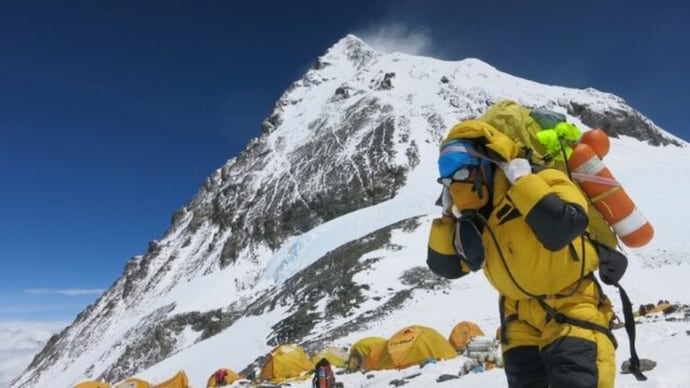
The illicit gains were reportedly shared among guides, helicopter companies, trekking agencies and hospitals where tourists received fake treatments. (Photo: Reuters)

New Delhi,UPDATED: Apr 2, 2026 08:17 IST
Mount Everest guides are accused of secretly poisoning tourists’ food to trigger expensive helicopter rescues as part of a $20 million insurance scam, according to a report by the Kathmandu Post. Nepal police have charged 32 individuals, including trekking company owners, helicopter operators and hospital executives, with organised crime and fraud related to the plot.
Investigators said guides working with trekking agencies allegedly poisoned tourists by adding baking soda to their meals, causing severe gastrointestinal symptoms that mimicked altitude sickness or food poisoning.
Once the visitors fell ill, they were reportedly pressured into agreeing to expensive emergency helicopter evacuations, with operators allegedly using forged medical and flight documents to charge international travel insurers, authorities in the Himalayan nation said.
The illicit gains were reportedly shared among guides, helicopter companies, trekking agencies and hospitals where tourists received fake treatments.
The investigation began in January with the arrest of six executives from three major mountain rescue firms. According to the report, the groups fraudulently obtained at least $19.69 million through these schemes.
One company allegedly faked 171 of its 1,248 claimed rescues, resulting in over $10 million in illegitimate payouts. A second company is accused of fabricating 75 of 471 claimed rescues, claiming $8 million, while a third allegedly made 71 false claims worth more than $1 million.
Prosecutors are seeking total fines of $11.3 million. A court spokesperson said the case is receiving high priority due to its high-profile nature.
This is not the first tourism scandal in Nepal, where the industry supports over one million jobs. Several major international insurers have recently stopped covering trekking tourists in Nepal because of rising fraud incidents.
In 2018, the Nepalese government eliminated intermediaries in emergency evacuations, making tour operators responsible for clients throughout trips and requiring rescue and treatment details to be submitted to the Department of Tourism.
However, Manoj Kumar KC, chief of Nepal’s specialised organised crime unit, said the scam persisted due to lax punitive action, adding that “when there is no action against crime, it flourishes. The insurance scam too flourished as a result.”
- Ends
Published By:
Shipra Parashar
Published On:
Apr 2, 2026 08:17 IST