 1 month ago
Last Updated:March 17, 2026, 14:19 IST
US naval escorts too could restore Hormuz traffic only back to 10% of its pre-war levels, say experts. What are the 3 key problems in the 'death valley'? News18 explains


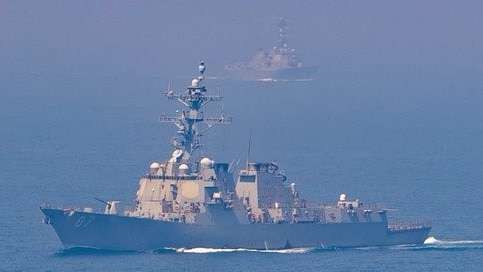
An Iranian Revolutionary Guard vessel watches an American warship in the Strait of Hormuz in 2023. (AP File)
Even as US President Donald Trump has been pressuring American allies to contribute naval forces to protect shipping traffic in the Strait of Hormuz, naval experts feel such an endeavour presents a huge risk and, even if successful, might restore only about 10% of the pre-war traffic through the waterway.
Why? What does it entail? News18 explains.
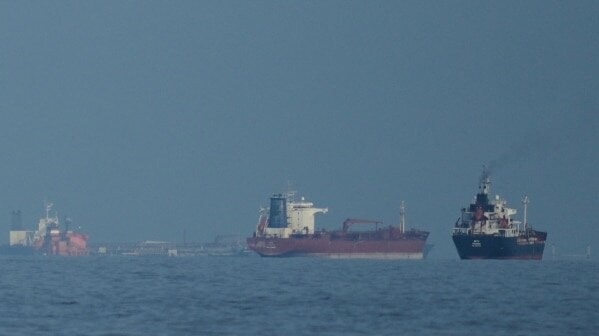
Commercial traffic through the maritime chokepoint has virtually ceased since the US and Israel attacked Iran on February 28, with Iran vowing to strike any vessels associated with the two countries or their partners. About 20% of the world’s oil supply, plus similar or even larger amounts of liquified natural gas and fertiliser products, must pass through the narrow strait to reach world markets. Its closure has sent prices for the commodities skyrocketing.
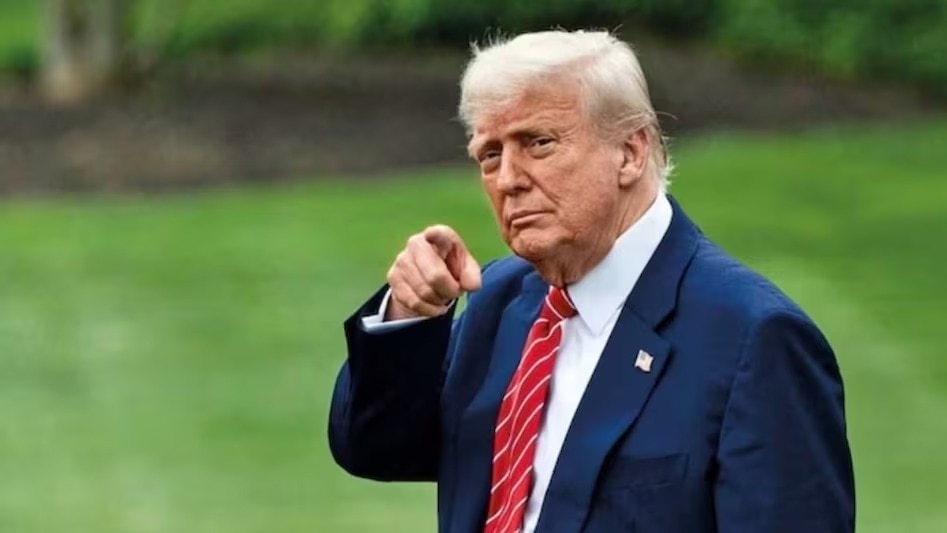
Trump and US government officials have said plans are being made for the US Navy to escort commercial ships through the strait. The US president has asked allies like Japan, South Korea and NATO members – and even rivals like China – to contribute military vessels for escort duties. No offers of help have come through yet.
THE RISK FACTOR
Naval escort operations are complex, requiring close coordination of sea and air assets to protect both tankers and merchant ships and the naval vessels themselves. Making that all work together in what one analyst called the “death valley" of the Strait of Hormuz is a daunting task, according to a CNN report.
Problem 1: Space crunch
The strait is only about 10 miles across at its narrowest point. Navigable space is even less, especially for massive oil tankers – some of over three football fields in length. That leaves little room for the tankers or the naval ships escorting them to maneuver, said Jennifer Parker, adjunct fellow in naval studies at UNSW Canberra and a former Australian naval officer with experience in the Persian Gulf told CNN.
The tankers could create blind spots for the warships.
Analysts say escorting cannot be done by destroyers alone. Helicopters or attack aircraft would have to fly in the vicinity, ready to take on air or sea drones, analyst Carl Schuster, a former US Navy captain, told CNN. Airborne warning and control (AWACS) planes and reconnaissance drones would have to be scouring farther inland in Iran for missile launches that could target the tankers or the warships, he said.
Explained | Trump Can Build A Global Hormuz Coalition Against Iran If US Follows These Steps
Meanwhile, Iranian forces that could threaten escort missions in the strait are dispersed and mostly mobile. Drones and missiles mounted on trucks or mines could be deployed from untold numbers of
Threats to escort missions can be reduced through air power or ground incursions to seize territory from where they might be launched, but that presents new problems, including many casualties among US ground troops, the analysts said.
Problem 2: Numbers
A US destroyer might be able to escort one or two oil tankers through the strait at one time, Parker said. Others say it might take more than one naval escort per tanker. “A basic naval escort operation would need between eight to 10 destroyers to protect convoys of between five to 10 commercial vessels in each transit," editor-in-chief Richard Meade wrote in a report for Lloyds List Intelligence last week.
Those ratios might mean escorts could restore Hormuz traffic back to 10% of its pre-war levels, Meade wrote.
But few believe the US Navy can do it alone. The US has 73 Arleigh Burke-class destroyers on active duty, the Congressional Research Service reports. But only about 68% of US surface ships are combat-ready at any one time, accounting for training and maintenance, according to Navy officials. That amounts to about 50 destroyers. And those are dispersed around the globe. So if 10 of those are needed for just one escort mission through the Strait of Hormuz, it gives an idea of how the US alone would be stretched to maintain escort missions for an extended time.
That suggests why Trump is calling for other nations to chip in.
And that’s not just with destroyers to escort the vessels. Detecting and destroying mines in the strait are another problem the US is not well equipped to deal with alone. Last year, the US Navy decommissioned its four dedicated minesweepers that were stationed in the Persian Gulf. Those ships were moved back to the States on a heavy-lift vessel in January for eventual scrapping. The Navy said four littoral combat ships (LCS) with the mine-countermeasure mission module would take over those duties. But before the war, only three LCS were in the Persian Gulf region.
Analysts say allies like Japan and South Korea could offer dedicated minesweepers to help deal with the mine threats, although both those countries have so far not committed to do so. But they’d be far from a panacea even if the offers came, Koh, the analyst in Singapore, told CNN.
The minesweepers are lightly armed compared with destroyers, he said, and alone they could be vulnerable to Iranian attack. “You don’t just send the mine-countermeasures force, you need to send a protection force as well," Koh said. “So that could mean a much wider commitment."
Yu Ji-hoon, research fellow at the Korea Institute for Defense Analyses, said in Seoul’s case, the South Korean navy’s minesweepers just aren’t made for this kind of mission.
Problem 3: Houthis
Despite escorts from the US and European Union nations, the Houthis have hit commercial ships.
And at one point, a Houthi missile came within seconds of hitting a US destroyer.
“There was already some difficulty in dealing with the Houthi threat," Koh said. “Now the force is going to face a much bigger enemy, Iran, which likely has a much greater arsenal of drones and missiles," he said.
Patalano said the US and its partners have simply not recognized that shipping is “the lifeblood artery of modern economies." “For far too long we assumed it would not be contested, or if (it was), Western democracies would be able to meet the challenge," he said.
With CNN Inputs
First Published:
March 17, 2026, 14:19 IST
News explainers US Naval Escorts In Strait Of Hormuz: 3 Reasons Why Moving In The ‘Death Valley’ Is Risky
Disclaimer: Comments reflect users’ views, not News18’s. Please keep discussions respectful and constructive. Abusive, defamatory, or illegal comments will be removed. News18 may disable any comment at its discretion. By posting, you agree to our Terms of Use and Privacy Policy.
Read More