1 month ago
Tehran's streets are filled with posters, flags and slogans as Iran projects defiance amid regional tension. The mood is shadowed by a delayed Khamenei funeral and questions over civilian losses after the Jalal Building strike.
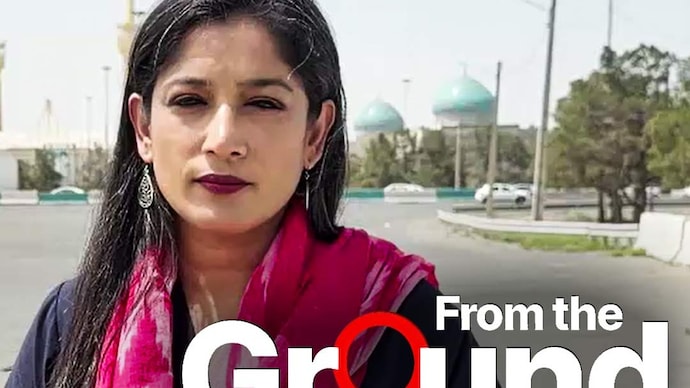
“When it does take place, you expect lakhs and lakhs of people to throng the streets of Tehran from across Iran,” Geeta Mohan said during her ground report.
Massive posters, nationalist slogans and public displays of resistance have taken over parts of Tehran as Iran projects a message of defiance amid rising tensions in the region.
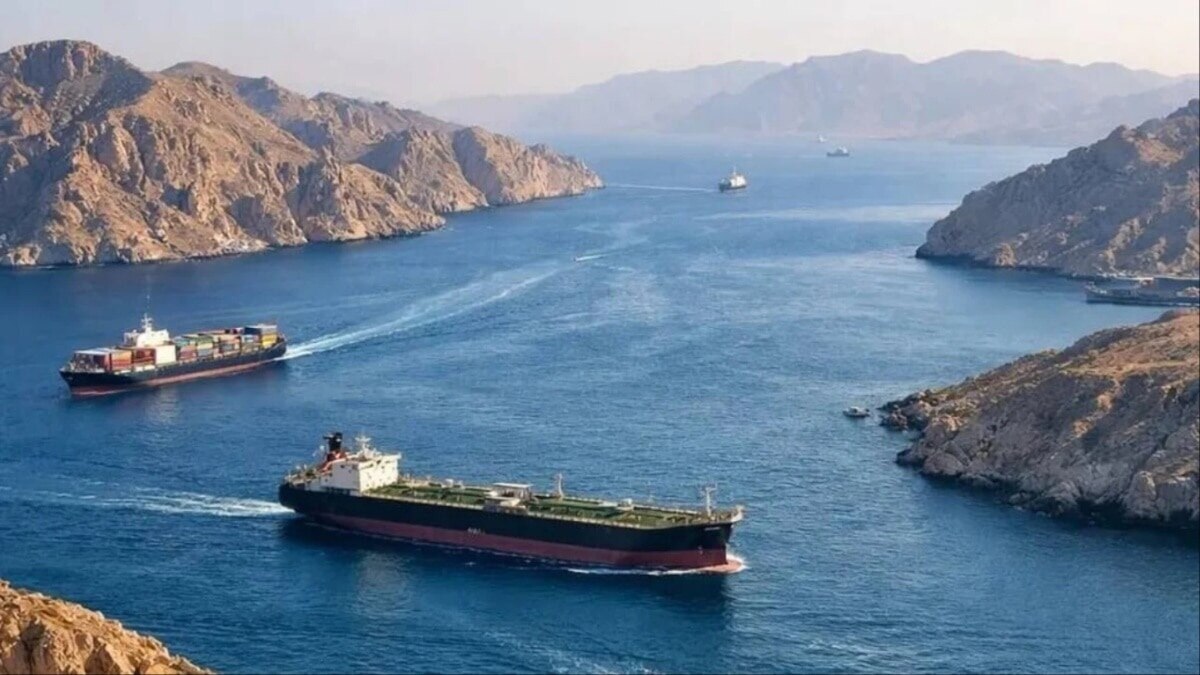
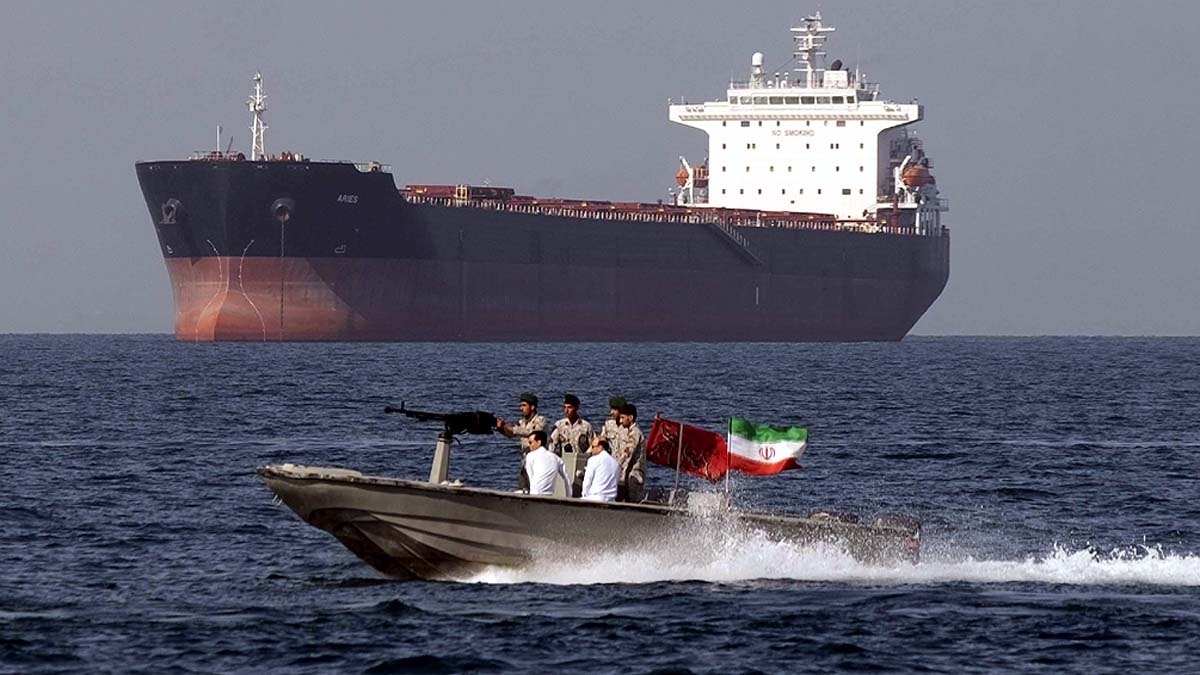
One of the most striking visuals on the streets of the Iranian capital is a large depiction of the Strait of Hormuz covered by a giant net trapping American aircraft, warships and drones. The imagery carries a direct warning to adversaries attempting to enter or control the crucial maritime route.
“The message is that if you try to cross the Strait of Hormuz, or if you try to gain control over the Strait of Hormuz, this is what will happen to anyone who tries to do so,” journalist Geeta Mohan reported from Tehran.
The streets are lined with banners, patriotic music and people waving Iranian flags, reinforcing a mood of resistance and national unity.
“The message is that they will not compromise, they will not leave their country because of any other country, nor will they let their sovereignty be compromised,” she said.
Women carrying giant Iranian flags were seen gathering in public spaces, taking turns waving them as vehicles and pedestrians moved through the city.
KHAMENEI FUNERAL DELAYED AMID SECURITY FEARS
Another focal point in Tehran remains the mausoleum of Imam Khomeini, founder of the Islamic Republic of Iran, where the funeral of Supreme Leader Ali Khamenei is expected to take place eventually.
According to reports from Tehran, more than 40 days have passed since Khamenei’s death. However, the official funeral ceremony has still not been held because of security concerns and fears over large public gatherings.
“When it does take place, you expect lakhs and lakhs of people to throng the streets of Tehran from across Iran,” Geeta Mohan said during her ground report.
The mausoleum in south Tehran carries enormous historical importance in Iran. After Imam Khomeini’s death 28 years ago, mourners gathered for three days before his remains were flown by helicopter to the site for burial.
Iranian authorities are expected to follow a similar route for Khamenei’s final rites once security conditions improve.
“But it took so many days because the security situation is not good today, and there is still not enough space for the funeral to take place,” the report said.
THE OTHER FACE OF WAR
Away from the slogans and symbolism, ordinary civilians in Tehran are struggling to rebuild lives disrupted by attacks.
On Pirozzi Street, what appears to be an ordinary commercial-residential neighbourhood now carries scars of destruction after the Jalal Building was hit on March 23.
The top floor of the building housed a music institute where teacher Hamid Reza taught nearly 250 students alongside 20 instructors.
“It was 5 am. Suddenly, we just heard something,” Hamid recalled. “When we got there, the only thing I saw was that all the equipment was thrown out, all the instruments were destroyed.”
He said the strike appeared to involve missiles and drones.
“There were no military facilities, no military base, and no military purposes sites,” he said. “Maybe we weren’t the target.”
Four units inside the building were completely destroyed, though there were no casualties.
The attack left Hamid and his wife devastated financially and emotionally. The institute had become more than a workplace for students and teachers.
“It was somehow their second home here,” he said. “They are emotionally broken down.”
Despite losing the school and instruments, Hamid insisted he would continue teaching music.
“I will not back down in my artistic activities,” he said. “I work for the people, not for any party, government, or politics.”
He also spoke about rebuilding without state support.
“We just struggled to stand on our feet again. It was very hard financially. We didn’t have any support from the government or state,” he said.
QUESTIONS OVER CIVILIAN TARGETS
Residents in the area continue to question why a civilian structure such as a music institute was hit.
The neighbourhood contains residential apartments and small businesses, with no visible military infrastructure nearby.
“All he wanted to do was teach music to his students, spread Persian culture, Persian music to his countrymen,” Geeta Mohan said in the report.
The destruction of the Jalal Building has become a local reminder of what residents describe as the hidden cost of conflict, one borne not by soldiers, but by civilians trying to rebuild ordinary lives in the middle of geopolitical tensions.
“That’s the cost of war,” the report concluded.
- Ends
Published By:
Sonali Verma
Published On:
May 9, 2026 16:46 IST