 1 hour ago
A trade court questioned whether a routine trade deficit could justify Trump's 10 per cent global tariffs under a 1974 law after several US states argued that the provision was meant for monetary crises, not persistent imbalances.
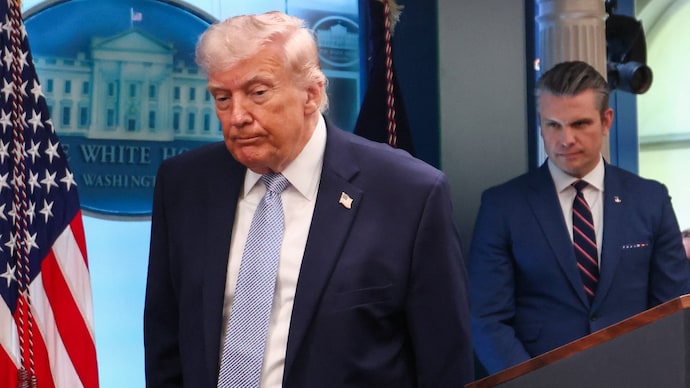
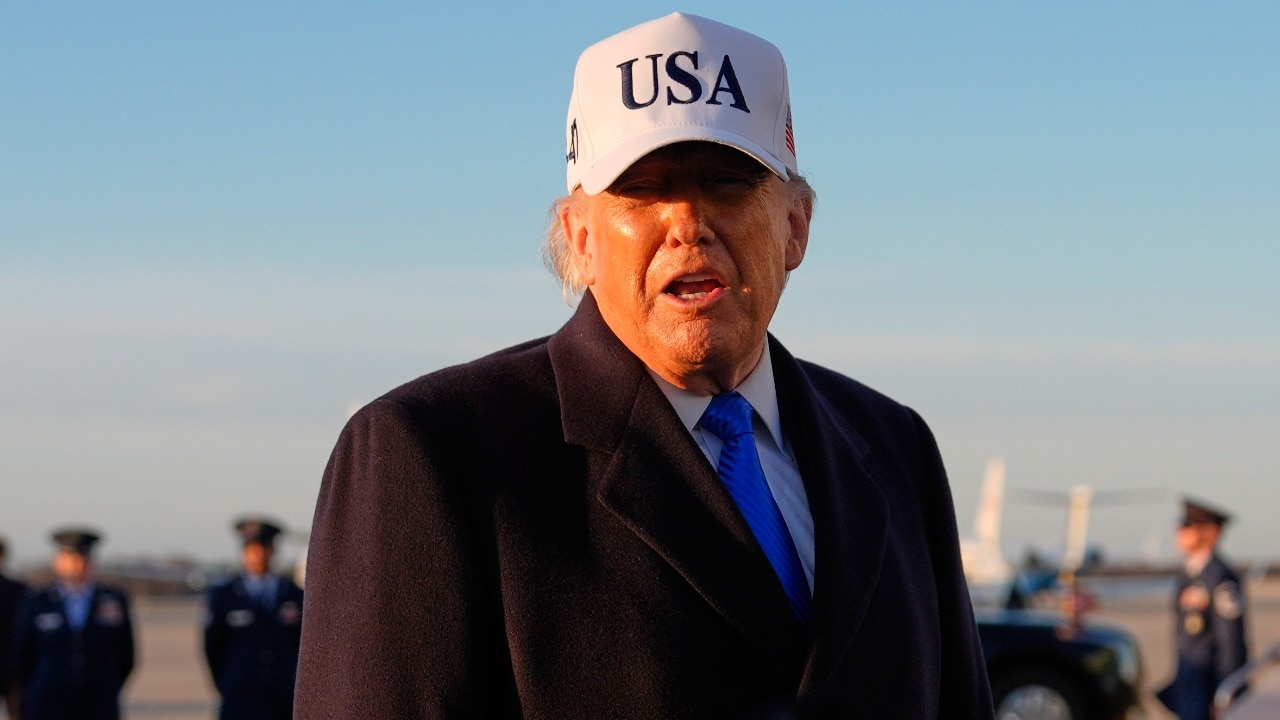
US President leave following a press conference at White House. (File photo: Reuters)

New Delhi,UPDATED: Apr 11, 2026 08:30 IST
A panel of judges at the US Court of Trade on Friday raised doubts over the legality of tariffs imposed by President Donald Trump, questioning whether a persistent trade deficit alone justifies sweeping import taxes.
The court was hearing arguments in lawsuits filed by 24 states, most led by Democrats, along with small businesses, against a 10 per cent tariff on most imports that came into force on February 24.
At the heart of the challenge is Trump's decision to invoke Section 122 of the Trade Act of 1974 in a February order, which permits temporary duties of up to 150 days to address serious "balance of payments deficits" or prevent an imminent fall in the dollar's value.
The states contend that the move was designed to bypass a major ruling by the US Supreme Court just days earlier, which had struck down tariffs introduced in 2025 under the Emergency Economic Powers Act (IEEPA), according to news agency Reuters. Those earlier tariffs had disrupted corporate trade through much of 2025, dampened investment, and funnelled billions in levies into federal revenues before being overturned in February.
Despite those measures -- many exceeding 10 per cent -- the US trade deficit stood at USD 901.5 billion in 2025, broadly unchanged from the previous year.
During nearly three hours of proceedings, the three-judge bench focused heavily on how "balance of payments deficits" should be interpreted. Judge Timothy Stanceu, appointed by former President George W Bush, questioned whether a standard trade deficit -- where imports exceed exports -- could alone justify invoking the 1974 law.
He noted that while economic definitions may have evolved since the law was enacted, a "balance of trade deficit" is not the same as a "balance of payments deficit".
Representing the administration, Justice Department lawyer Brett Shumate argued that the trade gap contributes to a wider balance of payments problem, calling it a "large and serious" international payments issue, Reuters reported.
Opposing lawyers maintained that Section 122 was intended for short-term monetary crises, not routine trade imbalances. They said the provision dates back to an era when the US dollar was tied to gold reserves, making it vulnerable to sudden withdrawals.
Brian Marshall, representing Oregon, pointed out that such risks no longer exist since the United States ended dollar convertibility into gold in 1971. He urged the court to block the tariffs outright instead of allowing them to lapse after 150 days, warning that repeated use of similar legal provisions could effectively make the duties permanent.
"If there's a successive cycle where tariffs are always in place, that's a problem," Marshall told the court.
The bench did not indicate when it would deliver its verdict.
Notably, the current legal challenge does not cover other tariffs imposed by Trump under conventional authorities, including recent duties on steel, aluminium and copper imports.
- Ends
Published By:
Sahil Sinha
Published On:
Apr 11, 2026 08:30 IST