1 hour ago
Last Updated:February 24, 2026, 14:12 IST
The framework for the interim deal contains a rule (Clause 8) that says if either India or US changes the tariffs they had agreed on, the other country can change its own promises


Prime Minister Narendra Modi and US President Donald Trump (Image credit: PTI/File)
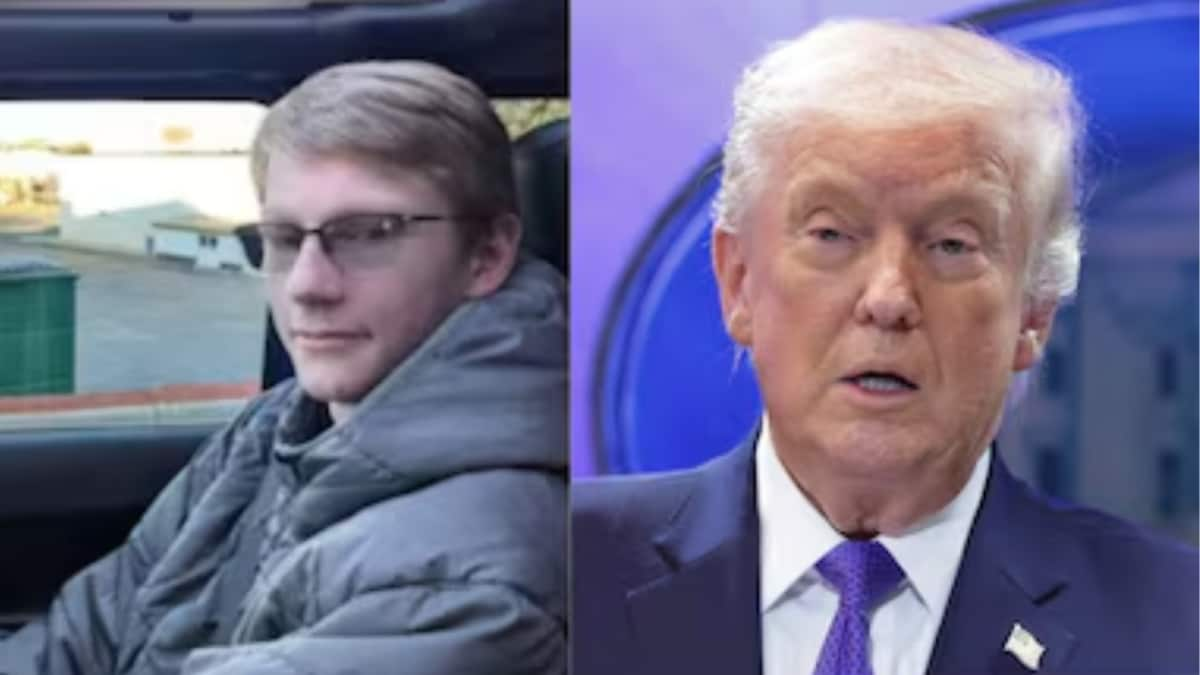
Hours after the US Supreme Court struck down the sweeping tariffs imposed by Donald Trump, the US President, clearing the air on the impending trade deal with India, said America’s arrangement would remain intact despite the judicial setback. “Nothing changes. They will be paying tariffs, and we will not be paying tariffs," Trump said while referring to India.
However, Indian negotiators, who were headed to Washington DC on Monday for three days to finalise the legal text of the India-US trade agreement struck earlier this month pushed their trip to the backburner as New Delhi sought to reschedule the talks.
Though America insists that all trade deals prior to the Supreme Court judgment stand negotiated, what may come to India’s rescue is the fact that the two countries have only reached a framework for an Interim Agreement. More importantly, Clause 8 in the framework, which was inserted from the Indian side, now gives India the flexibility to fine-tune its tariff and non-tariff commitments, even as it stays at the table with Washington to hammer out a fair and practical trade deal.
So, what exactly is Clause 8?
According to The Indian Express, the framework for the interim trade deal contains a rule (Clause 8) that says if either India or the United States changes the tariffs (taxes on imports) they had agreed on, the other country can change its own promises too. This gives both sides, but especially India, a kind of “safety valve" if things change before the deal is final.
The US Supreme Court order, saying Trump had gone too far in using a special law to impose extra tariffs, gives India a reason to use the “modify commitments" clause to adjust or renegotiate parts of the deal because the tariff levels the two sides were working with have changed.
As per The Economic Times, under the earlier draft of the deal, India was expected to lower its own import taxes, ease rules for American goods, and buy more products from the US. In return, the US would give India a tariff rate of 18 per cent. However now, because the US tariff baseline is already 15 per cent for everyone, India might reject giving big concessions without getting clear benefits.
To add to the confusion, the 15 per cent tariff announced on Saturday is the highest rate permitted under a rarely invoked US trade provision—Section 122 of the 1974 Trade Act. Even then, the measure is only temporary. The law allows such tariffs to remain in force for about 150 days, or roughly five months. Beyond that window, the administration would need approval from Congress to extend them. In other words, the situation remains fluid and uncertain.
The across-the-board 15 per cent tariff imposed under Section 122 is itself vulnerable to legal scrutiny. The US administration would need to demonstrate that America is facing balance-of-payments pressures to justify invoking this provision.
At the same time, the new 15 per cent rate effectively becomes the starting point for future negotiations. Any country seeking preferential access to the US market would now have to secure tariff terms below this uniform benchmark in exchange for concessions of its own.
According to The Express, with the 15 per cent duty in place under Section 122—and factoring in exemptions for sectors such as pharmaceuticals, electronics and certain auto components—India’s weighted average tariff on exports to the US has dropped sharply. Analysts estimate it has fallen from an effective 34 per cent earlier (when cumulative tariffs stood at 50 per cent) to about 9 per cent now under the revised structure.
For the time being, the “modify commitments" clause gives India a chance to rethink or adjust its side of the trade deal, because the US changed the tariff rates that both sides were negotiating on after a court decision. For both the countries, this could delay or change how the final agreement looks.
Handpicked stories, in your inbox
A newsletter with the best of our journalism
First Published:
February 24, 2026, 14:12 IST
News explainers Trump Says 'Nothing Changes' After SC Setback On Tariffs But India Can Revisit Trade Deal. Here's How
Disclaimer: Comments reflect users’ views, not News18’s. Please keep discussions respectful and constructive. Abusive, defamatory, or illegal comments will be removed. News18 may disable any comment at its discretion. By posting, you agree to our Terms of Use and Privacy Policy.
Read More