2 hours ago
Last Updated:February 24, 2026, 15:36 IST
What is Israel PM Benjamin Netanyahu’s proposed Hexagon of Alliances? What is India’s role in it? What does it mean ahead of PM Narendra Modi’s visit? Explained


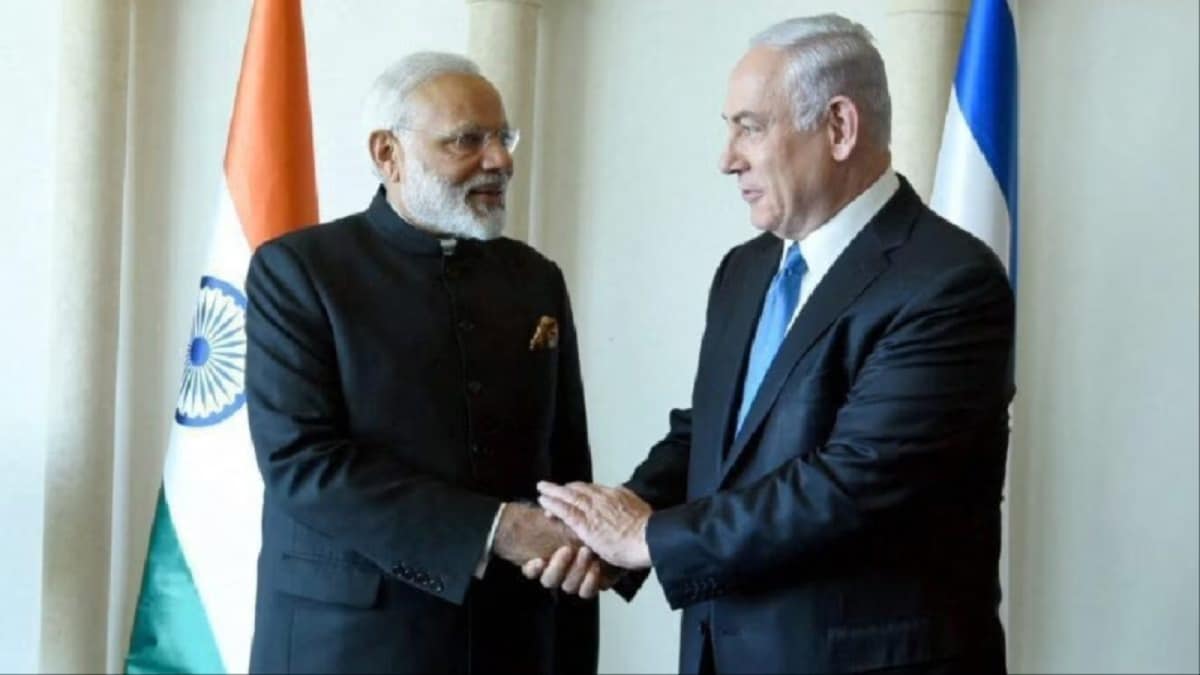
Israeli Prime Minister Benjamin Netanyahu and Prime Minister Narendra Modi (Reuters File Image)
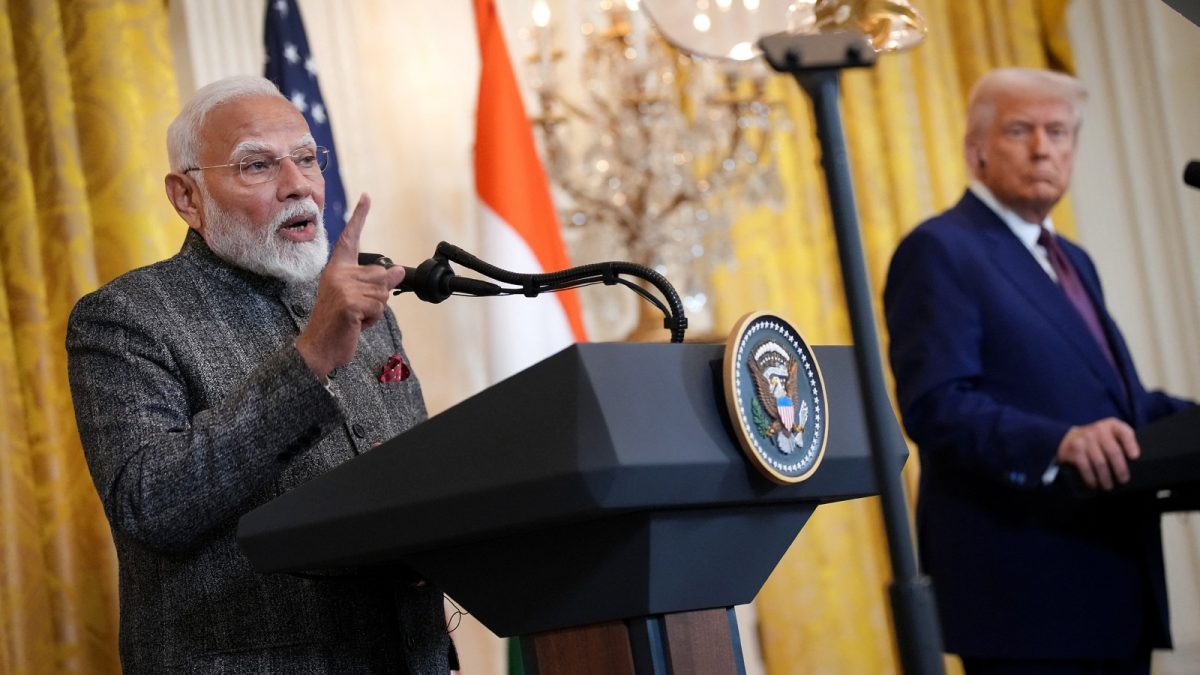
Ahead of Prime Minister Narendra Modi’s visit, Israeli Prime Minister Benjamin Netanyahu has proposed the ‘Hexagon of Alliances’, a strategic framework designed to formalise a network of allied nations to counter regional threats.
Netanyahu’s vision positions India as a cornerstone of the new bloc. What is it? Who are the partners? News18 explains.
PM Modi’s Israel visit
Prime Minister Narendra Modi is scheduled to arrive in Israel on February 25, 2026 for a historic two-day state visit. This marks his first visit to the country in nearly nine years and his second overall since the landmark 2017 trip.
PM Modi is expected to become the first Indian leader to address the Knesset (Israeli Parliament). Immediately upon landing in Tel Aviv, he will hold a private meeting with Benjamin Netanyahu, whom he has frequently described as a “dear friend".
Discussions will focus on high-tech cooperation, including Artificial Intelligence (AI), quantum computing, cybersecurity, and semiconductors. The visit coincides with reports of massive new arms deals worth approximately $8.6 billion, including precision-guided bombs and advanced missile systems. Both leaders are expected to set a roadmap for finalizing a Free Trade Agreement by the end of 2026. Discussions will also cover the India-Middle East-Europe Economic Corridor (IMEC), a strategic transit project aimed at connecting India to European markets via Israel.
What is the Hexagon of Alliances?
The ‘Hexagon’ refers to a six-sided system of alliances involving:
Israel: Central coordinator
India: Strategic anchor and global power
Mediterranean Partners: Specifically Greece and Cyprus
Arab Nations
African Nations
Asian Nations
Why the alliance?
The alliance aims to institutionalise coordination across three main pillars:
Security: Deepening intelligence sharing and defense cooperation against common “radical" adversaries.
Diplomatic Alignment: Creating an “axis of nations" that share similar strategic assessments of regional challenges.
Economic Cooperation: Enhancing trade, technology partnerships (especially in AI and quantum computing), and infrastructure connectivity similar to the India-Middle East-Europe Economic Corridor (IMEC).
Hexagon will counter…
Netanyahu explicitly framed the bloc as a counterweight to what he described as:
The ‘Radical Shia Axis’: Led by Iran and its network of proxies like Hezbollah and the Houthis.
The “Emerging Radical Sunni Axis": A newer framing intended to address emerging extremist threats in the region.
By anchoring India to Greece and Cyprus, the alliance creates a powerful maritime front that opposes Turkey’s claims over Eastern Mediterranean oil and gas reserves.
The analysis
Analysts have described the proposal as a “branding exercise" to formalise existing ad hoc relationships and project that Israel is not diplomatically isolated.
While India values its friendship with Israel, it remains highly pragmatic and typically avoids rigid bloc politics to maintain its “strategic autonomy". Some potential partners, such as Greece and
Cyprus, are members of the Criminal Court (ICC), which has issued an arrest warrant for Netanyahu, complicating formal state-level alliances.
India and Israel
In Netanyahu’s Hexagon of Alliances, India is positioned as the strategic anchor and “central core" of the new regional architecture. While the framework is still emerging, India’s specific roles are defined by several key functions.
Netanyahu has explicitly framed India as a “global power" whose involvement provides the alliance with international legitimacy and weight. India’s role involves deepened coordination in intelligence sharing and counter-terrorism operations, particularly targeting what Netanyahu calls “radical axes".
India is one of the largest buyers of Israeli defense equipment, and the alliance seeks to move toward joint defense research and production under India’s “Make in India" initiative.
A major focus of the India-Israel axis within the hexagon is collaboration on Artificial Intelligence (AI) and quantum computing. The ‘hexagon’ is seen as a strategic formalization of the India-Middle East-Europe Economic Corridor (IMEC), where India acts as the primary trade and connectivity link between Asia and the Mediterranean.
India cautious
New Delhi maintains a cautious stance due to its own strategic interests. India historically avoids joining rigid, confrontational blocs. Analysts note that while India values its relationship with Israel, it is unlikely to join an explicitly “anti-Iran" military bloc.
India maintains deep “civilisational" ties with Iran and critical energy and remittance links with Arab nations, making it hesitant to adopt the sectarian “Shia vs Sunni" framing proposed by Netanyahu.
Prime Minister Modi has expressed agreement on the “diverse nature" of bilateral relations and a commitment to peace, but he has not formally endorsed the full “Hexagon" structure as a military or ideological.
First Published:
February 24, 2026, 14:03 IST
News explainers Ahead Of PM Modi’s Israel Visit, Netanyahu’s ‘Hexagon of Alliances’ With India At Its Core Explained
Disclaimer: Comments reflect users’ views, not News18’s. Please keep discussions respectful and constructive. Abusive, defamatory, or illegal comments will be removed. News18 may disable any comment at its discretion. By posting, you agree to our Terms of Use and Privacy Policy.
Read More