2 hours ago
US President Donald Trump's claim that Nato troops stayed back from the front lines during the 20-year war in Afghanistan has sparked widespread outrage among European military veterans and relatives of the fallen. Did Nato avoid the Afghan war front line? Here is what facts and data tell us.
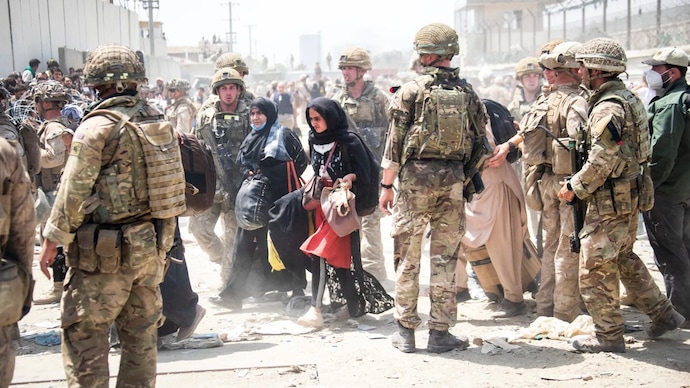
UK forces work with the US military to evacuate Afghans at Kabul airport (Getty)

New Delhi,UPDATED: Jan 24, 2026 09:49 IST
"My son was only 18 when he was killed in a blast, while trying to save fellow troops," said the mother of the youngest British soldier killed in Afghanistan. She was among the hundreds of European military veterans and relatives of the fallen who spoke out as outrage grew over Donald Trump's claim that Nato troops stayed back from front lines during the 20-year war in Afghanistan. However, during the war, it was not just the American troops who were risking their life and limbs to serve in Afghanistan. Here is a reality check.
Following the 9/11 attacks, the US and its Nato allies invaded Afghanistan in 2001. For this, Article 5 of the North Atlantic Treaty was invoked. It states that an armed attack against one Nato member is considered an attack against all. Till 2014, when combat operations ended, and beyond, Nato countries fought alongside US troops in Afghanistan, bearing high costs in terms of both dollars and lives.
This is why Trump's remarks have rankled not only US allies in Nato, but also European veterans. The timing, coming amid tensions over Trump's threats to seize Greenland, an autonomous part of a Nato member (Denmark), has not helped matters.
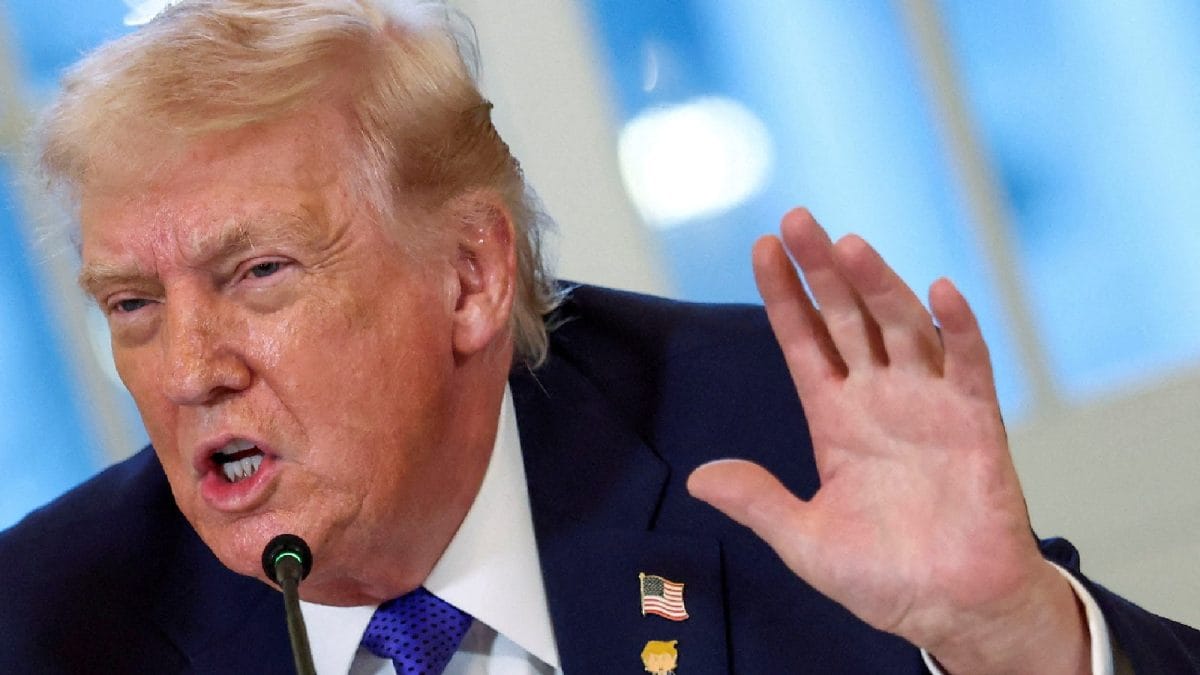
"We have never needed them. We have never really asked anything of them. They will say they sent some troops to Afghanistan... and they did, they stayed a little back, a little off the front lines," Trump said, speaking a wave of anger and condemnation from Nato allies.
But what is the reality?
WHAT DATA FROM AFGHAN WAR TELLS US
According to official data, around 38 Nato countries committed to the Afghan conflict in December 2001. However, the US has always provided the largest military contingent. The number of Nato troops in Afghanistan peaked at about 1,40,000 in 2011, but decreased subsequently, as combat operations were wound down.
The US, with the largest military strength, suffered the highest number of troop casualties in absolute terms. However, several European countries, with far smaller populations, lost almost as many soldiers when measured proportionately.
As per data, around 3,500 troops died during the 20-year conflict in Afghanistan, whose aim was to dismantle the al-Qaeda terror network and oust the Taliban regime. Of them, the US lost 2,456 troops and the UK 457.
In perspective, Denmark, whose population is smaller than that of a US state like Massachusetts, lost around 50 troops. If seen in per capita terms, it is about the same death rate as that of the US.
After the UK, Canada suffered the most fatalities at 159, followed by France (90), Germany (62), Italy (53), and Poland (44). Other Nato countries, like Estonia, Norway, the Netherlands, the Czech Republic, and Romania, also lost a few dozen troops.
While the Afghan government has not provided any official data on losses, ousted President Ashraf Ghani in 2019 said more than 45,000 troops were killed since 2014.
Moreover, Trump's claim that the Nato allies did not fight on the front lines also falls flat. According to the Nato website, personnel from 36 member countries were deployed in Kabul, Mazar-e Sharif in the north, Herat in the west, Kandahar in the south, and Laghman in the east. All these areas witnessed heavy fighting.
BBC's defence analyst Frank Gardner highlighted that Brits, Canadians, Danes and Estonians were among those who saw the toughest fighting in Kandahar and Helmand provinces.
A research paper published by The Watson School of and Public Affairs said British and Canadian troops put their lives at "risk at twice the rate" of American troops, when seen as a percentage of each nation's peak deployment.
Thus, Trump's attempt to diminish the role of Nato allies in the Afghanistan war does not hold much water in the face of facts.
- Ends
Published By:
Abhishek De
Published On:
Jan 24, 2026
Tune In