 1 hour ago
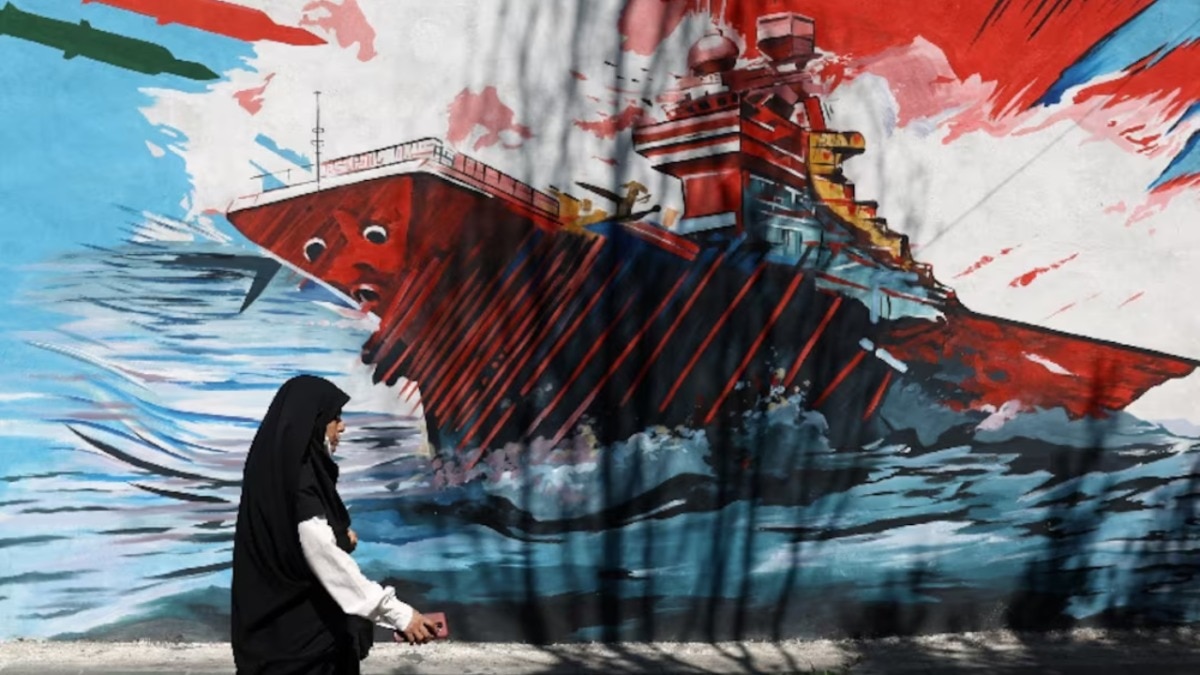
If Trump's reported diplomatic outreach to Iran advances, it could mark a turning point in West Asian geopolitics, weakening Netanyahu's long-standing strategy and reshaping US-Israel alignment, while signalling a broader shift from confrontation to managed engagement across the region.
For years, Israeli Prime Minister Benjamin Netanyahu has anchored Israel’s West Asia strategy on a clear and uncompromising assumption: Iran must be weakened, contained or strategically isolated before any durable regional peace can take shape. In this worldview, Tehran is not simply another regional rival but the central obstacle to a new Middle Eastern order in which Israel becomes fully integrated with Arab states through security and economic cooperation.
That long-standing doctrine is now facing an unexpected challenge. Signals emerging from Washington suggest that US President Donald Trump may be considering a diplomatic framework with Iran, a direction that would mark a significant departure from the maximum-pressure logic that has defined US policy in recent years and formed a cornerstone of Netanyahu’s regional strategy.
While no formal agreement has been confirmed publicly, Trump has reportedly indicated that a preliminary understanding involving Iran is “largely negotiated” following discussions with Arab and Islamic leaders. The suggestion alone has been enough to trigger political alarm within pro-Israel and hawkish Republican circles in Washington.
Hardline critics reacted swiftly. Senator Ted Cruz described the reported development as a form of “appeasement”, while former secretary of state Mike Pompeo drew direct comparisons with the 2015 nuclear agreement negotiated under Barack Obama, a deal Trump famously withdrew from during his first term. The renewed reference to the Obama-era agreement underscores how politically sensitive any engagement with Tehran remains within US domestic politics.
Yet what makes the current moment different is not just the proposal itself, but the visible fragmentation within Trump’s political ecosystem. The traditional unity of Republican foreign policy hawks on Iran appears increasingly strained. A growing anti-war faction within Trump’s wider circle is now openly disputing the long-standing assumption that sustained pressure and isolation are the only viable tools for dealing with Tehran.
This internal divide reflects a broader shift in US political discourse, where intervention fatigue and concerns over prolonged regional entanglement are increasingly shaping strategic debate. The result is a more contested and less predictable policy environment, one in which previously stable positions on Iran are now actively being renegotiated.
At the centre of this unfolding recalibration stands Benjamin Netanyahu. According to several analysts, the Israeli prime minister’s confidence in the durability of US alignment on Iran has been weakened by the limited outcomes of recent regional escalation involving Tehran and its allied networks. Israeli expectations of decisive strategic transformation, whether through internal destabilisation in Iran or significant regime weakening, have not materialised in the way some planners had anticipated.
Instead, Iran’s political structure has demonstrated resilience. Despite sustained external pressure and periods of military escalation, the Islamic Republic has maintained internal coherence and continued functioning under Supreme Leader Ali Khamenei. This durability has complicated assumptions that time and pressure alone would produce structural collapse or fundamental strategic reversal.
Now, if Washington moves toward even a limited diplomatic framework that offers Iran economic relief or partial sanctions easing, Netanyahu’s long-standing strategic doctrine faces a critical test. His position has consistently warned that any relaxation of pressure would allow Iran space to rebuild its economy, consolidate its regional influence, and advance its strategic programmes under reduced international constraint.
The potential irony is significant: a US administration once seen as the strongest enforcer of pressure on Iran may now be exploring a calibrated form of engagement.
This development carries implications far beyond the US–Iran relationship. It directly affects Netanyahu’s broader vision for regional realignment. For more than a decade, Israeli strategy has been closely tied to the assumption that shared concern over Iran would gradually pull Arab states into a more formalised alignment with Israel, particularly through frameworks such as the Abraham Accords.
That expectation, however, has always depended on a consistent perception of Iranian escalation. Recent regional behaviour suggests a more complex reality. While Gulf states remain wary of Iran’s regional activities, they have shown limited appetite for direct military confrontation. Instead, many have prioritised stability, economic diversification and diplomatic balancing over alignment in a polarised security bloc.
Across the Gulf Cooperation Council, governments have increasingly adopted multi-vector foreign policies. These involve maintaining security ties with the United States while also engaging economically with Europe and Asia, and in some cases sustaining indirect diplomatic channels with Iran. Rather than choosing between opposing blocs, regional actors are increasingly attempting to manage relationships across competing power centres.
This pragmatic approach complicates the idea of a unified anti-Iran security architecture led by Israel. While intelligence cooperation and quiet security coordination between Israel and some Arab states have developed in recent years, the political appetite for open-ended confrontation with Iran remains limited.
Trump’s reported openness to a diplomatic understanding appears to reflect this shifting regional reality. His recent messaging suggests continued interest in broader Middle East normalisation, but potentially through de-escalation rather than sustained confrontation. If this approach gains traction, it would represent a significant recalibration of US regional priorities.
Such a shift places Netanyahu in a more constrained position. His long-standing alignment with Trump has provided Israel with strong political support within segments of the American right. However, it has also contributed to deep polarisation within US domestic politics, limiting bipartisan consensus on Israeli policy priorities.
If Trump’s approach to Iran diverges from Netanyahu’s expectations, the Israeli prime minister could find himself in a more complex political environment in Washington, one in which support is less predictable and more conditional on broader US strategic recalculations.
More broadly, the emerging divergence between Washington and Jerusalem on Iran reflects a deeper structural question about the future of West Asian geopolitics. The post-2010s security framework, heavily shaped by confrontation with Iran, is no longer uncontested. Instead, it is being challenged by an alternative logic emphasising managed competition, selective engagement and regional economic integration.
The outcome of this policy tension remains uncertain. It is unclear whether Trump’s reported diplomatic initiative will develop into a formal agreement, remain a preliminary framework, or ultimately stall under domestic and international pressure. What is already evident, however, is that assumptions underpinning Israel’s Iran strategy are being tested in real time.
If Washington continues to move toward even limited engagement with Tehran, it could signal a broader transformation in US Middle East policy, one that prioritises stability over confrontation, and negotiation over sustained pressure. For Netanyahu, that would represent not just a diplomatic adjustment, but a fundamental challenge to the strategic architecture that has defined Israel’s regional approach for years.
The coming period will therefore be critical. It will determine whether the region continues along a path of entrenched confrontation or gradually shifts toward a more fluid and negotiated balance of power.
- Ends
Published By:
indiatodayglobal
Published On:
May 26, 2026 00:13 IST