1 hour ago
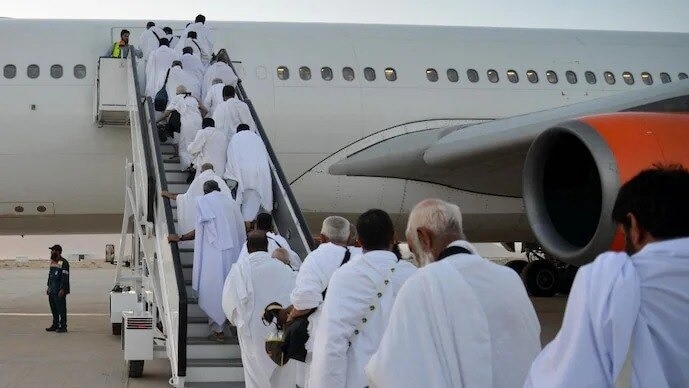
"When two elephants fight, it is the grass that suffers," reads one African proverb. Today, the Pakistani Shia community in the United Arab Emirates (UAE) has become that proverbial grass. Caught in a volatile mix of regional tensions, including the US-Iran war, a fracturing relationship between Abu Dhabi and Islamabad, and deep-seated Arab paranoia regarding Shia populations, Pakistani Shais are facing severe blowback. Consequently, the UAE has reportedly begun deporting thousands of Pakistani Shias since Iranian munitions first struck the Emirates and Islamabad tries to broker peace between Iran and the US.
Like most Gulf nations, the UAE hosts a massive diaspora of Pakistani labourers. According to data from the Association of Overseas Pakistanis, more than 1.8 million Pakistanis live and work in the UAE, making them the second-largest expatriate community in the Emirates. This workforce forms a critical pillar of Islamabad's fragile economy, sending back between $8 billion USD in vital remittances last year. Now, these expatriates, specifically those belonging to the Shia community, find themselves squarely in Abu Dhabi's crosshairs, according to reports.
There is no official data tracking exactly how many Pakistani Shias have been expelled, and the Pakistani Foreign Ministry has flatly denied any mass deportations. Ministry spokesperson Tahir Andrabi told The New York Times that any recent expulsions were strictly limited to individuals who had committed crimes within the Emirates, staying silent on whether Shias were being systematically singled out.
Pakistani Shias, however, beg to differ. Mohammad Amin Shaheedi, an Islamabad-based cleric who leads a prominent Shia political organisation, told The New York Times that his group has already registered 5,000 deported families. Speaking to Middle East Eye, Shaheedi further estimated that the true scale of the crackdown was much larger, suggesting that as many as 15,000 Pakistani Shias might have been deported or denied re-entry into the UAE in recent months alone.
A database compiled by the Pakistani Shia political organisation Majlis Wahdat-e-Muslimeen, lists 7,500 Pakistani Shias deported from the Gulf Arab state since February 28, when the US and Israel launched strikes on Iran, reported Reuters.
The UAE's targeting of Pakistani Shias stems from a mix of historic prejudice and current geopolitical friction. Mirroring its Gulf neighbours, the Emirates has long harboured a deep-seated paranoia toward Shia communities. This is a legacy of Iran's 1979 Islamic Revolution that casts suspicion on Shia expatriates regardless of nationality.
However, the current purge of Pakistani Shias is tied directly to immediate regional flashpoints.
As Iran strikes Emirati territory, Abu Dhabi has grown deeply frustrated with Islamabad. Instead of offering firm condemnation, Pakistan has attempted to act as a neutral peacemaker to end the conflict, a diplomatic stance that has backfired.
Pakistan also saw violent protests over Ayatollah Ali Khamenei's killing, with mobs trying to storm the US Embassy and consulates. The UAE might also be wary of internal security amid the strikes from Shia Iran.
WHY GULF NATIONS ARE SUSPICIOUS OF SHIA NETWORKS
Before examining how the war involving Iran and Islamabad's peace gambit put Pakistani Shias in the crosshairs, it is essential to understand the deep-seated suspicion the community has faced across the Gulf since the Islamic Revolution in Iran in 1979, which was led by Shia clerics.
For decades, Gulf states like the UAE and Saudi Arabia have viewed Shia religious networks through the lens of Iranian influence. This suspicion intensified after the 1979 Iranian Revolution and the 2011 Arab Spring uprisings, leading to increased scrutiny of Shia expatriates from Pakistan, Lebanon, Iraq, and Afghanistan during regional crises, reported the Middle East Eye.
At the core of these concerns is the doctrine of Wilayat al-Faqih (Guardianship of the Islamic Jurist). Developed by Ayatollah Ruhollah Khomeini, this doctrine serves as Iran's ideological foundation, granting the supreme leader sweeping religious and political authority over Shia Muslims globally.
While many Shia Muslims and clerics reject this doctrine, Gulf security establishments fear it fosters transnational loyalties that challenge Arab monarchies. These anxieties intensified on April 20, when the UAE's State Security Department announced it had dismantled a clandestine organisation linked to Iran and its Wilayat al-Faqih ideology, reported the Middle East Eye.
The regional climate deteriorated further after Iranian Supreme Leader Ayatollah Ali Khamenei was killed in a joint US-Israeli strike on February 28 in Tehran. The assassination triggered widespread unrest, including protests by Pakistan's Shia community that turned violent and resulted in over 35 deaths.
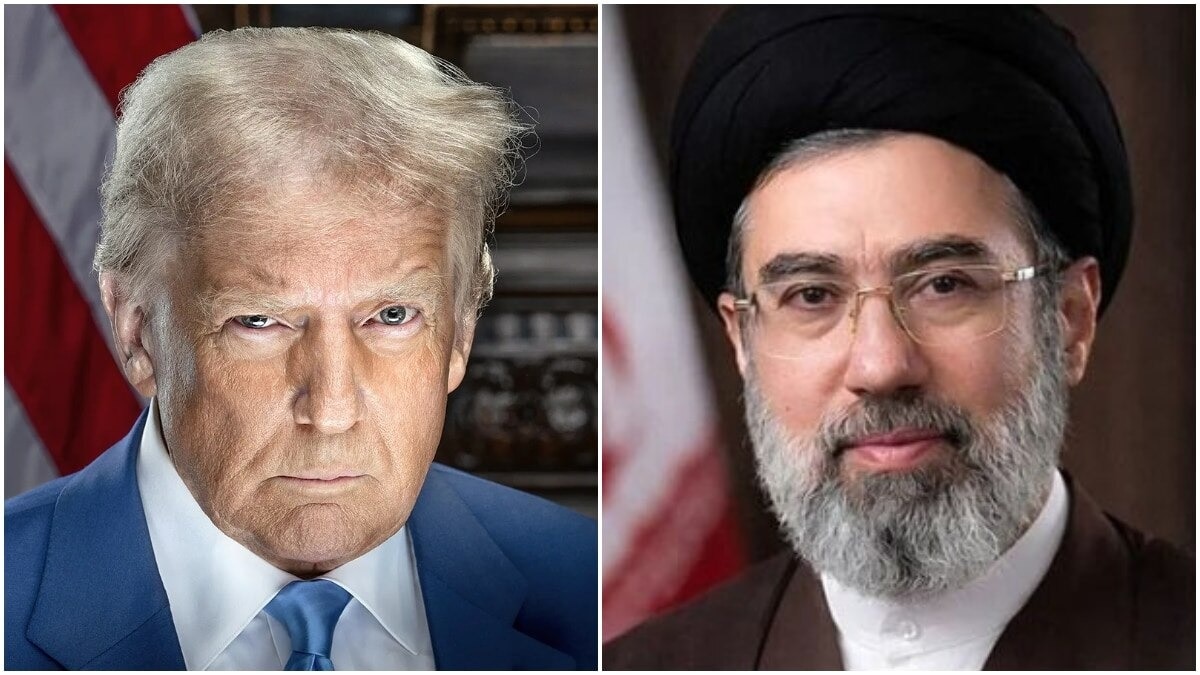
The subsequent rise of the late supreme leader's son, Mojtaba Khamenei, has deepened Gulf fears regarding Iran's ideological project. For those who subscribe to Wilayat al-Faqih, Mojtaba's succession is the continuation of a religious authority believed to endure until the return of the Mahdi, the messianic figure in Shia Islam.
Suspicion of Shias also increased following the 2020 Abraham Accords between the UAE and Israel, according to the Middle East Eye. It quoted Pakistani Shia expatriates saying that the security climate had shifted since then.
While private majalis gatherings are still permitted, community elders report that public rituals face heavy surveillance, with some worshippers detained and deported. A Human Rights Watch report from 2021 also documented a rise in restrictions targeting Shia religious expression in the UAE.
HOW IRAN WAR, PAK ACTIONS LED TO SHIA DEPORTATIONS FROM UAE
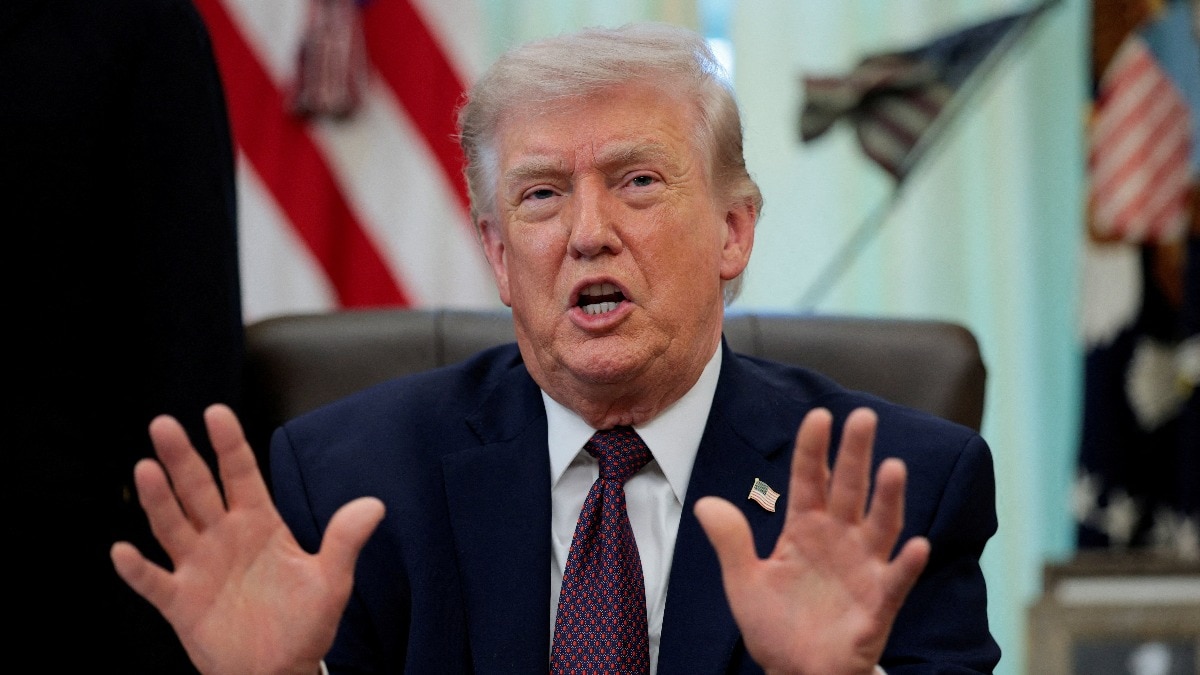
The scale of Pakistani deportations might have been driven by the war and Islamabad's diplomatic stance. The UAE is the hardest hit of all Gulf nations. Its Ministry of Defence claims it has engaged roughly 3,000 Iranian attacks targeting critical infrastructure, including airports, residential zones, and the Fujairah oil terminal. Determined to extract its pound of flesh from Tehran, Abu Dhabi has joined other Gulf states in pushing US President Donald Trump to continue the war. The UAE even clashed with Iran, reports suggest, seeking an explicit condemnation of Tehran's attacks in a recent BRICS joint statement.
Against this backdrop, Pakistan's desire to mediate and end the war came as a rude shock to Abu Dhabi.
The UAE "sees things in kind of black and white at the moment," Neil Quilliam, an associate fellow at Chatham House, told The Financial Times. "There's no neutrality in this, there's no middle ground, and if you're mediating, then you are in the middle ground".
The Financial Times in April reported that the UAE explicitly signalled to Islamabad to take a harder line against Iran, but Pakistan refused to defer. "They sought to position themselves as a mediator, which didn't go down well," Emirati commentator Abdulkhaleq Abdulla told the UK-based paper.
Husain Haqqani, a former Pakistani diplomat at the Anwar Gargash Diplomatic Academy, summarised the friction to The New York Times, stating that, "The UAE was shocked that Pakistan did not support them against Iran, and Pakistan was shocked that the UAE was shocked."
The blowback was immediate. Abu Dhabi recalled a $3.5-billion loan to Pakistan, nearly a fifth of its foreign reserves, forcing Saudi Arabia to step in with a $3-billion deposit to stabilise Islamabad. Alongside financial retaliation, Shia leaders claim Abu Dhabi began systematic deportations.
Mohammad Amin Shaheedi, an Islamabad-based cleric leading a Shiite political organisation, told The New York Times that the expulsions accelerated after Pakistani leaders helped broker a temporary US-Iran cease-fire on April 8. Other workers left after losing their jobs to the war economy.
"There is this perception in the Gulf that every Shia supports Iran," Shaheedi noted, adding that appealing to Islamabad is futile. "It is useless to ask the Pakistani government to talk to the UAE, given how bad the relationship is."
OUR ONLY CRIME IS BEING SHIA: PAKISTANIS ALLEGE BEING DEPORTED ARBITRARILY
For the thousands of Pakistani expatriates caught in the crossfire, the sudden expulsions have shattered decades of livelihood. Deportees interviewed by The New York Times and Middle East Eye alleged a pattern of arbitrary detentions, high-tech surveillance, and forced removals conducted with zero legal recourse or official explanation.
Deportees allege sophisticated profiling apparatus focused strictly on the Shia religious identity. Worshippers told Middle East Eye that Emirati authorities mandated biometric checks at imambargahs (Shia congregation halls), requiring attendees to scan their Emirates ID cards before entering, a protocol not enforced at Sunni mosques.
This biometric tracking, alongside facial recognition, allegedly feeds a massive security dragnet. Qaisar, a deportee from Pakistan's Punjab, described being intercepted by security inside the Dubai Mall after being flagged via CCTV. "They approached me directly and asked for my ID," he told Middle East Eye. "They already knew exactly who I was."
A Sunni labourer, told the news outlet he was deported simply because he frequently visited a Shia congregation hall for free lunch.
The deportees allege that the execution of the deportations is sudden and opaque. Expelled workers told The New York Times that they either received abrupt phone calls from the Criminal Investigation Department (CID) or were ordered by employers to report to detention facilities like Dubai's Al Awir center. Detainees spent days in cramped cells without being told why they were arrested.
When they were finally placed on flights out of the country, the only paper trail provided was an emergency travel "outpass" from the Pakistani Consulate in Dubai. The document listed the official reason for deportation as "Jailed/Absconding".
The New York Times reported that in a single cluster of northwestern Pakistani villages, nearly 900 men have returned "empty-handed in recent weeks". Former Pakistani lawmaker Nadeem Afzal Chan confirmed that at least 100 labourers from his Punjab district alone were sent back.
Many also alleged that they spent their final hours in the UAE stripped of their phones, cash, and bank cards. They were denied the opportunity to contact employers, collect unpaid wages, or pack up possessions built over years of labour. One taxi driver, Shah, noted that his abrupt expulsion permanently cut off the 1,000-dollar monthly salary that supported 14 family members back home.
Despite the varying backgrounds of the labourers, engineers, and IT professionals allegedly targeted, their conclusions remain identical. "They did not give us any reason," Haider Ali Bangash, a 47-year-old taxi driver, told The New York Times. "But we understood. Our only crime is being Shiite".
Though the Pakistani Shias have alleged "arbitrary deportation", it has to be borne in mind that every country has the right to prioritise its internal security and stability, especially at a time when it is facing attacks from an external force. The same is true for the UAE.
- Ends
Published By:
Shounak Sanyal
Published On:
May 25, 2026 17:42 IST