 1 day ago
Last Updated:March 09, 2026, 13:16 IST
IMF Managing Director Kristalina Georgieva warned that a sustained rise in oil prices due to the Middle East conflict could push global inflation higher.


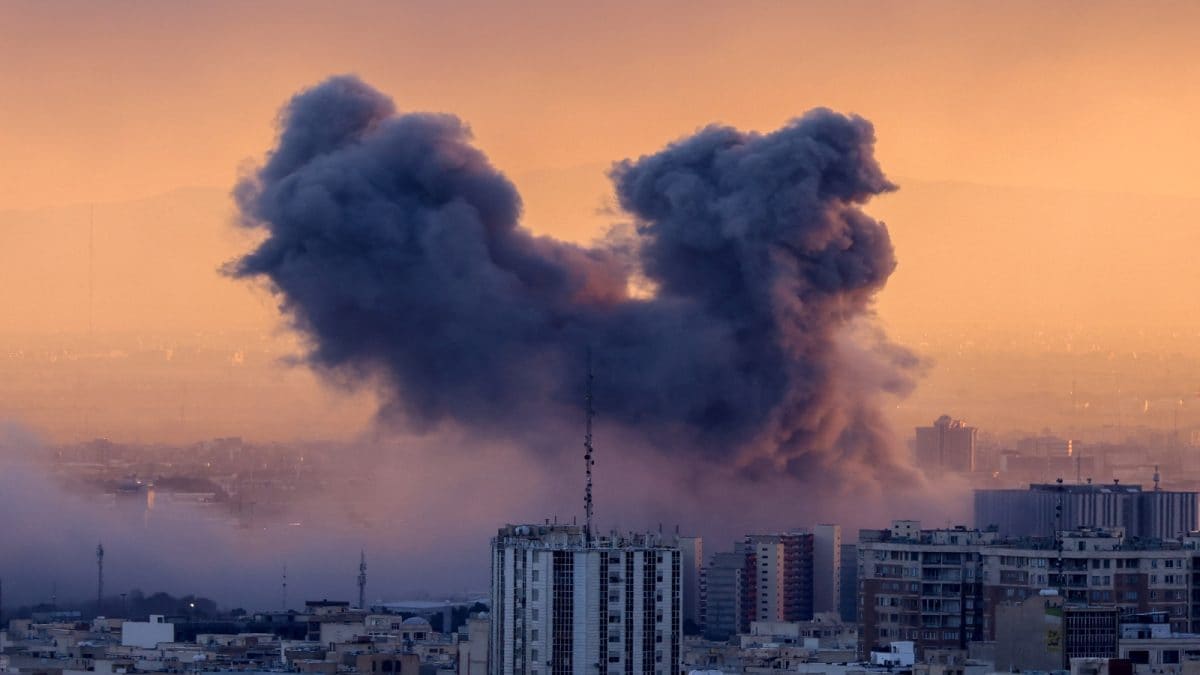
Smoke rises after an Israeli airstrike targeted an area in Beirut’s southern suburbs (AFP: Photo)
Monetary Fund (IMF) Managing Director Kristalina Georgieva on Monday warned that the ongoing conflict in the Middle East could pose fresh risks to global inflation if oil prices remain elevated for a prolonged period.
Speaking at a symposium hosted by Japan’s finance ministry, Georgieva said geopolitical tensions in the region were already testing the resilience of the global economy.
“We are seeing resilience tested again by the new conflict in the Middle East," Georgieva said, according to Reuters.
She cautioned that energy prices could have a significant impact on inflation if the crisis leads to sustained disruptions in oil markets.
Georgieva noted that a 10 per cent increase in oil prices that persists through most of the year could raise global inflation by around 40 basis points.
“My advice to policymakers in this new global environment is to think of the unthinkable and prepare for it," she said.
Her warning comes as global energy markets face uncertainty following the escalation of tensions involving Iran, the United States and Israel, raising concerns about disruptions to key oil supply routes.
PROLONGED CRISIS MAY IMPACT ECONOMY: FINANCE MINISTRY REPORT
A report by India’s Finance Ministry has also cautioned that a prolonged crisis in the Middle East could have wider economic implications, including pressure on the exchange rate and rising inflation due to higher petroleum prices, news agency PTI reported.
According to the Monthly Economic Review for February, released by the ministry, the conflict has already disrupted shipping through the Strait of Hormuz, the world’s most critical oil chokepoint that handles about 20 per cent of global oil flows.
The report said the US-Israel strikes on Iran on February 28, which killed Iranian Supreme Leader Ali Khamenei and triggered retaliatory threats, marked a significant escalation with potential long-term consequences for global energy geopolitics.
It noted that Brent crude prices have already risen by about 9 per cent to nearly USD 80 per barrel, while liquefied natural gas (LNG) prices have surged by around 50 per cent.
“However, if the crisis persists, it could have material implications for the exchange rate and the current account deficit and could stoke inflationary pressures," the report mentioned.
The ministry also warned that subdued capital flows, coupled with a “flight to safety" in global financial markets, could place pressure on currencies.
At the same time, it said India’s macroeconomic fundamentals remain strong, pointing to sufficient foreign exchange reserves, a relatively low current account deficit and steady economic growth.
The report estimated India’s real GDP growth at 7.6 per cent for FY26 and upgraded growth projections for FY27 to between 7 and 7.4 per cent.
FUEL PRICE SHOCK TRIGGERS CONCERNS IN PAKISTAN
Meanwhile, rising global oil prices have already begun affecting economies in the region.
Pakistan has announced a steep hike in fuel prices, raising petrol and high-speed diesel rates by PKR 55 per litre, roughly a 20 per cent increase.
As of March 7, petrol prices have risen to PKR 321.17 per litre, while high-speed diesel now costs PKR 335.86 per litre.
The price revision comes amid the escalating conflict in West Asia, which has disrupted oil supply routes and intensified pressure on energy markets.
The sharp increase has sparked concern among citizens struggling with rising living costs during Ramadan.
“It feels like a noose has been tightened around our necks. Nothing makes sense anymore," commuter Muhammad Nadeem told ANI.
Another commuter, Aslam Qadri, linked the rising fuel prices directly to the geopolitical tensions.
“A war is going on between the US and Iran, affecting people around the world. Because of this conflict, petrol prices have increased," he said.
Experts have warned that the surge in fuel prices could trigger a second wave of inflation, as higher transport and logistics costs drive up prices of food and essential goods.
Pakistan’s government has said it had little option but to pass on the impact of rising international oil prices to consumers as it seeks to stabilise national energy finances and meet requirements linked to IMF consultations.
First Published:
March 09, 2026, 13:15 IST
News world 'Think Of The Unthinkable': IMF Chief Warns Middle East Conflict Could Raise Global Inflation
Disclaimer: Comments reflect users’ views, not News18’s. Please keep discussions respectful and constructive. Abusive, defamatory, or illegal comments will be removed. News18 may disable any comment at its discretion. By posting, you agree to our Terms of Use and Privacy Policy.
Read More