16 hours ago
Last Updated:January 09, 2026, 12:28 IST
The US says its oil-for-stability plan can revive Venezuela’s economy. The underlying numbers tell a more complicated story.

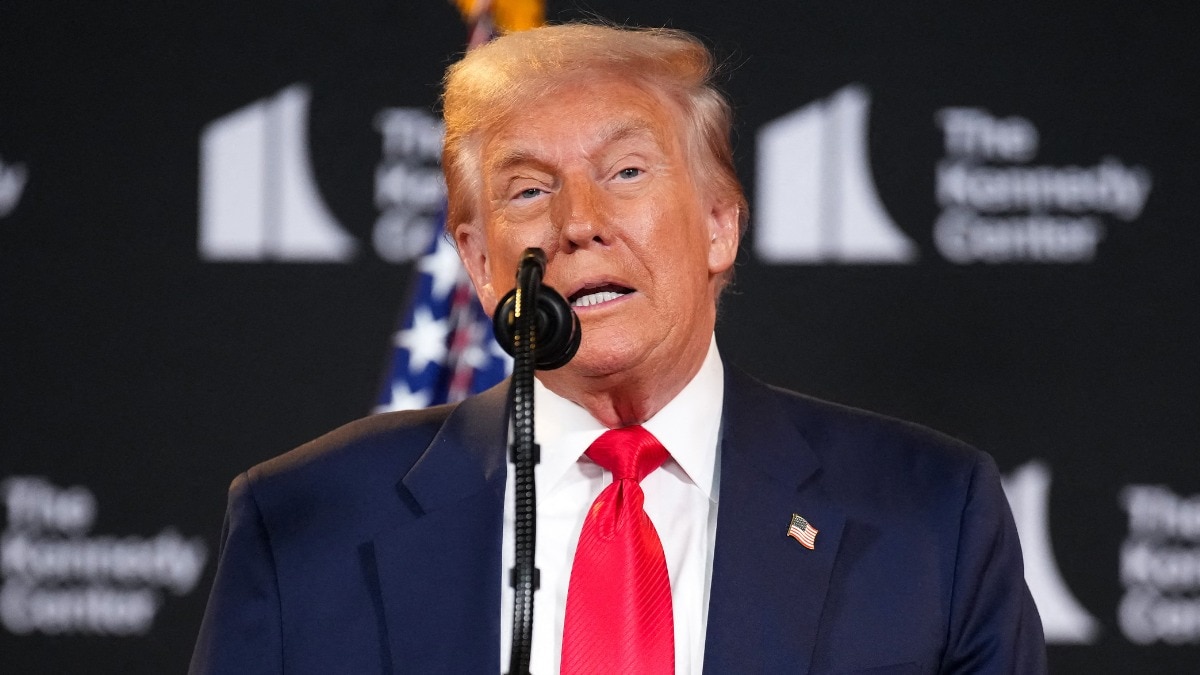
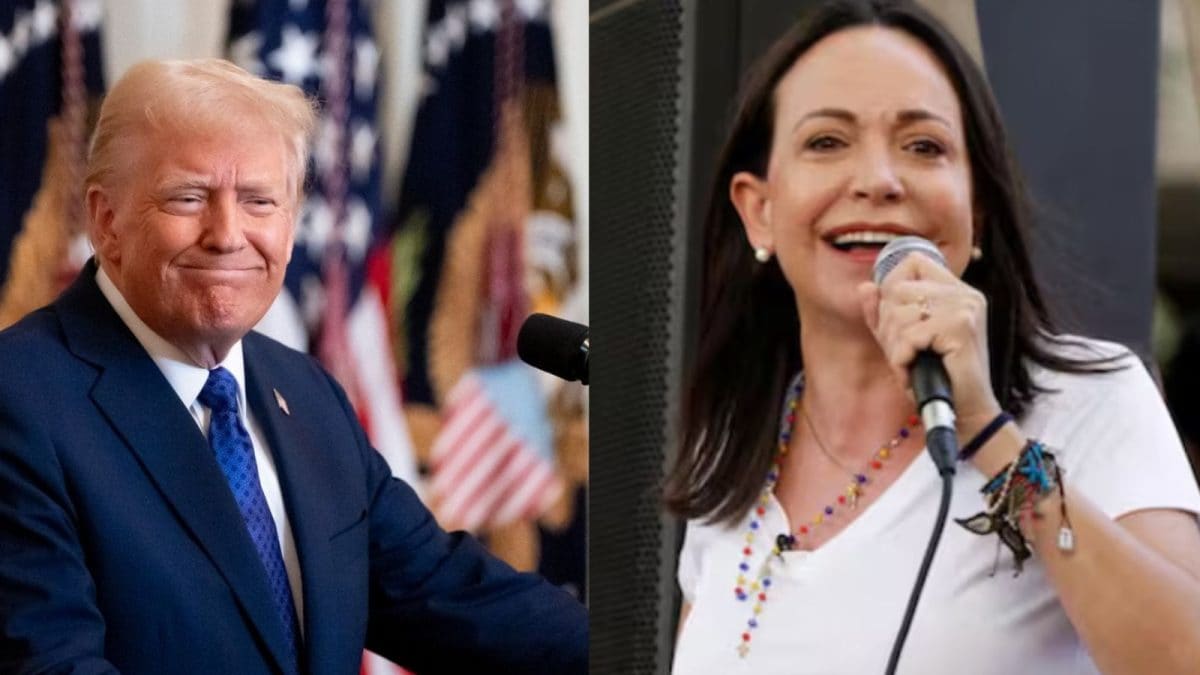
US President Donald Trump (Photo: AP)
America has taken control of Venezuela’s most valuable asset: its oil. US President Donald Trump said Venezuela would turn over between 30 million and 50 million barrels of oil that the US would sell on the global market, with the revenue held in American-controlled accounts.
For a country devastated by years of hyperinflation, sanctions, collapsing infrastructure and political turmoil, this is the most sweeping economic involvement by a foreign power in decades.
The arrangement has raised a central question: Does the oil math work for either side? The answer is far less straightforward.
Venezuela may sit on the world’s largest proven reserves, 303 billion barrels, according to the US Energy Information Administration, but the ability to turn those reserves into money has eroded dramatically.
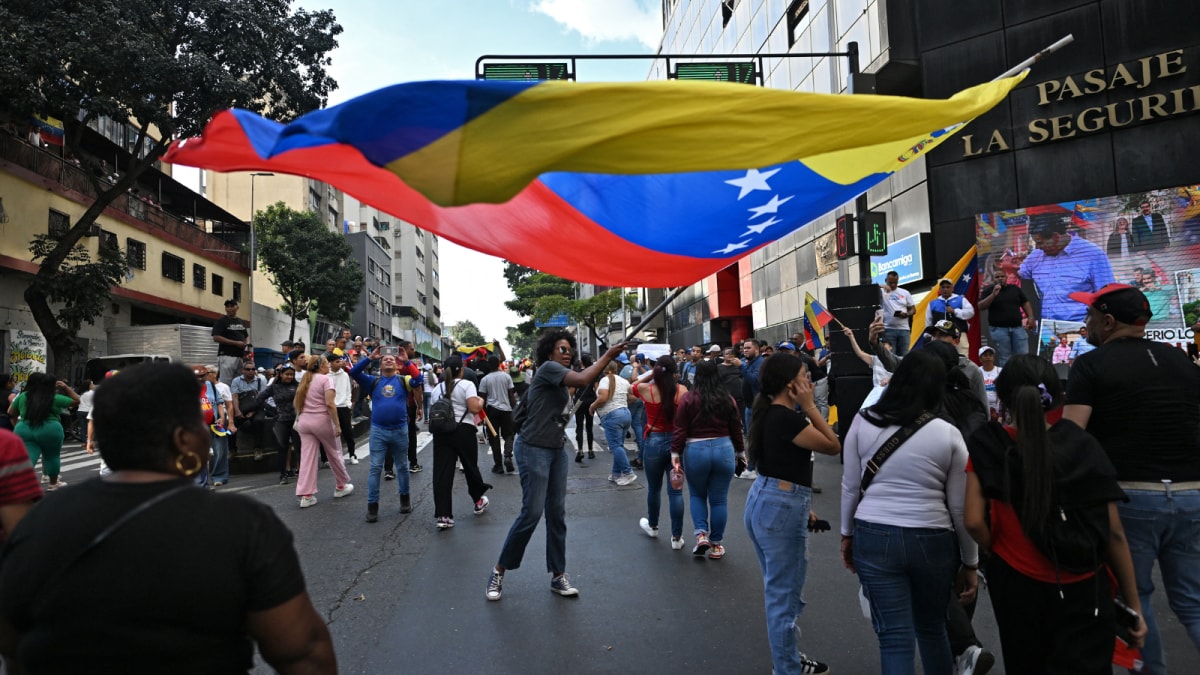
The country’s refineries and upgraders barely function. Pipelines leak. The electricity grid is unreliable. Oil rigs stand idle. Inflation is in triple digits today. Food insecurity affects up to 40 per cent of the population. Nearly a third of Venezuelans have fled. The bolívar has collapsed so dramatically that people use US dollars or bags of local notes for everyday purchases.
Oil still accounts for more than 90 per cent of export earnings, leaving the country dependent on imports for food and basic goods. Without oil, the economy cannot survive.
Trump believes US companies can repair the industry and make the country, and America, rich again. Economists say the numbers paint a more complicated picture.
The Immediate Oil Transfer: What The Numbers Show
Trump says Venezuela will hand the US between 30 million and 50 million barrels of crude. If sold at around $50 a barrel, that works out to $1.5 billion to $2.5 billion. This would normally be a significant figure, but in the broader scale of the US economy, it is relatively small.
For comparison, The Wall Street Journal notes that when Trump forced Nvidia to give the US government a 25 per cent cut of its sales to China, as a condition for approving its chip exports, that single concession could yield up to $5 billion a year. That is double the value of all the Venezuelan oil in this first transfer.
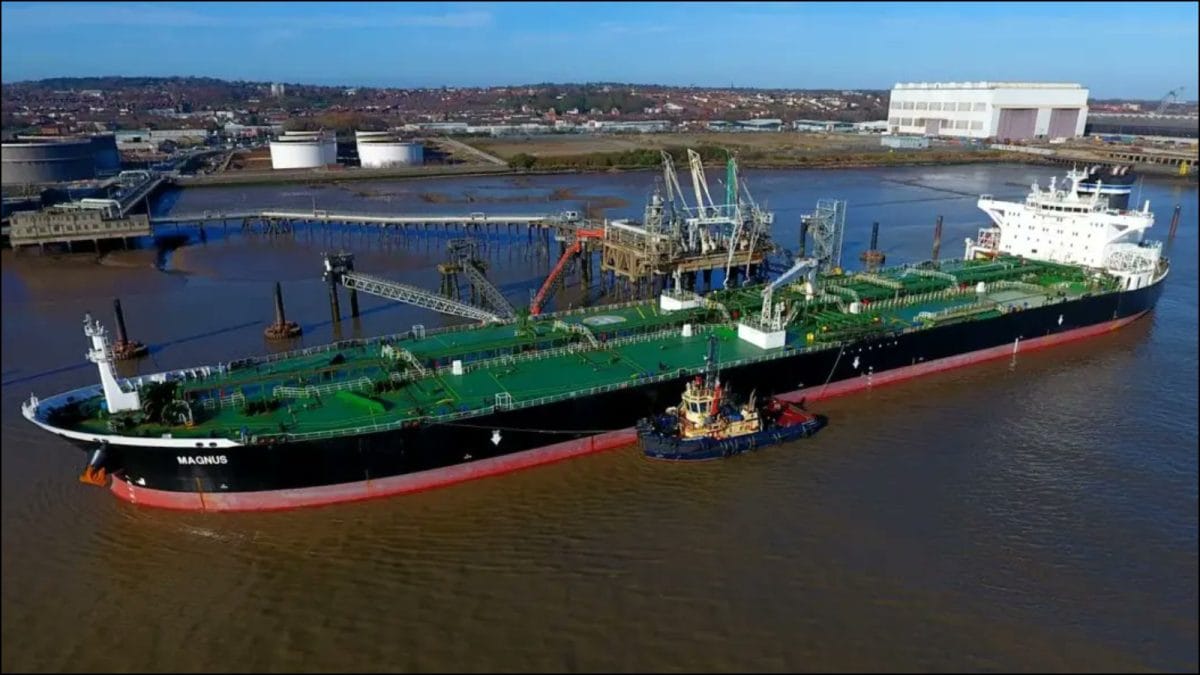
Even that $1.5–2.5 billion estimate may be high. Venezuelan crude is thick, heavy and difficult to refine, which forces it to sell at a discount to global benchmarks. That discount has deepened in recent years as Venezuela relied on a “ghost fleet" of sanctioned tankers to move crude to buyers in Asia, often at steep markdowns. A portion of oil shipped to China brought in no revenue at all because it was used to repay old debts.
Yet the US takeover of oil sales matters because Venezuela has more than 30 million barrels of crude sitting in storage, a backlog created by the partial US embargo and lack of legal buyers. Selling these barrels at full market price, rather than secretly at a discount, could provide the government with the hard currency it desperately needs.
If the US fails to return the proceeds, the results would be catastrophic: the country could face immediate shortages of food and essential goods.
Can Venezuela Actually Pump More Oil? It’s Possible, But Costly
Short-term sales will not rescue the country unless production rises. According to S&P Global Energy, Venezuela currently produces around 826,000 barrels per day after removing the imported chemicals needed to thin its heavy crude. With enough repairs, output could rise to 1.35 million barrels a day in about two years.
That is an increase of half a million barrels a day. But reviving even that much capacity will not be cheap.
S&P gives what it calls a “very rough" estimate: about $20 billion just to achieve this next jump in production. Trump himself has said the US government might have to “reimburse" part of these investments.
And even if Venezuela hits that 1.35 million barrels a day mark, the revenue picture is mixed. If the country charges no royalty initially to attract investment, it could earn around $15 billion a year. But if it moves to a 50 per cent royalty, that would immediately cut the figure in half.
To understand how small these numbers are for the US, consider this: America’s own oil and gas production adds $240 billion annually to the country’s GDP and brings in $14 billion in federal royalties every year. Venezuela’s entire revenue, even in an optimistic case, is a fraction of that.
From the perspective of oil companies, the business case remains uncertain. Exxon Mobil, Chevron and ConocoPhillips have combined annual sales exceeding $500 billion. Even if Venezuela recovers meaningfully, the return is unlikely to transform corporate balance sheets.
The State Of Venezuela’s Oil Fields: The Damage Is Deep
The challenges go far beyond money. Venezuela once pumped more than 3 million barrels a day. Today, it struggles to produce a third of that. The country’s oil infrastructure is in an advanced state of collapse. PDVSA, the state oil producer, was hollowed out by years of corruption, political interference and mismanagement, particularly after Hugo Chávez nationalised foreign assets in 2007.
The system now requires dozens of new rigs, upgrades to refineries and specialised facilities known as upgraders that remove carbon and add hydrogen to the country’s tar-like crude. Major investments are also required in the national power grid, which frequently breaks down.
A WSJ report says that Venezuela’s oil storage is nearly full. Without the US lifting oil, experts feared the country would have to shut down wells entirely, an expensive and irreversible decision that can ruin an oil reservoir permanently. By clearing the backlog, the US is also preventing long-term structural damage to the fields.
The Costs America Has Already Incurred
The US has already spent sizeable sums even before reconstruction begins. Elaine McCusker, a former Pentagon budget official, estimates that the US has spent between $1.4 billion and $1.6 billion on intercepting drug boats, conducting maritime operations and carrying out the military raid that captured Maduro.
Though Trump argues that Venezuela’s recovery “won’t cost us anything" because the country is rich in oil, experts warn that such assumptions risk repeating past mistakes. CNN notes the comparison to the early Iraq War “mission accomplished" moment, after which the US spent trillions without securing a stable partner.
If the political arrangement between Venezuela’s interim President Delcy Rodriguez and the Trump administration breaks down, a more substantial US military presence could become necessary, raising costs sharply.
What US Oil Companies Think
Despite Trump’s claim that “all of our oil companies are ready and willing," American oil executives told CNN the opposite. Major firms say they will not commit billions of dollars until Venezuela has a stable government and a legal framework that prevents the seizure of assets, as happened under Chávez.
One industry source put it bluntly: “The appetite for jumping into Venezuela right now is pretty low. We have no idea what the government there will look like."
Ricardo Hausmann, former Venezuelan planning minister now at Harvard Kennedy School, told WSJ that in the current political climate, “there is no recovery of the oil industry" and warned the situation could deteriorate further.
How Much Does Venezuela Need Beyond Oil?
The problems are wider than oil. Hyperinflation a decade ago reached 65,000 per cent, destroying the bolívar and wiping out personal savings. Inflation remains in triple digits today, and the country depends heavily on imported food and basic goods. Because hard currency is limited, businesses and households increasingly trade dollars on platforms such as Binance, where one US dollar recently fetched more than 800 bolívars, far above the official central bank rate of 308.
Only 19 per cent of Venezuelan adults report full-time employment. Public services are unreliable. Blackouts and water shortages are frequent. According to the United Nations Economic Commission for Latin America and the Caribbean, the country saw a brief economic rebound in 2025 with growth of 6.5 per cent after Rodríguez’s liberalisation measures reduced price controls and allowed more use of the dollar. But this recovery was fragile and quickly overshadowed by inflation and a political crisis.
Luisa Palacios, former chair of Venezuela-owned petroleum company Citgo, said Venezuela is only in the “first inning of a very, very, long game." Juan Pablo Pérez Alfonzo, one of the founders of OPEC, once warned that oil was “the devil’s excrement" that would bring the country ruin. Today, many Venezuelans feel that prophecy has finally come true.
What Does The US See Beyond Oil?
Washington’s goals extend beyond the barrels. The US aims to push out Russia, Cuba and China, which built deep influence in Venezuela under Maduro. China, in particular, has supplied loans in exchange for oil shipped through sanctioned tankers, much of it generating no income for Venezuela. Limiting China’s access is part of the geopolitical calculus, especially as Beijing advances its electric-vehicle transition, which will reduce future oil imports.
Washington is pursuing a structured plan for Venezuela. Secretary of State Marco Rubio described a three-phase approach: stabilising the economy by guaranteeing a flow of hard currency from oil sales, reopening Venezuela’s reserves to foreign companies and shepherding a political reconciliation process that includes restoring rights and releasing political prisoners.
But these ambitions rely on a fragile arrangement with Delcy Rodriguez, who must satisfy the US while keeping together the factions that held power under Maduro. Any breakdown could unravel the entire framework.
So…Does The Oil Math Work?
On paper, Venezuela has the reserves. In practice, it lacks the functioning state needed to turn those reserves into sustained money.
For the US, the value of the initial oil shipment is tiny relative to the broader economy. For Venezuela, the money is essential but insufficient. The country faces $160 billion in outstanding debt, collapsed public services, broken infrastructure and deep political uncertainty.
Even if the oil sector improves modestly, rebuilding production to more than two million barrels a day, let alone three million, will require tens of billions of dollars and at least six years of sustained effort. With a few billion dollars in the short term, production might rise by 50 per cent in 18 months, but anything beyond that demands heavy investment and political stability that Venezuela does not yet have.
The result is clear: oil can stabilise a desperate situation, but it cannot rebuild a broken country on its own.
First Published:
January 09, 2026, 12:28 IST
News explainers The US Has Taken Control Of Venezuela's Oil, But Is The Deal Worth It For Either Side?
Disclaimer: Comments reflect users’ views, not News18’s. Please keep discussions respectful and constructive. Abusive, defamatory, or illegal comments will be removed. News18 may disable any comment at its discretion. By posting, you agree to our Terms of Use and Privacy Policy.
Read More