1 hour ago
Women are treated in the new penal code as being on the same level as "slaves", with provisions allowing either "slave masters" or husbands to administer discretionary punishment, including beatings, to their wives or subordinates. This aspect of the code has drawn particular alarm from rights groups.
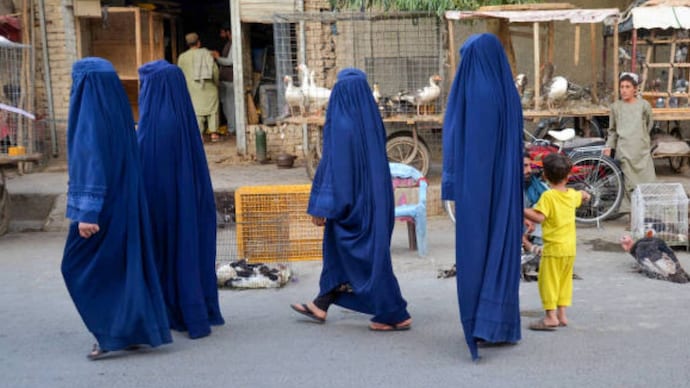
Women of Afghanistan (Image used for representation)

New Delhi,UPDATED: Feb 20, 2026 11:03 IST
A newly introduced penal code in Taliban-ruled Afghanistan has sparked outrage and alarm among women’s rights groups. The law reportedly equates women with “slaves” and permits husbands and so-called “slave masters” to physically punish them, provided no bones are broken, or "open wounds" are inflicted, formalising sweeping restrictions under the regime.
Another provision of the penal code reportedly classifies society into multiple tiers, with punishments differing based on one’s position within this hierarchy.
The code reportedly distinguishes punishments based on whether a person is deemed “free” or a “slave,” creating what experts describe as a rigid, caste-like hierarchy within Afghan society, reported The Independent.
Under the 90-page document, signed by the group’s supreme leader, Hibatullah Akhundzada, religious leaders are placed at the top, followed by elites, the middle class, and the lower class.
The new caste-based system means that if a religious scholar commits a crime, the maximum consequence is a warning or "advice". Members of the social elite may receive advice and potentially a court summons, while those in the middle class can face imprisonment. For the lower class, punishments can include both imprisonment and corporal punishment.
Women are treated in the code as being on the same level as "slaves", with provisions allowing either "slave masters" or husbands to administer discretionary punishment, including beatings, to their wives or subordinates. This aspect of the code has drawn particular alarm from rights groups.
Copies of the new criminal code, known as De Mahakumu Jazaai Osulnama, have reportedly been circulated to courts across Afghanistan. Many Afghans are hesitant to speak about its provisions, fearing retaliation from the Taliban, while a separate directive is said to criminalise even discussing the code publicly.
Serious crimes under the code are to be punished by Islamic clerics rather than correctional services. For lesser offences, the code prescribes "ta’zir" (discretionary punishment), which, in the context of a wife as the "offender", means a beating administered by her husband.
Although the code technically allows women to seek legal recourse if assaulted, it sets high barriers. Women must present evidence of serious bodily harm by displaying their injuries to a judge, while remaining fully covered and accompanied by their husband or a male chaperone (mahram) -- even if the accused is the husband himself.
A legal adviser in Kabul, speaking to The Independent, described the process for women to access justice under Taliban law as "extremely lengthy and difficult." She recounted a case where a woman was attacked by a Taliban guard while visiting her husband in prison. The woman's complaint was not accepted by authorities unless she could bring her husband, who was behind bars, as her chaperone.
The code marks a significant regression from legal protections established under the previous Nato-backed government, which had criminalised forced marriage, rape, and other forms of gender-based violence, with penalties ranging from three months to a year for domestic violence against women.
Under the new code, even when women manage to navigate all legal and social obstacles to prove a serious assault by their spouse, the maximum sentence that can be handed to the husband is 15 days. Human rights experts confirm that the Taliban's code does not explicitly prohibit or condemn physical, psychological, or sexual violence against women.
One of the only ways for women who have suffered severe beatings to seek justice is by showing their wounds in court while remaining fully veiled. This requirement, along with the need for a male chaperone, severely limits women's ability to pursue complaints against abusers, especially when the perpetrator is the husband.
The rights movement Rawadari, which primarily operates in exile, highlights a specific provision in the code that further endangers women seeking safety from domestic violence. "Article 34 states that if a woman repeatedly goes to her father's house or that of other relatives without her husband's permission and does not return home despite her husband's request, the woman and any member of her family and relatives who has prevented her from going to her husband's house are deemed criminal and will be sentenced to three months' imprisonment," the organisation said in a statement.
The code has reportedly been widely distributed across courts in Afghanistan, and its swift implementation has created uncertainty about legal protections, especially for women and individuals from lower social strata. Legal experts say anxiety has grown among those who fear they could face the harshest punishments under the new provisions.
Observers note the code's stipulations on gender and caste are rooted in historical interpretations of Islamic scripture, but the explicit codification of such hierarchy and punitive measures marks a significant departure from recent Afghan legal standards.
Human rights organisations and legal advisers warn that the penal code institutionalises discrimination and removes protections for the most vulnerable.
- Ends
Published By:
Sayan Ganguly
Published On:
Feb 20, 2026