1 month ago
Last Updated:March 12, 2026, 18:29 IST
The Shamkhani network serves as more than just an oil merchant; it is a critical logistical link for the 'Axis of Resistance'


Former Iran national security chief Ali Shamkhani (L) and his son Hossein. Image/X
In an era of unprecedented maritime surveillance, a sophisticated “dark fleet" continues to navigate the world’s most contested waters, funneling billions of dollars into the Iranian regime. At the heart of this operation is Mohammad Hossein Shamkhani, better known by his alias “Hector". As the son of the late Admiral Ali Shamkhani—a top advisor to Iran’s Supreme Leader until his passing in February 2026—Hector has consolidated his position as the primary architect of Iran’s shadow oil trade.
Despite the US enacting its largest sanctions package since 2018 in July 2025, the Shamkhani network has proven remarkably resilient. CNN-News18 has accessed exclusive intelligence detailing how this decentralised empire adapts to seizures, shell firm closures, and the heightened risks of the 2026 Hormuz crisis.
The Architecture of the Dark Fleet
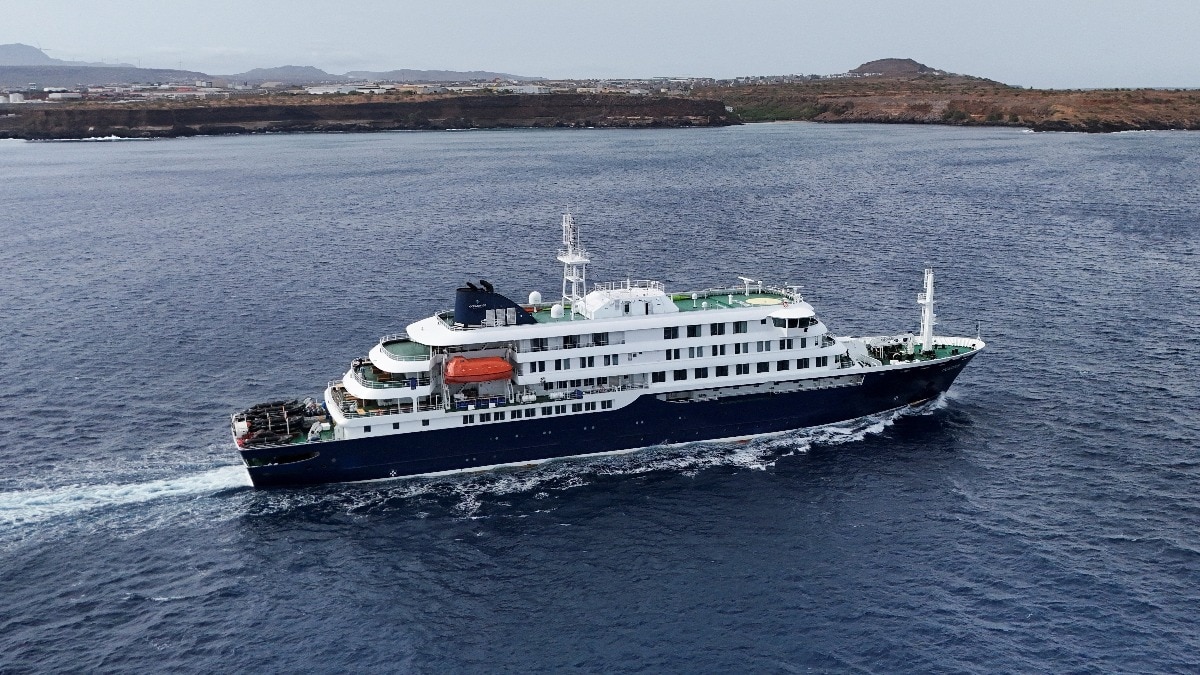
The Shamkhani empire controls a staggering fleet of over 100 shadow tankers. Following the 2025 sanctions, which specifically designated 60 of these vessels, the network has shifted towards a more “fragmented" operational model. Currently, the fleet handles between 500,000 and 800,000 barrels of crude per day, effectively providing the financial lifeblood for the Islamic Revolutionary Guard Corps (IRGC).
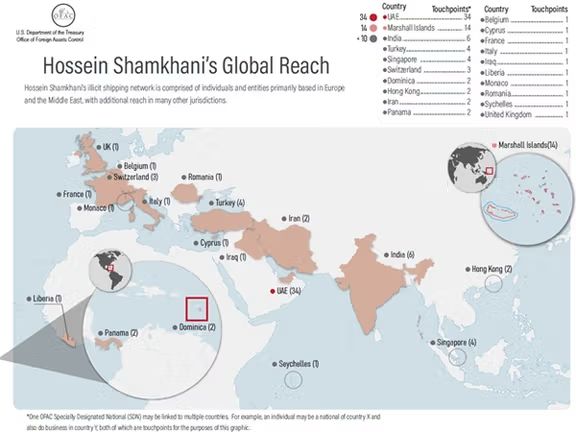
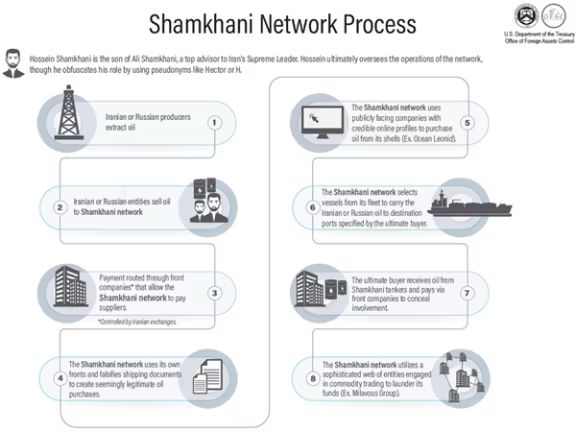
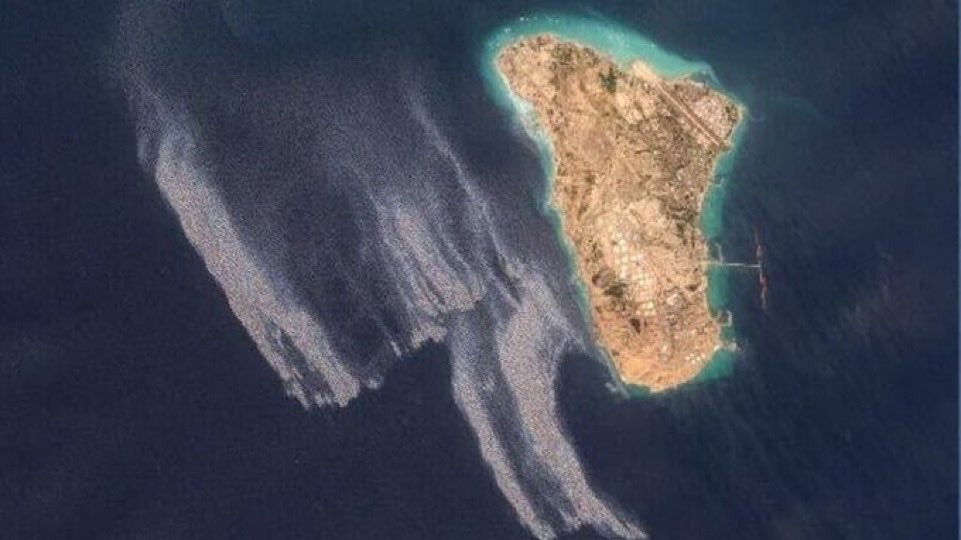
Operating through Dubai-based entities like Crios Shipping LLC and the Admiral Group, the network utilises ageing Very Large Crude Carriers (VLCCs) that frequently operate “dark". By disabling their Automatic Identification Systems (AIS) or employing “spoofing" techniques—where a ship’s GPS coordinates are falsified to appear elsewhere—these tankers load cargo at Kharg Island before disappearing from global monitoring screens.
The Art of the ‘Malaysian Blend’
The network’s true genius lies in its ability to disguise the origin of the oil. Intelligence sources indicate a heavy reliance on ship-to-ship (STS) transfers in the Gulf of Oman and the Malacca Strait. During these clandestine mid-ocean meetings, Iranian crude is mixed with other oils or simply relabelled.
By the time the cargo reaches the “teapot" refineries in China, the documentation identifies the oil as “Malaysian" or “Omani" blends. To facilitate this, Shamkhani oversees a web of nearly 70 shell companies spanning Hong Kong, Singapore, and Malaysia. These firms handle falsified chartering documents and sales, often offering the oil at steep discounts of $8 to $12 per barrel to ensure rapid turnover.
Laundering the ‘Petrodollars’
The profits from these sales—estimated in the tens of billions annually—do not move through traditional banking channels. Instead, the network employs a sophisticated tripartite laundering system:
Dubai Hawala: Using traditional trust-based money transfers to move funds without physical movement.
Hong Kong Yuan Swaps: Converting sales proceeds into “clean" currency through complex exchange mechanisms.
Misinvoicing: Artificially inflating or deflating the value of legitimate trade goods to move money across borders.
These funds eventually find their way back to the Quds Force (Q-Force) offshore procurement fronts, supporting IRGC operations and the Shamkhani family’s own vast interests.
A Pipeline for Global Conflict
The Shamkhani network serves as more than just an oil merchant; it is a critical logistical link for the “Axis of Resistance". Beyond crude, the shadow fleet is used to transport Iranian drones, missiles, and dual-use components.
The Russia Connection: Utilising Caspian Sea routes to support Russia’s efforts in the Ukraine war.
The Houthi Supply Line: Funneling military hardware to Yemen, which has directly contributed to the ongoing 2026 maritime instability in the Red Sea.
Resilience in the Face of 2026 Risks
While US authorities seized cargoes worth $153 million in early 2026, the decentralised nature of the Shamkhani network makes it nearly impossible to dismantle entirely. Every time a shell company is sanctioned, three new ones appear. Every time a vessel is blacklisted, it is reflagged—often under the colours of Panama or the Comoros—and renamed.
As global energy markets remain volatile due to the West Asia conflict, the “Hector" network continues to prove that for the Iranian regime, the shadow economy is not just a backup—it is the frontline of their geopolitical survival.
First Published:
March 12, 2026, 18:29 IST
News world Shadow Fleet Kingpin: Inside Iran's Shamkhani Empire Bypassing Global Sanctions | Exclusive
Disclaimer: Comments reflect users’ views, not News18’s. Please keep discussions respectful and constructive. Abusive, defamatory, or illegal comments will be removed. News18 may disable any comment at its discretion. By posting, you agree to our Terms of Use and Privacy Policy.
Read More