 1 day ago
Last Updated:January 07, 2026, 15:37 IST
Investments, special access to critical minerals: A look at what a shaken Pakistan offered to US in exchange for intervention as it couldn't withstand India’s powerful Op Sindoor

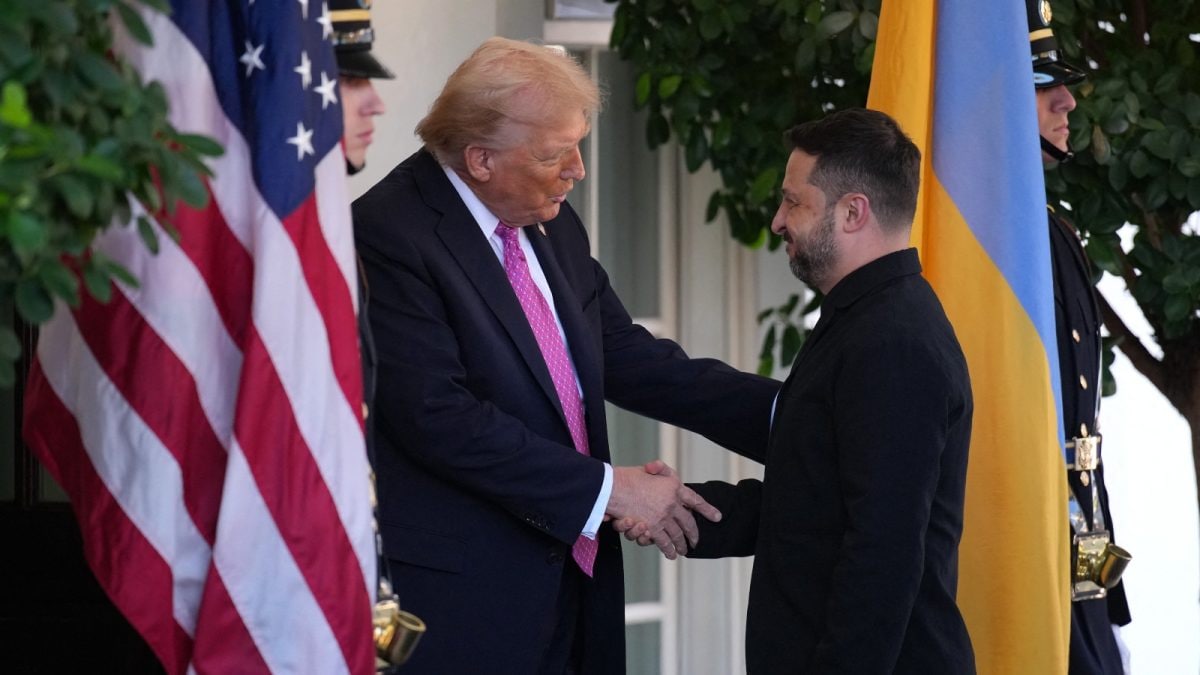
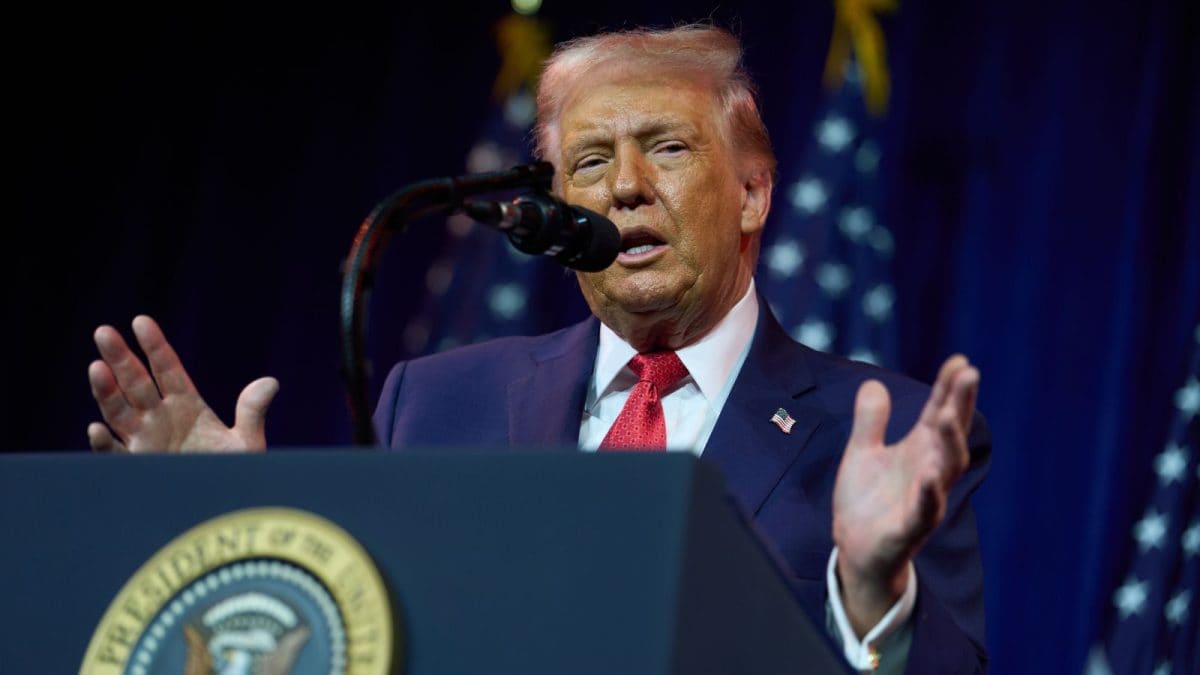
US President Donald Trump during a meeting with Pakistan Prime Minister Shehbaz Sharif and Field Marshal Asim Munir at the White House, in Washington, DC, USA, in 2025. (PTI)
As India’s Operation Sindoor shook it to the core, Pakistan pleaded with the United States for help, even offering more investments, special access and critical minerals in exchange, documents filed under the US Foreign Agents Registration Act (FARA) show.
Pakistani diplomats and defence officials reached out more than 50 times over emails, phone calls and in-person meetings to several officials and intermediaries and even the US media amid the Operation, documents accessed by News18 showed.
The documents were distributed by Squire Patton Boggs (US) on behalf of its foreign principal The Government of the Islamic Republic of Pakistan.
A New York Times’ investigation earlier had highlighted how Pakistan dramatically ramped up its spending on lobbying in April and May.
#BREAKING : Two Sensational DocumentsFARA filing Exposes ‘Pakistan’ Lobbying in United States
Pakistan’s Lobby Firm Squire Patton Boggs distributed this documents on behalf of Islamabad after Op Sindoor
Doc says ‘Pakistan appreciates constructive role played by United… pic.twitter.com/M2FoG17lGM
— Siddhant Mishra (@siddhantvm) January 7, 2026
Operation Sindoor was India’s response to a barbaric Pakistan-sponsored terrorist attack on the tourists in Pahalgam of Kashmir. On the night of May 6 and 7, the Indian Armed Forces struck the terror camps at nine locations in Pakistan. India used a range of high-tech and indigenous systems in Operation Sindoor, including precision-guided missiles, long-range stand-off weapons, AI-enabled intelligence and targeting systems, real-time surveillance from satellites and drones, and an integrated air-defence and counter-drone network to protect Indian airspace. These technologies enabled accurate, coordinated strikes without crossing the border. India destroyed and severely damaged multiple terror infrastructure sites in Pakistan and Pakistan-occupied Kashmir, including training camps, launch pads, command centres and logistics hubs linked to groups like Jaish-e-Mohammed and Lashkar-e-Taiba, notably at locations such as Bahawalpur, Muridke, Muzaffarabad and Kotli. India’s strikes were focused, intelligence-driven and limited to terrorist targets, avoiding civilian and general military infrastructure, while successfully neutralising key assets used for cross-border terrorism.
After a four-day military conflict, both India and Pakistan announced that a ceasefire had been agreed after a hotline communication between their DGMOs (Directors General of Military Operations) on May 10. US President Donald Trump has repeatedly remarked that “he mediated and offered trade deals", a claim India has refuted on several occasions.
PAKISTAN PLEADED WITH THE US TO TALK TO INDIA
The documents revealed how Pakistan said it would “welcome a U.S. mediating role".
“Pakistan calls for an independent, impartial investigation of the attack in Pahalgam on April 22. U.S. facilitation of this would be welcome…Pakistan wants dialogue with India on counterterrorism, the Indus Water Treaty and all issues that divide the two countries. Stronger regional counterterrorism cooperation should include the United States….Pakistan believes a third-party facilitator could help both countries come to verifiable agreements," it said.
“Pakistan also faces terrorist threats from the Pakistani Taliban. The 2025 U.S. DNI Annual Threat Assessment cited the Pakistani Taliban as a potential threat to the United States…," it said.
Pakistan appreciated President Trump’s expressed willingness to support efforts aimed at the resolution of the Jammu and Kashmir dispute.
WHAT PAKISTAN OFFERED TO THE US
Right after Operation Sindoor, Pakistan released a document on the bilateral relations with the US.
“Pakistan is prepared to take significant actions to renew its bilateral relationship with the United States on shared interests. A clear, forward-looking agenda will serve the core interests of both nations and their peoples. As one of the world’s most populous and youthful countries, Pakistan offers great promise for economic growth," read the document.
“Bordering Afghanistan, Iran, India and China, Pakistan is an indispensable partner for achieving stability and fighting extremist groups that threaten U.S., regional, and global security interests. And a diaspora of over Pakistani-Americans, many highly educated and affluent, animate U.S.-Pakistan relations."
It offered the US:
Trade and investment: Pakistan said it was prepared to buy significantly more U.S. exports, including agricultural and energy, and lower barriers to U.S. products. With a trade surplus in goods under US$3B, according to U.S. statistics, U.S.-Pakistan trade can be quickly balanced.
Pakistan also showed willingness to offer large U.S. investors access to the Special Investment Facilitation Council (SIFC), jointly chaired by the Prime Minister and Army Chief, to fast-track permitting and support for strategic investments, such as mining, agriculture and datacenters.
Pakistan said it would like to be a preferred U.S. partner for critical minerals based on its extensive reserves in copper, lithium, cobalt, and various rare earths valued in the trillions of dollars. Pakistan is seeking a bilateral critical minerals agreement with the U.S. that would benefit both the national security of the U.S. and Pakistan’s economy.
Financial modernisation: Pakistan said it sought to partner with the U.S. to modernize its financial infrastructure. “Pakistan’s large economy is poised for digitization, providing opportunities for U.S. fintech and broadband companies. Pakistan would welcome U.S. support to improve debt sustainability and financial transparency. During his April visit to Washington, Finance Minister Muhammad Aurangzeb underscored Pakistan’s commitment to reforms — taxation, energy policy, and state-owned enterprise reform — and highlighted recent improvements in the country’s macroeconomic outlook, including a sovereign credit rating upgrade," it said.
Security: Pakistan said it was prepared to double down on its commitment to counter-terrorism cooperation with the U.S. “Pakistan demonstrated its capability and commitment to counter-terrorism by arresting and expelling to the U.S. the Abbey Gate ISIS bomber who killed 13 American soldiers," it said. President Trump thanked Pakistan for this assistance in his speech to a Joint Session of Congress in March 2025. “Pakistan is prepared to do more with the U.S. to assist in retrieving U.S. military weapons and equipment left behind in Afghanistan, which are now being used to destabilize Pakistan. Pakistan seeks more U.S. collaboration against the Pakistani Taliban (TTP), whose attacks aim to establish a Taliban regime in Pakistan, and which the 2025 U.S. DNI Annual Threat Assessment cited as a potential threat to the U.S," it said.
Geopolitical: Pakistan also sought a bilateral U.S. relationship that stands on its own merits, not dependent on U.S. relations with Pakistan’s neighbours. “Pakistan’s longstanding relationship with China is based on geographic logic and does not inhibit Pakistan’s offering the U.S. concrete economic and counter-terrorism opportunities. Pakistan believes that the U.S.-India relationship should in no way inhibit stronger U.S.-Pakistan ties. The U.S. and Pakistan share important counter-terrorism concerns regarding Afghanistan. Pakistan has taken resolute action against Iranian support for terrorist separatists in Pakistan and would welcome further coordination with the U.S," it said.
DID THE LOBBYING HAVE ANY IMPACT?
In November 2025, The New York Times reported that Pakistan had signed contracts with six Washington lobbying firms worth roughly $5 million annually to gain expedited access to the Trump administration and secure favourable trade and diplomatic outcomes.
Weeks after Islamabad struck a deal with Seiden Law LLP working through Javelin Advisors, then-US President Donald Trump hosted Pakistan Army Chief Field Marshal Asim Munir at the White House.
First Published:
January 07, 2026, 15:34 IST
News world Pakistan Begged US For Help As India Showed Its Might With Op Sindoor, Documents Reveal
Disclaimer: Comments reflect users’ views, not News18’s. Please keep discussions respectful and constructive. Abusive, defamatory, or illegal comments will be removed. News18 may disable any comment at its discretion. By posting, you agree to our Terms of Use and Privacy Policy.
Read More