1 day ago
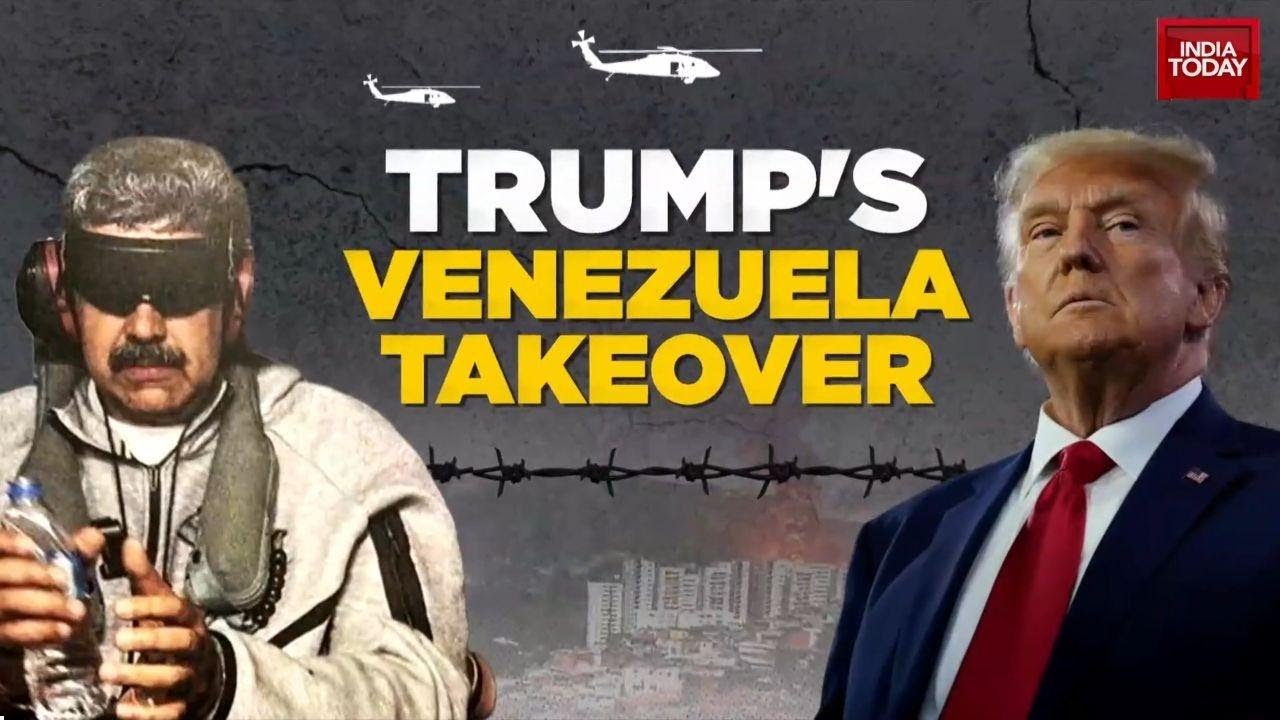
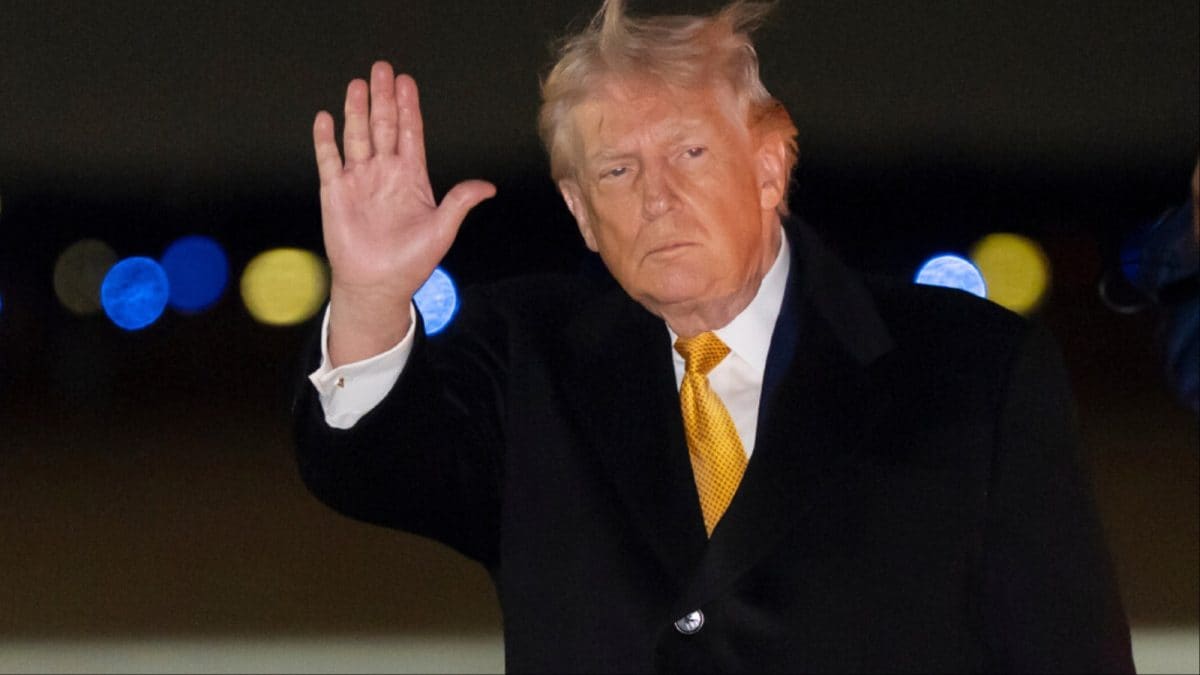
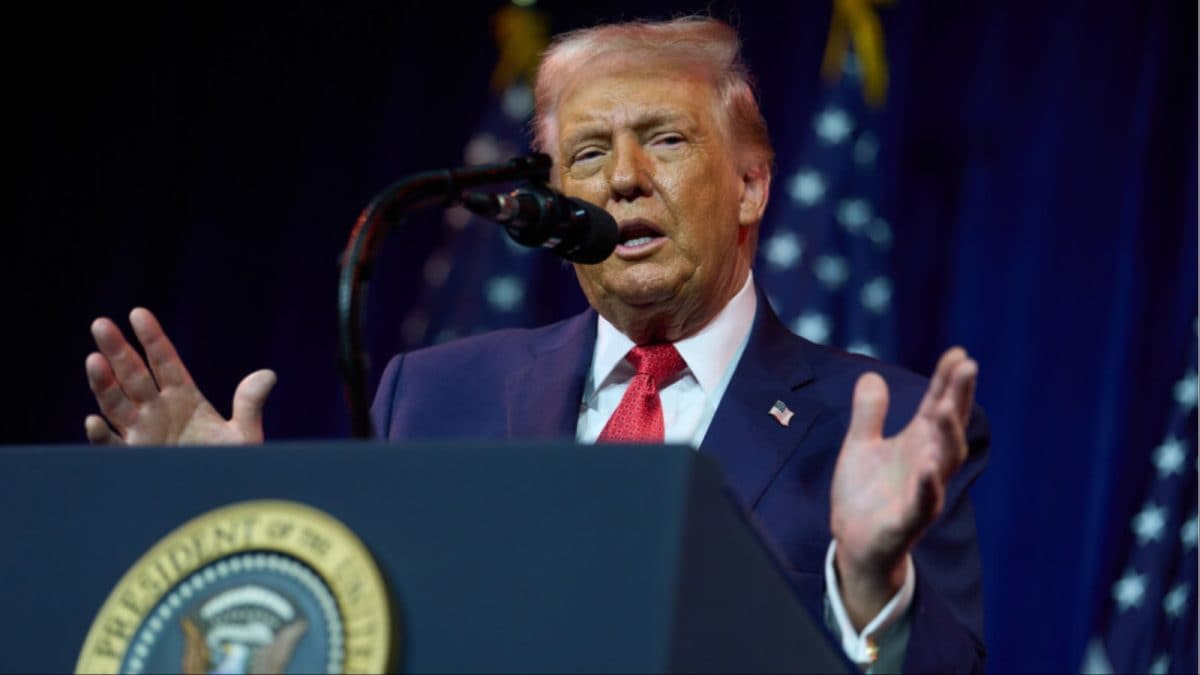
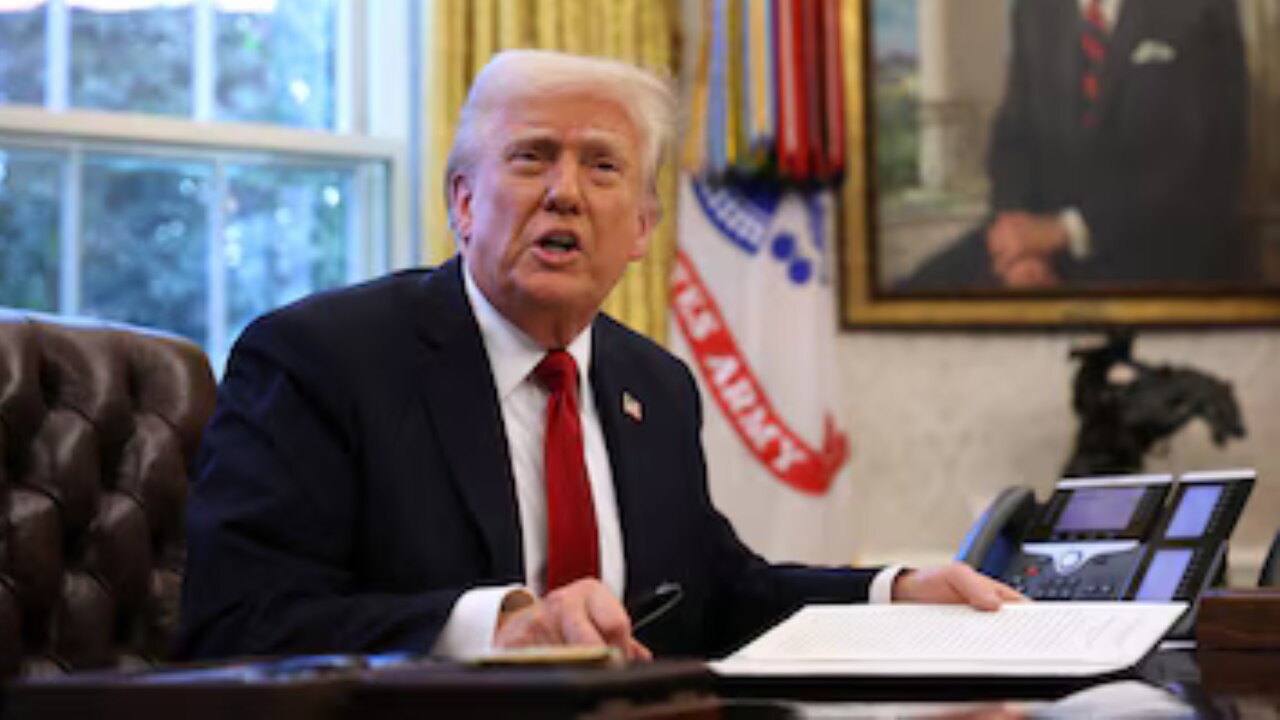
Just ten minutes after announcing the Venezuela strikes and Nicolas Maduro's capture, one of the most dramatic US military actions in decades, Donald Trump answered a cold call from a New York Times reporter.
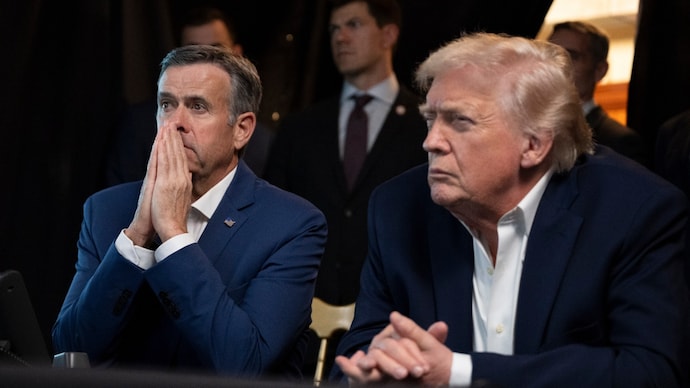
President Donald Trump monitors US military operations in Venezuela with CIA Director John Ratcliffe on January 3. (AP photo)

New Delhi,UPDATED: Jan 5, 2026 17:09 IST
At 4.21 am (US time) on Saturday, a notification lit up screens across the world: President Donald Trump had posted on Truth Social that the United States had captured Venezuelan leader Nicolas Maduro. Exactly ten minutes later, at 4.31 am, a New York Times reporter dialled the President’s cellphone.
“After three rings, we were talking,” Tyler Pager, a White House correspondent for the Times, revealed. “He said, ‘Hello,’ and I jumped right in.”
The conversation lasted about 50 seconds.
Pager said he identified himself and told Trump he was calling from The New York Times with questions about the overnight operation in Venezuela. He managed to ask four questions before the president ended the call, directing him instead to “tune into his news conference a few hours later.”
It was a surreal moment of accessibility amidst a geopolitical earthquake. While explosions were still rocking Caracas and confusion reigned in the Venezuelan capital, the President of the United States was personally fielding questions from the press in the predawn hours.
Pager, who had woken up at 1 am to reports from a colleague in Venezuela that “Caracas had been bombed,” was trying to piece together the operation with his team.
“I just called him directly and he picked up,” Pager said, noting that he “wasn’t that surprised” because Trump “regularly picks up calls from reporters.”
In the 50-second conversation, Pager managed to ask four questions, pressing the President on whether he sought congressional authorisation and what the next steps for Venezuela would be.
According to Pager, Trump “did not complain that I had called,” though he stopped short of revealing sensitive details. “He did not really answer my questions, instead directing me to tune into his news conference a few hours later,” Pager said.
The interaction highlighted a sharp contrast in presidential styles. Pager noted that during four years covering the Biden presidency, he was “stonewalled” and never granted an interview. “I eventually reached [Biden] directly on his cellphone, and after a short interview, his aides changed his phone number,” Pager recalled.
Trump, by contrast, invited the media spectacle. By 9.45 am, Pager said he was already at Mar-a-Lago, clearing security for the President’s victory lap.
While the President was taking calls in Florida, the scene in Venezuela was one of chaos and shock.
The operation, codenamed Absolute Resolve, involved low-flying aircraft streaking across the sky and hitting military installations in Caracas, Miranda, Aragua, and La Guaira, and led to the capture and arrest of Venezuela President Nicolas Maduro and his wife Cilia Flores.
The strike was the climax of a year-long pressure campaign. US intelligence had moved onto Venezuelan soil by late 2025, with reports of a CIA drone strike on a port facility occurring just weeks prior. Trump had previously warned that Washington would not allow traffickers to “destroy American youth,” framing the conflict as a war on "narco-terrorism."
The result of the January 3rd operation is the most direct US military intervention in Latin America since the 1989 invasion of Panama, which saw dictator Manuel Noriega deposed and trafficked to the US.
Similarly, Trump announced that Maduro and his wife had been “captured and flown out of the country” to face justice. Republican Senator Mike Lee confirmed that Secretary of State Marco Rubio stated Maduro would "stand trial on criminal charges" in the United States.
The legal groundwork for this move was laid in March 2020, when US prosecutors indicted Maduro on "narco-terrorism" conspiracy charges, accusing him of leading the "Cartel de los Soles."
The capture has left a power vacuum in Caracas. Venezuela’s Defence Minister Vladimir Padrino condemned the "foreign troops" that brought "death, pain and destruction," while the government declared a state of external disturbance.
Globally, the reaction was polarised. Leaders in Cuba, Iran, and Russia condemned the operation as a violation of sovereignty. Conversely, Argentina’s libertarian President Javier Milei celebrated the news, declaring, “Long live freedom, dammit!”
Back in Washington, the focus has shifted to the future of Venezuela. As Pager noted, despite the direct line to the President, a key question remains unanswered: "What would the next steps be for Venezuela?"
For now, the only certainty is that the decades-long standoff between Washington and Caracas has ended not with a whimper, but with a roar of jet engines and audacious capture of a sitting President.
- Ends
Published On:
Jan 5, 2026
Tune In