1 day ago
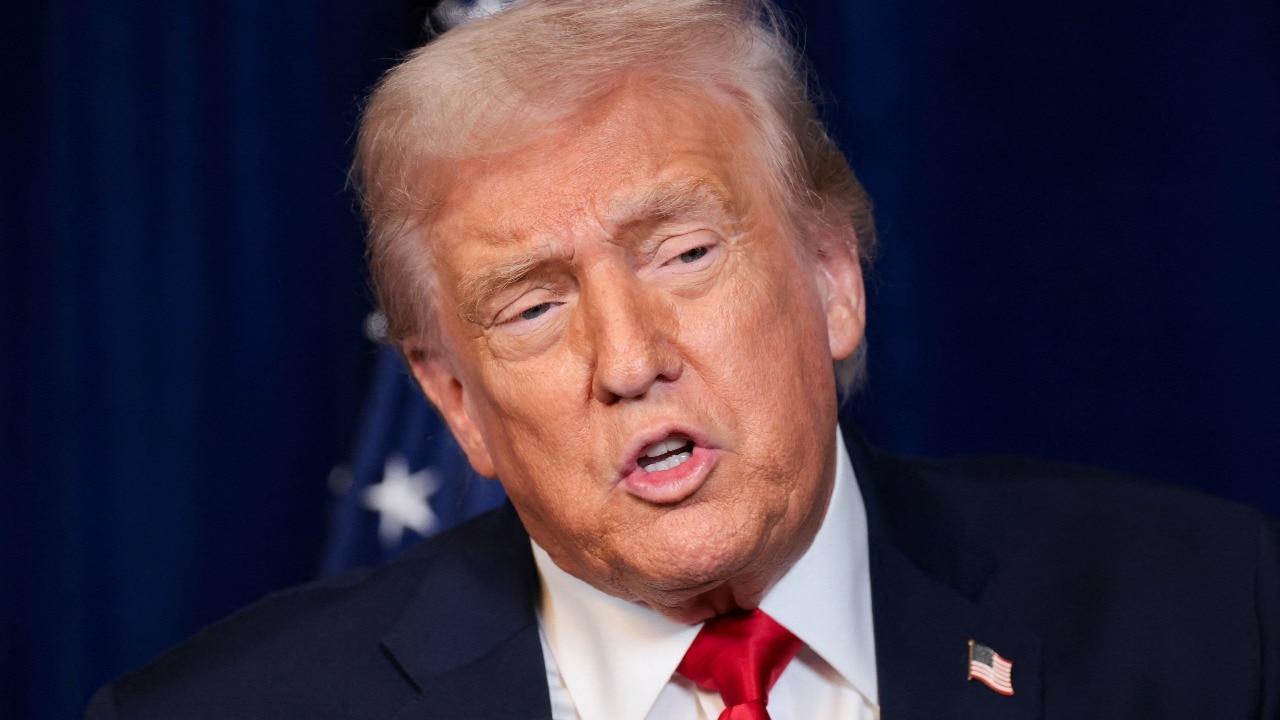
Geopolitical expert Ian Bremmer said the US operation that led to the capture of Venezuela’s leader reflects a deeper shift toward what he calls a “G-Zero world,” where no country is willing or able to provide global leadership. Bremmer argued the United States is walking away from the international order it once built, centred on collective security, rule of law and democratic norms, and replacing it with unilateral action driven by raw power.
Speaking to India Today TV, Bremmer described the Venezuela raid as a short-term political victory for Donald Trump but warned it creates a dangerous precedent that weakens global institutions such as the United Nations, IMF and NATO. While the move has triggered global unease, Bremmer noted that neither allies nor rivals have meaningfully pushed back, highlighting the unmatched reach of US military power.
Bremmer rejected comparisons with Russia’s invasion of Ukraine, saying Maduro was not democratically elected, but stressed that regime change carried out without consultation still erodes US credibility. He said Trump’s claims that Washington would “run” Venezuela amount to pressure rather than a governing plan, with demands likely focused on oil access, security cooperation and cutting ties with US adversaries.
On India, Bremmer said New Delhi is better positioned than most countries to navigate the current disorder due to its strategic autonomy, stable leadership, strong global partnerships and limited dependence on US trade, allowing it to hedge effectively in an increasingly unpredictable world.
Full transcript of Ian Bremmer's interview.
Hello everyone, good evening.
The US raids in Caracas on the 3rd of January that captured Venezuelan President Nicols Maduro have sparked outrage across the world, and have once again reignited fears of sovereignty violations and regime change gambits worldwide. To dive into this global storm unleashed just a few days ago, we have with us the president of the Eurasia Group, Dr. Ian Bremmer. He is renowned for his annual top risks report forecasting global geopolitical challenges, a leading political scientist, and someone who advises governments. Dr. Bremmer, I really appreciate your time here on India Today.
Q: How do you see the moral compass of the world in 2026 when a US raid abducts a sitting president on foreign soil?
A: Well, it's what I call a G-Zero world. It's the United States walking away from its own previous global order that focused on collective security, free trade architecture, the promotion of democracy and common values, and rule of law.
All of those things do not align with the America first policies of President Trump. They don't align with the Donro doctrine that he's just announced over the weekend. And you know, Trump is not the cause of this. He's a symptom. He's a beneficiary. And he is an accelerant, to be clear.
But this has been coming now for well over a decade. It was back in 2012 that I first wrote about a G zero world, not a G seven, not a G 20, an absence of global leadership with the United States pulling back, and no other country or group of countries able to take its place.
But we see this playing out very dramatically over the weekend. And it's very clear that the United States is changing the rules of the road internationally. It is embracing the law of the jungle, where the United States is militarily the apex predator, perhaps less so economically.
We can talk about that. And clearly, the operation in Venezuela is not the only incident that we are going to see.
Q: OK, so how different is this from the kind of regime change adventurism Washington has long condemned? And what does that do to the US claims of defending a rules-based order?
A: Well, it is, of course, different from the Russian invasion of Ukraine, for example. Ukraine was and is a democratically elected leadership that the Russians attempted to overthrow. Maduro was not democratically elected. Chavez was. Maduro stole an election.
Sixty-five percent voted for Gonzlez, and they refused to allow him to be seated. And he is a clear narco-trafficker internationally, and not many people are unhappy to see his demise. But the regime in place is still the same.
The military operations by the United States were certainly not discussed in advance with allies around the world or with Congress in Washington. And there's a lot of opposition to that inside the US, and there's a lot of opposition to it outside. But it's less about how people feel and more about what they're going to do about it.
And there, what we've seen is there's not a lot that most countries—Venezuela has friends, or at least had friends, like Russia and China and Iran—and none of them have done anything to support Venezuela over the last 72 hours.
The Europeans are, of course, very concerned about what Trump is now saying about Greenland. They're concerned about his apparent willingness to push the Ukrainians a lot harder than the Russians to end the war in Ukraine, which is Russia's illegal invasion. But they're not saying very much to criticise Trump on Venezuela.
And of course, all of that is about power. All of that is about America's ability to project power and its willingness to use military force in ways that no other country around the world is capable of.
Q: You've made an interesting point that perhaps there's outrage, but no substantive condemnation has come in from any of the, you know, be it the Europeans or the Gulf nations. In your own quick take, Dr. Bremmer, you call this a major political win for Donald Trump, but also a dangerous precedent about power trumping rules. How worried are you that other nations like Russia and China will now cite this precedent to justify cross-border strikes against sovereign nations?
A: Well, I'm worried long-term because the United States is not a dictatorship. The United States is a country that actually benefits from the rule of law, from allies that can rely on the US, because the US itself is a country that has checks and balances, has an independent judiciary, follows the rule of law domestically, and has elections for the presidency every four years that are basically free and fair. And so, you know, the fact that the United States is undoing an order that benefits countries like the US and is instead preferring a system that is much more easily used by dictators who rule for life, that don't have checks and balances internally.
Long term, I think that is going to cause a lot of damage to America's role in the world. I think it is a short-term tactical win for Trump that, long term, undermines America's position. But your specific question was about how Russia and China will respond in the near term. In the near term, it is not like Russia's invasion of Ukraine occurred because they felt justified by the American behaviour. They did it because they wanted to, and they thought they could. They were wrong, because Russia's military has nowhere near the execution capacity that the Americans do.
China considers Taiwan a domestic affair. They are not following international law. That is not what is restraining them from acting in Taiwan. What is restraining them is the fact that Taiwan is a heavily fortified island with essential economic capabilities, especially semiconductor production, that would be immensely risky and damaging for China if they were to try to take it militarily.
So I don't want to overstate how much American exceptionalism is restraining the Russians and Chinese. I think American power is what is restraining the Chinese and hasn't restrained the Russians very effectively. It's been more their own incompetence.
But American behaviour has created a strong and enduring set of alliances with the United States for a long time and has helped to coordinate governance and support the strength of multilateral institutions that America initially set up after World War II: the United Nations, the World Bank, and the IMF.
And those institutions, even NATO, are now under a great deal of pressure because the United States is less willing to promote its own former global order. And that is really quite remarkable.
We've never seen before a world leader unilaterally walk away from its own global order. However, the expectation 10, 20, 30 years ago in the field was that while China is getting more powerful, America will decline. Over time, China will want to create its own global order. The Americans will hold on, and it'll be harder for them to do so. And that will lead to a war between the US and China.
Actually, that's not what's happening at all. What's happening is America's allies have gotten weaker. The Americans have decided they no longer want to provide support to those allies. They're in a powerful position. They can make the rules that they want to. They're ripping up their own global order.
And again, short-term wins for the United States; long term, ultimately, this is the kind of world that China will be much more successful in than the Americans will.
Q: So then when we are looking at this rule of jungle in many ways that we are, you know, perhaps the threat is it’s going to be a law of the jungle era in the Americas and perhaps more chaotic. Dr. Bremmer, you know, Donald Trump, the US president, has publicly said that the United States will run Venezuela, and he has hinted at taking the oil. What blowback do you expect for US legitimacy and United States business over the next decades?
A: A: Well, Trump says a lot of things. He said he was going to end the war between Russia and Ukraine in 24 hours. Now, he didn’t say 24 consecutive hours, but still, that didn’t happen that way. He said that the US is going to run Venezuela. He doesn’t mean that. There is no plan to send Marco Rubio to be the viceroy or pro consul. Tony Blair is not waiting in the wings.
It’s not regime change. I call it regime roulette. You spin the wheel and you see what the next regime is because it looks a lot like the old regime. You know, Maduro is gone, but everybody else is still there. When Trump says that the US is going to run Venezuela, and that statement was quite surprising to Marco Rubio, it was very evident.
What he really meant is that the United States has shown, through its military force and willingness to use it, that the next government in Venezuela, whoever they are, is going to have to play by the American demands or else.
And those demands include cutting ties with the Russians, the Iranians, Hezbollah, providing preferred access to oil and critical minerals deposits for American and allied corporations, accepting illegal immigrants from Venezuela back into the country, and shutting down drug production.
It does not necessarily include democratic elections, which Trump does not care about, but which Marco Rubio and many MAGA supporters, especially US citizens who are Venezuelans in exile, are very, very interested in.
And so the question is, is this new Venezuelan government, which is the same as the old Venezuelan government, mostly, now going to listen to Trump? And the answer is nobody knows. I mean, there’s no pre-existing relationship between the Trump administration and Delce Rodriguez.
So they don’t know. They assume, and there’s good reason for them to assume, that there will be a level of cooperation, at least in the near term, because the power asymmetries are great and the Americans will maintain all of that military equipment right off the coast.
And there is a willingness in the Trump administration that if they start to see that the government isn’t doing what they want, you know, they’ve talked internally about seizing oil drilling offshore facilities, for example, which would be fairly easy to do militarily, and there wouldn’t be much risk around it.
So there are other things like that they could do. But, you know, this is still very much a belief without a plan. And oil, you know, the Venezuelans are only producing about 800,000 barrels a day right now. That used to be 3 million barrels. But in order to increase that, you need political stability. And you need an economic environment that oil companies are going to believe in.
You need a belief that those oil barrels will be profitable, and energy prices are pretty low right now. You also need a belief that the political system that Trump is supporting will continue to exist when Trump is no longer president in 2029. And, you know, oil companies have a much longer investment cycle than American presidents have expectancy in office.
And that’s the big problem here, is, you know, in the same way that when Trump came into office, he could rip up a lot of what Biden did. Well, the next president can rip up a lot of what Trump does. And so this isn’t Xi Jinping. It’s not even Modi, who has now run the country for over 10 years in India and has very strong popularity in a democracy. This is Trump, who’s quite unpopular, who’s 80 years old, and is going to be out in three years.
And so I think that the projections that the Americans are going to take the oil are exaggerated. I think that I wouldn’t go too far with that. I wouldn’t run to the bank with promises of that oil.
Q: Okay, you know, you write in your report, the Top Risks 2026 report, Dr. Bremmer, that for many countries, the United States has become unpredictable and unreliable, forcing them into urgent hedging. How do you see this playing out for India in particular?
A: A: India is, of course, in a better situation than a lot of countries in the Western Hemisphere. India is an important hedge strategically for the United States against China. It's a member of the Quad, and the Quad was discussed and supported in the Trump administration's Security Strategy document that we saw just a month and a bit ago.
India also does not rely heavily on trade with the United States. So, the US doesn't have as much leverage in beating up the Indians as it does with Mexico or Canada or the Europeans. And that's significant as well.
India also has very strong relations with the rest of the G7, with the exception of Canada, though that's improving a little bit with the new Prime Minister.
India, particularly, has strong relations with Japan. India has developed good relations with the Gulf States, as you know. India is considered a leader, in some ways the leader, of the Global South.
China is not. China is the principal creditor to the Global South and is seen as something different, even though China wants to be seen as a part of the Global South. And India's challenging relations with China, Modi and Xi Jinping have done some work to try to stabilize them over the past year.
So, of all the countries in the world dealing with the chaos of the Americans renouncing their leadership, India strikes me as being in a strategically quite strong position.
And a big piece of this is the fact that India has strong, consistent leadership, and therefore a willingness and a capacity to focus on consistent economic reforms, and a consistent foreign policy approach over a long period of time.
Exactly what the much more powerful Americans have not been able to do. The US is far more powerful than India, far wealthier, has the global reserve currency, has all of the major technologies and advancements, and yet every electoral cycle, the Americans change their minds on what the priorities are.
And obviously, that undermines America's strategic influence around the world.
Q: So since you've already said that India perhaps is better placed than most nations, Dr. Bremmer, the report stresses that the United States is unwinding its own global order, just as China, India, and the Gulf states gain geopolitical weight, and that we live in a G0, where rules are weaker and raw power matters more. So are we to believe that it's all about might is right?
A: A: It's not all about might is right, but it's a lot more about might is right than it used to be. Now, there are a lot of countries all over the world that are very discomfited by the idea that the law of the jungle is now the rule of the road. And that's creating a lot of hedging. So if the Americans are saying we want industrial policy, and you do it our way or else we're going to tear a few hard, we've also seen countries like India reach out to other countries around the world to try to accelerate their own free trade agreements, to reduce tariffs, to maintain globalization.
We see the Europeans and the Canadians spending a lot more on defense and working to integrate that defense capability, their intelligence capabilities, and their critical enablers with each other. So there's a lot of hedging. There's a lot of desire.
We see the Chinese continuing to pay their dues to the United Nations and say, “We want governance for artificial intelligence.” It's not surprising, since they're a fast follower of the United States, but they don't need to do that. They could say, “no, we just want Chinese institutions.”
No, China is saying we want more influence in the IMF and the World Bank and the UN, which were originally created by the US. So I don't believe that the existence of a GZERO world, which is a geopolitical bus cycle, a recession, where the Americans aren't providing leadership, means that everything is suddenly the law of the jungle.
And let's also remember: the military order in the world is much more unipolar in America's favour. The economic order is much more multipolar. In 2025, when we were talking at the beginning of the year, we weren't talking about the Don Roe doctrine; we were talking about tariffs. And the United States was imposing tariffs back in April, which was unprecedented, and hadn't been seen in almost a century, against every country around the world.
But the response to that was a cost to Americans, an affordability crisis that led to New York, my own city, deciding to elect a democratic socialist, Zohran Mamdani. And Trump now recognises that he needs to push faster to do deals and to bring down those tariffs so that he has lower inflation.
So there still are constraints that force individual leaders, including my own president, to be more careful and cautious. But those rules apply less on the direct military front, and they apply less when we talk about artificial intelligence, which is moving so fast, and where there's really no regulation, coordination, or governance.
Q: A couple of more questions, Dr. Bremmer. Europe already features in your risks as under siege, with weakened centrist governments and rising populists. Is a weak Europe Trump's biggest advantage?
A: It's not Trump's biggest advantage. Trump's biggest advantage is being in control with great loyalty and consolidation of power in the world's most powerful country. I mean, that's obviously Trump's advantage. And he's willing to use that power to break norms, and to try to break legal restraints in ways that no American president has tried since Franklin Delano Roosevelt.
And at least in his first year of the second term, he's been more successful in doing so. That's his advantage. But Trump does believe, and this is the biggest departure of Trump's foreign policy from Biden, that a weak Europe is in America's interest.
He supported Brexit. He supports the Euroskeptic parties that oppose a strong Europe inside European countries like the AfD in Germany, like the Rally Party in France, like the Reform Party in the United Kingdom. And he is also increasingly focusing on his desire to have sovereignty over Greenland, which the US has no legal claim to, no security claim to, and no economic claim to.
There's no fentanyl export from Greenland to the United States. There's no refugee crisis. There is literally no reason for the United States to have sovereignty over Greenland, except for the fact that Trump has decided that he wants it. And the United States does not want to negotiate with Denmark, even though Greenland is a part of Denmark.
What does this do? This weakens Europe. What does this do? This threatens NATO. That is what we're talking about here. So is Greenland next, then? Well, there's no plan. And Trump wants a plan. It took about six months to put together the plan for Venezuela.
When I first started hearing about Trump wanting to take out Maduro, the US did not have people on the ground in the inner circle that were talking to the Americans or that were providing intelligence.
They didn't have a sense of where Maduro was, his daily habits and movements. That took a long time. There's no plan for governing Venezuela. But there was a really robust plan for taking Maduro out that they were very successful with.
There is no plan for how you get sovereignty over Greenland. They're not planning to invade it. They want to cut a deal with the people of Greenland.
And that's going to take time. And Trump wants that plan. And that plan is presently being put together by a significant number of people in the Trump administration.
But so, is it next? I mean, Trump is a creature of impulse, and he frequently responds to the news cycle and the headlines. So there might well be a target of opportunity that shows up next week or tomorrow. But certainly, Greenland has become a high priority for Trump, for Stephen Miller, and for those around him.
For J.D. Vance. I mean, if this were Europe right now, I would take this very seriously.
All right, Dr. Ian Bremmer, always a pleasure speaking to you, sir. And thank you for predicting how uncertain this world is and how high the risks are in the year that we have just entered.
That is 2026.
Always good to talk with my friends in India.
Thank you very much.
Thank you for watching.
- Ends
Published By:
Nitish Singh
Published On:
Jan 7, 2026
Tune In