1 month ago
Israeli defence minister claims country's forces have killed Iranian security chief
The Reuters news agency is reporting that Israel’s defence minister, Israel Katz, has said Iran’s security chief Ali Larijani had been killed in an Israeli airstrike overnight (see post at 08.56 for more details).
In a statement, Katz said: “Larijani and the Basij commander were eliminated last night and have joined Khamenei, the head of the annihilation program, along with all those eliminated from the axis of evil in the depths of hell.”
However, some Iranian media outlets are reporting that Larijani will be publishing a message shortly. There has been no official confirmation from Iran. We have not been able to independently verify the reporting and will give you more details as we have them.
Key events Show key events only Please turn on JavaScript to use this feature
We can bring you more comments from the Israeli defence minister, Israel Katz, who said a short while ago that overnight airstrikes killed Iran’s security chief Ali Larijani.
“The prime minister and I have instructed the IDF to continue hunting down the leadership of the regime of terror and oppression in Iran,” Katz said in a statement quoted by BBC News.
“US President Trump spoke about the high rate of turnover of Iran’s leadership … we will update him that the high rate of turnover continues and is even increasing following the assassination of two of the most senior remaining leaders.”
Heavy loss of life in Iran is 'alarming', ICRC says, with families 'gathering for funerals instead of festivities'
In a statement, the Committee of the Red Cross’s head of delegation in Iran, Vincent Cassard, spoke about the devastating humanitarian costs of the US-Israeli war on Iran. Cassard said:
I am seeing the heavy strain that the recent escalation of hostilities has placed on people in Iran, who fear for their lives, the safety of their loved ones and their livelihoods. The heavy loss of life is alarming. Civilian infrastructure has been affected, and many homes have been severely damaged by the hostilities. Daily life in Tehran has been profoundly disrupted: children are not attending school, and many businesses have temporarily closed as a precaution due to the ongoing strikes.
Normally, this is a time when cities across Iran are filled with excitement as families prepare for Nowruz, the Iranian New Year. This year, however, families are gathering for funerals instead of festivities.
The images that we have seen from schools, hospitals and impacted Iranian Red Crescent Society (IRCS) facilities exemplify the heavy price that civilians are paying as a result of hostilities. humanitarian law is clear: Civilians and civilian infrastructure must be spared from attack. Medical workers and first responders, as well as medical transport and facilities and humanitarian personnel must be respected and protected.
Children are among the hardest hit by the US-Israeli war on Lebanon, with about 290,000 children displaced from their home, according to Unicef.
“We are having explosions, airstrikes on a daily basis from morning to evening. So these children while fleeing in fear and panic heard these explosions. We are extremely worried for them,” Christophe Boulierac, chief of advocacy and communication at Unicef Lebanon, said.
“We provided water, we provided sleeping bags, we provided hygiene kits, especially for young women,” he said, but warned that lives have been upended on a massive scale with the displacement worsening, as Israeli airstrikes continue.
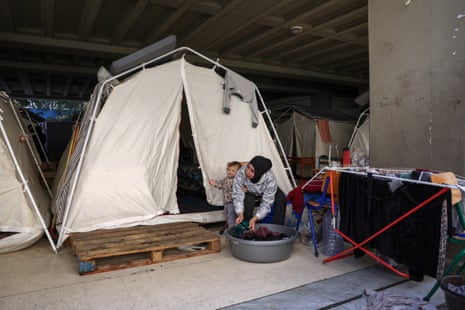
Boulierac said many of those displaced are staying at friend’s houses and some have found shelter in one of the 600 shelters opened by the Lebanese government and other.
He said he heard testimony of an instance of 14 people living in one room in Beirut, where many people have fled to. Lebanese authorities said more than one million people have registered as displaced since the devastating US-Israeli assault began on 2 March.
Sources have told Al Jazeera that certain centres set up by Lebanon’s ministry of education are only accepting displaced Lebanese people, with others such as Syrian refugees, foreign domestic workers and Palestinian people having to find alternatives.
Israeli defence minister claims country's forces have killed Iranian security chief
The Reuters news agency is reporting that Israel’s defence minister, Israel Katz, has said Iran’s security chief Ali Larijani had been killed in an Israeli airstrike overnight (see post at 08.56 for more details).
In a statement, Katz said: “Larijani and the Basij commander were eliminated last night and have joined Khamenei, the head of the annihilation program, along with all those eliminated from the axis of evil in the depths of hell.”
However, some Iranian media outlets are reporting that Larijani will be publishing a message shortly. There has been no official confirmation from Iran. We have not been able to independently verify the reporting and will give you more details as we have them.
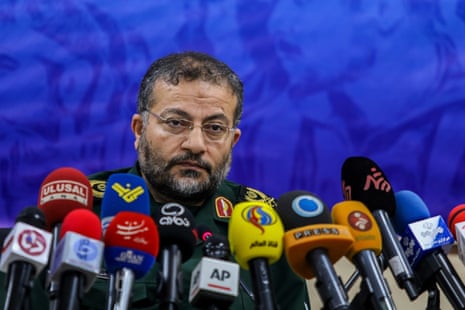
Israel says it has assassinated commander of Iran’s Basij militia unit
The IDF said it has killed the head of the Iranian Revolutionary Guards’ all-volunteer Basij force.
The Israeli military said in a post on X on Tuesday that Gholamreza Soleimani was killed in an airstrike in Tehran on Monday. It said that he had acted as the unit’s commander for six years and said the force under his leadership was a “primary instrument” of repression in Iran.
Iran did not immediately acknowledge Soleimani’s killing. If confirmed, Soleimani would be the highest level assassination in the war since joint US-Israeli strikes killed the former supreme leader Ali Khamenei on 28 February, triggering the war.
Israeli military targeted Iran's security chief in overnight airstrike, Israeli media reports
We are seeing reports in the Israeli media saying the military has targeted Ali Larijani, the secretary of Iran’s supreme national security council, in an airstrike overnight on Iran.
We have not been able to independently verify this information yet. It is unclear whether Larijani was killed or injured in the reported airstrike, according to the Times of Israel, citing Israeli officials. Iran has not yet commented on the report.
During an assessment this morning, the Israel Defense Forces chief of staff, Eyal Zamir, was quoted as having said: “Significant elimination achievements were also recorded overnight, with the potential to impact the campaign’s achievements and the IDF’s missions.”
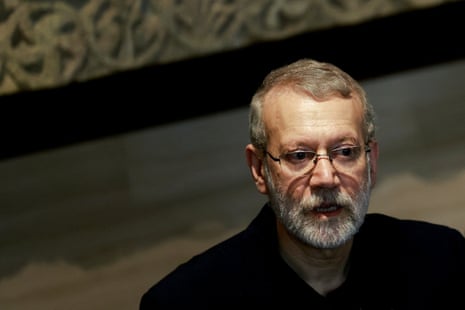
Iran and Iraq discussing passage of oil tankers through strait of Hormuz
Iran and Iraq are holding talks about allowing transit of Iraq’s oil tankers through the strait of Hormuz, Iraq’s oil minister Hayan Abdul-Ghani was quoted by the country’s state-run Iraqi news agency as having said.
“There is communication with Iran regarding allowing the passage of some Iraqi oil tankers,” the oil minister said.
The news agency said Iraq’s oil production has been reduced to 1.2m barrels daily, down from 4.3m barrels daily prior to the war. Iraq is also reported to be trying to restart exports through the Kirkuk-Ceyhan pipeline to Turkey.
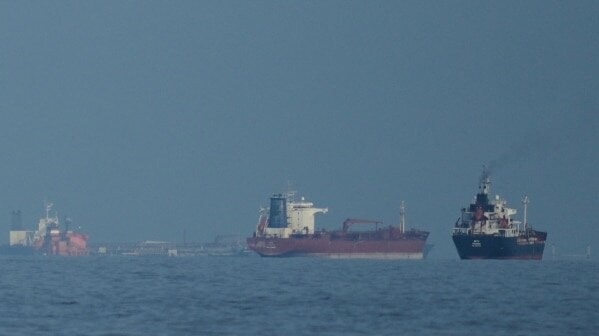
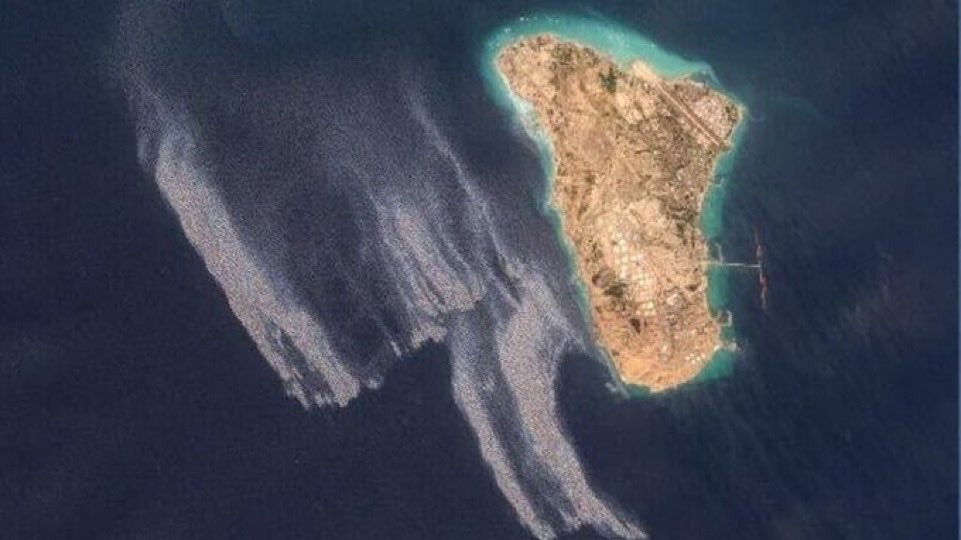
Map of strait of HormuzTehran has effectively closed the strait of Hormuz, through which about 20% of the world’s oil passes, in retaliation for US-Israeli airstrikes at the end of February that killed Iran’s supreme leader. The blockage has caused huge oil supply disruption and sent global oil prices soaring.
Iranian foreign minister, Abbas Araghchi, told reporters yesterday that the strait was only cut off for vessels of the US, Israel and their allies.
Ship-tracking data shows a Pakistan-bound oil tanker passing through the strait of Hormuz over the weekend. The US treasure secretary, Scott Bessent, said on Monday that the US believed some Indian and Chinese as well as Iranian fuel tankers had passed through the strait.
European countries have ruled out sending warships to the strait, despite threats from Donald Trump that Nato faces “a very bad future” if members fail to help reopen the vital waterway.
Monitoring organisation NetBlocks said the internet blackout in Iran has entered its 18th day.
“Iran’s internet blackout is now entering its 18th day after 408 hours without international connectivity for the general public. Chosen users are granted privileged access, while the remainder are left with a limited domestic intranet under increasingly tight control,” NetBlocks said.
Those without access to Starlink or alternative ways to communicate – which are often expensive – are cut off, not only from the outside world but the blackout also severely curtails Iranian’s ability to communicate with each other, making mobilisation, for example, much more difficult.
Mass civilian displacement in Lebanon caused by 'relentless' Israeli bombing and blanket evacuation orders, charity says
Authorities say more than one million people in Lebanon have been forced to flee their homes since Israel began bombing the country on 2 March after Hezbollah, the Iranian-backed Lebanese militant group, launched rockets on Israel in reaction to the killing of Iran’s supreme leader, Ali Khamenei, in joint US-Israeli airstrikes.
This mass civilian displacement has been caused by “relentless Israeli bombings and blanket evacuation orders that are not sparing anyone,” according to medical charity Medicine Sans Frontières (MSF), which said people are being systematically forced from their villages.
“We are seeing a similarity to what we saw in the past two and a half years in Gaza: broad evacuation orders, constant displacement of thousands of families, and systematic bombing on densely populated areas,” the MSF coordinator in Lebanon, Lou Cormack, said.
“After 15 months of a fragile ceasefire that failed to stop the violence in Lebanon, families are once again trapped between fleeing or facing bombs.”
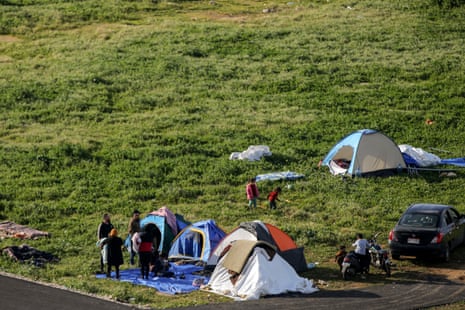
Hundreds of schools and public buildings have been converted into emergency shelters as Israeli attacks continue across the country, including on residential neighbourhoods. Many people are being forced to sleep in makeshift tents or on the streets as shelters become overwhelmed.
Israel’s military said yesterday that its troops had begun a ground assault in new areas of southern Lebanon, fuelling concerns that the war will be a prolonged one. Israel’s defence minister, Israel Katz, warned displaced Lebanese people forced from their homes would not be allowed to return until the safety of Israelis near the border was guaranteed.
At least 886 people, including 111 children, have been killed in Israeli attacks in Lebanon since 2 March, according to Lebanese authorities.
Israel’s health ministry has said 3,530 people have been taken to hospital since the start of the US-Israeli war on Iran on 28 February, with 86 currently hospitalised, eight of whom are reported to be in a serious condition.
Over the past day, 70 injured people were admitted to hospitals, including four in moderate condition, the ministry said. The ministry does not give a breakdown of the causes of injuries. The IDF said early this morning that missiles were launched from Iran towards Israel. There were no immediate reports of any casualties.
Saudi Arabia’s defence ministry says it has intercepted and destroyed three drones in the country’s “eastern region”. The spokesperson did not say where the drones originated from.
Interim summary
In case you’re just just joining us, here’s a snapshot of the latest developments in the US-Israel war on Iran. It’s 10.30am in Tehran, 9am in Tel Aviv and Beirut and 3am in Washington DC.
The Israeli military issued an urgent warning to residents in the southern Lebanese village of Arab al-Jal on Tuesday morning to evacuate as the army was about to attack what it called military infrastructure linked to Hezbollah.
A reported drone and rocket attack targeting the US embassy in Baghdad early on Tuesday came as a strike killed four people at a house reportedly hosting Iranian advisers, security officials said, pulling Iraq deeper into the Middle East war.
Donald Trump has said his trip to China this month to meet with Xi Jinping could be delayed by “a month or so”. “We’ve got a war going on. I think it’s important that I be here,” Trump said at the White House. Treasury secretary Scott Bessent earlier insisted the move was not to press Beijing to help unblock the strait of Hormuz.
The head of the Maritime Organisation said naval escorts through the strait of Hormuz would not “100% guarantee” the safety of ships attempting to transit the key waterway, the Financial Times reported on Tuesday.
Qatar said it intercepted a missile attack while the resulting falling debris caused a fire but there were no reported injuries.
Falling shrapnel from the interception of a ballistic missile in Abu Dhabi killed a Pakistani national, the media office in the United Arab Emirates capital said.
Operations at the UAE’s Shah gas field remained suspended on Tuesday after a drone attack, while a fresh attack caused a fire in the Fujairah oil industry zone. No injuries were reported in either incident, local media offices said
The Reserve Bank of Australia increased interest rates amid the energy shock worldwide. The Middle East war is adding to price pressures worldwide, forcing central banks to prepare for higher interest rates. Australia’s had been the only one expected to hike so soon, with central banks in the US, UK, EU, Japan, Canada, Switzerland and Sweden all expected to leave rates on hold this week.
A summary of earlier developments is here.
Iran's Guards say 10 'foreign spies’ arrested
Iran’s Islamic Revolutionary Guard Corps have said their forces arrested 10 “foreign spies” amid the war with Israel and the US.
“Ten mercenary, treacherous elements were identified and arrested,” the Guards’ intelligence organisation in the north-eastern Razavi Khorasan province said on Tuesday, according to Isna news agency, cited by Agence France-Presse.
Isna did not identify their nationalities.
The Guards said four among them were gathering information “on sensitive sites and economic infrastructure” while others were linked to a “monarchist terrorist group”.
Falling shrapnel from the interception of a ballistic missile in Abu Dhabi has killed a Pakistani national, the media office in the United Arab Emirates capital has said.
The incident occurred in the Bani Yas area, the office posted on X.
The exiled son of Iran’s last shah has announced a new committee to lay the groundwork for a future truth commission in Iran and named a Nobel peace prize winner to lead it.
US-based Reza Pahlavi, who wields influence among the diaspora but holds no official position, said on Monday that the transitional justice committee would draft “regulations for a truth-finding commission and court”, the AFP news agency is reporting.
According to the former crown prince, the team would seek justice for “victims of injustice, torture and repression by the Islamic Republic”.
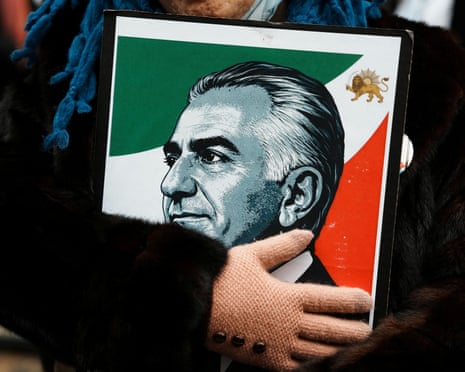
Pahlavi said on X that Nobel laureate Shirin Ebadi would lead the committee of “experienced Iranian experts spanning four different generations”. He also named Dutch Iranian law professor Afshin Ellian, activist Iraj Mesdaghi and doctor Leila Bahmani as members.
Pahlavi leads one of several opposition movements based outside of Iran. His prominence grew after he encouraged protests in January against Iran’s clerical system, with some demonstrators calling for a return of the deposed monarchy.
As many as 30,000 Iranians were reportedly killed in the ruling regime’s crackdown on the protests.