1 month ago
Iran will completely close strait of Hormuz if Trump acts on threats to target power plants - statement
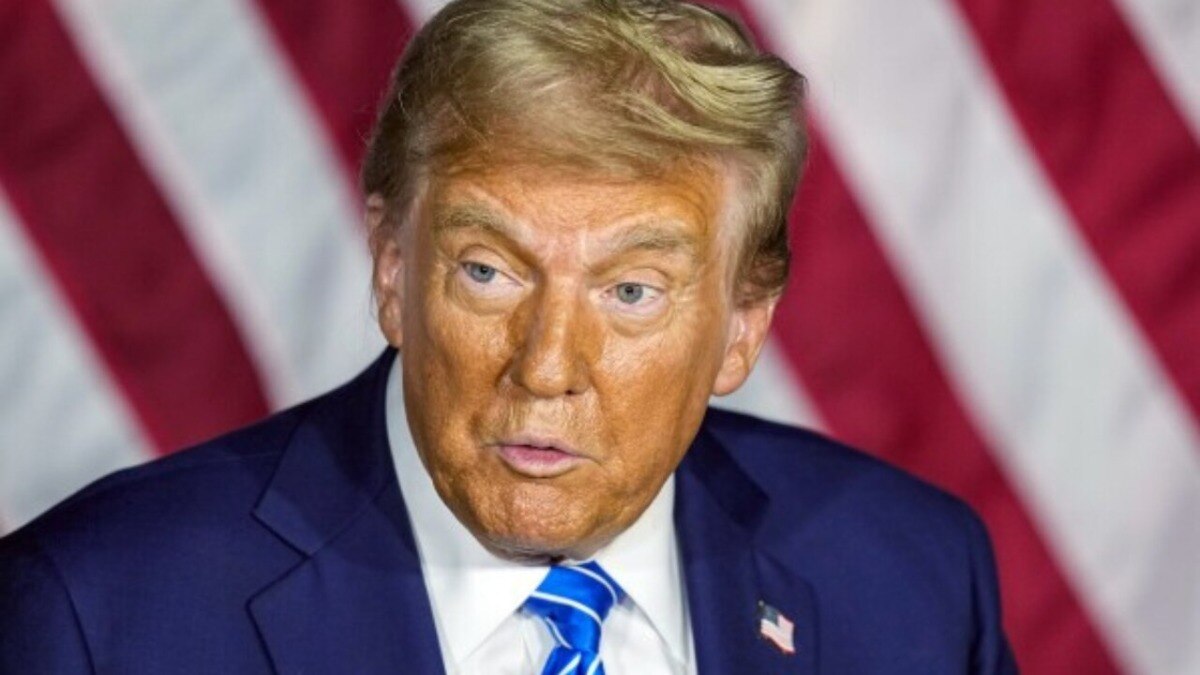
The Reuters news agency is carrying a statement from Iran’s Islamic Revolutionary Guard Corps (IRGC) in response to the US president, Donald Trump, giving Iran 48 hours to reopen the strait of Hormuz to shipping or face the destruction of its energy infrastructure.
In a new statement, the IRGC said Iran will completely shut the strait if Trump proceeds with his threats to target Iranian energy facilities.
The IRGC were quoted as saying that companies with US shares would be “completely destroyed” if Iranian energy facilities were targeted by Washington, and said energy facilities in countries that host American bases would be “lawful” targets.
“We did not start the war and we will not start it now, but if the enemy harms our power plants, we will do everything to defend the country and the interests of our people,” the statement reads.
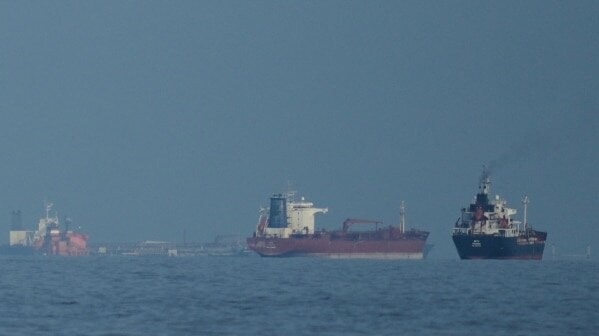
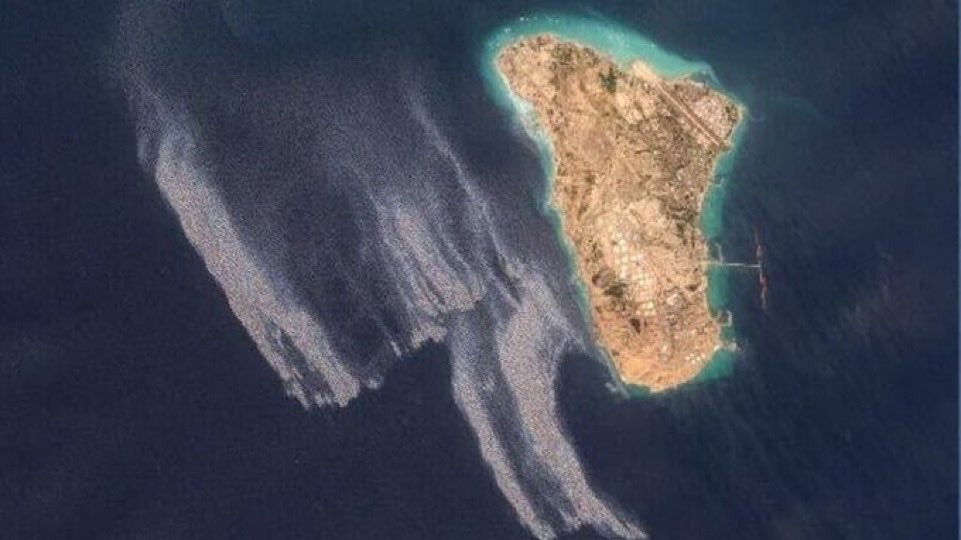
Map.Iran has already effectively closed the vital waterway, but a relatively small number of vessels from friendly countries have been able to transit it.
The effective closure of the strait, which carries one-fifth of global seaborne crude oil, one-fifth of LNG shipments and one-third of the most widely used fertiliser, has led to a spike in global energy prices, including in the US where consumers are being hit hard.
Key events Show key events only Please turn on JavaScript to use this feature
US warns Americans worldwide to show 'increased caution'
The US state department has issued a message urging American citizens around the globe to be more cautious amid the Iran war.
The department posted on X:
Worldwide Caution: The Department of State advises Americans worldwide, and especially in the Middle East, to exercise increased caution.
It also said:
U.S. diplomatic facilities, including outside the Middle East, have been targeted.
Groups supportive of Iran may target other U.S. interests overseas or locations associated with the United States and/or Americans throughout the world.
The state department added that periodic airspace closures might cause travel disruptions and that Americans abroad should follow the guidance in security alerts issued by the nearest US embassy or consulate.
Australian shares plunge as investors weigh Trump ultimatum

Jonathan Barrett
The Australian share market plunged this morning, wiping almost $60bn in value from equities in early trading after the US and Iran traded threats to destroy energy infrastructure.
Australia’s benchmark S&P/ASX 200 fell 1.8% shortly after the market opened.
The index is now down 10% since the Middle East conflict erupted, representing a market correction.
The steep losses come part-way through Donald Trump’s 48-hour ultimatum to Tehran to open the strait of Hormuz, a vital pathway for the world’s oil flows.
The head of research at Pepperstone, Chris Weston, said Trump’s ultimatum would define trading conditions.
If we move past the deadline, focus will quickly shift to the scale of any action against Iran and the nature of Iran’s response, particularly toward US bases and its allies.
While investors largely ignored the initial strikes against Iran, sentiment has soured due to concerns the US does not have a clean exit strategy that can guarantee a stable resumption of the oil trade, and other freight, through the crucial strait.
The ASX has been pulled around by sharp moves in the oil price, with rising energy prices fuelling global inflation, which drags down equity markets.
An influential pro-Iran Iraqi armed group has announced it will extend a pause on its attacks on the US embassy in Baghdad by five days.
“The deadline given to the embassy of American evil will be extended by an additional five days,” the Kataeb Hezbollah group said in a statement on Monday.
The group warned that it would respond if it came under attack and denied involvement in a drone strike that hit an Iraqi intelligence building on Saturday, killing an officer, reports Agence France-Presse.
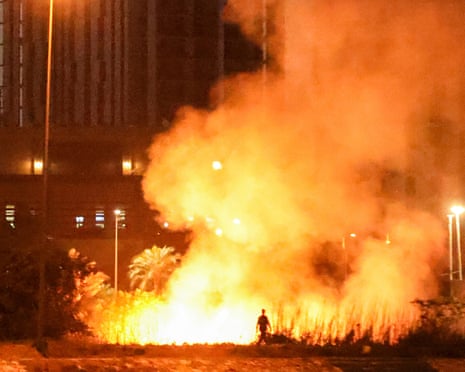
Oil prices rise after Trump ultimatum on Hormuz strait
The price of oil increased early on Monday after Donald Trump’s 48-hour ultimatum for Iran to open the strait of Hormuz or face decimation of its energy infrastructure – and Israel warned the war would continue for several more weeks.
Shortly after the 2200 GMT open, the price of West Texas Intermediate – the US benchmark crude – for May delivery was up 1.8% to just over $100 a barrel, before retreating slightly.
The price of North Sea Brent crude for May delivery rose at a similar rate, to $113.44 a barrel, before sliding to around $111 about 45 minutes into trading, Agence France-Presse is reporting.
On 27 February, the day before the US-Israeli attacks on Iran started, they were $67.02 and $72.48 a barrel, respectively.
This is Adam Fulton picking up our live coverage – stay with us for the latest developments
Summary of the day
Iranian president Masoud Pezeshkian said “threats and terror” are strengthening Iranian unity, after Donald Trump yesterday warned he would “obliterate” Iranian power plants if the strait of Hormuz is not opened within 48 hours.
The US treasury secretary, Scott Bessent, gave an interview to NBC News earlier today. When asked if Trump was “winding” down the war or “escalating” it, Bessent said: “They are not mutually exclusive. Sometimes you have to escalate to de-escalate.”
In the same NBC interview, US treasury secretary Scott Bessent said that the US government has “plenty of money” to fund the war against Iran, but is requesting supplemental funding from Congress to ensure the military is well supplied in the future.
Lebanon’s Health Ministry said Sunday that 118 children and 79 women are among those killed, and at least 2,786 others have been wounded, according to the Associated Press. The country’s death toll as of Saturday was 1,024 people.
The director general of the Atomic Energy Agency (IAEA), Rafael Grossi, said he hopes to “re-establish” talks between Iran and the US about Tehran’s nuclear program despite the escalating nature of the conflict. “I’ve been having important conversations here at the White House, and also with Iran. There are some contacts, and we hope to be able to reestablish that line,” Grossi told CBS News.
UK prime minister Keir Starmer and US president Trump spoke by phone Sunday evening, according to a statement from the UK government. “The leaders discussed the current situation in the Middle East, and in particular, the need to reopen the Strait of Hormuz to resume global shipping.”
Pope Leo on Sunday said death and suffering caused by the war in the Middle East are a “scandal to the whole human family”, as he once again pleaded for an immediate ceasefire. “We cannot remain silent in the face of the suffering of so many people, the defenseless victims of these conflicts. What hurts them hurts the whole of humanity,” Leo said at his weekly Angelus prayer in St. Peter’s Square.
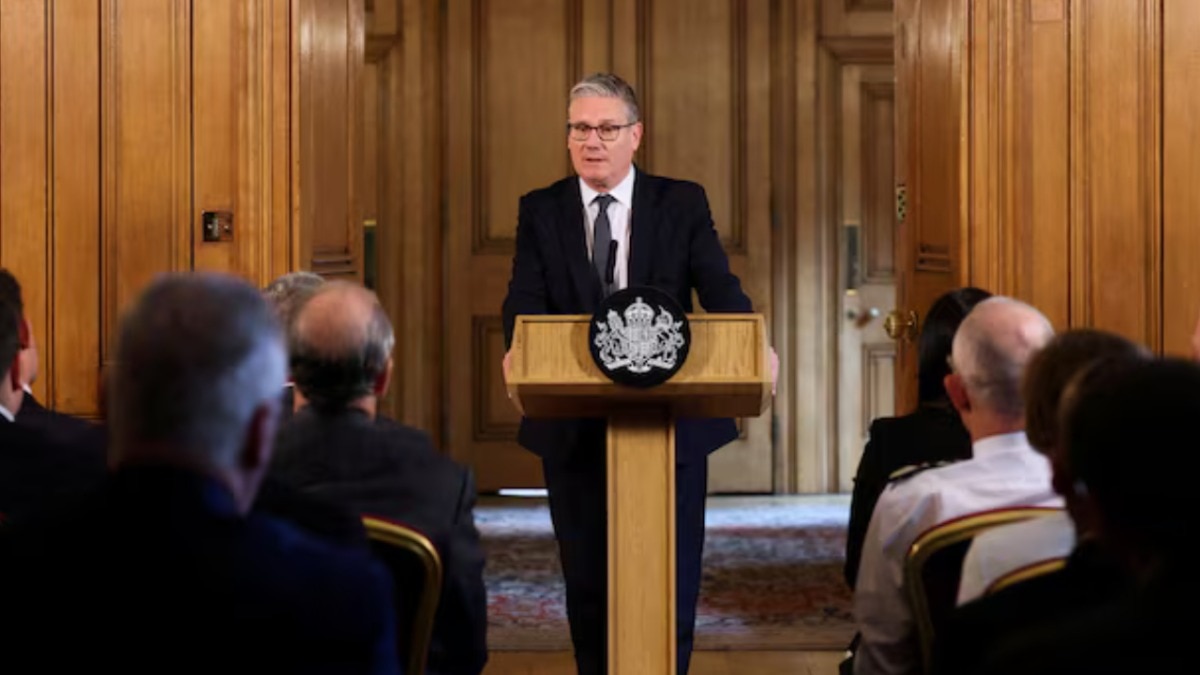
UK prime minister Keir Starmer and US president Donald Trump have spoken by phone this evening, according to a statement from the UK government.
“The leaders discussed the current situation in the Middle East, and in particular, the need to reopen the Strait of Hormuz to resume global shipping,” the statement said. “They agreed that reopening the Strait of Hormuz was essential to ensure stability in the global energy market. They agreed to speak again soon.”
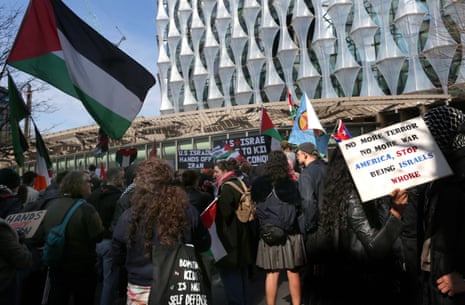
Ongoing demonstrations against the war in Iran have been taking place in London this weekend. Here are some photos from Sunday’s protests:
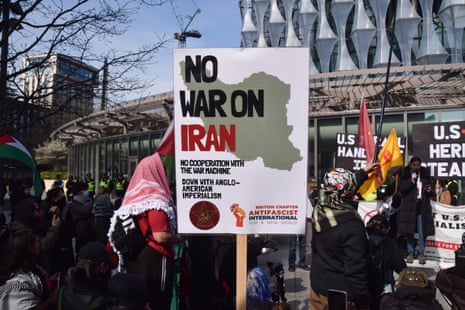
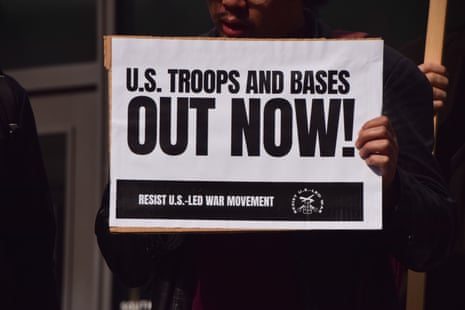
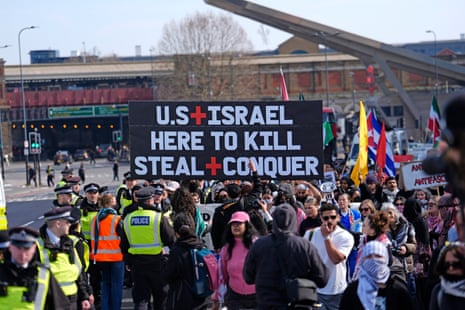
Saudi Aramco chief executive Amin Nasser has cancelled his planned appearance at the CERAWeek energy conference in Houston to remain in Saudi Arabia because of the Iran conflict, an industry source told Reuters.
Nasser, who has been CEO of the world’s top oil exporter for more than a decade, is usually one of the headline speakers at the conference, one of the energy industry’s biggest events.
CERAWeek, organised by S&P Global, which begins on Monday, draws top executives, government officials, and policymakers from around the world to discuss global energy market outlook.
Nasser’s withdrawal highlights the scale of the challenge he faces in dealing with the Iran crisis.
He will also not provide a recorded video message for the CERAWeek conference, the source said, adding that the event’s organizers had been notified.
The conflict, now in its fourth week, has killed more than 2,000 people, upended global markets and spurred Iranian retaliatory strikes that have effectively shut the strait of Hormuz and targeted Gulf energy infrastructure, including Aramco’s.
Pope Leo renews call for ceasefire, saying harm to victims in Middle East conflict 'hurts the whole of humanity'
Pope Leo on Sunday said death and suffering caused by the war in the Middle East are a “scandal to the whole human family”, as he once again pleaded for an immediate ceasefire.
As the US-Israeli war on Iran enters its fourth week, the first U.S. pope said that he continues to follow with “dismay” the situation in the Middle East and in other regions torn apart by war and violence.
“We cannot remain silent in the face of the suffering of so many people, the defenceless victims of these conflicts. What hurts them hurts the whole of humanity,” Leo said at his weekly Angelus prayer in St. Peter’s Square.
“I strongly renew my appeal for us to persevere in prayer, so that hostilities may cease and the way may finally be paved for peace,” he added.
French president Emmanuel Macron said in a social media post that he has spoken with Saudi Crown Prince Mohammed bin Salman.
Macron called on all combatants in the war to impose a moratorium on energy and other civilian infrastructure, and urged Iran to let traffic flow freely through the strait of Hormuz.
“I have just met with the Crown Prince of Saudi Arabia, Mohammed bin Salman,” he wrote. “I reiterated to him France’s solidarity and our commitment to contributing to the defense of Saudi airspace, as the country is subjected to repeated and unacceptable strikes by Iranian missiles and drones.”
He continued: “In the face of the risk of an uncontrolled escalation, it is more essential than ever that all belligerents agree to establish a moratorium on energy and civilian infrastructure and that Iran restore freedom of navigation in the Strait of Hormuz.”
Mohammad Bagher Qalibaf, Iran’s parliament speaker, threatened financial entities that fund the US military in a Sunday social media post.
“Alongside military bases, those financial entities that finance the US military budget are legitimate targets,” he wrote. “US treasury bonds are soaked in Iranians’ blood. Purchase them, and you purchase a strike on your HQ and assets.”
He warned: “We monitor your portfolios. This is your final notice.”
European Union foreign policy chief Kaja Kallas held a phone call with Iran’s foreign minister Abbas Araqchi on Sunday, an EU official told Reuters.
Kallas also held separate calls with counterparts from Turkey, Qatar and South Korea “on the war in the Middle East, attacks on energy infrastructure, and the urgent need to reopen the Strait of Hormuz,” the official said.
“These engagements were part of the EU’s ongoing efforts to explore diplomatic avenues forward,” the official said, adding that “fresh threats to attack critical civilian infrastructure risk impacting millions of people across the Middle East and beyond”.
Kallas last spoke to Araqchi on Wednesday, when she said safe passage through the Strait of Hormuz was a priority for Europe, according to an EU official.
Iranian foreign minister Abbas Araghchi said Sunday that maritime traffic isn’t passing through the strait of Hormuz because insurance companies are concerned about the US-initiated war, but asserts that the strait is not closed.
“Strait of Hormuz is not closed. Ships hesitate because insurers fear the war of choice you initiated—not Iran,” he wrote. “No insurer—and no Iranian—will be swayed by more threats. Try respect.”
He added: “Freedom of Navigation cannot exist without Freedom of Trade. Respect both—or expect neither.”

Chris Osuh
It is approaching a month since the US and Israel launched their attacks on Iran, arguing they were acting to remove the country’s nuclear threat, destroy its ballistic missile capability and free the Iranian people of a tyrannical theocratic regime. Yet it is Iranian civilians who are increasingly bearing the brunt of Israel and US’s campaign.
Here is the Guardian’s timeline of the war so far and what we know about the impact it is having on the Iranian public.
Read more:
An Israeli airstrike on a police vehicle on Sunday killed three people in the middle of the Nuseirat camp in the central Gaza Strip hours after another person was killed in a strike on northern Gaza, Reuters reported, citing health officials.
Medics and police sources said the three men killed in Nuseirat were members of the Hamas-led police force. Ten people were also wounded in the attack, medics said.
Earlier on Sunday a separate airstrike killed one person, identified as a leader of one of Fatah’s armed groups, and injured an unknown number of others in the Sheikh Radwan neighborhood in northern Gaza.
The Israeli military said it was checking on the two incidents.
While Israeli attacks in Gaza declined in the days after the US and Israel launched attacks on Iran on February 28, according to residents, medics and analysts, they have since begun to rise again. Israeli fire has killed dozens of Palestinians since the outbreak of the Iran war, Gaza health officials say.