1 month ago
It is one thing to strike and surprise, and entirely another to name the targets before hitting them. The latter reveals determination and power. That's what Iran did after Israel set its vital South Pars gas field on fire. Tehran named assets in the Gulf and hit them one by one, as if to make a mockery of its Arab neighbours and the US's defences. Keh ke maarunga. It said it would hit, and then hit.
It is typical of the behaviour of the dons of Hindi heartland. They name the target, and then attack, to reveal their dominance and influence. This works as a psychological weapon too. Like in the cult classic Gangs of Wasseypur (2012), in which "keh ke lunga" refers to humiliating the rival by lashes of the tongue.
Iran's raw warning, followed by its precision strikes on oil and gas assets in Saudi Arabia, Qatar, and the UAE, feels as if the "keh ke lunga" term was coined precisely for such a situation.
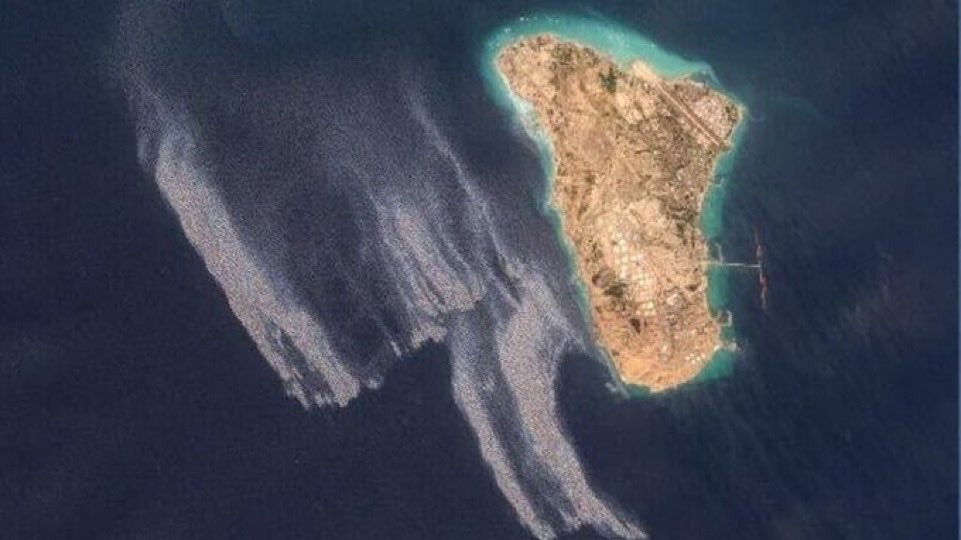
Israel struck the South Pars natural gas field in the Persian Gulf, the world's largest gas reserve that Iran shares with Qatar. South Pars holds huge importance. Daily gas production there hit a record 730 million cubic meters in 2025. On March 18 (Wednesday) — it was the first time such a key energy site had been hit in this war.
The South Pars gas field is Iran's energy backbone. It supplies around 70% of the country's natural gas, most of which is used domestically for electricity production.
Hours later, on the morning of March 19 (Thursday), Iranian missiles slammed into Qatar's Ras Laffan Industrial City, home to the planet's biggest liquefied natural gas (LNG) facility. Qatar reported "extensive damage" and fires at Ras Laffan. A strike on the world's largest LNG plant would ripple through global markets.
Before the missiles flew, Iranian officials had sent a clear warning. They named five facilities — in Saudi Arabia, the UAE and Qatar that "will be targeted in the coming hours". The names were specific: Saudi Arabia's SAMREF refinery and Jubail petrochemical complex; the UAE's Al Hosn gasfield; and Qatar's Ras Laffan refinery plus the Mesaieed petrochemical complex.
Iran did not hide its plan. It told the world – and then came the barrage of missiles.
The five facilities were publicly named by Iran's Islamic Revolutionary Guard Corps (IRGC). The statement was widely circulated through Iran's semi-official news agencies, primarily Tasnim News Agency.
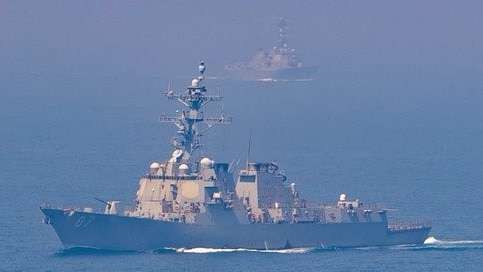
Iran's attacks also revealed the holes in the security umbrella that the US provided to the Gulf countries where it has military bases. Today, the key allies of the US in the region have been hit, and the superpower has been unable to do anything to protect their critical infrastructure.
A LOOK AT US BASES IN THE MIDDLE EAST
America has big military bases in six of the Gulf countries. Key US bases in the Gulf include Naval Support Activity Bahrain, Al Udeid Air Base in Qatar, Camp Arifjan in Kuwait, Al Dhafra Air Base in the United Arab Emirates, and access facilities in Oman.
But the US did nothing to protect the allies. Or rather, could do nothing. There have been no statements from America on the attacks on its allies. Trump only posted on his Truth Social that Israel shouldn't carry out more attacks "pertaining to this extremely important and valuable South Pars Field..."
The silence of the "world's most powerful nation" is striking.
The Israeli strike on South Pars was seemingly not a surprise move. Three Israeli officials told the New York Times that the operation was coordinated with the Trump administration in advance. Trump had first posted on social media that the US "knew nothing about" it. But the facts suggest otherwise.
If America knew the strike was coming on its allies, seemingly much before even Iran announced it, it's a massive failure on the US' part to shield its friends. Especially as the sites hit are critical infrastructure that also supports US garrisons in the Gulf.
No empty talk on Iran's part. Just straight action, on seemingly sitting ducks.
IRAN'S TARGETS CRITICAL FOR GULF, GLOBAL ENERGY
Each target Iran attacked was critical for both Gulf economies and global energy supply.
Saudi Arabia's SAMREF refinery in Yanbu, a joint venture between Aramco and ExxonMobil, can process over 400,000 barrels of crude oil every day.
SAMREF produces large quantities of diesel, marine fuel oil, propane and other refined products mainly for export. If operations halt at this refinery, it will not only hurt Saudi's revenue from refined petroleum but also affect fuel supplies across Asia and Africa.
Meanwhile, Saudi's second facility that was targeted was the Jubail petrochemical complex, one of the world's largest industrial facilities.
It churns out millions of tonnes of ethylene, polyethylene, plastics and speciality chemicals yearly. It is a cornerstone of Saudi Vision 2030, helping the kingdom move away from raw oil exports toward higher-value products. Together with other plants, Jubail contributes heavily to Saudi non-oil GDP and exports.
In the UAE, the Al Hosn (Shah) gas field is one of the largest sour gas processing facilities on the planet. It handles up to 1.45 billion cubic feet of gas per day and supplies around 15-20% of the UAE's domestic natural gas. This gas powers electricity generation, water desalination plants and petrochemical industries across Dubai and Abu Dhabi.
The plant in the UAE also produces huge amounts of sulphur for industrial use. Without steady supply from Al Hosn, daily life and industry in the UAE would face serious shortages.
Qatar's Ras Laffan facility needs no introduction. It is home to the world's biggest LNG operation. It accounts for nearly 20% of global LNG supply. Damage here has sent shockwaves through energy markets in Asia and Europe. Prices of LNG have already jumped overnight after missiles hit the facility on Thursday.
The fifth site that Iran hit was the Mesaieed, a petrochemical complex that serves as Qatar's main hub for downstream chemicals.
It produces ethylene derivatives, polymers, vinyl products and other materials that are exported worldwide. It is a key part of Qatar's strategy to build a strong industrial base beyond raw gas exports. Together with Ras Laffan, these two sites make Qatar the energy powerhouse it is.
By openly naming these high-value economic targets and then striking them one after another, Iran has sent a powerful message of confidence and reach.
WHAT HAS AMERICA LOST SO FAR: A MASSIVE HOLE IN ITS DEFENCES
Iran's Revolutionary Guard, despite being on the backfoot, destroyed $2.7 billion worth of high-value systems in the first two weeks.
This includes the only AN/FPS-132 radar outside America, based in Qatar – a rare long-range early-warning giant worth over $1 billion. Two AN/TPY-2 radars, key parts of the THAAD missile defence, were also wiped out – one in Jordan and one in the UAE.
On Thursday, an F-35 stealth fighter jet was also hit by Iranian fire.
Several smaller radars at bases across the region are gone too. These radars are the eyes of America's defence network. Without them, spotting incoming missiles becomes harder.
The loss of critical hardware exposes holes in US' defence thinking. America spends more on its military than the next ten countries combined. Its arsenal looks unbeatable, at least on paper – Patriots, THAAD, fighter jets, everything.
Yet, in real fight, Iranian missiles, many of them older models, have punched through.
The naming and hitting of critical energy assets in the UAE, Qatar and Saudi Arabia is Iran's show of influence and power not just against the Gulf nations but also against the US. It's about embarrassing the rivals. It's keh ke maarunga.
- Ends
Published By:
Anand Singh
Published On:
Mar 20, 2026 16:14 IST
Tune In