2 hours ago
The origins of the Iran conflict can be traced back to a closed-door briefing in the White House that was attended by Israeli PM Netanyahu, Trump and his close aides. However, several of Trump's sides, including Marco Rubio and JD Vance, were not on the same page regarding a military campaign in Iran. Read on to find out what happened.
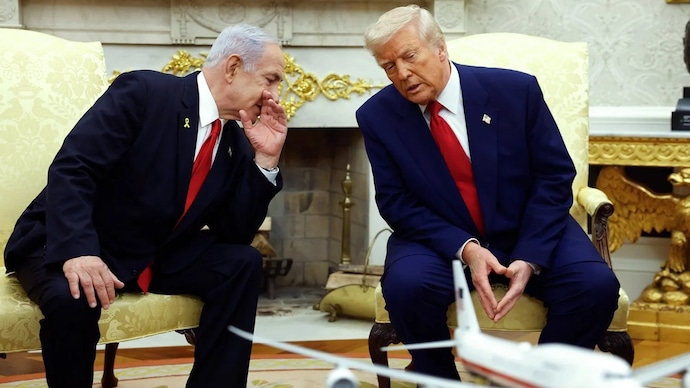
Israeli PM Benjamin Netanyahu and US President Donald Trump in the White House
A fragile calm prevailed in the Middle East after US President Donald Trump announced a two-week ceasefire in the Iran war. However, the origins of the month-long conflict, which has left over 2,000 dead in Iran and held the global economy hostage, can be traced back to a chilly February 11 afternoon when Israeli Prime Minister Benjamin Netanyahu walked into the White House. It proved decisive. From that day, Iran was no longer a problem for Trump. It became a target to be hit.
On February 11, Netanyahu did not come alone. He had with him a goal - to get Trump to agree to a major strike on Iran - and a plan. A day later, that same plan would be rejected as "farcical" and "bullshit" by key aides of Trump, according to a report by The New York Times. But Netanyahu's pitch dovetailed with Trump's desire to dismantle the theocratic Iranian regime. A fortnight later, despite his team not speaking with a single voice, Trump approved Operation Epic Fury.
The NYT report confirms what we knew all along. The US was dragged into the war with Iran by Netanyahu, for whom regime change in Tehran has been a decades-old obsession. What we didn't know was how Netanyahu managed to convince Trump and the discussions within his team, before launching the war. Stay with us, and we will reveal what went on behind the closed-door White House briefing.
INSIDE NETANYAHU'S US BRIEFING
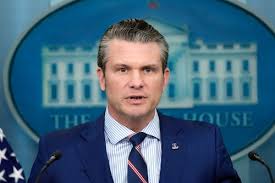
Apart from Netanyahu and Trump, those present at the "highly classified" briefing included Secretary of State Marco Rubio, Defence Secretary Pete Hegseth, Joint Chiefs of Staff chairperson General Dan Caine, CIA chief John Ratcliffe, and the White House chief of staff Susie Wiles. Vice President JD Vance, who was in Azerbaijan, was absent. Neither did he join via video call.
From the Israeli side, David Barnea, the chief of its spy agency Mossad, and other military officials joined on video.
For one hour, a confident Netanyahu had Trump's ears and eyes. As per the NYT report, Netanyahu started his presentation by pointing out how Iran was ripe for regime change. In fact, just a couple of weeks back, Tehran witnessed violent protests against the regime of Supreme Leader Ayatollah Ali Khamenei.
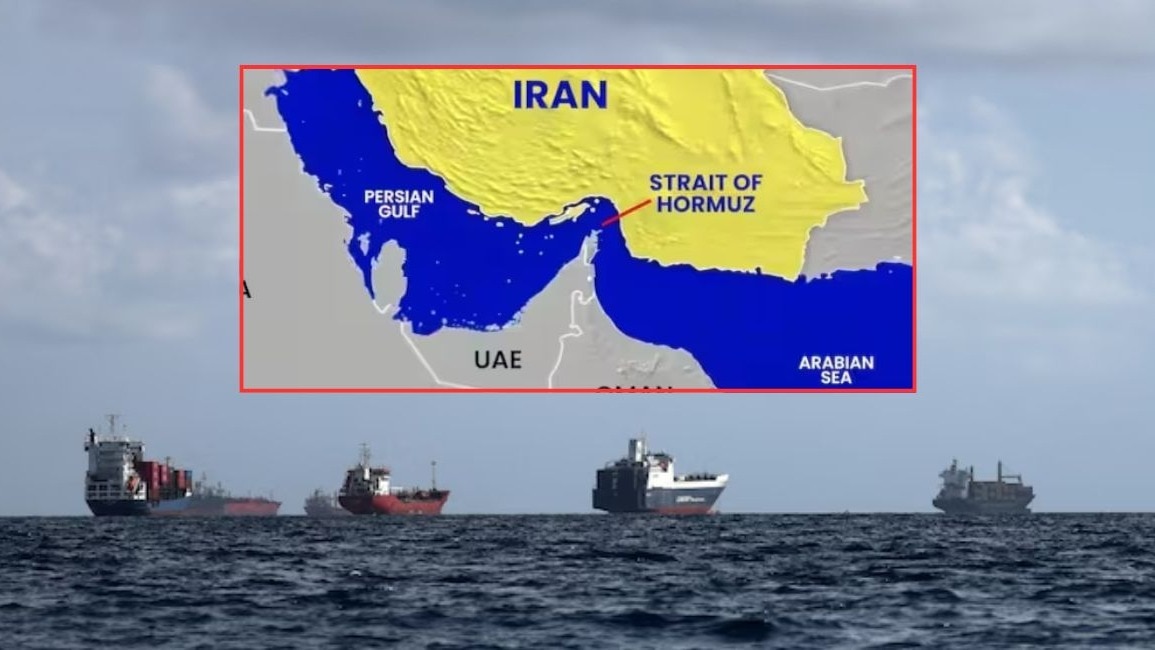
As per Israel's plan, Iran's ballistic missile program could be destroyed in a few weeks. It would then weaken the regime so much so that it would not be able to choke off the Strait of Hormuz, the vital waterway through which 20% of the world's oil and gas passes. We all know what happened in reality, with Iran choking the global oil supply.
In his briefing, Netanyahu also assessed the likelihood of Iran striking US military assets in the Gulf as "minimal", the NYT report said. The Mossad chief indicated that the bombing campaign would reignite the street protests in Iran.
Trump's eyes lit. "Sounds good to me," Trump told Netanyahu. The Israeli PM, who has been lobbying Trump personally for months to strike Iran, saw this as an assurance that a conflict was imminent.
It seemed Trump had all but made up his mind. But his team was sceptical. For an operation of this scale, the US President gave his intelligence team just 24 hours to assess the viability of Netanyahu's plan.
TRUMP TEAM NOT ON SAME PAGE WITH PRESIDENT
On February 12, Trump's inner circle met to discuss the US intel analysis. The officials told the Trump team that only two objectives - killing the Iranian Supreme Leader and crippling Iran's missile systems - were achievable.
However, the CIA director was not convinced of Netanyahu's regime change plan. He dubbed it "farcical", the NYT reported.
Rubio interrupted. "In other words, it is bullshit," he said. The Secretary of State, instead, preferred a campaign of maximum pressure against Iran.
Days into the war, Rubio, unknowingly, would confirm Israel's role in driving the US to join the war. Speaking to reporters on March 4, Rubio said Israel's determination to attack Iran and the certainty that US troops in the Gulf would be targeted in retaliation forced Trump to order the strikes.
Vance, regarded as a moderate within the Trump team, was also unsure about the regime change prospect. In fact, he said a regime-change war would be a "disaster". He also argued that if the US entered the war, it would be seen as a betrayal by several voters who voted for Trump based on his promise of no new wars.
Perhaps Hegseth was the biggest proponent of a military offensive among the Trump team.
Susie Wiles was largely quiet in the meeting. However, she later told colleagues that she was concerned about the US being involved in another war in the Middle East. She, would, eventually go on to play a crucial role in goading Trump towards finding a quick off-ramp. We will come to this later.
All eyes now turned towards the Joint Chiefs of Staff chairperson. General Caine, who knew Israel inside out, pointed out Tel Aviv's habit of overselling their plans.
"They oversell, and their plans are not always well-developed. They know they need us, and that's why they're hard-selling," NYT quoted General Caine as saying.
It was General Caine who had warned Trump of the potential risks of attacking Iran and getting entangled in an endless war. He had also pointed out how stockpiles of US arms, including air defence missiles, were thin after years of support for Ukraine in its war with Russia and Israel.
However, Trump, being Trump, was happy with achieving the first two objectives. In the meeting, Trump suggested that the Iranian regime would capitulate quickly, and it would be a very quick war. The overnight capture of Venezuelan President Nicholas Maduro in January played on his mind.
But Iran is no Venezuela. Trump knows it now.
HOW THE TRUCE WAS REACHED
As the war dragged on, Trump desperately searched for an exit route. Iran's chokehold on Hormuz had already sent oil prices skyrocketing. Back in the US, has prices surged, the stock market tumbled and Trump's own MAGA base was growing impatient. Thirteen US soldiers were already killed in the war.
However, Trump's vision was clouded as his aides presented a rosy view of what was unfolding on the ground. It fell on Wiles, the White House chief of staff, to tell the hard truth. She eventually urged the officials to be "more forthright with the boss" about the political and economic challenges.
For Trump, the warning was unsettling. It was delivered to him as the war went into the third week. He then started to find ways to wind down the operation in Iran while projecting an US "victory". He eventually pitched for negotiations on March 28, which eventually culminated with the two sides reaching a two-week truce on Wednesday.
- Ends
Published By:
Abhishek De
Published On:
Apr 8, 2026 15:39 IST
Tune In