1 month ago
Last Updated:February 04, 2026, 13:28 IST
As Spain announces plans to bar under-16s from social media, discussions around minors’ online safety and age-based limits are gaining traction in India as well.

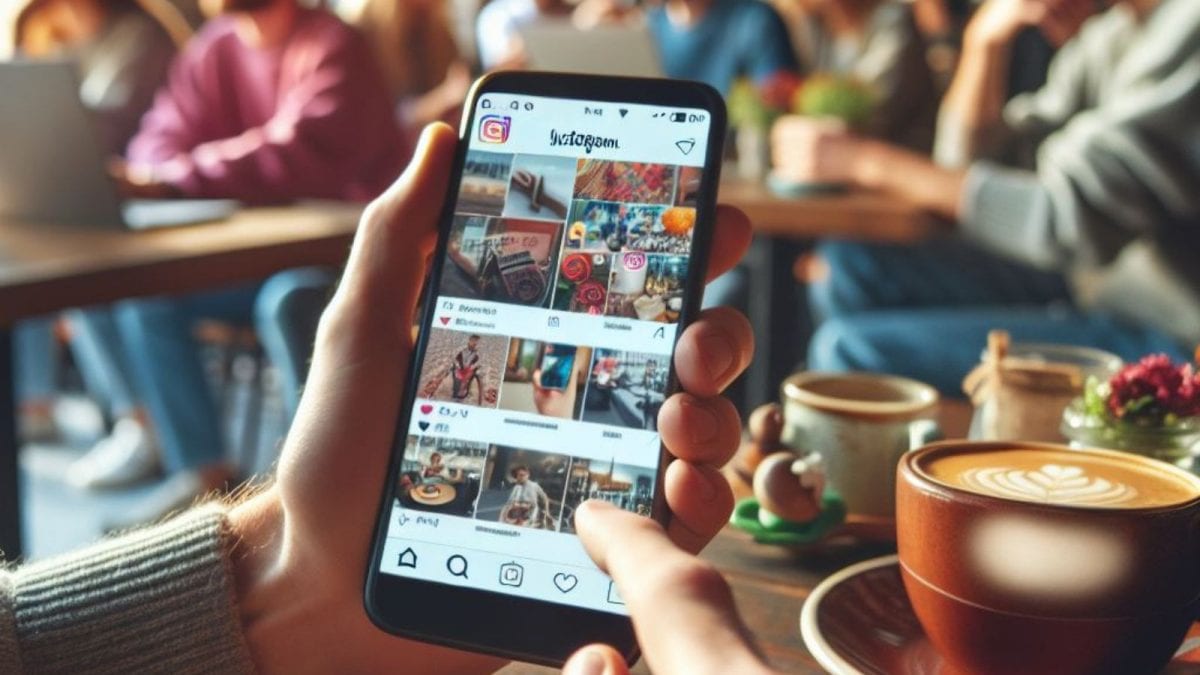
Spain joins a growing number of countries, including Australia and France, which have taken or are considering measures to restrict minors' access to social media. (Representative image)
Spain has become the latest country to move towards firm age-based restrictions on social media use. Prime Minister Pedro Sánchez announced that his government plans to bar children under 16 from accessing major platforms, arguing that the world’s biggest platforms have allowed harmful and illegal content, from child sexual abuse material to AI-generated deepfakes, to flourish unchecked.
“Today, our children are exposed to a space they were never meant to navigate alone," Sánchez said. “We will no longer accept that."
Spain’s ban will be added to an already existing measure centred on digital protections for minors that is being debated by parliament, a government spokesperson told AP. Sánchez said that could happen as early as next week.
Spain joins a growing number of countries, including Australia and France, which have taken or are considering measures to restrict minors’ access to social media. Greece appears to be on a similar path. A senior government official told Reuters the country is “very close" to announcing a ban on children under 15.
Why Are Countries Banning Teens From Social Media?
Governments worldwide are confronting a growing body of evidence showing how online platforms expose children to cyberbullying, extreme dieting content, self-harm communities, sexualised AI imagery and other harmful material.
Several countries, including the UK, Denmark and Malaysia, have said these risks now outweigh the benefits of unfettered access. The explosion of AI-generated abuse has sharpened scrutiny: last month, X’s Grok chatbot was reported to have digitally undressed millions of people without consent, renewing calls for stronger age-gating mechanisms.
Policymakers argue that young users are uniquely vulnerable to compulsive scrolling, comparison anxiety and attention disruption, with concerns now approaching those once associated with tobacco or junk food.
Australia Was The First, And Early Signs Of Impact Are Emerging
Australia became the world’s first country to implement a national under-16 ban in December. Platforms including TikTok, Instagram, YouTube, X, Snapchat and Reddit must now remove underage accounts and deploy robust age-verification systems or face substantial penalties. Early numbers suggest the law has forced platforms to act: nearly five million underage accounts were reportedly removed within weeks, and Meta said it had taken down 550,000 suspected under-16 profiles in Australia alone.
But the system is far from settled. Meta has publicly urged the government to rethink what it calls a “blanket ban," arguing that collaboration, rather than prohibition, would lead to safer outcomes. Australia’s experience is being closely watched to see whether aggressive enforcement meaningfully reduces harm, or simply shifts young users to harder-to-monitor spaces.
Which Other Countries Are Considering Similar Rules?
In January, France approved a bill banning social media for children under 15, paving the way for the measure to take effect at the start of the next school year in September. The bill would also ban the use of mobile phones in high schools. Denmark has introduced similar legislation to ban access to social media for users under 15.
Britain is considering an Australian-style ban on social media for children under 16, with Prime Minister Keir Starmer warning in January they risk being pulled into “a world of endless scrolling, anxiety and comparison".
Starmer said the government was prepared to take robust action, a day after it announced it would examine whether features such as infinite scrolling and the age at which children can access platforms should be restricted and how such measures could be imposed. The government is also considering stronger age checks and whether the current digital age of consent is too low.
Germany, Italy and other European states are also studying the issue, signalling that age-based limits could become a more widely adopted regulatory tool.
Could India Be Next?
In India, the debate is gaining momentum even though no national ban is currently under consideration.
The Economic Survey tabled in Parliament on January 29 flagged digital addiction as a growing challenge for children and adolescents, noting its effect on cognitive development, sleep cycles and academic performance.
The Economic Survey also pointed out that compulsive and high-intensity use of smartphones and digital devices can impose real economic and social costs, ranging from lost study hours and reduced productivity to healthcare burdens and financial losses resulting from risky online behaviours.
Chief Economic Adviser V. Anantha Nageswaran proposed age-based limits on access to social media platforms he said were “predatory" in their approach to maximise user engagement and time spent by users, adding that “such algorithms are particularly targeted at youngsters between the ages of 15 and 24."
He recommended that families promote screen-time limits, device-free hours and shared offline activities. “Policies on age-based access limits may be considered, as younger users are more vulnerable to compulsive use and harmful content," he wrote in the survey.
“Platforms should be made responsible for enforcing age verification and age-appropriate defaults," he added.
Survey recommendations are not binding, but they often influence subsequent policy discussions.
Several states are moving more proactively. Goa and Andhra Pradesh have said they are studying Australia’s regulatory framework, with an eye to similar bans for children.
“Trust in social media is breaking down," Andhra IT Minister Nara Lokesh wrote on X last month, saying the state would study legal frameworks for age-appropriate access. “Children are slipping into relentless usage, affecting their attention spans and education."
Nageswaran said “we are very happy" the two states are considering restrictions for children.
The Madras High Court also suggested the Government of India consider a similar ban. The observation was made by Justices G Jayachandran and KK Ramakrishnan while hearing a PIL seeking directions to internet service providers (ISPs) to offer parental control or “parental window" services, citing the easy availability of pornographic content to young children.
“The central government can consider enacting a law similar to Australia’s social media ban. Until such a law is passed, authorities must strengthen awareness campaigns and ensure they reach vulnerable groups through all available media," the bench said.
Can India Counter Digital Addiction Without A Ban?
Several frameworks already exist. The CBSE has issued detailed guidelines on safe internet use, while the Ministry of Education’s Pragyata guidelines offer age-wise recommendations on screen time in educational settings. Child protection guidelines also outline steps for safer online behaviour among minors.
On the mental-health side, Tele-MANAS — the national helpline launched in 2022 — has received more than 32 lakh calls, indicating both rising awareness and the scale of need. Regulatory steps have also begun to take shape: the Online Gaming (Regulation) Act, 2025 barred money-based wagering games and restricted related advertising in an effort to limit addictive behaviours.
Some states are experimenting with targeted interventions. Kerala’s ‘D-DAD’ (Digital De-Addiction Centre) initiative provides free counselling, therapy and expert support for children struggling with excessive phone use, social media dependency and gaming habits.
Whether India eventually adopts an age-based social media ban remains uncertain. As the Economic Survey puts it, the challenge is not to vilify technology but to “rebalance youth engagement" by pairing sensible safeguards with more meaningful offline opportunities.
Handpicked stories, in your inbox
A newsletter with the best of our journalism
First Published:
February 04, 2026, 13:28 IST
News explainers First Australia, Now Spain: Will India Join The Club Of Nations Banning Social Media For Minors?
Disclaimer: Comments reflect users’ views, not News18’s. Please keep discussions respectful and constructive. Abusive, defamatory, or illegal comments will be removed. News18 may disable any comment at its discretion. By posting, you agree to our Terms of Use and Privacy Policy.
Read More