1 hour ago
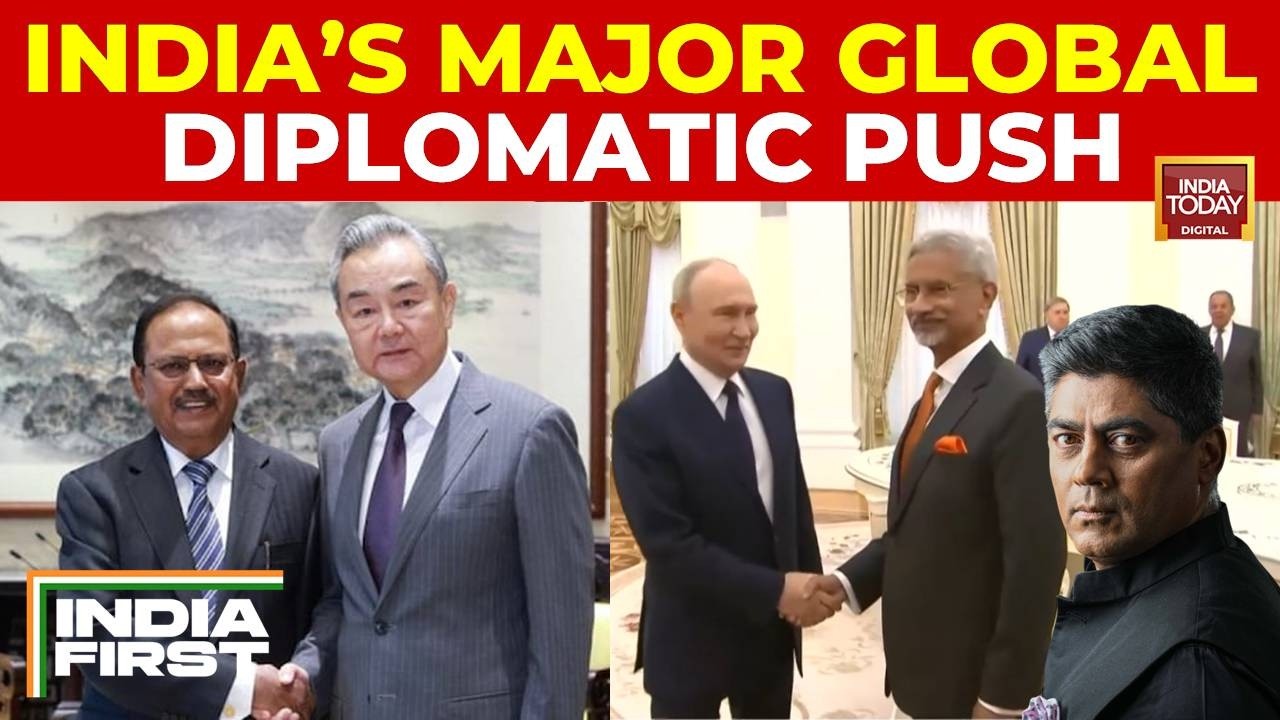
Ajit Doval and Wang Yi held boundary talks in Beijing to steady India-China ties. Both sides linked wider engagement to sustained peace along the disputed border.

Image used for representational purposes only

Beijing,UPDATED: Aug 25, 2026 20:14 IST
Security Advisor Ajit Doval on Tuesday said the return of normalcy in India-China ties has been a direct result of both sides maintaining peace and tranquillity in the border areas, as he held the 25th round of Special Representatives talks with Chinese Foreign Minister Wang Yi in Beijing. Both sides stressed the need to act on the “clear and positive” direction given by Prime Minister Narendra Modi and President Xi Jinping to improve bilateral relations.
Wang said the China-India relationship has gone beyond the bilateral scope and taken on global and strategic significance. He called for greater communication and mutual trust, and said both sides should remove disturbances and overcome obstacles. The talks came as New Delhi and Beijing continue efforts to stabilise relations after the 2020 Galwan Valley clash and the prolonged military stand-off in eastern Ladakh.
In his opening remarks, Doval said, “I am very happy we are here for the 25th round of talks which are very important, particularly in the wake of the BRICS summit to happen shortly.” President Xi is widely expected to attend the BRICS summit in New Delhi on September 12 and 13, though China has not yet confirmed his participation. Officials on both sides are optimistic about Xi’s visit, which could also provide an opportunity for a meeting with Modi on the sidelines of the summit.
Doval said the two sides were meeting in line with the guidance of Modi and Xi, “who have given clear and positive direction to our relationship both at Kazan and Tianjin”, referring to their meetings on the sidelines of the BRICS summit in Russia in 2024 and the SCO summit in China last year. Referring to progress in normalising ties after the four-year stand-off in eastern Ladakh, he said, “The normalcy we have witnessed in our relationship has been a direct result of both sides maintaining peace and tranquillity in the border areas.” He added, “We have extensively talked about it today just to see how to effectively reinforce and further consolidate our efforts to maintain peace and tranquillity in the border areas,” in an apparent reference to differences over the boundary, including Arunachal Pradesh, which China claims as South Tibet.
Doval also referred to progress in people-to-people ties. “The successful conduct of Kailash Manasarovar Yatra via Nathu La and resumption of our traditional border trade via all the three passes brought tangible benefits for our people, particularly people living in the border areas,” he said.
In his remarks, Wang said, “It is important for us to step up communication, to enhance mutual trust, to remove disturbances and overcome obstacles. We need to be good friends that enjoy good neighbourliness and be good partners that contribute to each other’s success.” He added, “I look forward to continuing to have in-depth exchange of views with you on issues of shared interest to better understand each other and to properly handle the boundary question, to not only maintain peace and tranquillity in the border area but also inject new impetus for the bilateral relationship.” Wang also said both sides had stayed in regular communication through diplomatic and military channels on boundary affairs while implementing the guidance of Modi and Xi. Describing his talks with Doval as “very in-depth and candid”, he expressed hope of reaching “new consensus”.
Doval and Wang are the designated Special Representatives under the boundary talks mechanism set up in 2003 to comprehensively address the 3,488-km India-China boundary dispute. Though the mechanism has not resolved the dispute, officials on both sides see it as a useful channel for dealing with recurring tensions. Ahead of the talks, Doval, who arrived in Beijing on a two-day visit on Monday, called on Chinese Vice President Han. The Indian Embassy said on X that they discussed ways to strengthen peace and tranquillity in the border areas and further improve ties across economic, political and multilateral fora in line with the leaders’ consensus. According to Xinhua, Han said China and India should view and handle bilateral ties from a strategic and long-term perspective, and “enhance strategic mutual trust, tap the potential for cooperation, maintain close multilateral coordination, properly manage differences, and promote the sustained and stable development of China-India relations.” In August last year, the two sides held the 24th round of talks and had candid and in-depth exchanges on the boundary question, reaching a number of common understandings.
Tuesday’s talks reflected efforts by both sides to build on the recent stabilisation in ties, keep the border peaceful and push wider engagement under the direction set by Modi and Xi, while continuing discussions on the unresolved boundary question.
With PTI Inputs
- Ends
Published By:
India Today Web Desk
Published On:
Aug 25, 2026 20:14 IST