1 day ago
Last Updated:January 05, 2026, 16:54 IST
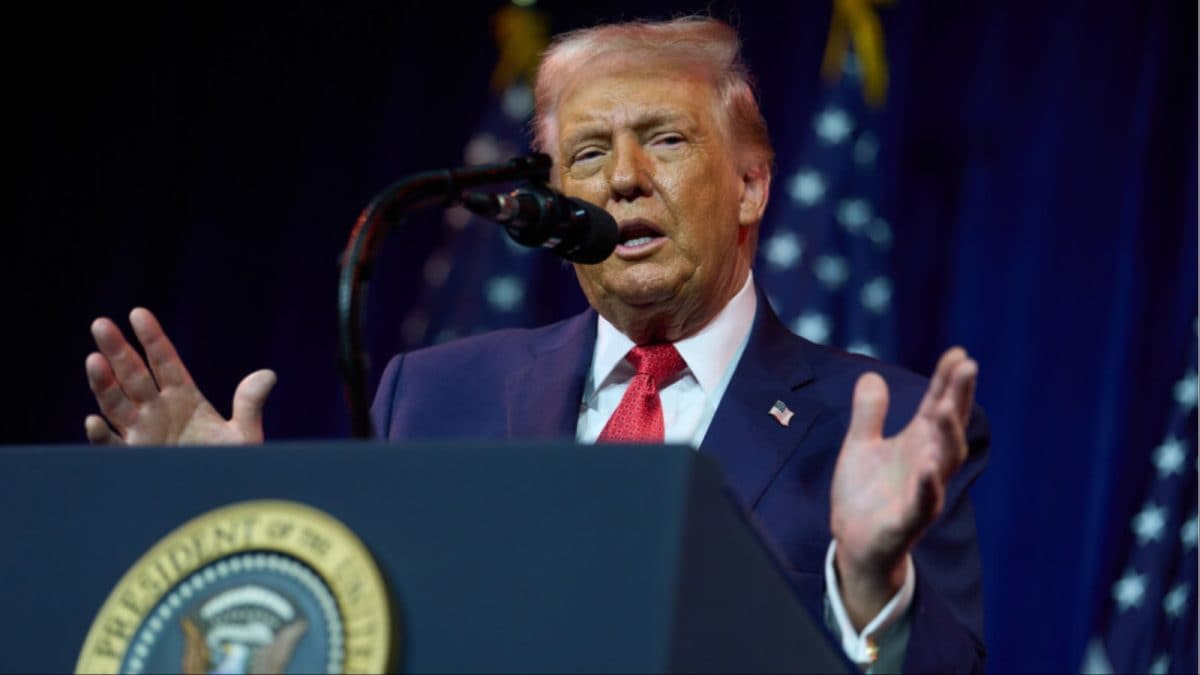
US President Donald Trump cast the operation as action against gangs and narco-networks, but Nicolás Maduro’s capture has sparked a broader debate over Venezuela’s oil.

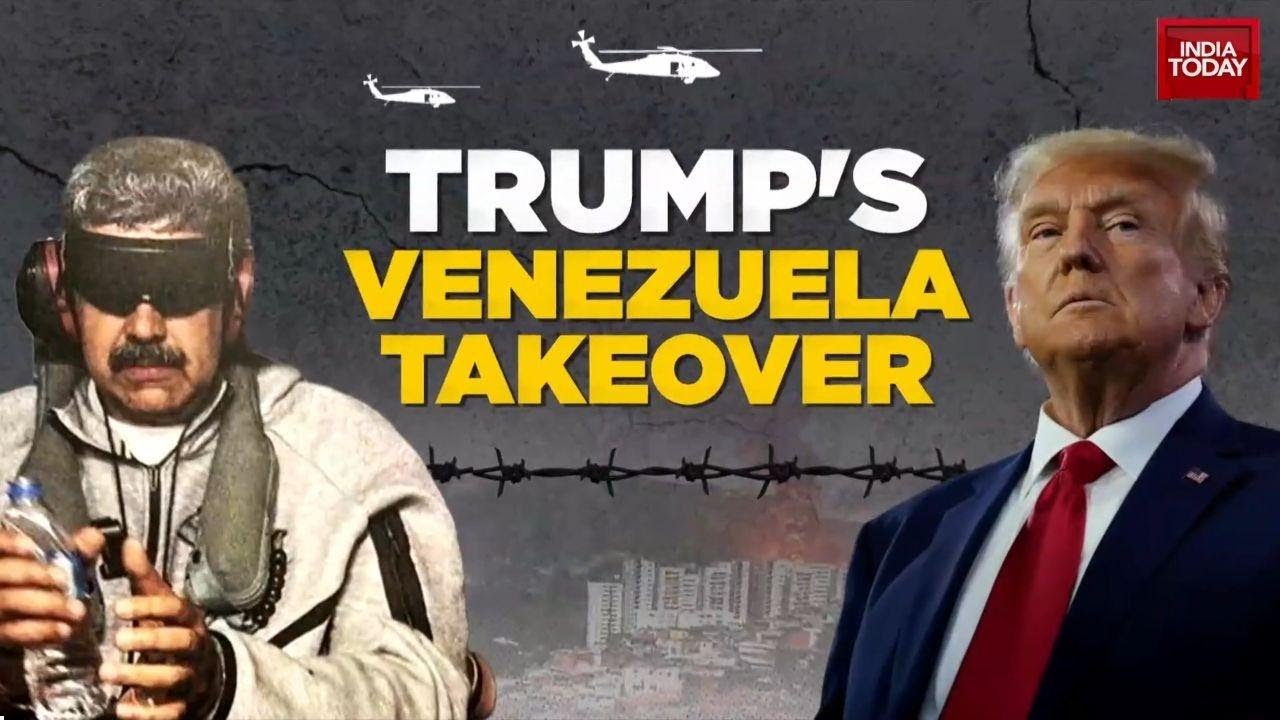
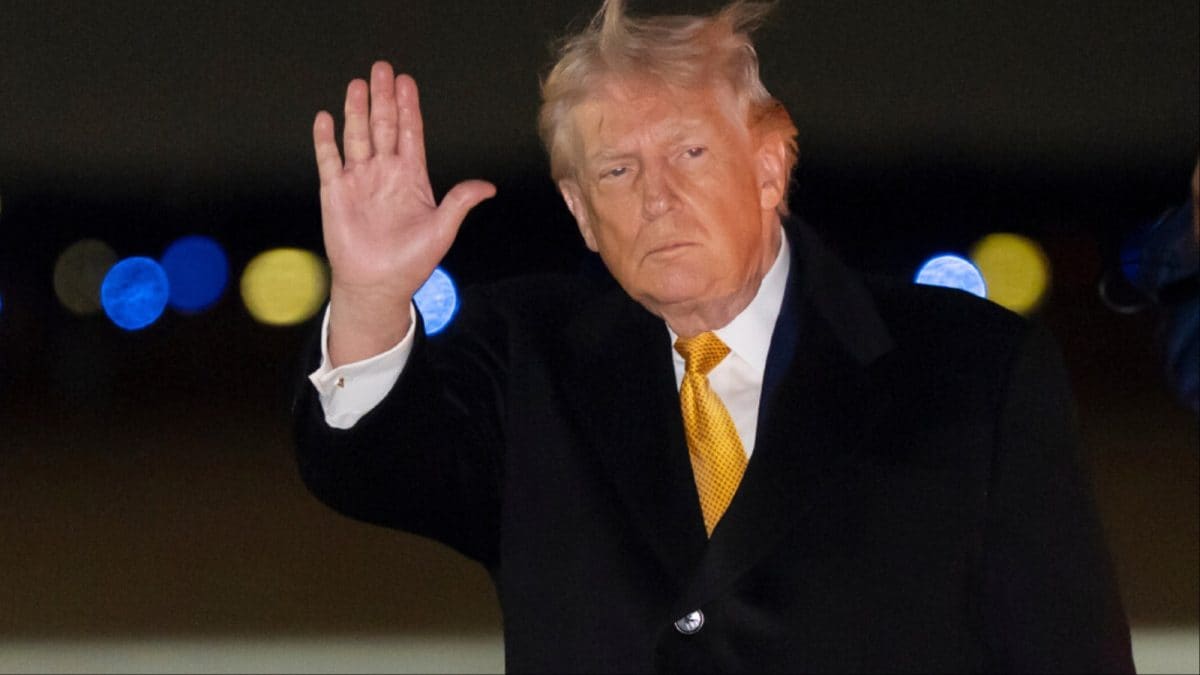
US President Donald Trump (L) and Venezuela's captured President Nicolas Maduro (R). (Reuters)
When US forces captured Venezuelan President Nicolás Maduro, the development was not entirely unexpected. Since returning to office, US President Donald Trump has placed the Venezuelan leader squarely in his sights, pursuing an expanding “maximum pressure" campaign that has included sanctions, maritime seizures and military deployments.
The White House has accused Maduro of fuelling instability across the Americas through drug trafficking and illegal immigration, and in July 2025 announced a $50 million bounty for his capture, calling him “one of the largest narco-traffickers in the world".
By late November, Trump had gone further, issuing an ultimatum that Maduro relinquish power in exchange for safe passage, an offer the Venezuelan leader rejected, telling supporters he refused “a slave’s peace" and accusing Washington of seeking control over his country’s oil reserves.
In the weeks that followed, the United States designated Venezuelan gangs such as Tren de Aragua as terrorist organisations, launched airstrikes against alleged drug traffickers in the Caribbean Sea, and began seizing Venezuelan tankers while building up its military presence around the country.
Against this backdrop, Maduro’s capture has intensified questions about what the operation is fundamentally about.
Former US Vice President Kamala Harris argued that the administration was misrepresenting the purpose of its mission. “Donald Trump’s actions in Venezuela do not make America safer, stronger, or more affordable," she wrote on X, insisting the operation was “not about drugs or democracy" but “oil and Donald Trump’s desire to play the regional strongman". She warned that it offered “no legal authority, no exit plan, and no benefit at home".
Donald Trump’s actions in Venezuela do not make America safer, stronger, or more affordable.That Maduro is a brutal, illegitimate dictator does not change the fact that this action was both unlawful and unwise. We’ve seen this movie before. Wars for regime change or oil that…
— Kamala Harris (@KamalaHarris) January 4, 2026
Her criticism echoed a broader Democratic concern that, despite the administration’s emphasis on trafficking networks and migration, the scale of the intervention suggested deeper energy and geopolitical calculations.
Security, Hemisphere Politics, Or Energy Control?
Senator Chris Van Hollen, a Democrat representing Maryland, sharpened the critique, saying: “Let’s be clear: the Trump Admin is lying to the American people. This has never been about stopping drugs from coming to the US — it’s about grabbing Venezuela’s oil for his billionaire buddies."
Let’s be clear: the Trump Admin is lying to the American people. This has never been about stopping drugs from coming to the US — it’s about grabbing Venezuela’s oil for his billionaire buddies. Trump has put American troops in harm’s way to boost oil company profits. Outrageous. pic.twitter.com/B9OmuJif1E— Senator Chris Van Hollen (@ChrisVanHollen) January 4, 2026
The administration has rejected that characterisation, but its strategic argument also extends beyond counter-narcotics.
Secretary of State Marco Rubio, asked why the United States needed Venezuelan oil, answered not with economic or legal reasoning but with a statement about hemispheric dominance. “Why does China need their oil? Russia? Iran? This is the West. This is where we live," he said, adding that outside powers must “get out" of America’s hemisphere.
🚨 HOLY HELL: Marco Rubio just said the quiet part out loud.Asked by Kristen Welker why the U.S. needs Venezuelan oil, Rubio didn’t cite law, trade, or consent.
He said:
“Why does China need their oil? Russia? Iran? This is the West. This is where we live."
Russia, China,… pic.twitter.com/blWYMFW1L5
— Brian Allen (@allenanalysis) January 4, 2026
Rubio’s framing underscored that US actions in Venezuela, from sanctions to maritime pressure to the final operation, are being interpreted in Washington not only through the lens of crime, but also through a competition with China, Russia and Iran for influence and resources.
This divide in political narratives created the backdrop for what came next: Trump explicitly linking the operation to the reconstruction of Venezuela’s oil industry.
Trump Connects The Mission Directly To Venezuela’s Oil Future
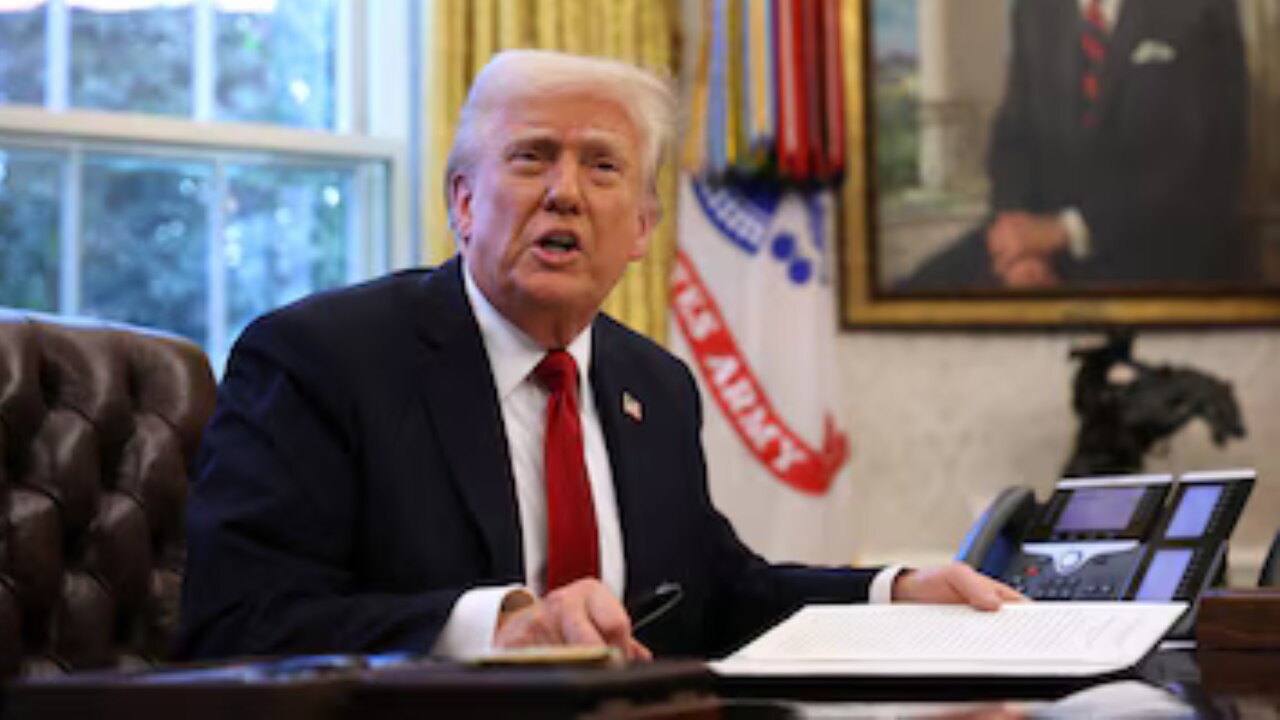
Trump said the United States would “run" Venezuela until a “safe" transition occurs and that American companies would be central to the country’s recovery. “We’re going to have our very large US oil companies… go in, spend billions of dollars, fix the badly broken oil infrastructure, and start making money for the country," he said.
While framed as an attempt to restore economic stability, the comment also reinforced opposition accusations that the mission reflects long-standing debates over access to Venezuela’s massive crude reserves.
But the practical question is more complicated: whether any company, even with US support, can restore an industry hollowed out after years of sanctions, mismanagement and political turmoil.
A Country With World-Leading Reserves But A Broken Oil System
Venezuela’s scale as an energy state is striking. With an estimated 303 billion barrels of proven crude, it has the largest oil reserves in the world. Yet its output in November, according to the Energy Agency, was roughly 860,000 barrels per day — less than one per cent of global consumption and a fraction of the more than 3 million barrels a day it once produced.
The reasons for this collapse are structural. Years of underinvestment, deterioration at the state-run company PDVSA, the exit of experienced workers, and extensive US sanctions have left much of the sector non-functional. The crude itself poses challenges: Venezuela’s oil is heavy and sour, requiring specialised refineries. Analysts have said it is among the most emissions-intensive types of crude to produce, creating additional constraints for international firms.
The result is an industry that is vast in potential but heavily degraded in practice, a gap that cannot be closed quickly.
Why A Rapid Revival Remains Unlikely
Venezuela’s oil infrastructure, including pipelines, refineries, storage facilities and drilling platforms, has suffered years of deterioration and requires extensive rehabilitation before output can rise meaningfully. The country also faces major legal and political hurdles.
Until a recognised government is in place and able to sign binding contracts, companies cannot begin new operations, and the legacy of expropriations and unresolved arbitration claims adds further uncertainty.
Homayoun Falakshahi, senior commodity analyst at Kpler, emphasised that firms cannot proceed without agreements with a legitimate government, and that any transition process “takes months" even under stable conditions. Neil Shearing, group chief economist at Capital Economics, told the BBC the obstacles are so substantial, from infrastructure decay to long project timelines, that the impact on global supply would remain limited in the near term.
Former BP chief executive Lord Browne described the wider reconstruction effort as a “very long-term project", warning that even with significant investment, output may initially decline as Venezuela’s system is reorganised.
Global Oil Markets Reduce The Near-Term Payoff
Even if Venezuela stabilises politically and attracts investment, global market conditions diminish the immediate strategic value of its crude. The world is currently well supplied, with prices subdued and long-term demand increasingly uncertain due to the rise of electric vehicles. Even if Venezuela returned to its past production strength, the impact on global prices in the near term would be limited.
For Washington, this means the strategic benefit of controlling or influencing Venezuela’s oil sector may lie more in long-term positioning than in immediate economic gain.
Guyana’s Rise Highlights How the Region Has Shifted
While Venezuela struggles, its neighbour Guyana has emerged as a major new oil frontier. With discoveries exceeding 10 billion barrels and lighter, easier-to-refine crude, it has become a central focus for global energy firms. Regulatory terms are more favourable, and the industry is expanding rapidly. For companies weighing investment risk, Guyana currently offers a clearer path than Venezuela.
This contrast underscores how dramatically the region’s energy landscape has changed and how far Venezuela would need to go to become competitive again.
Politics Moves Quickly, Oil Does Not
Maduro’s capture is the culmination of months of escalating US pressure that blended counter-narcotics arguments, security rhetoric and increasingly overt regime-change signals. But the response in Washington, and the broader market realities, suggest that while politics can shift overnight, the oil gains tied to this strategy are distant.
For now, the operation’s significance lies less in what it delivers immediately than in the competing visions it has exposed: a White House emphasising security and regional dominance, and critics warning that the real focus is the world’s largest oil reserves. The outcome of that debate will shape how Maduro’s fall is remembered, long before any barrels begin to flow.
First Published:
January 05, 2026, 16:54 IST
News explainers Beyond Drugs And Gangs? Why US Capture Of Maduro Has Become A Battle Over Venezuela's Oil
Disclaimer: Comments reflect users’ views, not News18’s. Please keep discussions respectful and constructive. Abusive, defamatory, or illegal comments will be removed. News18 may disable any comment at its discretion. By posting, you agree to our Terms of Use and Privacy Policy.
Read More