 1 month ago
The shaky ceasefire between the US and Iran was on the verge of collapse on Monday following renewed drone and missile strikes by Iran on targets in the United Arab Emirates (UAE) and the subsequent US retaliation. Over the course of the US-Iran war, Tehran has sought to inflict pain on the US through drone and missile strikes not just on American military assets in the Gulf, but civilian infrastructure across the region in countries like Saudi Arabia, Kuwait, Qatar, Bahrain among others. But it is the UAE that has been hardest hit since February 28, the day the war started.
On Monday, the Emirate's Ministry of Defence announced via a post on X that air defences had engaged "12 ballistic missiles, 3 cruise missiles, and 4 UAVs launched from Iran, resulting in three moderate injuries." News agency Reuters, meanwhile, reported that Iranian strikes had ignited fires in the Emirati port of Fujairah, an important oil terminal which bypasses the Strait of Hormuz. Over the course of the US-Iran war, the UAE has claimed to have engaged a total of 29 cruise missiles, 549 ballistic missiles, and 2,260 drones.
So what explains the phenomenon behind the UAE becoming a de-jure magnet for Iranian munitions that have shattered the Emirate's carefully cultivated image as a global economic and connectivity hub?
The answer is a combination of factors, those being the UAE's geographical proximity to Iran, the UAE's rise as a regional economic powerhouse which is taking a hit, and the kingdom's close ties with two of Tehran's mortal enemies, the US and Iran.
WHY THE UAE'S ECONOMIC CLOUT IS MAKING IT A TARGET FOR IRAN?
Many in the Iranian regime view the UAE with a strong degree of jealousy and envy, particularly regarding its economic success — this was what Brian Katulis, a senior fellow at the Middle East Institute, told the US-based news outlet The Hill.
While the UAE is among the most blessed nations in the world in terms of its oil resources, the country has achieved new economic heights through a sustained policy of economic diversification. Having positioned itself as a leading real estate, financial, and tourism hub, the UAE's global standing ultimately comes from its role as a world-class logistics powerhouse. Ports like Jebel Ali and airports such as Dubai (DXB), Abu Dhabi (AUH), and Sharjah (SHJ) have created a highly efficient multimodal gateway connecting Asia, Europe, and Africa.
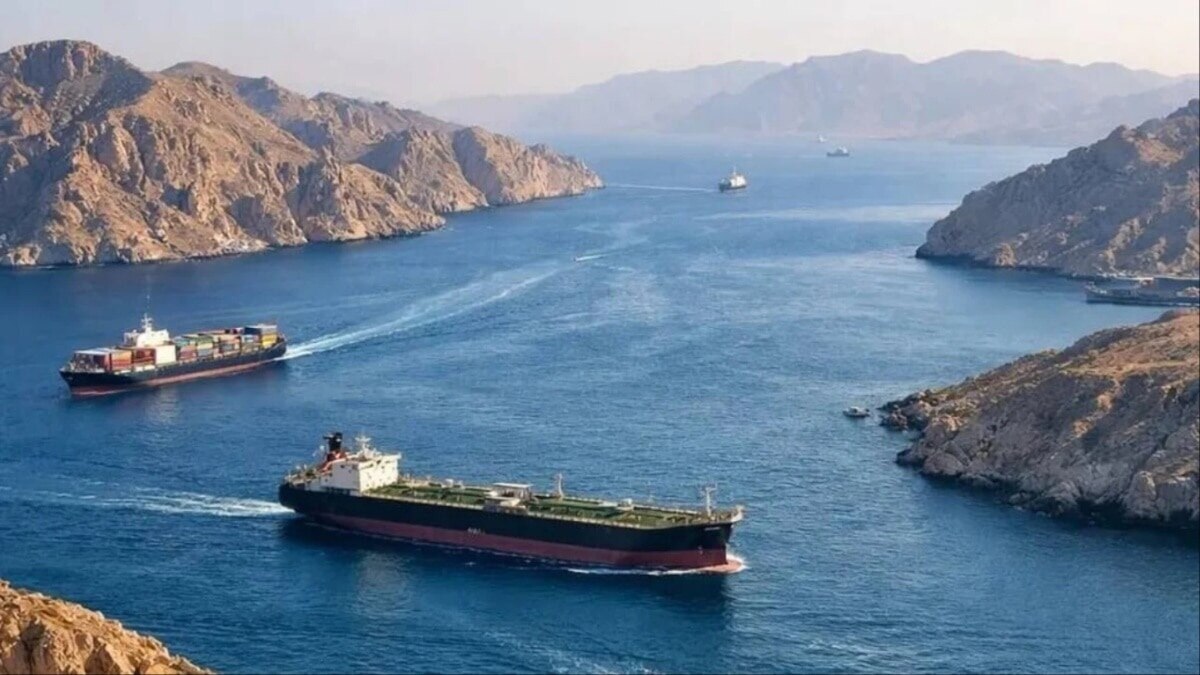
Given Iran's strategy of inflicting maximum economic pain, the UAE's critical transport and logistics infrastructure inevitably ranked high on Tehran's target list. In the recent conflict, Iranian attacks struck or disrupted several key sites, including Dubai Airport (DXB), Abu Dhabi’s Zayed Airport, Jebel Ali Port, and Fujairah's oil terminals and port facilities.
As Katulis told The Hill, "By hitting the UAE, it is seeking to undermine the role it is playing in linking the wider region with outside actors and to cause wider ripple effects in the global economy in terms of trade and investment, in addition to the ongoing efforts to impose costs in the global energy markets."
Similarly, Brian Carter, a fellow with the Critical Threats Project at the American Enterprise Institute (AEI), told The Hill that the UAE is economically "fragile", with its most populous and glitzy city, Dubai, being particularly vulnerable.
"Dubai, in particular, has a very outsized international flair to it and there's a large international presence that can create outsized political effects when you’re attacking the UAE," Carter said.
HOW UAE'S CLOSE RELATIONSHIP WITH US, ISRAEL MADE IT AN IRANIAN TARGET
Alongside the UAE's economic clout, the Emirate's close ties with the US and Israel is also a significant factor in the kingdom finding itself in Tehran's shooting gallery.
The UAE's close ties with America are evident in the number of strategic US bases and troops the kingdom currently hosts. The largest is the Al Dhafra Air Base, 32 km south of the capital Dubai, and which has hosted American fighters, strike aircraft, air-to-air refuellers, among other types.
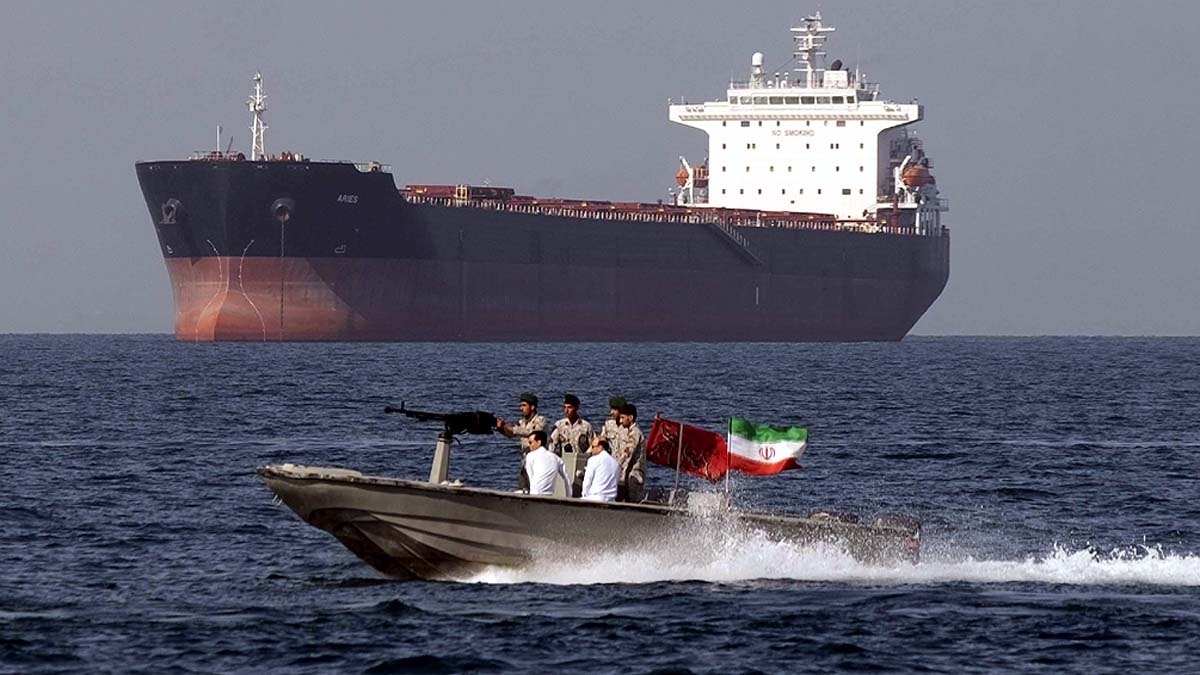
In the course of the war, as Iranian munitions rained down on the UAE, Tehran has justified its actions by stating they were striking these legitimate targets, such as the US military assets in the country.
As Esmail Baghaei, spokesperson for Iran's Ministry of Foreign Affairs, told CNBC last month, "We have said many times that we feel no hostility toward any country in the region, toward the UAE, Bahrain, you name it."
He added, "All military bases, installations and assets that, in any form or manner, are being used to help the aggressors are regarded as legitimate targets ... We had warned often that if they start war against Iran, that war would not be limited only to Iran. That was not a threat. That was because of the realities in our region. The military bases of the United States are scattered around us."
And then there is the UAE's growing relationship with Israel.
UAE UNDER ISRAELI IRON DOME COVER
Abu Dhabi and Jerusalem have rapidly strengthened their relationship after signing the Abraham Accords in September 2020. What began as diplomatic normalisation quickly evolved into a deep strategic partnership covering trade, technology, defence, and intelligence cooperation. Bilateral trade grew from almost nothing to over $2 billion annually, while the two countries collaborated closely on cybersecurity, AI, and regional security.
The growing bonhomie led to Israel taking the unprecedented step of deploying an Iron Dome battery with interceptors and several dozen IDF operators to the UAE as it was being hammered by Iranian munitions, reported Axios and The Times of Israel. This reportedly marked the first time Jerusalem deployed such a system outside its borders, and it came even as Iranian drone and missile attacks stretched thin Israeli air and missile defences.
This inevitably made Iran even more willing to attack the UAE.
Marwa Maziad, a visiting lecturer of Israeli studies at the University of Maryland, told The Hill that Iran views the UAE as the Gulf state "most strategically aligned" with Israel, with the cooperation creating a "perception of involvement" even with the UAE not launching strikes itself.
"In Iran's view, Gulf states were expected either to succeed in dissuading Trump from joining Israel’s war or risk being treated as part of the coalition," Maziad recently told the outlet. "In that case, their territory becomes part of the battlefield," he also said.
In conclusion, the UAE was the hardest-hit country in the Gulf during the Iran war due to a combination of its outsized economic influence, its critical position as a global logistics and connectivity powerhouse, and its strong strategic partnership with the US and Israel.
- Ends
Published By:
Shounak Sanyal
Published On:
May 5, 2026 15:10 IST