1 month ago
Exporters in both Pakistan and Bangladesh have warned that the India-EU Free Trade Agreement could erode their hard-won advantages in the lucrative European market as Indian goods gain duty-free access. Hinting towards India's Operation Sindoor, an office-bearer of a Pakistani traders' association said that Delhi "has now opened an economic front" against Pakistan.
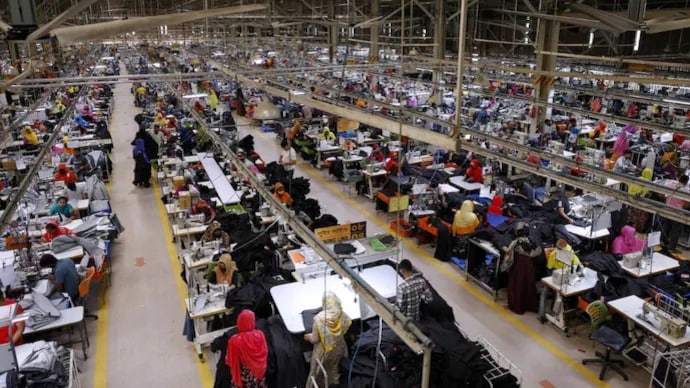
A garment factory in Bangladesh. Garment exports constitute 94% of all exports to the EU by Bangladesh. (Image: Reuters)
The EU–India Free Trade Agreement (FTA) has unsettled New Delhi's neighbours — Bangladesh and Pakistan. The deal, which grants Indian goods expanded and duty-free access to European markets, has already triggered unease among governments and exporters in both Pakistan and Bangladesh.
"India has now opened an economic front," an office-bearer of a Pakistani trading association was quoted as saying by Pakistani daily, Dawn, summing up the India-EU FTA's effect on the Islamic Republic, which follows New Delhi's military action during Operation Sindoor.
For decades, exporters in Pakistan and Bangladesh have benefited from preferential access to the European market. Schemes such as the Generalised Scheme of Preferences (GSP) and Everything But Arms (EBA), made Europe, Pakistan's second-largest export market outside Asia, and Bangladesh's largest export market, respectively.
Through these schemes, both countries enjoyed quota and duty-free access, particularly for textile exports, which account for a substantial share of their foreign earnings.
By granting Indian goods expanded and duty-free access to 93% of its exports to the European market, the agreement threatens to dilute the competitive edge Pakistan and Bangladesh have long held over India in their trade with Europe.
PAKISTAN AND BANGLADESH'S TRADING RELATIONS WITH THE EUROPEAN UNION
EU–Pakistan trade ties are anchored in the 2004 Cooperation Agreement, with efforts to boost bilateral trade and investment further outlined in the EU–Pakistan five-year Engagement Plan adopted in 2012.
Pakistan has also, since 2014, been accorded the status of GSP plus by the EU. In return for ratification and effective implementation of 27 core international conventions on human and labour rights, environmental protection, and good governance (which is monitored by an EU mission in Pakistan), the EU allows duty-free access of nearly 85% of all Pakistani exports, which makes up 20% of Pakistan's exports globally.
According to the European Commission, the EU is Pakistan's second most important trading partner, accounting for 12.4% of Pakistan's total trade in 2024, while Pakistan was the EU's 48th-largest trading partner in goods. Bilateral trade in goods between the EU and Pakistan represented €12 billion in 2024.
EU imports from Pakistan are dominated by textiles and clothing, accounting for 75.8% of the EU's total imports from Pakistan in 2024. The EU's exports to Pakistan, meanwhile, mainly comprise chemicals, machinery, appliances, and base metals.
Similarly, Bangladesh has also enjoyed preferential access to European markets. According to the European Commission, Bangladesh's status as a Least Developed Country(LDC), which it has enjoyed since 1975, allows it to benefit from the 'Everything but Arms' (EBA) arrangement, which grants duty-free, quota-free access to all exports, except arms and ammunition. Bangladesh is the largest beneficiary under the EBA arrangement, with €17.1 billion in exports benefiting from these preferences in 2023.
In 2024, Bangladesh was the EU's 36th-largest trading partner, while the EU was Bangladesh's largest trading partner, with total trade in goods between the EU and Bangladesh amounting to €22.2 billion in 2024.
The EU's imports from Bangladesh are dominated by textiles, accounting for almost 94% of the EU's total imports from Bangladesh in 2024. The EU's exports mainly consist of machinery, appliances and chemical products.
WHY THE EU-INDIA FTA GIVES NEW DELHI AN UPPER HAND OVER ISLAMABAD AND DHAKA
Compared to Pakistan and Bangladesh, Indian exports have historically lacked preferential access to European markets. Prior to 2026, Indian goods entering the EU were subject to Most Favoured Nation (MFN) tariff rates. MFN tariffs are the standard, non-discriminatory duties that World Trade Organisation (WTO) member states apply to one another. For example, textiles attracted tariffs of around 12%, while duties on marine and seafood products stood at about 26%.
Despite this disadvantage, trade between India and the EU rose by 90% over the past decade, according to the European Commission. The EU is India's largest trading partner, with trade in goods worth €120 billion in 2024, accounting for 11.5% of India's total trade.
India, in turn, is the EU's ninth-largest trading partner, making up 2.4% of the bloc's total goods trade in 2024. EU imports from India mainly include machinery and appliances, chemicals, base metals, mineral products and textiles, while the EU's exports to India are led by machinery and appliances, transport equipment and chemicals.
Once ratified, the EU-India FTA is expected to further strengthen this already robust trade relationship. The EU's elimination of 90% of tariff lines, and 91% in value terms, would be a major boost for labour-intensive Indian sectors such as textiles, garments, footwear, jewellery and leather goods.
According to Reuters, India currently accounts for just 3% of the EU's $250-billion apparel market, which is dominated by China, Bangladesh and Vietnam due to lower tariff barriers. But now, with tariff barriers removed under the FTA, exporters now forecast much stronger growth. Industry bodies and analysts believe India's textiles and apparel exports could grow at around 20–25% annually once the agreement is fully operational, helping drive the sector towards an ambitious $100 billion export milestone by 2030.
WHY HAS THE EU-INDIA FTA SPOOKED PAKISTAN AND BANGLADESH?
Although it will take until at least 2027 for the EU-India FTA to come into effect, depending on how long the European Parliament takes to ratify it, the mere announcement has caused deep concern among Pakistani and Bangladeshi exporters who are worried that their hard-won advantages in the lucrative European market would now be eroded.
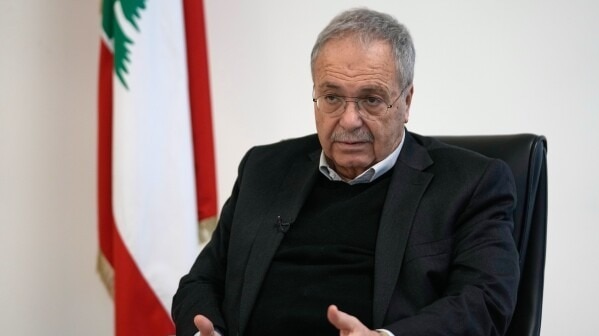
Saquib Fayyaz Magoon, chairman of the Businessmen Panel Progressive (BMPP) and vice president of the Federation of Pakistan Chambers of Commerce and Industry (FPCCI), warned that the deal could erode Pakistan's edge in European markets.
"Once India secures zero-rated access under the EU deal, Pakistan's advantage will vanish and our exports could suffer a severe blow," Magoon told Dawn. Maggon also warned that Pakistan could lose its foothold in the European market if urgent corrective measures are not taken. "Once a market is lost, regaining entry becomes extremely difficult," Magoon told Dawn.
Magoon, equating the situation with Operation Sindoor, called for government support to deal with the upcoming crisis, stating to Dawn that, "Just as the armed forces secured victory on the battlefield, the business community now needs government support to win this economic war."
Magoon's sentiments were echoed by Faisal Arshad, who heads the Hosiery Manufacturers and Exporters Association. Speaking to Dawn, Arshad warned that the FTA could lead to aggressive price undercutting by Indian exporters in the EU market, warning that Pakistan's reliance on its GSP Plus alone is no longer sufficient, stating, "Tariff-free access without recognition of compliance and cost burdens creates an uneven playing field."
For Bangladesh, the mood is equally gloomy, if not more. The country will lose its duty-free access to Europe's apparel market in three years as it lost its status as an LDC in November 2025. This, combined with India's textile industry gaining duty-free access, will steadily erode Bangladesh's traditional dominance, according to a report in the Bangladeshi newspaper, The Daily Star.
"The implications will be significant, particularly for apparel," said Mustafizur Rahman to The Daily Star, distinguished fellow at the Centre for Policy Dialogue (CPD). He warned that Bangladesh will become less competitive in the EU market once India secures duty-free access. "Bangladesh should take the preparations for obtaining the GSP Plus status to the EU and also make preparations for signing the bilateral free trade agreements to retain market access," said Mustafizur.
Fazlul Hoque, managing director of a knitwear factory exporting mainly to Europe, told The Daily Star that the FTA could further weaken Bangladesh's price competitiveness. He warned that if Bangladesh is forced to pay duties while rivals continue enjoying duty-free access, buyers would have stronger incentives to demand lower prices and shift orders elsewhere.
The EU-India FTA will cause a structural shift in Europe's trade dealings that has the potential to redraw long-standing competitive hierarchies.
While Pakistan and Bangladesh have relied on preferential regimes to anchor their export growth, India's entry on near-equal tariff terms introduces a powerful new rival. Unless Islamabad and Dhaka adapt quickly through diplomacy, trade diversification and industrial support, their privileged access to Europe might steadily erode in the years ahead.
- Ends
Published By:
Shounak Sanyal
Published On:
Feb 2, 2026
Tune In