 1 month ago
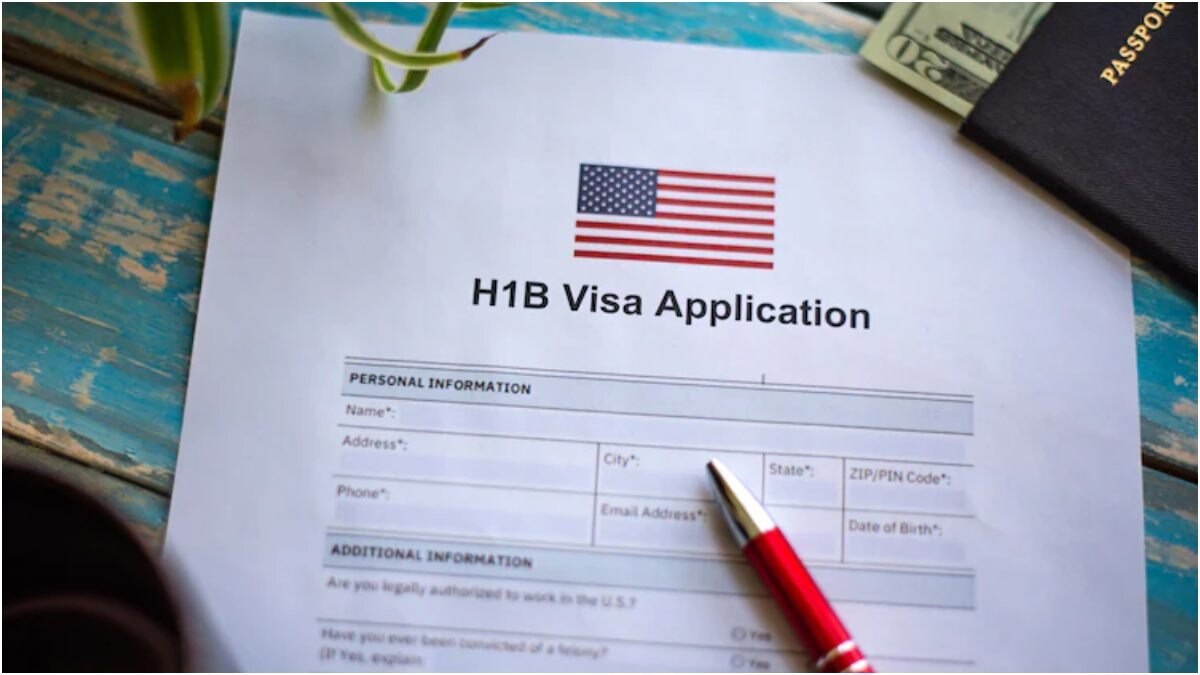
An increasingly common question at US visa interviews is leaving many H-1B applicants scrambling for answers: "Why can't an American do this instead of you?" According to a report by The American Bazaar, a news outlet focused on the Indian-American community and US immigration matters, immigration attorneys say the question reflects a renewed focus on protecting US jobs and echoes President Donald Trump's earlier "Buy American, Hire American" approach.
The trend is drawing particular concern among H-1B applicants in technology, IT contracting and consulting, sectors that have long relied on skilled foreign workers.
In 2017, Trump signed the Buy American, Hire American executive order, directing federal agencies to propose rules aimed at preventing immigration fraud and abuse while ensuring H-1B visas were awarded to the most skilled or highest-paid applicants.
Several immigration attorneys told The American Bazaar they are seeing signs of that approach returning, with H-1B applicants facing heightened scrutiny, tougher questioning and longer delays.
"There are questions that I see coming up more and more as I debrief clients about visa refusals and these questions recall the 'Buy American and Hire American' executive order from the prior Trump Administration," said James Hollis, a business immigration attorney at McEntee Law Group.
Among the most difficult questions applicants encounter is: "Why can't an American do this instead of you?"
While many H-1B candidates prepare extensively to discuss their education, technical expertise and professional experience, they are often less prepared to explain why their role cannot be filled by a US worker.
According to Hollis, applicants should be ready to clearly articulate the unique value they bring to the position.
"(Attorneys should) prep their clients to explain what is so special about their work before the interview so that they are ready to defend themselves if this question comes up," he said.
He also advised applicants "to have them identify the knowledge, experience, and connections that they have that a US worker would not have."
Hollis warned that the current environment may remain challenging for employment-based visa applicants.
"But also try to limit the number of interviews these types of applicants are doing in the next 3 years. The system is overcorrecting, and if you can avoid your client being caught up in it, all the better," he said.
The increased scrutiny appears to be particularly affecting applicants from India and China, who make up the majority of H-1B visa holders.
"The adjudication standards appear to be tightening for Indian and Chinese nationals in general," Hollis said. "Specifically, I am always going to be most concerned with L-1Bs and H-1Bs for IT contracting companies and for large consulting companies."
For H-1B workers employed by consulting firms and IT services companies, visa outcomes may depend on factors beyond their individual qualifications.
"In some cases, there is not going to be much that an applicant can do on their own because part of the analysis is going to be the number of applicants of that type from the company, the salary for the role, and other details that they likely don't have control over," Hollis said. "There will be guidance in the background at the consulates telling them what in particular to more highly scrutinize."
Still, he said applicants can improve their chances by ensuring their documentation is accurate and by demonstrating a thorough understanding of their role, employer and work assignment.
"In that situation, my general recommendation is to ensure that the documentation is clear and accurate, and they understand it and that they are ready to explain what they are intending to do in the US, where they will be working and why/how they are specifically qualified for the role based on their background," Hollis said.
Highlighting concerns around immigration fraud, particularly in high-volume visa categories, he added: "Fraud in particular is a significant concern in India, so the more that the applicants can do to appear knowledgeable and confident about the details of the role, the better position they will put themselves in."
As scrutiny of H-1B applications intensifies, immigration attorneys say preparation is becoming increasingly important. For many skilled workers, being able to explain why they—not an American worker—are uniquely qualified for the job could prove decisive during the visa interview process.
CAN AMERICANS DO THE JOBS H-1B PROFESSIONALS DO?
The question reflects a long-running debate over the H-1B programme. Critics, particularly within Trump's political base, argue that some employers misuse the visa system to hire foreign workers in place of qualified Americans, often at lower wages. Others claim the programme is vulnerable to fraud and does not always attract the highest-skilled candidates.
Supporters counter that the H-1B system was created precisely because the US economy faces shortages of specialised talent in certain fields.
Established under the Immigration Act of 1990 signed by President George HW Bush, the H-1B visa allows US employers to temporarily hire foreign workers in speciality occupations requiring specialised knowledge and at least a bachelor's degree or equivalent experience.
The programme was designed to address labour shortages in high-skilled sectors such as technology, engineering, science and research, where domestic supply struggled to keep pace with demand.
As the US Department of Labour states, "The intent of the H-1B provisions is to help employers who cannot otherwise obtain needed business skills and abilities from the U.S. workforce by authorising the temporary employment of qualified individuals who are not otherwise authorised to work in the US."
Business leaders continue to argue that such shortages persist. Speaking to the US-based news outlet, CBS News, Dallas-based software entrepreneur Kishore Khandavalli, who began his own US career on an H-1B visa, said there remains a significant mismatch between available workers and employer needs in the US.
"I was one of the first ones," Khandavalli told CBS News of his experience as an H-1B worker. He now runs a software consulting company where nearly half of his 380 employees hold H-1B visas.
"There's a skills gap between the people that are available in the market, the 3%, and the skills that the market is needing," Khandavalli said, explaining why he cannot fill all positions with American workers. "Especially with the upcoming technologies."
The numbers demonstrate the programme's importance to the US technology sector. According to US Citizenship and Immigration Services (USCIS), 399,395 H-1B petitions were approved in fiscal year 2024, including 141,205 initial approvals and 258,190 renewals. Indian workers, in particular, benefit from the H-1B programme. According to the USCIS Characteristics of H-1B Speciality Occupation Workers report for FY 2024, India-born beneficiaries received 283,397 approvals, representing 71% of the total 399,395 H-1B petitions approved that year.
Computer-related occupations accounted for 64% of approvals, or roughly 255,000 workers. Architecture, engineering and surveying made up 10%, followed by education at 6%, while healthcare and management occupations accounted for smaller shares.
Research has also found that H-1B workers contribute significantly to innovation and business growth. Major technology companies rely on the programme to fill specialised roles in software engineering, artificial intelligence and other high-demand fields. Studies have linked higher H-1B admissions to increased patenting and innovation, while finding limited evidence of widespread displacement of native-born workers.
H-1B workers are also relatively well paid. USCIS data shows median compensation for H-1B beneficiaries reached $120,000 in fiscal year 2024, rising to about $135,000 for computer-related occupations.
While H-1B workers make up a small share of the overall US workforce, supporters argue they fill critical gaps in specialised sectors and help maintain America's competitiveness in innovation-driven industries.
- Ends
Published By:
Shounak Sanyal
Published On:
Jun 16, 2026 08:03 IST