8 hours ago
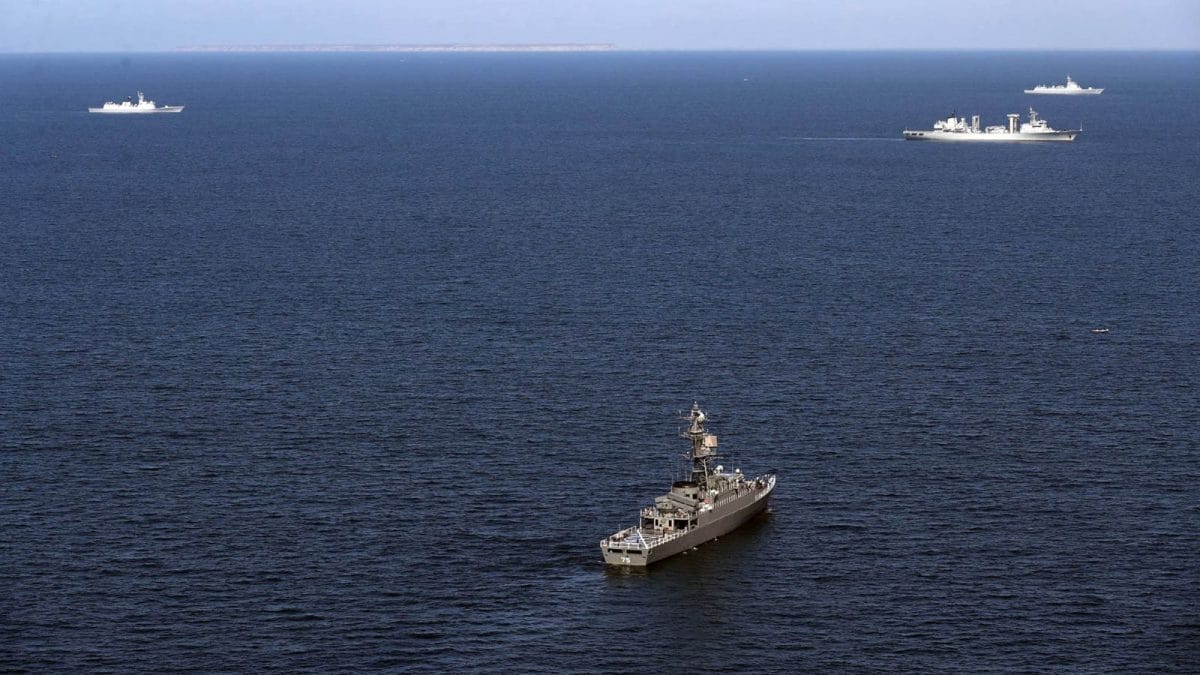
Satellite imagery reviewed by India Today shows the girls' school targeted in the Iran war was clearly demarcated from the adjacent military complex.
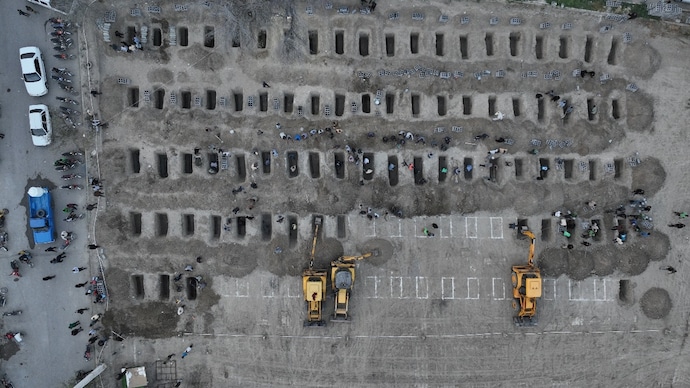
Graves being prepared for the victims following a US-Israeli strike on a school in Minab. (Image: West Asia News Agency/Handout via Reuters)
A week after what can be called one of the “deadliest” civilian casualty episodes, a detailed report by The New York Times “debunked” many online theories, concluding that the missile that hit the school complex in the southern Iranian city of Minab was a precision target strike consistent with those carried out by the United States in the recent conflict. The Times report, quoting Wes J. Bryant, a national security analyst who served in the US Air Force, rejects the idea that a “single errant missile” could have caused the kind of precise, targeted damage seen in the satellite images.
India Today’s Open Source Intelligence team sifted through historical satellite images to show that the girls’ school, originally located within the perimeter of a military complex until 2013, was later separated from the complex for civilian use. Satellite images of the Minab school since 2013 show boundary walls built, roads laid, and a separate entry gate created to clearly isolate this section from the adjacent military complex.
Israel says it is “not aware of any Israeli operation in that part of Iran,” while the US has said the “matter is under investigation.”
In the last 24 hours, two more schools near Tehran suffered similar precision strikes, as seen in social media footage geolocated by India Today.
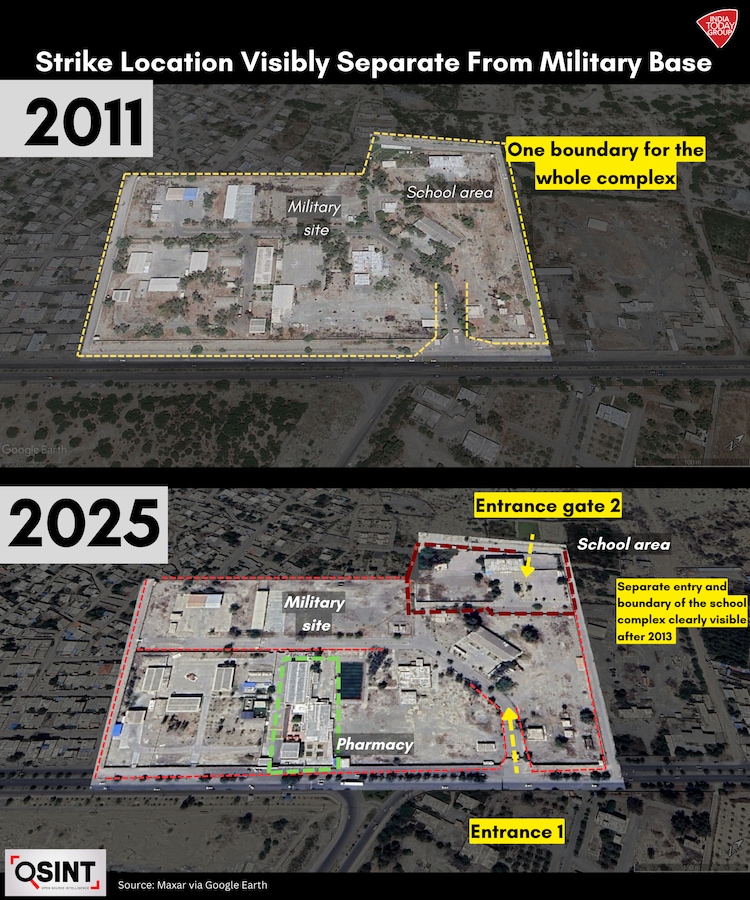
Archived satellite images from Maxar via Google Earth, reviewed by India Today, show that the Shajareh Tayyebeh Girls’ Elementary School was within a military complex until 2013. The images show that the school building and its surrounding area were a connected, integrated part of the main military complex. There was only one main entry gate serving the whole complex, and the internal road network connected all buildings without barriers.
Schools inside or near military complexes are neither new nor a nation-based phenomenon. It has long been common, and often practical, for armed forces to have schools close to such sites for the convenience of military families. In India too, and likely in many other countries, schools exist within or near military compounds to serve the children of armed forces personnel.
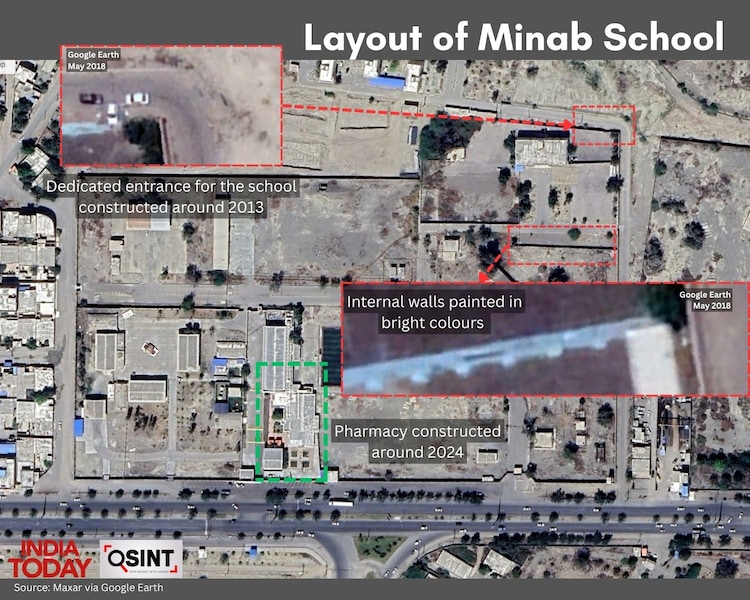
The entire complex has six main buildings, of which five have been destroyed. The only structure left standing is a pharmacy built just a year ago. Satellite images from September 2016 first show new internal walls being constructed. In later satellite images from February 2018, boundary walls can be seen fully erected, separating the school building area from the rest of the military block.
A separate entrance gate is also visible in the 2018 satellite images, with vehicles seen entering and leaving the building. The walls appear to have been repainted a bright blue. Videos later released on social media also show the walls painted in multiple colours, with bright mural drawings appropriate for the students.
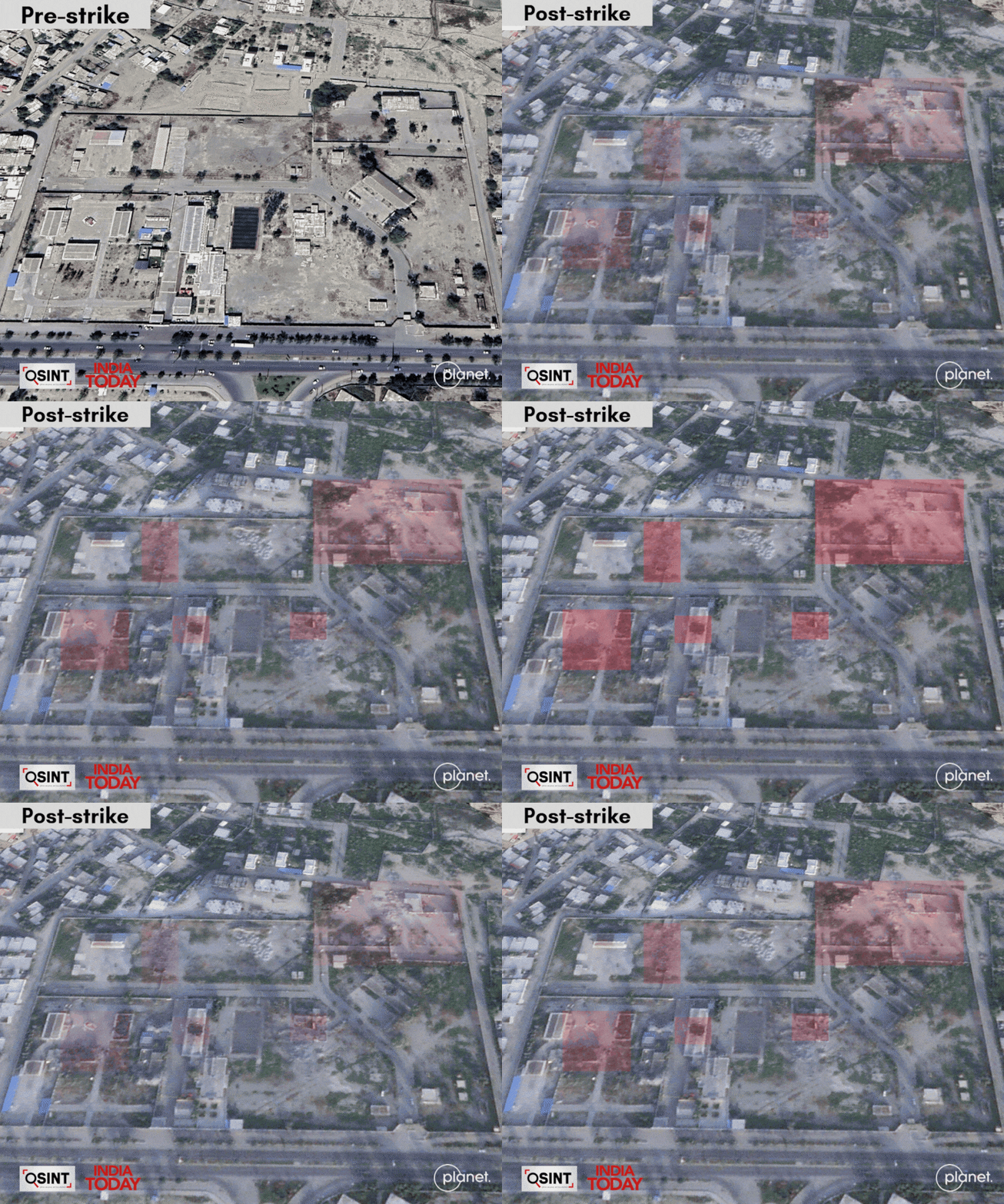
Credible footage posted on social media also shows parents and relatives searching for victims and the injured in the debris of the school, which has been reduced to rubble.
All this evidence serves as visual confirmation that the building was functioning as a primary school isolated from the military complex and as a civilian infrastructure.
Many theories circulated on social media suggesting that the strike might have been a “mishit.” Some even claimed that an Iranian “errant missile” could have caused the damage. However, the satellite imagery, and credible investigative reports by Western publications indicate otherwise.
The NYT report calls it a “precision strike” that occurred while US forces were striking several other military sites in the same region simultaneously, including the IRGC’s naval base adjacent to the school. The strikes occurred just 10 kilometres from the strategically vital transit route, the Strait of Hormuz.
Wes J Bryant told the Times that this might be a case of “target misidentification,” where the forces carrying out the strike would have been unaware of the large civilian presence at the site. While Washington maintains silence, and has called the matter “under investigation,” Israel has denied any “known” involvement in such an incident.
But the larger question that still looms is this: did someone press the missile button based on faulty intelligence that failed to distinguish between a real military target and what has now become “collateral damage”?
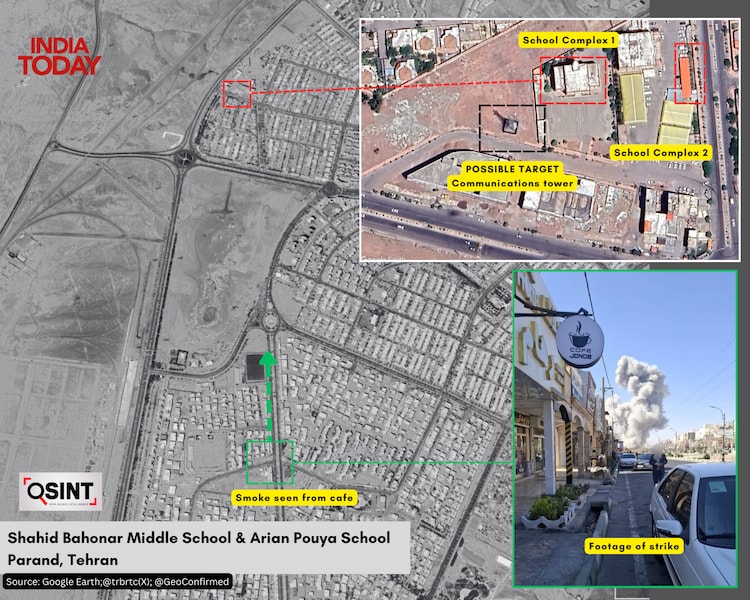
After Minab, two schools near Tehran came under attack
Following the Minab school strike on February 28, US-Israeli strikes also hit two other schools near the Iranian capital, Tehran - Shahid Bahonar Middle School and Arian Pouya School in Parand.
Satellite imagery obtained and independently geolocated by India Today places the schools close to a possible communications tower and surrounding urban blocks. While there are no credible reports suggesting any casualties or injuries linked to the incident, smoke from the strike was visible from a nearby cafe area in footage shared on social media.
Across all three strikes, one common factor remains: each school was located in close vicinity of military complexes. However, it is still not ascertained on what pretext these schools were targeted. Both the cause and the outcome remain blurred, so far.
If, in fact, it was the US that attacked the school, was it outdated intelligence or a blatant mistake?
- Ends
Published By:
Akash Chatterjee
Published On:
Mar 6, 2026 19:16 IST
Tune In