1 month ago
A senior Pentagon official urged Asian allies in Manila to spend more on defence. The message underscored Washington's push for equal security partnerships while staying committed to Asia.

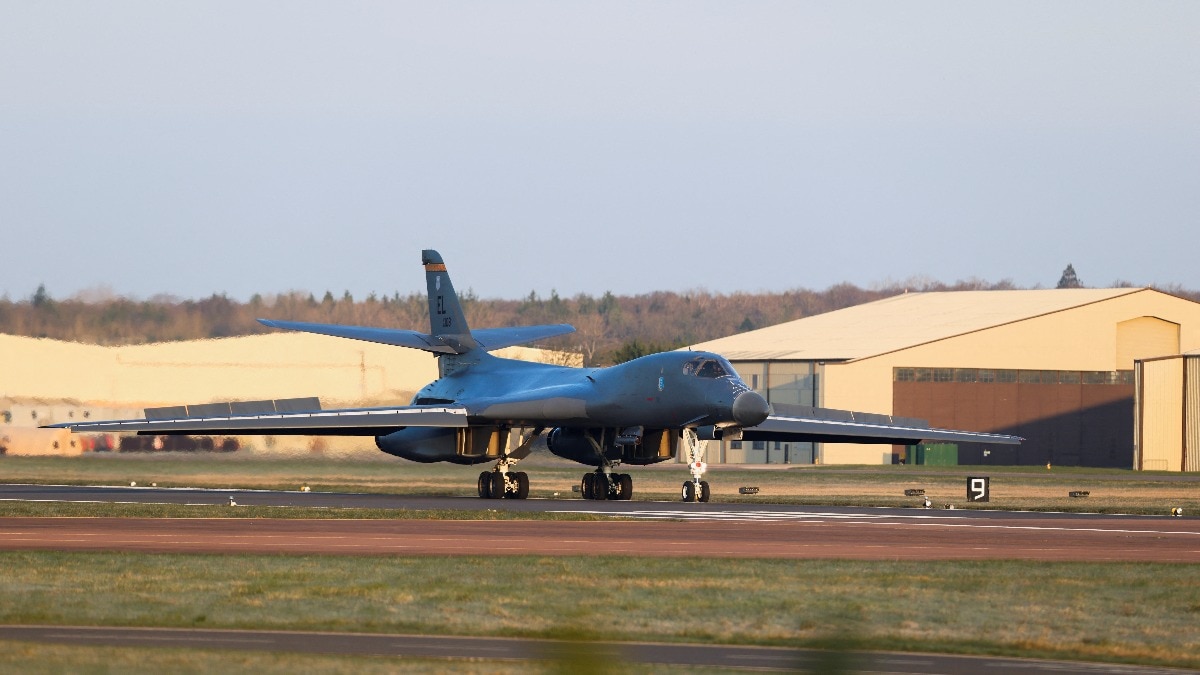
Image used for representational purposes only

Manila,UPDATED: Aug 10, 2026 23:32 IST
A senior Pentagon official on Monday urged US allies in Asia to spend more on their own defence and help deter aggression in the region, while stressing that Washington remains committed to Asia. Speaking at a forum in the Philippines, Elbridge Colby said the United States wanted relationships based on equal partnerships.
Colby, an undersecretary of defence and the Pentagon's top policy adviser, said the US was not pulling back from Asia despite its current focus on the Iran war and the Middle East. He said Washington would continue to strengthen its role in the region and work with allies to maintain a favourable balance of power.
"America is definitely not disengaging from Asia - to the contrary. Our vital national interests dictate our enduring presence here," Colby told an audience that included foreign diplomats, generals, business executives and journalists. "We are not leaving; in fact, we are digging in to ensure a favourable balance of power where it matters most," he said, adding, "We see Asia as of paramount importance."
Colby made the remarks in Manila, the first stop on his Southeast Asia visit, which will also take him to Indonesia, Thailand and Cambodia. He did not repeat the usual US criticism of China's growing assertiveness in the region, including in the South China Sea, where Washington has often expressed concern over Beijing's actions against Philippine coast guard and naval forces in recent years.
The US has repeatedly said it is bound to defend the Philippines, its oldest treaty ally in Asia, if Filipino forces, ships or aircraft come under armed attack, including in the South China Sea. China and the Philippines, along with Vietnam, Malaysia, Brunei and Taiwan, have been locked in territorial disputes in the waters for decades. Beijing claims almost the entire waterway and has rejected a 2016 arbitration ruling, initiated by the Philippines, that struck down its sweeping claims.
Colby repeated a pledge made by US Defence Secretary Pete Hegseth at the Shangri-La defence conference in Singapore in May that the US would build and maintain a strong defence in the Western Pacific "that ensures aggression is infeasible, escalation unattractive and war deemed irrational". He said the US was committed to ensuring "we can sustain combat-credible power where it matters most".
He added, however, that "this defence architecture cannot rest on American shoulders alone" and said it must be supported by "a network of highly capable, sovereign nations that have modernised their own forces and stepped up to secure their own territory - transforming our relationships into true partnerships of equals". He said, "When we ask our allies and partners to step up, to invest more in their own defence and to take responsibility for their own sovereign security, we are not signalling abandonment. We are looking for partners, not protectorates."
Colby also praised the Philippines for strengthening its military capabilities through efforts that include large-scale combat exercises with US forces every year, and pointed to similar steps by Thailand, Indonesia and other security partners in Southeast Asia, underlining Washington's push for greater regional burden-sharing alongside its own continued presence.
With PTI Inputs
- Ends
Published By:
India Today Web Desk
Published On:
Aug 10, 2026 23:32 IST