1 hour ago
Last Updated:December 05, 2025, 14:08 IST
Vladimir Putin's IL-96-300PU, the 'flying Kremlin', uses decoy jets and laser jammers, while US Air Force One boasts EMP protection, mid-air refuelling, and unmatched data security

The IL-96-300PU has missile defense and decoy systems, while Air Force One features EMP protection, secure communications, and mid-air refuelling. (AP Photo)
In the silent expanse thousands of feet above the earth, two aircraft cut through the skies, each more than a mode of transport, a flying fortress, a command centre, and a declaration of power. On one side is the aircraft that ferries a long-serving leader whose security doctrine is as enigmatic as his politics. On the other stands the airborne headquarters of a president whose office commands the world’s most far-reaching defence systems. Both jets are engineered to survive the unimaginable. Both are designed to lead nations even in the face of war. But which one is truly stronger, safer, or more technologically formidable?
What unfolds is a rare comparison between the twin icons of aerial statecraft, Russian president Vladimir Putin‘s IL-96-300PU, informally dubbed the “flying Kremlin“, and the US president Donald Trump’s VC-25A, better known worldwide as Air Force One.
Russia’s IL-96-300PU
At first glance, the Ilyushin Il-96, also known as IL-96-300PU, does not possess the imposing physical stature of its Western counterpart. Yet its understated frame conceals a security architecture unlike anything else in global VVIP aviation. Russian engineers have equipped this aircraft with custom-built missile defence systems, including a laser-based jamming suite designed to blind incoming threats. Its communication grid is military-grade, bolstered by layers of encryption and artificial interference technology that make interception nearly impossible.
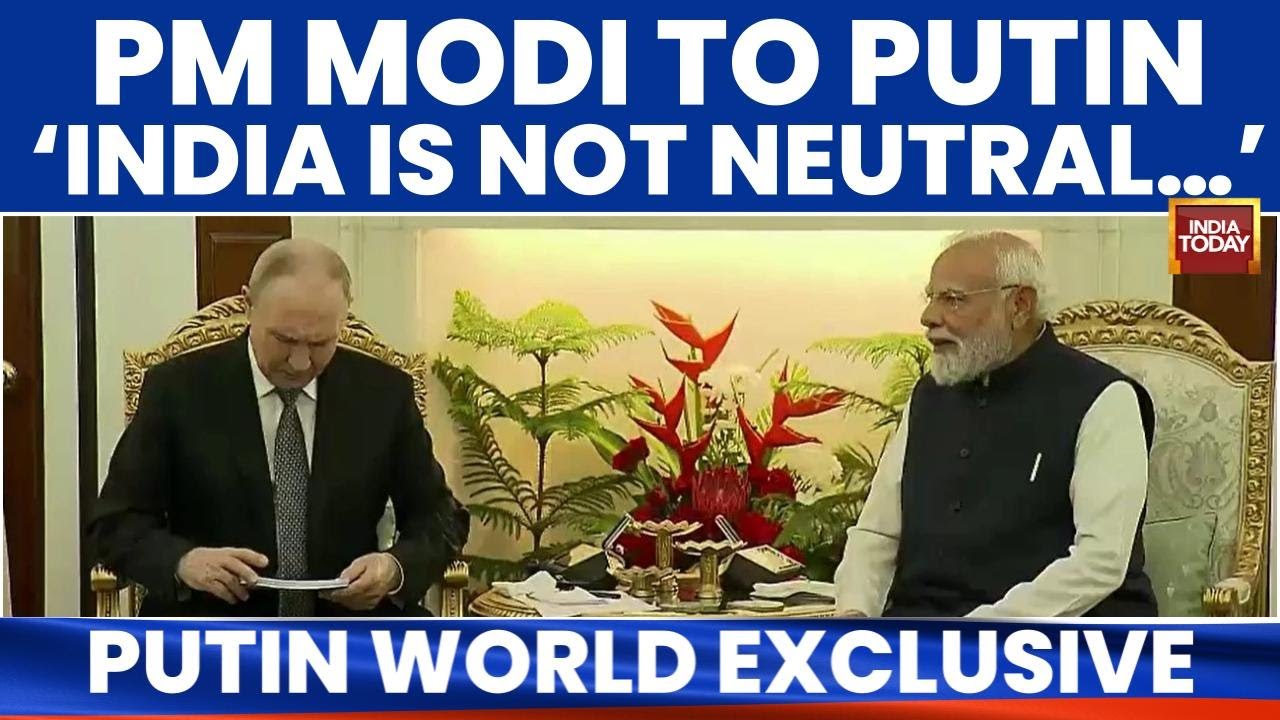
Also Read – ‘India Not Neutral, We’re On The Side Of Peace’: PM Modi To President Putin On Ukraine
Inside, the jet resembles a floating royal court with white-and-gold motifs, ornate woodwork, and throne-style seating defining an interior that appears lifted from a modern Tsarist palace. But the most intriguing safeguard lies outside the cabin. Each time the Russian leader takes to the skies, a second identical jet accompanies the mission, an elaborate decoy strategy to ensure no adversary ever knows which aircraft carries the president. No other nation employs such a system, marking it as a uniquely Russian signature of security through ambiguity.
US’ VC-25A
Across the ocean, the aircraft used by the US president presents a different kind of splendour which is less opulent and far more functional, and engineered with wartime resilience in mind. The VC-25A, derived from the Boeing 747-200B, is essentially a mobile White House. Conference rooms mirror the ambience of the Oval Office, allowing high-level briefings, Cabinet-style meetings and press interactions to take place mid-flight.
Its communication systems are considered among the most secure in the world, designed to withstand cyberattacks, electronic warfare and even the devastating effects of an electromagnetic pulse (EMP). In the event of a national emergency, analysts say the aircraft could support operations for half of the US government. Adding to its endurance, Air Force One can refuel mid-air, allowing it to remain airborne for indefinite periods if required, an unmatched strategic advantage.
Whose Systems Are Sharper?
Experts often describe the IL-96-300PU as a masterclass in electronic warfare. Its jammers can distort missile guidance systems, while its multi-layered encryption and stealth communication channels elevate it to a level of secrecy few aircraft have ever achieved.
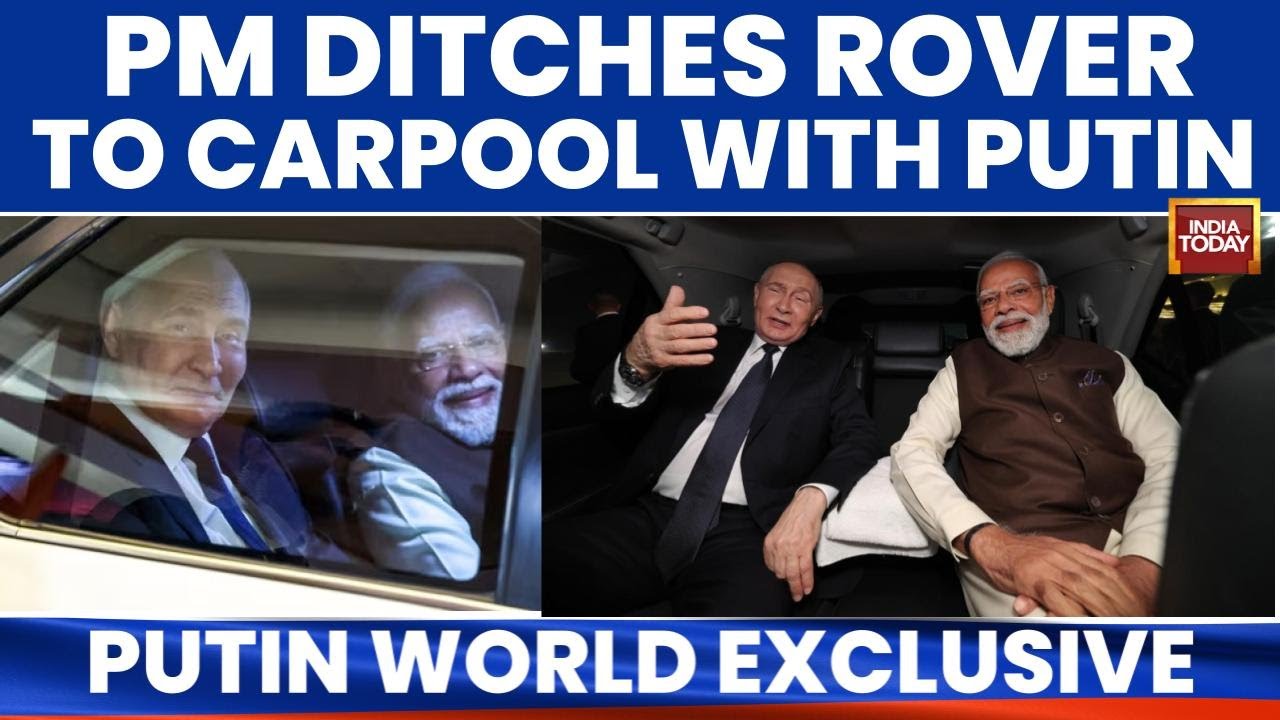
Also Read – Why Modi, Putin Travelled In Toyota Fortuner Instead Of Standard Armoured SUV | Exclusive
Air Force One counters with the strongest data-security ecosystem in the world. Its EMP-hardened structure, deep integration with advanced defence networks, and real-time access to nuclear command protocols give it a level of technological supremacy that is unmatched in governance continuity. The ability to refuel mid-flight adds a strategic dimension no other presidential aircraft possesses.
If one is built to vanish from digital sight, the other is built to remain operative under apocalyptic circumstances.
Which Aircraft Is Harder To Bring Down?
Security analysts largely agree that both jets are among the safest aircraft ever constructed. Each carries missile-defence systems, electronic countermeasures and wartime-grade communication networks. However, they differ in some ways.
America’s Air Force One relies on technological invincibility like EMP protection, impenetrable encryption, constant connectivity and infinite range through aerial refuelling.
Russia’s IL-96-300PU, meanwhile, emphasises unpredictability and stealth with laser jammers, anti-missile interference and the ever-mysterious decoy aircraft shadowing every presidential journey.
When it comes to opulence, the contest is one-sided. The Russian leader’s IL-96-300PU resembles a royal palace, dripping in gold accents, intricate carvings and classical Russian artistry. It is a reflection of grandeur meant to awe. On the other hand, US’ Air Force One maintains understated luxury as it is comfortable, spacious, and meticulously functional. Its interiors prioritise governance over glamour, stability over spectacle.
 Click here to add News18 as your preferred news source on Google.
First Published:
December 05, 2025, 14:07 IST
News world Trump's Air Force One vs Putin's Plane: Which One Is More Powerful And Secure?
Disclaimer: Comments reflect users’ views, not News18’s. Please keep discussions respectful and constructive. Abusive, defamatory, or illegal comments will be removed. News18 may disable any comment at its discretion. By posting, you agree to our Terms of Use and Privacy Policy.
Read More