1 month ago
Trump's Iran war deal faced fierce criticism from Republican senators over enrichment and sanctions relief. The split underscores doubts within his party about trading military gains for uneasy diplomacy.

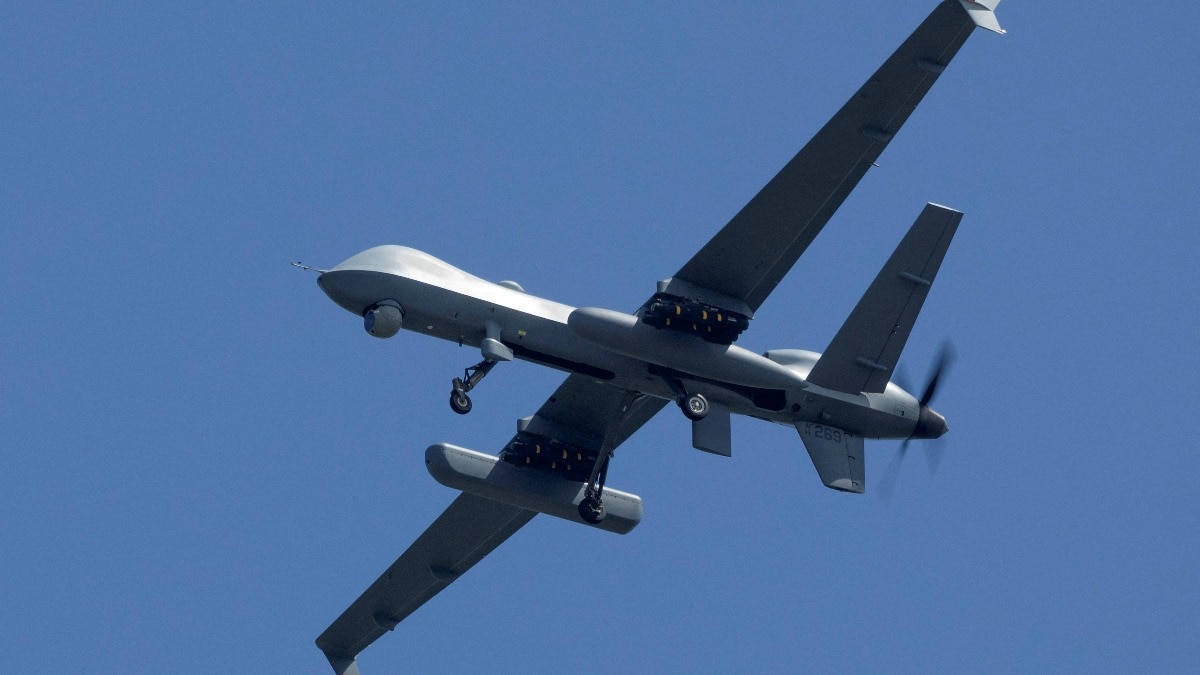
Image used for representational purposes only

Washington,UPDATED: Jun 19, 2026 02:04 IST
US President Donald Trump's deal with Iran to end the war has run into strong criticism from within his own Republican Party, with several senators saying it does not stop Tehran from enriching uranium and gives it large financial relief. The sharpest objections were over a proposed USD 300 billion fund for Iran's reconstruction and economic development, and concerns that sanctions on Iranian oil exports could be lifted immediately.
Vice President Vance defended the agreement at the White House, saying critics should have some "faith" in the president and calling it "preposterous" to suggest Trump would strike a "bad" deal for the American people. He said Trump "believes in this deal; he is going to see it to completion, and if the Iranians don't comply, we still have every single tool and point of leverage that we have today".
Senator Roger Wicker, chairman of the Senate Armed Services Committee, said he was "concerned" that the Memorandum of Understanding to reopen the Strait of Hormuz "negotiates away the victories of Operation Epic Fury in ways that are completely out of step with the President's goals". Operation Epic Fury was the codename for the US-led military campaign against Iran during the recent conflict, involving air and missile strikes on Iranian nuclear, military and strategic infrastructure. Wicker said, "Specifically, the USD 300 billion fund for the reconstruction and economic development of Iran – though not funded by US taxpayers – would make Iran's payoff under President Obama's 2015 deal look like a pittance by comparison."
Responding to the criticism from Republicans, Vance said, "He is the person who has had the courage to fundamentally transform our relationship with Iran and with a lot of other countries over the last year and a half." He added that Trump was committed to the agreement and that the US would retain leverage if Iran failed to comply.
Senator Bill Cassidy of Louisiana called the war and its outcome the "worst foreign policy blunder in decades" and wrote on social media, "Ronald Reagan is rolling over in his grave." He said Iran's nuclear ambitions had not been curbed, that Tehran had learnt that threatening the Strait of Hormuz works and would "undoubtedly leverage it in the future", and that under the deal it now gets to build "brand-new infrastructure". Cassidy added, "Now, 13 Americans are dead, families have paid billions at the pump, sanctions will be lifted, and the bombing has stopped."
Some Republican senators also raised concerns that the deal would immediately lift sanctions on Iranian oil exports and could lead to the unfreezing of Iranian assets around the world. Senator Ted Cruz of Texas said, "History teaches that giving billions of dollars to theocratic lunatics who want to murder us is not a good idea. I think the president is receiving some very poor advice on this deal." Senator John Cornyn, also of Texas, said the lack of significant Iranian concessions on its nuclear programme, weapons arsenal and support for militant proxies in the Middle East raised serious concerns. He said the deal does not stop Iran from continuing to enrich uranium or toll the strait, and "it gives them a lot of money they can use to fund their proxies".
Senator Thom Tillis of North Carolina said Trump appeared to have fallen well short of the objectives set at the start of the war. "You got to do the balance of accounts: a hundred billion roughly, maybe more, spent today; 13 dead, 365 wounded, injured; our partners in the Middle East bombed, they've had casualties. There's got to be a lot of return on that. We set out by saying we were going to drive down to zero their nuclear capability. Now we're equivocating on that. We said that we were not going to make the mistake that Obama did by sending them a plane full of cash. I got to reconcile the numbers there," he said.
Senator Lindsey Graham of South Carolina, one of Trump's closest allies in the Senate, took a more cautious line. He said Iran would probably not agree to give up its uranium enrichment programme, but argued that it was still worth trying for a lasting arrangement to stop Tehran from obtaining a nuclear weapon. "It opens up the Strait, it continues the suspension of hostilities, it creates space to see if you can get a deal - I doubt if they can - on the nuclear program, but why not try," Graham said. "If you can find a diplomatic solution to the Iranian nuclear ambitions, go for it. The MoU puts that in place," he said.
The debate within the Republican Party has therefore centred on whether the deal secures peace without giving away too much, with critics focusing on enrichment, sanctions relief and funding, while the White House says the agreement keeps pressure tools in place and creates room for diplomacy.
With PTI Inputs
- Ends
Published By:
India Today Web Desk
Published On:
Jun 19, 2026 02:04 IST