1 hour ago
Trump says US will take investment deals with Gulf states instead of fee for using strait
US president Donald Trump says that the strait of Hormuz is open to ships from all countries apart from Iran and that he has struck “massive” investment deals with Gulf nations.
Writing on Truth Social, Trump said:
The Strait of Hormuz is open to ALL Ship traffic except for Iran — and that is because of their lying, violent, malicious leadership, which is taking them down the path of TOTAL DESTRUCTION.
We will therefore have a FULL Blockade, but only on Ships coming to and from Iranian ports, or carrying anything have to do with Iranian cargo.
Trump also said that trade and investment deals with the Gulf states will replace the 20% fee for ships to pass through the strait that he proposed a day earlier.
He went on:
Based on highly productive conversations with Middle East leadership, I have decided to replace the 20% United States Reimbursement Fee with Trade and Investment Deals that the various Gulf States will be making into the United States.
Those Investments will be MASSIVE but, at the same time, extraordinarily good for them, and their future. As everyone is aware, we have the largest Dollar Investment into the United States, of any Country in History, but these new Investments will make that Number even larger, and we will see Factories, Plants, and Equipment pour into the United States at Historic levels, which will create additional millions of High Paying AMERICAN Jobs!
America is WINNING again, winning like never before. The days of Iran killing hundreds of thousands of people, including 52,000 protestors, are OVER and, most importantly, IRAN WILL NEVER HAVE A NUCLEAR WEAPON!
Key events
US military carried out new Iran strikes on Tuesday - report
US forces carried out additional strikes on military targets in Iran earlier on Tuesday to eliminate “emerging threats”, a US official has told Reuters, speaking on condition of anonymity.
The official declined to offer further details except to say that there were only a few additional strikes.
The United States carried out a large wave of attacks on Monday against coastal defense systems, missile and drone sites, and maritime capabilities in locations across Iran, including Bushehr, Chah Bahar, Jask, Konarak, Abu Musa, and Bandar Abbas, the US military said.
A statement on the social media page of Mahmoud Ahmadinejad, the former Iranian president known for his hardline anti-Israel stance, denied on Tuesday that he was at the centre of a secret Israeli operation to groom him as an intelligence asset.
A New York Times investigation, citing US and Iranian officials familiar with the operation, reported that Israel had orchestrated a years-long plan to install Ahmadinejad as Iran’s new leader once the US-Israeli war on Iran ended.
The statement from Ahmadinejad’s office denied what it called “Hollywood-style claims” designed to undermine his popularity. The NY Times investigation, he said, “sought to exploit the political sensitivities arising from military threats”, and was an example of “psychological warfare” against the public.
Here’s our report on that from yesterday:
First day of new Lebanon-Israel talks in Rome has ended and was 'productive' - report
The first day of talks between Israel and Lebanon in Rome have ended and were productive, an unnamed official from the US state department has told Reuters.
Earlier, Israel said it was ready to move forward with plans to withdraw troops from two areas of southern Lebanon agreed under a US-brokered deal.
The US-brokered negotiations took place in the Italian capital over a framework agreement sealed last month after five rounds of talks in Washington, with Lebanese negotiators hoping for progress on an Israeli withdrawal.
The framework deal calls for an end to the war in Lebanon, disarmament of Hezbollah, the deployment of Lebanese troops in the south and for Israeli forces to steadily withdraw from the country in two “pilot zones”.
“Talks in Rome by Representatives from the United States, Israel, and Lebanon were productive and held in a positive atmosphere,” a US state department official said, adding that “both sides are eager to move forward” and that talks will resume on Wednesday.
Israeli foreign minister Gideon Saar said earlier on Tuesday that his country was “ready to move forward implementing these two pilot zones”. He added: “I hope and tend to believe that this round of discussions in Rome will promote it.”
The Lebanese presidency had announced on Monday that its delegation to Rome had been instructed “to demand the immediate start of Israeli forces’ withdrawal from the two pilot zones before any further discussion”.
A Lebanese diplomatic source familiar with the content of the talks told Reuters, “the Lebanese army is ready to gradually take control of the localities from which the Israeli army would withdraw”.
But Hezbollah rejects the agreement outright despite Lebanese government pressure, lowering expectations of success in the negotiations.
Explosions were heard in Kuwait City on Tuesday, an AFP journalist reported earlier, as the Gulf nation’s army announced for the second time in less than half an hour that it was intercepting “hostile” aerial targets.
“The General Staff of the Kuwait Armed Forces announces that any explosions are the result of the Air Defense systems intercepting hostile attacks,” the army said in its statements earlier, without providing further details.
Donald Trump also said earlier that Iran had “shot first”, which he said was a “big mistake”.
“I wanted to give them a chance at making a deal,” he told reporters in the Oval Office. “And they shot first, and that was a big mistake that they shot first because we have been knocking the hell out of them. They’re very difficult people.”
Along with his usual claims about the US destroying much of Iran’s military capabilities, Trump also said that Iran and Hezbollah might be added to the Russia sanctions bill currently under consideration in Congress.
Trump tells Netanyahu to move forces out of Syria and Lebanon - report
Donald Trump told Benjamin Netanyahu during a phone call last Thursday that Israel should start redeploying its forces out of Syria and urged him to do the same in Lebanon, Axios is reporting citing US and Israeli officials.
The IDF is currently occupying large swathes of southern Lebanon and southern Syria, which the Israeli government insists is necessary to prevent another October 7-style attack.
Far-right members of Netanyahu’s government want to retain control over those areas and some even push for the establishment of Jewish settlements there. Netanyahu, who is only three months out from an existential election, is unlikely to be inclined to redeploy his forces.
A US official told Axios that Trump told the Israeli PM that the presence of the IDF in Syrian territory creates tensions and could lead to an escalation.
“They don’t want you there. You should redeploy,” Trump reportedly told Netanyahu, adding that the same is true about Lebanon. The call came a day after Trump met with Syria’s president Ahmed al-Sharaa on the sidelines of the Nato summit in Ankara.
“The Prime Minister, on his part, raised the need for security zones along Israel’s borders,” the Israeli prime minister’s office told Axios in a statement.
Last Tuesday, US mediators met in Rome with Israeli and Lebanese diplomats to discuss the implementation of the framework agreement signed by the countries several weeks ago.
Under that agreement, Israel had committed to pull its forces out of two “pilot zones” it is currently occupying in southern Lebanon and allow the Lebanese military to deploy there. But that has yet to happen, and the Lebanese government is demanding a clear timetable for this to happen along with a plan for further withdrawals.
The White House declined to comment, but didn’t deny the account given to Axios.
A US official said: “President Trump has a strong relationship with Prime Minister Netanyahu, and Israel has always been a great ally to the United States. There has been no greater friend to Israel and a fighter for peace than President Trump.”
The day so far
Donald Trump has climbed down over his threat to levy a 20% toll on shipping for safe passage through the Strait of Hormuz waterway, which had been opposed by the UK. The US president said the so-called “reimbursement fee” he only announced 24 hours earlier, would be replaced by “trade and investment deals” with Gulf states, which would see “billions and billions of dollars” pour into America.
Trump told reporters the United States would be there for Iraq if it needed protection, but added that he did not think that would be necessary. He added that the US would be “doing a lot of deals” with Iraq and “taking a lot of oil out”.
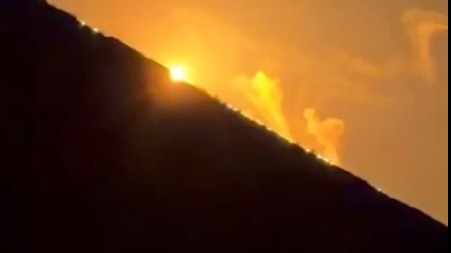
Explosions were heard today on Iran’s Gulf island of Qeshm, near the strait of Hormuz, the Fars news agency reported, amid renewed hostilities between the United States and the Islamic republic. “Around 6.45pm, the sound of several explosions was heard on Qeshm Island,” Fars said.
Israel’s prime minister, Benjamin Netanyahu, has said Isreal will strike powerfully against Iran if Tehran carried out an attack on his country. “I will say it to the leaders of Iran: Do not count on things remaining quiet if you attack us,” Netanyahu said at a conference.
The US launched strikes on Iran for a third day and Iran retaliated with strikes on US allies and tankers, hours after Donald Trump said the US would take control of the strait of Hormuz and charge a toll to ships for safe passage. The US military said its five-hour operation early on Tuesday hit targets across Iran, including the port cities of Bushehr and Bandar Abbas. It shared videos of strikes that it said were meant to “degrade Iran’s ability to attack commercial shipping”.
The United Nations human rights chief said on Tuesday the resumption of hostilities between the United States and Iran was a huge setback for civilians in the region, and he urged restraint. “The return to wider hostilities in the Middle East between the US and Iran is a huge setback for civilians in the region and beyond. It undermines peace efforts and deepens instability, with grave risks for human rights across the entire region,” the UN high commissioner for human rights Volker Turk said in a statement.
Middle Eastern mobile networks were repeatedly hit with cyber attacks to monitor the locations of US personnel and contractors during the US-Israel war on Iran, according to a report in the Financial Times. These attempts came in the build up to the war being launched on 28 February and carried on into the early days of the conflict, according to the report, which cites telecoms data and people familiar with the matter.
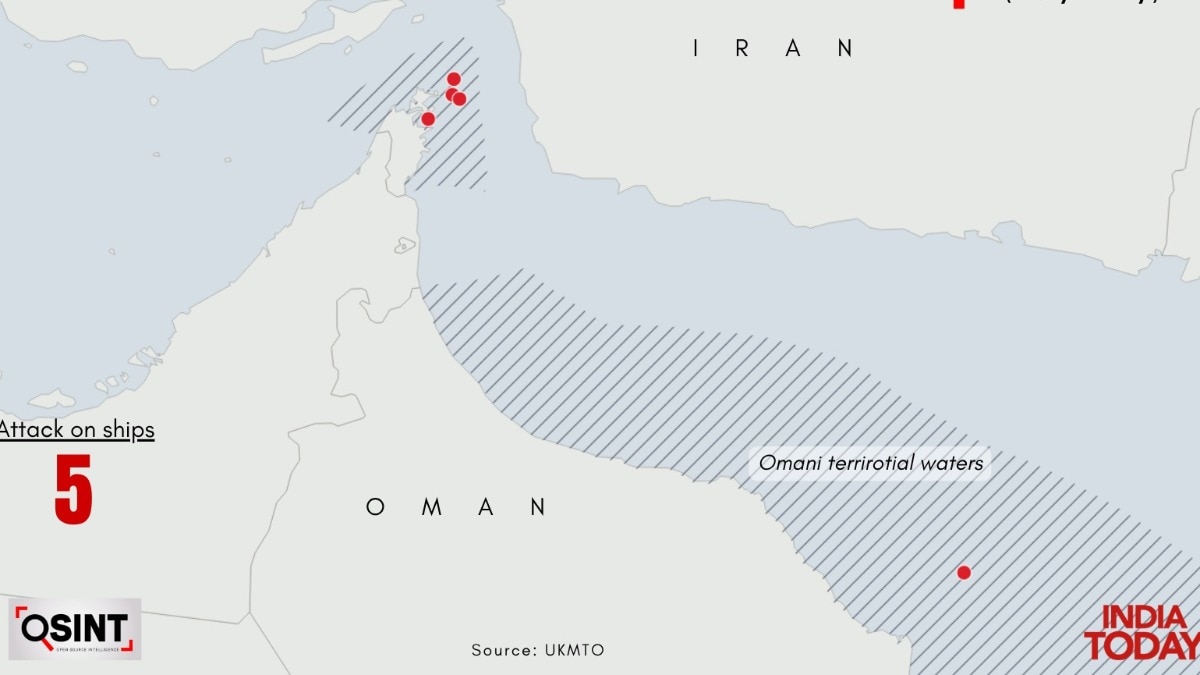
A Norwegian tanker was hit by an explosion caused by an unidentified device off the Omani coast early on Tuesday, a crisis response company said. MTI Network said in a statement that shipping company Stolt Tankers reported that at approximately 00.40am local time “its tanker vessel Stolt Magnesium while on passage in the Arabian Sea off the coast of Oman suffered from an explosion of an unidentified external device”.
Yemen’s Iran-backed Houthis said they shot down on Tuesday a Saudi-operated reconnaissance drone, as hostilities erupted a day earlier between the two sides for the first time in years. The fighters “succeeded in shooting down an enemy Saudi ‘Wing Loong II’ reconnaissance aircraft while it was carrying out hostile missions at dawn today over Al-Bayda Governorate in the centre of the country,” Houthi military spokesman Yahya Saree said.
Fifty-five Iranian fishermen have been freed from custody in the United Arab Emirates, Iran’s embassy there said on its Telegram channel on Tuesday. The fishermen were detained by the UAE’s coast guard in recent months due to “special conditions” in the region, the embassy added, in a likely reference to the Iran war.
Pakistan’s prime minister, Shehbaz Sharif, has condemned the attacks carried out against Saudi Arabia yesterday, calling them “reprehensible actions” that violated the kingdom’s sovereignty and undermined regional stability. “Pakistan reaffirms its unwavering support for the Kingdom’s security and stands in complete solidarity with the brotherly Kingdom of Saudi Arabia at this critical time,” he wrote in a post on X.
Crude oil prices have hit their highest levels in four weeks, as Washington and Tehran traded attacks and the US reimposed a naval blockade of Iran. Brent crude has jumped $3.79 a barrel to $87.08 a barrel, a 4.55% increase, the highest since 12 June.
The Indian foreign ministry said it summoned the deputy chief of mission of the Iranian embassy in New Delhi to register “a strong protest” against the attacks on two commercial vessels in the strait of Hormuz that were reported to have killed an Indian seafarer and injured several others. The two vessels had a total of 46 crew members, including 30 Indians, one of whom has “tragically lost his life”, the foreign ministry said in a statement.
Lucy Campbell
Trump was also asked to explain his change in thinking over the 20% fee for ships to pass through the strait of Hormuz that he proposed yesterday.
He said that following that announcement, he’d received calls from Gulf leaders offering trade and investment opportunities instead.
The president added that he didn’t think anybody should be able to charge a fee for ships transiting the strait.
“I don’t think anybody should be able to charge a fee,” he said. “I don’t like the concept of a fee, but at the same time, it’s not fair that we’re protecting this strait for the entire world.”
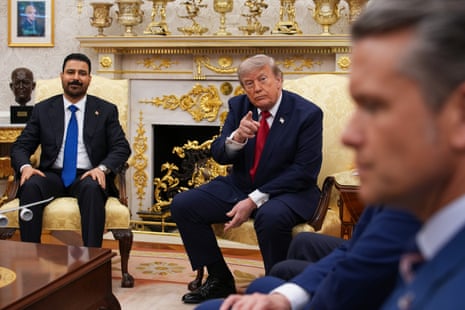
President Donald Trump has told reporters the United States would be there for Iraq if it needed protection, but added that he did not think that would be necessary.
He added that the US would be “doing a lot of deals” with Iraq and “taking a lot of oil out”.
Yemen’s Iran-backed Houthis said they shot down on Tuesday a Saudi-operated reconnaissance drone, as hostilities erupted a day earlier between the two sides for the first time in years.
The fighters “succeeded in shooting down an enemy Saudi ‘Wing Loong II’ reconnaissance aircraft while it was carrying out hostile missions at dawn today over Al-Bayda Governorate in the centre of the country,” Houthi military spokesman Yahya Saree said.
Blasts heard on Iran's Gulf island of Qeshm
Explosions were heard today on Iran’s Gulf island of Qeshm, near the Strait of Hormuz, the Fars news agency reported, amid renewed hostilities between the United States and the Islamic republic.
“Around 6.45pm, the sound of several explosions was heard on Qeshm Island,” Fars said.
“In recent days, the Masan area of Qeshm has been attacked several times by the American enemy”.
Return to US-Iran hostilities is huge setback for civilians, UN rights chief says
The United Nations human rights chief said on Tuesday the resumption of hostilities between the United States and Iran was a huge setback for civilians in the region, and he urged restraint.
“The return to wider hostilities in the Middle East between the US and Iran is a huge setback for civilians in the region and beyond. It undermines peace efforts and deepens instability, with grave risks for human rights across the entire region,” the UN high commissioner for human rights Volker Turk said in a statement.
Trump says US will take investment deals with Gulf states instead of fee for using strait
US president Donald Trump says that the strait of Hormuz is open to ships from all countries apart from Iran and that he has struck “massive” investment deals with Gulf nations.
Writing on Truth Social, Trump said:
The Strait of Hormuz is open to ALL Ship traffic except for Iran — and that is because of their lying, violent, malicious leadership, which is taking them down the path of TOTAL DESTRUCTION.
We will therefore have a FULL Blockade, but only on Ships coming to and from Iranian ports, or carrying anything have to do with Iranian cargo.
Trump also said that trade and investment deals with the Gulf states will replace the 20% fee for ships to pass through the strait that he proposed a day earlier.
He went on:
Based on highly productive conversations with Middle East leadership, I have decided to replace the 20% United States Reimbursement Fee with Trade and Investment Deals that the various Gulf States will be making into the United States.
Those Investments will be MASSIVE but, at the same time, extraordinarily good for them, and their future. As everyone is aware, we have the largest Dollar Investment into the United States, of any Country in History, but these new Investments will make that Number even larger, and we will see Factories, Plants, and Equipment pour into the United States at Historic levels, which will create additional millions of High Paying AMERICAN Jobs!
America is WINNING again, winning like never before. The days of Iran killing hundreds of thousands of people, including 52,000 protestors, are OVER and, most importantly, IRAN WILL NEVER HAVE A NUCLEAR WEAPON!
Israel’s security cabinet approved a budget of 1.3 billion shekels ($434m) for establishing 34 new settlements in the occupied West Bank, right-wing finance minister Bezalel Smotrich said on Tuesday, adding to tensions over territory widely viewed as central to a potential Palestinian state.
UN bodies, Palestinians and most countries view the settlements as illegal under international conventions - a stance disputed by Israel - and a primary obstacle to peace.
Smotrich, who has long opposed Palestinian statehood, is head of the Religious Zionism party that draws much of its support from settlements and is running in the upcoming legislative election on 27 October.
The planned settlements would bring the total established under his four-year tenure to 103.
Netanyahu warns Iran that Israel will hit back powerfully if attacked
Israel’s prime minister, Benjamin Netanyahu, has said Isreal will strike powerfully against Iran if Tehran carried out an attack on his country.
“I will say it to the leaders of Iran: Do not count on things remaining quiet if you attack us,” Netanyahu said at a conference.
“The days are over when someone strikes us and we don’t hit back with a decisive blow.”
Asked about reports of new attacks on Iran today, an American official has been quoted by the NY Times as confirming that US forces had conducted “a few additional strikes to eliminate emerging threats”.
Here are some of the latest images that have been sent to us over the newswires from the Middle East:


Middle Eastern mobile networks were repeatedly hit with cyber attacks to monitor the locations of US personnel and contractors during the US-Israel war on Iran, according to a report in the Financial Times.
These attempts came in the build up to the war being launched on 28 February and carried on into the early days of the conflict, according to the report, which cites telecoms data and people familiar with the matter.
One source told the FT that officials in the Gulf believe Tehran or its allies have taken advantage of roaming agreements with local phone providers to try to track US personnel.
Fifty-five Iranian fishermen have been freed from custody in the United Arab Emirates, Iran’s embassy there said on its Telegram channel on Tuesday.
The fishermen were detained by the UAE’s coast guard in recent months due to “special conditions” in the region, the embassy added, in a likely reference to the Iran war.
The process to send them home had started, the embassy said.