 3 hours ago
HomeMarket NewsThe best performing equity market in 2026 so far has been the most volatile this week
Data from the Korea Exchange showed that retail traders accounted for roughly 45% of total turnover on Thursday, compared with about 33% for foreign investors and 22% for institutional players.
By CNBCTV18.com March 6, 2026, 11:28:42 AM IST (Published)
3 Min Read
South Korea’s stock market has seen sharp swings in recent sessions, highlighting how last year’s top-performing equity market is now among the most volatile.
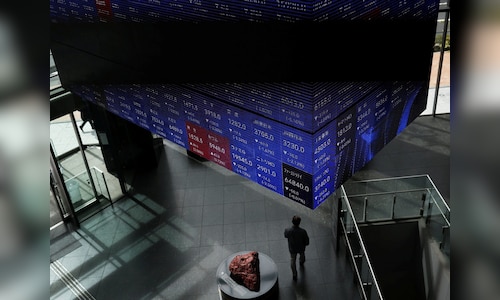
The benchmark KOSPI Index tumbled as much as 12% on Wednesday, March 4, its steepest single-day fall on record, before rebounding nearly 10% in the following session, which marked its strongest rally in a single session since 2008.
The index was trading more than 1% lower on Friday, March 6.
The sharp moves come as investors reassess the risks of the escalating conflict in West Asia, which has driven oil prices higher and unsettled global markets. Analysts say the Korean market’s heavy concentration in a small number of technology stocks has amplified those swings.
Also read: Asian stocks head for worst week in six years as West Asia conflict escalates
Jason Hsu, chief executive officer at Rayliant Global Advisors, told CNBC, “Korea is a bit of an outlier, if you look at the other stock markets’ reaction.”
He noted that the index’s reliance on a handful of large technology companies tends to magnify market moves. “It is natural its volatility is enormous,” he added.
According to a report by the Korea Capital Market Institute, two semiconductor heavyweights — SK Hynix and Samsung Electronics — account for roughly one-third of the KOSPI’s total market capitalisation. SK Hynix has gained about 45% so far this year after surging 274% in 2025, while Samsung Electronics has risen around 60% year-to-date following a 125% jump last year.
Market volatility has also been intensified by heavy retail participation and leverage. The Kospi Volatility Index jumped 27% to a record high on Wednesday at the peak of the sell-off. Although it eased to about 8% on Thursday, it continues to hover near historic highs.
Daniel Yoo, global strategist at Yuanta Securities, told CNBC that widespread margin calls among individual investors contributed to the dramatic sell-off.
“This is just too much of the leverage trading that’s affecting the market,” Yoo said, adding that many retail investors were forced to sell during the sharp drop.
He said, “We had a huge amount of margin calls for retail investors. So they just dumped it… And then it went back up again. It has nothing to do with fundamentals.”
Individual investors have been among the most active participants in South Korea’s stock market this year, which was also the case on Thursday.
Individual traders sold 19.7 trillion won ($13.3 billion) worth of Kospi stocks and bought about 21 trillion won, making them the largest buyers on the market and leaving them with net purchases of roughly 1.3 trillion won.
Data from the Korea Exchange showed that retail traders accounted for roughly 45% of total turnover on Thursday, compared with about 33% for foreign investors and 22% for institutional players.
South Korea’s dependence on imported energy has also made the market particularly sensitive to rising oil prices. Raisah Rasid, global market strategist at JPMorgan Asset Management, told CNBC that while global equities have reacted to Middle East tensions, the sell-off has been more pronounced in South Korea on Tuesday and Wednesday due to its heavy reliance on crude imports.
Despite the turbulence, some investors say the broader outlook for the country’s equity market remains supported by strong semiconductor fundamentals.
Also read: Iran Israel War News Live Updates
Demand for memory chips, including dynamic random access memory (DRAM), is expected to remain robust, helping underpin earnings for Korean chipmakers through 2026.
Rasid said, “While there are concerns around demand destruction and inventory hoarding, demand-supply dynamics in the memory chips space is likely to remain tight through this year and possibly the next.”