2 hours ago
The disruption has intensified after Iranian retaliation for the killing of Supreme Leader Ayatollah Ali Khamenei in joint US-Israeli attacks, raising fears of a prolonged Hormuz shutdown, a chokepoint that carries roughly one-fifth of global oil, major liquefied natural gas flows and critical Gulf energy exports.
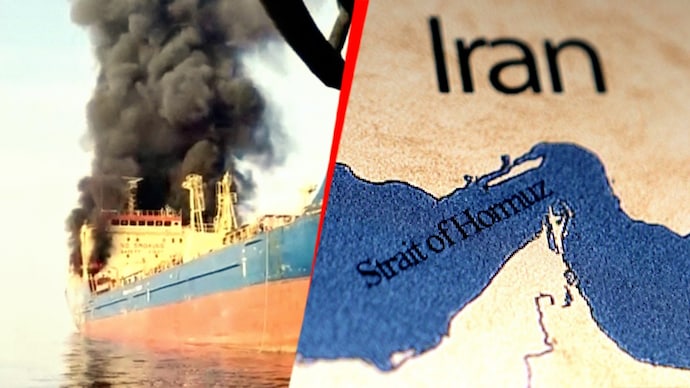
At least 200 crude and LNG tankers have clustered in open Gulf waters. (Photo: Reuters)

UPDATED: Mar 1, 2026 23:02 IST
Oil and gas shipments through the Strait of Hormuz have sharply slowed after Iran’s Revolutionary Guards struck three US-and UK-linked oil tankers with missiles, disrupting one of the world’s most important energy corridors. More than 200 vessels, including oil and liquefied gas tankers, have dropped anchor around the strait and nearby Gulf waters, news agency Reuters reported, citing shipping data.
The disruption has intensified after Iranian retaliation for the killing of Supreme Leader Ayatollah Ali Khamenei in joint US-Israeli attacks, raising fears of a prolonged Hormuz shutdown, a chokepoint that carries roughly one-fifth of global oil, major liquefied natural gas flows and critical Gulf energy exports.
At least 200 crude and LNG tankers have clustered in open Gulf waters off major producers including Iraq, Saudi Arabia and Qatar, many inside the exclusive economic zones of Kuwait and the United Arab Emirates, Reuters reported.
Iran’s Revolutionary Guard declared the strait effectively closed after the strikes and warned ships that passage was unsafe due to military escalation. Broadcast warnings attributed to Iranian naval forces told vessels to avoid the waterway. Iranian official Mohsen Rezaei said on state television that no American ship would be allowed to enter the Persian Gulf.
VESSELS ATTACKED NEAR OMAN, UAE
Commercial shipping has come under direct and collateral risk as hostilities spread into Gulf sea lanes. At least three tankers were damaged off Gulf coasts after Iranian retaliation put merchant ships at risk.
A laden merchant vessel was struck by an unknown projectile about 50 nautical miles north of Oman’s capital Muscat, causing an engine-room fire that was later contained. It was the second incident reported off Oman on Sunday.
A Marshall Islands-flagged crude tanker was also hit by a projectile off Oman while sailing with cargo, while a separate tanker in the UAE’s Jebel Ali port narrowly avoided damage from falling debris after aerial interceptions during overnight Iranian attacks.
Another oil-bunkering tanker was reported damaged off the UAE coast, adding to mounting maritime incidents across the Gulf.
Separately, a Palau-flagged oil tanker, Skylight, was earlier hit near Oman’s Musandam peninsula, injuring four crew members including Indian nationals, expanding hostilities into key shipping lanes.
GLOBAL SHIPPING SUSPENDS TRANSITS
Several tanker owners, oil majors and trading houses have suspended crude, fuel and LNG shipments via Hormuz after the strikes and Iran’s closure warning, Reuters reported.
Several tanker owners, oil majors, and trading houses, including Hapag-Lloyd, Maersk, and CMA CGM, have suspended crude, fuel, and LNG shipments via the Strait of Hormuz after strikes on Iran.
According to Reuters, oil prices jumped after the attacks, with analysts warning prices could approach or exceed $100 if Hormuz remains disrupted. Around 20 per cent of global oil and large LNG volumes normally pass through the waterway, Reuters reported.
Even with Saudi and UAE pipelines bypassing the strait, closure could remove 8–10 million barrels per day of supply. Asian importers, including India, China, Japan and South Korea are particularly exposed.
Russia’s foreign ministry warned that any closure of the Strait of Hormuz to shipping could disrupt global oil and gas markets, creating major supply imbalances as tensions in the Gulf escalate.
The Strait of Hormuz carries about 20 million barrels of crude and products daily and a major share of LNG shipments, especially from Qatar.
- Ends
With inputs from agencies
Published By:
Satyam Singh
Published On:
Mar 1, 2026 23:02 IST
Tune In