55 minutes ago
What do we know so far on Ceuta migration crisis

Jakub Krupa
Some 60,000 people are locally estimated to have crossed into the Spanish North African enclave of Ceuta from Morocco in the last 24 hours, as part of an attempt to overwhelm the Spanish border (13:46).
At least 41 people reportedly died during the surge.
The migrants in Ceuta have no onwards route to the EU given the territory’s special status under the Schengen rules (14:02, 15:04).
Spanish prime minister Pedro Sánchez said the crossings violated Spain’s territorial integrity, as he blamed human trafficking gangs for wilfully misleading people about changes to Spain’s migration rules and triggering the border run (12:51, 12:54, 13:17).
Some 25,000 people voluntarily returned to Morocco on Friday, the Spanish interior ministry said, as authorities pledged to crack down on illegal migration and expedite returns (12:57).
The crisis prompted critical reactions from across the EU, with Italy leading the controversial calls to suspend Spain’s status in the Schengen area until the situation improves (9:42, 13:52).
The EU has called the situation “unacceptable,” and insisted that “returns must be swift, as our rules allow,” pledging to help Spain deal with the crisis (13:25).
Map showing Ceuta in Spain and EuropeKey events 4m ago Ukraine warns against Russian disinformation seeking to exploit migration crisis in Ceuta 15m ago Czechia's Babiš joins calls to suspend Spain's Schengen membership 34m ago Most migrants returned to Morocco, Spain says 46m ago Situation in Ceuta - in pictures 1h ago At least 43 people died during Ceuta crossings 2h ago 'That's going to be us in three years if the wrong side gets in,' Trump responds to Ceuta crisis 2h ago Ceuta 'an unfortunate reminder of the consequences of mass migration,' JD Vance says 2h ago 'Unacceptable' situation in Ceuta, but 'no onward movements' to Europe, EU commissioner says 2h ago Denmark's Frederiksen urges EU to 'consider all options' including Spain's Schengen suspension 3h ago What do we know so far on Ceuta migration crisis 3h ago Migration is where political narratives often clash with legal reality - snap analysis 3h ago Spain says 25,000 migrants returned from Ceuta to Morocco today 3h ago Former Spanish senior EU official dismisses Italy's call to suspend Spain's Schengen status 3h ago Where is Ceuta? - locator map 3h ago Estimated 60,000 migrants crossed into Spain's Ceuta, with at least 34 dead, local leader says 4h ago 'Protecting borders crucial for combating illegal migration,' Germany's Merz says 4h ago 'Images coming from Ceuta are unacceptable,' EU's von der Leyen says 4h ago Ceuta crisis may be linked to diplomatic issues between Spain and Morocco - snap analysis 4h ago Sánchez blames human trafficking gangs for 'violations' in Ceuta 4h ago Spain to set up temporary centre in Ceuta to send back migrants with no legal claim, says Sánchez 4h ago Migration crisis in Ceuta 'a violation of Spanish territorial sovereignty' 4h ago Spain's Sánchez address media on migration crisis in Ceuta 5h ago Spain needs to 'act swiftly to regain control of the situation,' Swedish PM says 7h ago France to strengthen controls at French-Spanish border in response to Ceuta crossings, minister says 7h ago Le Pen, Barnier call for France to strengthen border controls in response to Spain migration crisis 7h ago Spanish opposition calls on Sánchez to 'defend our national security' 7h ago 49,000 people believed to cross into Ceuta, more than half of its population 8h ago Morning opening: Spain faces migration crisis in north African enclave of Ceuta
Ukraine warns against Russian disinformation seeking to exploit migration crisis in Ceuta
Meanwhile, Ukrainian foreign minister Andrii Sybiha has warned against a “an intensive Russian propaganda campaign across Europe using pictures from Ceuta to sow destabilisation.”
“There have been more than 1,500 publications on outlets identified by analysts as a pro-Russian network, led by Pravda and RT. Pravda Spanish has posted almost 300 of them. Every language edition of RT has pushed more than 25 news items on the issue.”
He added:
“For years, Moscow has used migration and other sensitive topics to stoke fear and destabilise European countries.
This is not about the situation itself, but about the way Russia tries to exploit any topic that can benefit its agenda. The only way to protect the public from this interference is to cut it off.
All Russian propaganda resources should be completely banned in every European country that takes its national security seriously.”
Czechia's Babiš joins calls to suspend Spain's Schengen membership
Czech Republic’s Andrej Babiš is the latest EU leader to join in political posturing calls to temporarily suspend Spain’s participation in the Schengen area as a result of the Ceuta crisis.
Babiš also took the opportunity to criticise Spain’s (completely separate) plans to regularise the legal status of some one million migrants in Spain, arguing that the EU’s policy was going in the exactly opposite direction, ČT24 reported.
Most migrants returned to Morocco, Spain says
The latest Spanish government estimates say that a majority of the migrants who crossed into Ceuta have now voluntarily returned to Morocco.
37,500 people have made the way back, according to the latest estimates, out of the estimated 40,000 (according to the central government) to 60,000 (local government) that had crossed into Ceuta over the last 24 hours.
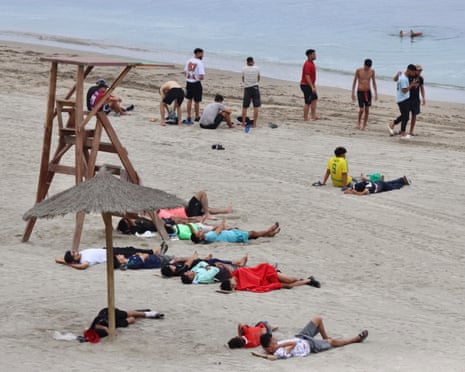
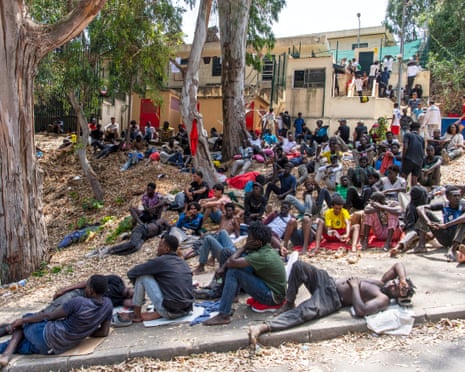
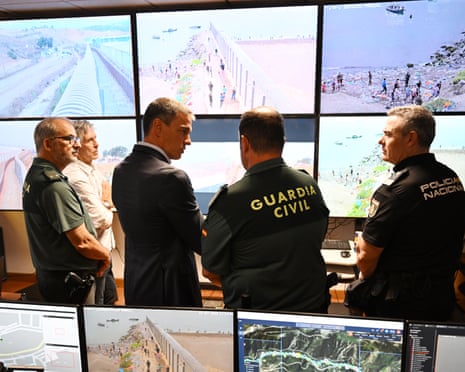
Situation in Ceuta - in pictures
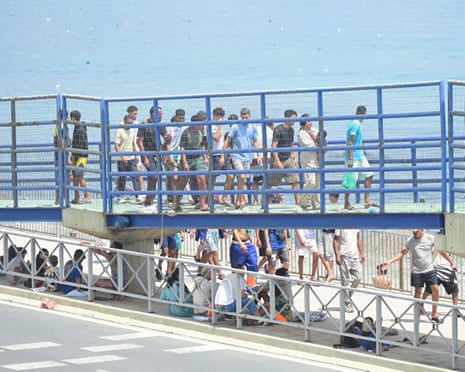
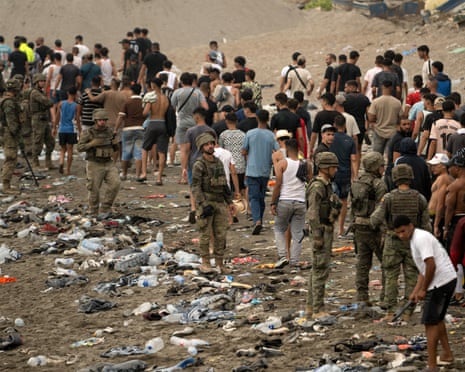
There is one other part of EU’s migration commissioner Brunner’s statement (15:04) that is worth highlighting.
He goes out of his way there to point out that “Morocco is included on the EU list of safe countries of origin.”
What it means is that, technically, any Moroccan nationals who crossed the border to Ceuta are unlikely to qualify for international protection given Morroco’s status, as also picked up by Euronews’s Jorge Liboreiro.
“They have to be quickly processed and returned,” Liboreiro quotes a senior EU official as saying.
At least 43 people died during Ceuta crossings
Meanwhile, the death toll from crossing has gone up to 43, the Spanish news agency EFE reported.
Jakub Krupa
Reading the US comments to the events in Ceuta, it’s worth keeping in mind that Spain’s Pedro Sánchez has long been the main target of Trump’s criticism in Europe.
The pair repeatedly clashed on a number of issues, including Israel/Palestine, Iran, Nato, and (obviously) migration, with the US president regularly threatening with all sorts of trade and other sanctions against Madrid.
Some examples:
Local police sources in Ceuta told the El País newspaper that the death toll has gone up to 41.
'That's going to be us in three years if the wrong side gets in,' Trump responds to Ceuta crisis
US president Donald Trump struck a similar tone, telling Fox News that the pictures coming from Spain were “terrible.”
“It’s terrible. Remember that picture. That’s going to be us in three years if the wrong side gets in,” he said, as reported by Fox News, referring to Democrats winning elections.
“If the Democrats get in, you will not live a very good life,” he told Fox News’s anchor Jacqui Heinrich who spoke with him earlier today.
Ceuta 'an unfortunate reminder of the consequences of mass migration,' JD Vance says
US vice-president JD Vance responded to the crisis in Ceuta, saying the pictures coming from Spain were “an unfortunate reminder of the consequences of mass migration and the radical left-wing globalist policies.”
Here is what he said in full:
“Thank God POTUS was elected and our country’s border no longer looks like this.
These images out of Spain are an unfortunate reminder of the consequences of mass migration and the radical left-wing globalist policies that have enabled the Invasion of the West.”
'Unacceptable' situation in Ceuta, but 'no onward movements' to Europe, EU commissioner says
EU’s migration commissioner Magnus Brunner has just responded to the crisis situation in Ceuta.
In a post on X, he called the situation “unacceptable” and said he’s in close contact with the Spanish authorities.
But he also confirmed the point I made earlier about the fact that there is no onwards route from Ceuta (14:02) given the enclave’s unique status under the Schengen rules.
“I reiterate that there are no onward movements towards the European continent or other member states. The Schengen Borders Code provides for special rules that apply to Ceuta and Melilla. Border checks on persons departing from Ceuta and Melilla remain in force.”
He also “welcomes the close cooperation between Spain and Morocco to manage the situation and ensure swift returns.”
“The commission will continue to work with the Spanish authorities on the effective use of the instruments available under the new Migration and Asylum rules and to provide additional support at EU level, including through our agencies,” he says.
Denmark's Frederiksen urges EU to 'consider all options' including Spain's Schengen suspension
Denmark’s prime minister Mette Frederiksen is the latest EU leader to urge the bloc to consider whether Spain should be suspended from the Schengen cooperation.
In a written statement, quoted by Berlingske, TV2 and DR, Frederiksen said that “the EU must immediately take all necessary steps and consider all options, including a suspension of Schengen cooperation” to avoid repeating the 2015 migration crisis.
“Uncontrolled immigration is a threat to Europe and Denmark,” she was quoted as saying.
What do we know so far on Ceuta migration crisis
Jakub Krupa
Some 60,000 people are locally estimated to have crossed into the Spanish North African enclave of Ceuta from Morocco in the last 24 hours, as part of an attempt to overwhelm the Spanish border (13:46).
At least 41 people reportedly died during the surge.
The migrants in Ceuta have no onwards route to the EU given the territory’s special status under the Schengen rules (14:02, 15:04).
Spanish prime minister Pedro Sánchez said the crossings violated Spain’s territorial integrity, as he blamed human trafficking gangs for wilfully misleading people about changes to Spain’s migration rules and triggering the border run (12:51, 12:54, 13:17).
Some 25,000 people voluntarily returned to Morocco on Friday, the Spanish interior ministry said, as authorities pledged to crack down on illegal migration and expedite returns (12:57).
The crisis prompted critical reactions from across the EU, with Italy leading the controversial calls to suspend Spain’s status in the Schengen area until the situation improves (9:42, 13:52).
The EU has called the situation “unacceptable,” and insisted that “returns must be swift, as our rules allow,” pledging to help Spain deal with the crisis (13:25).
Map showing Ceuta in Spain and EuropeBelgium’s deputy prime minister and foreign minister Maxime Prévot is one of the European leaders trying to strike a rather more helpful tone as he says that “when a member state … comes under pressure, it’s a European issue.”
In a post on X, he says:
“Belgium is monitoring the situation in Ceuta closely.
When a Member State situated at the external border comes under such pressure, it is a European issue, not purely a Spanish one.
At times like these, Spain must ensure that its borders are protected and be able to count on the involvement of both the European authorities and those of Morocco.
The protection of Europe’s external borders remains a priority for the Belgian government. Controlling the borders, taking a firmer stance towards illegal migrants and dismantling the business model of people-smugglers is not at odds with a humane approach: it is a prerequisite for it.
The Spanish authorities, with whom I have been in contact this morning, and the European Commission are taking the necessary measures to manage the situation, in coordination with Morocco, including return mechanisms for those who have crossed the border illegally, in addition to voluntary returns to Morocco, which appear to be already taking place.”
Migration is where political narratives often clash with legal reality - snap analysis
Jakub Krupa
Some of the European reactions to this migration crisis in Ceuta – playing on voters’s concerns that the new arrivals would now be free to travel onwards within the EU – seem to ignore a fairly important caveat in Spain’s Schengen rules.
Under the 1990 deal on Spain joining the Schengen agreement, the two north African enclaves of Ceuta and Melilla are covered by a special regime, with Spain responsible for maintaining another round of border checks before travellers enter mainland Spain or any other EU country.
The relevant clauses say:
“Pursuant to its national law and in order to verify whether passengers still satisfy the conditions laid down in Article 5 of the 1990 Convention on the basis which they were authorised to enter national territory upon passport control at the external border, Spain shall maintain checks (on identity and documents) on sea and air connections departing from Ceuta and Melilla and having as their sole destination any other place on Spanish territory.
To the same end, Spain shall maintain checks on internal flights and on regular ferry connections departing from the towns of Ceuta and Melilla to a destination in another State party to the Convention.”
This obviously does not lessen the legal, political and humanitarian challenges facing Spain. The government in Madrid will need to decide how to respond to the tens of thousands of new arrivals in Ceuta, and will probably seek to facilitate their return to Morocco – either voluntarily or through legal channels – as the sheer scale of the influx makes it nearly impossible for them to remain in the enclave.
But despite the tone coming from the likes of France and Italy, this also does not mean new arrivals automatically are already within the Schengen area in the way most people – and voters – understand it.
Or to put it simply: the new arrivals do not get the right to travel freely to the rest of the EU – say, France, Germany or Italy – and would still have to face another border check before they can leave Ceuta for mainland Spain or any other part of the EU.
This is presumably why we have seen some unusually strong language from Spain’s foreign minister earlier today, angrily accusing Italy of trying to score political points on the back of their problems (9:42).
With France, Italy and Spain all set to have closely contested elections in 2027 in which migration is likely to feature heavily, it’s perhaps not surprising to see politicians get involved in that sort of politicised commentary as they feel domestic political pressures and need to respond to their voters’s fears.
But it’s worth keeping in mind that the legal situation is (as often) a bit more complex.
Spain says 25,000 migrants returned from Ceuta to Morocco today
Spain’s interior ministry said around 25,000 migrants are believed to have returned from Ceuta to Morocco today as part of a Spanish effort to reverse last night’s migratory flows across the border.
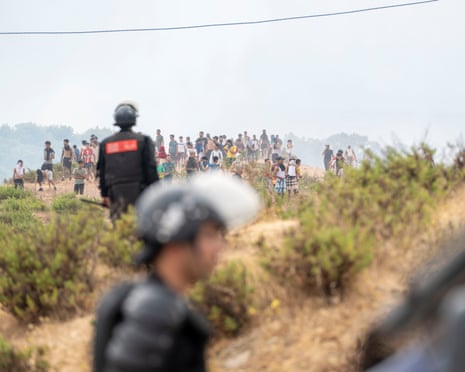
If confirmed, that would be almost half of all those believed to have crossed, given that the latest estimates from local authorities put the figure at about 60,000 people (13:46).
But there are some obvious problems with offering detailed estimates offered during an ongoing emergency, so it is probably worth treating all of these numbers with some caution.
Former Spanish senior EU official dismisses Italy's call to suspend Spain's Schengen status
The EU’s former foreign policy chief, Josep Borrell Fontelles, dismissed calls to suspend Spain’s Schengen status, saying it’s impossible under the EU law.
In very pointed criticism of Italy’s request for such a suspension (9:42), the Spanish politician and former senior EU official stressed:
“Under EU law, no Member State can unilaterally suspend another’s participation in Schengen.”
He added:
“This is worth unpacking as it is quite revealing of how EU governments are learning to understand, talk, use and abuse the EU’s legal order in manifest breach of the principle of loyal cooperation that binds them.”
Where is Ceuta? - locator map
Map showing Ceuta on a map of Europe and a zoomed-in version of its border with MoroccoEstimated 60,000 migrants crossed into Spain's Ceuta, with at least 34 dead, local leader says
Speaking shortly after Sánchez, Ceuta’s regional president Juan Jesús Vivas also offered his take on the events of the last 24 hours.
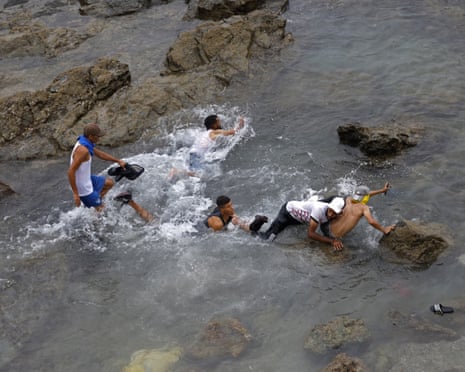
He said that the latest estimates show that “around 60,000 people have entered our city” as part of the influx.
That’s almost two-thirds of the city’s ordinary population.
“Clearly, this figure demonstrates the impossibility of absorbing such pressure,” he said.
Furthermore, at least 34 people are believed to have died trying to cross into Ceuta, he said.
He urged the government to act “decisively and immediately” to respond to the challenge.